
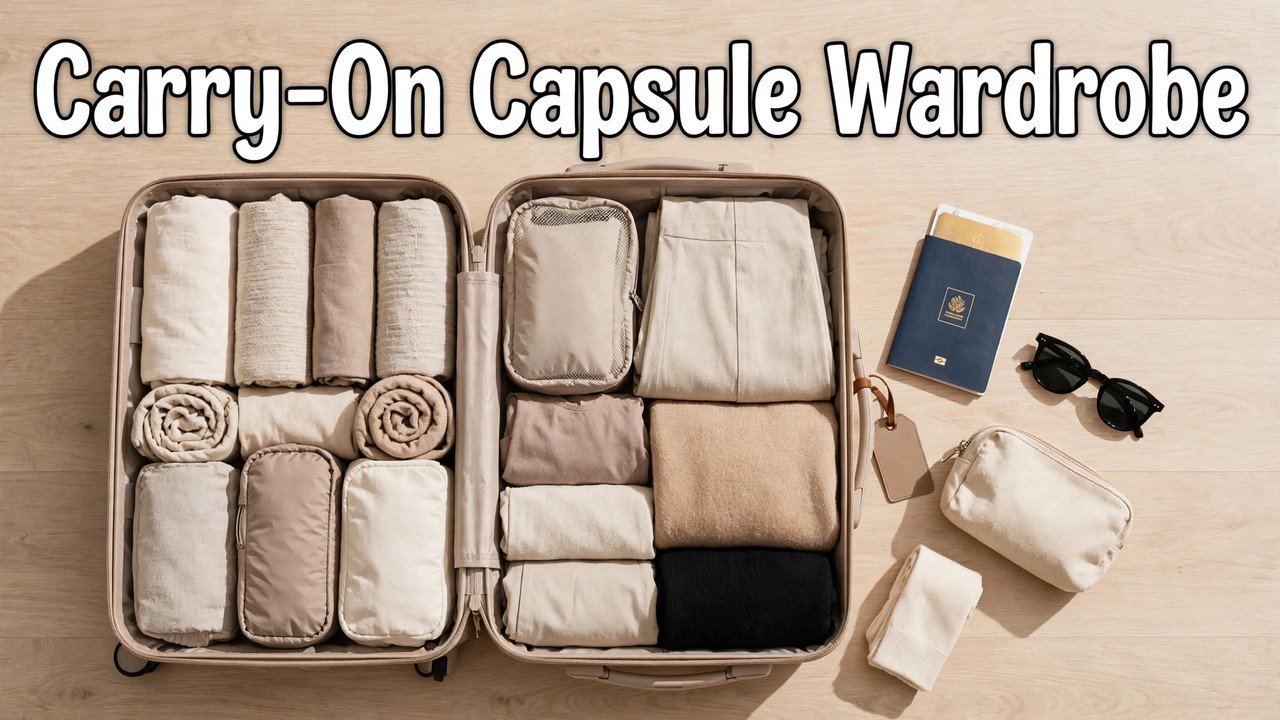
Carry-On Capsule Wardrobe: 12 Pieces for Two Weeks of Travel
Yes — twelve pieces of clothing can cover fourteen days of travel without once wishing for a checked bag. The full list: three tees, one blouse, one sweater, jeans, trousers, a dress, a blazer, a coat, and two pairs of shoes. Everything below explains why those twelve, how to pick them, and the laundry math that makes two weeks possible. Because here’s the question nobody asks before they pack: what does day nine actually look like?
The 12-Piece List
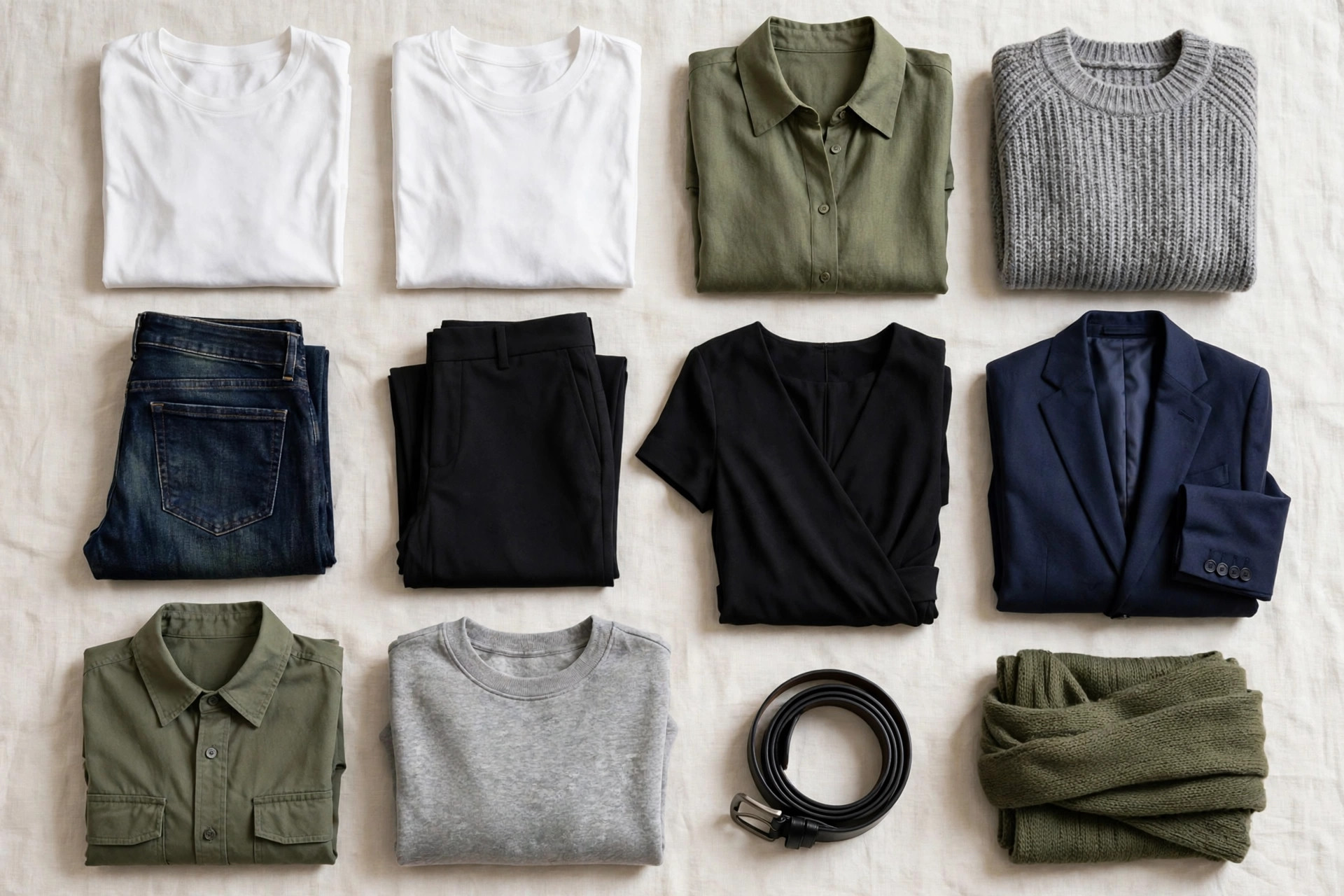
Start with the inventory, then we’ll earn it. Three short-sleeve tees in your palette (one gets worn on the plane). One blouse or button-down that dresses everything up. One mid-weight sweater.
One pair of dark jeans. One pair of trousers in a travel-friendly fabric. One dress that works day to evening. One blazer or structured cardigan — if you want proof one blazer can carry a whole trip, these oversized blazer outfit ideas show the range.
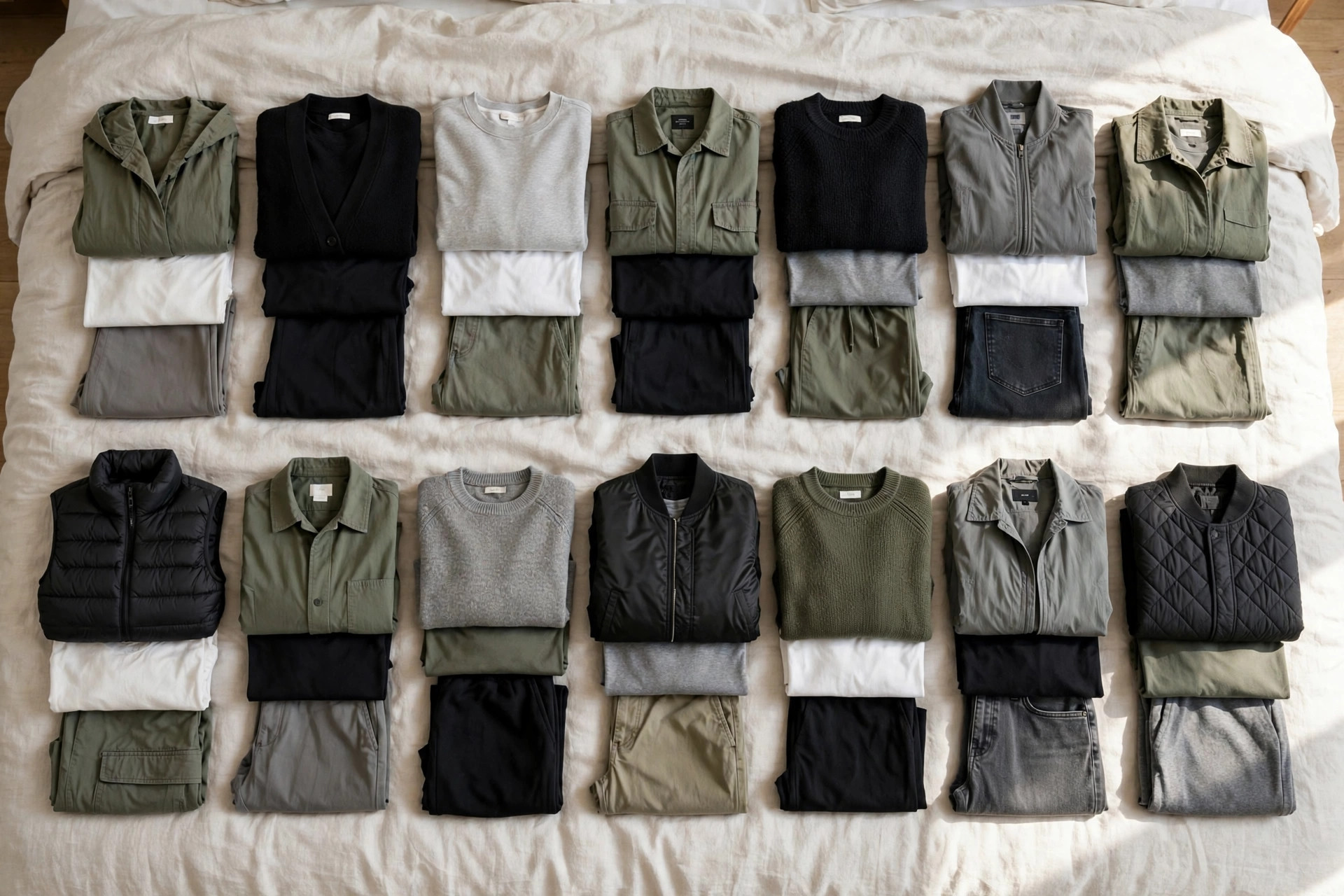
The math works because every piece talks to every other piece. The blouse goes over the dress as a layer and under the blazer for dinner. The sweater works with jeans, trousers, and over the dress. If any item only pairs with one other thing, it doesn’t make the cut — that’s the whole rule. The same capsule math scales to a full semester — see this college dorm minimalist wardrobe that covers months with fifteen pieces.
Pick One Color Story and Commit
Three neutrals plus one accent. That’s it. Black, white, and gray with olive as the accent — or navy, cream, and charcoal with rust.
The specific colors matter less than the discipline: when everything shares a palette, getting dressed takes four minutes and every combination looks considered.
The accent color is where people go wrong. They pack “a pop of color” in five different shades and nothing matches. One accent, repeated across two or three pieces, looks like a wardrobe.
Five accents looks like a suitcase exploded. Photographs better too — a consistent palette makes two weeks of travel photos look cohesive instead of chaotic.
Fabrics That Earn Their Carry-On Space
Merino wool is the undisputed champion of travel fabrics. It resists odor for multiple wears, regulates temperature across climates, and shakes out wrinkles when you hang it in a steamy bathroom. A merino tee costs more upfront but replaces two cotton tees in the rotation — that’s real carry-on space saved.
For everything else, do the scrunch test in the store: ball the fabric in your fist for ten seconds, release, and look. If it springs back smooth, it packs well.
Ponte, nylon blends, and technical knits pass easily. Linen and crisp cotton fail beautifully — leave them home unless you enjoy looking rumpled by noon. And skip anything labeled “dry clean only.” You’re not finding a dry cleaner in a beach town on day eleven.
Wear Your Bulkiest on the Plane
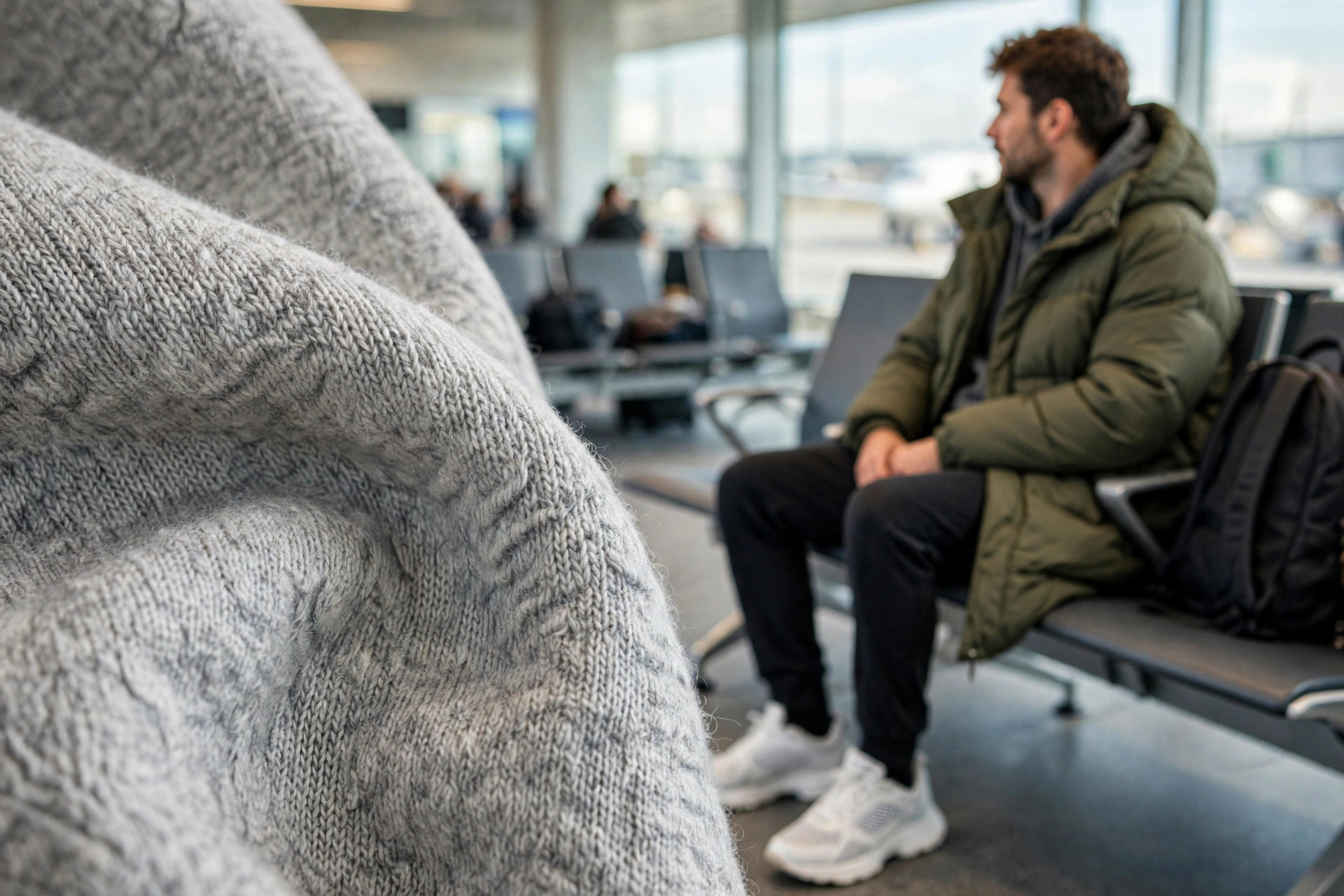
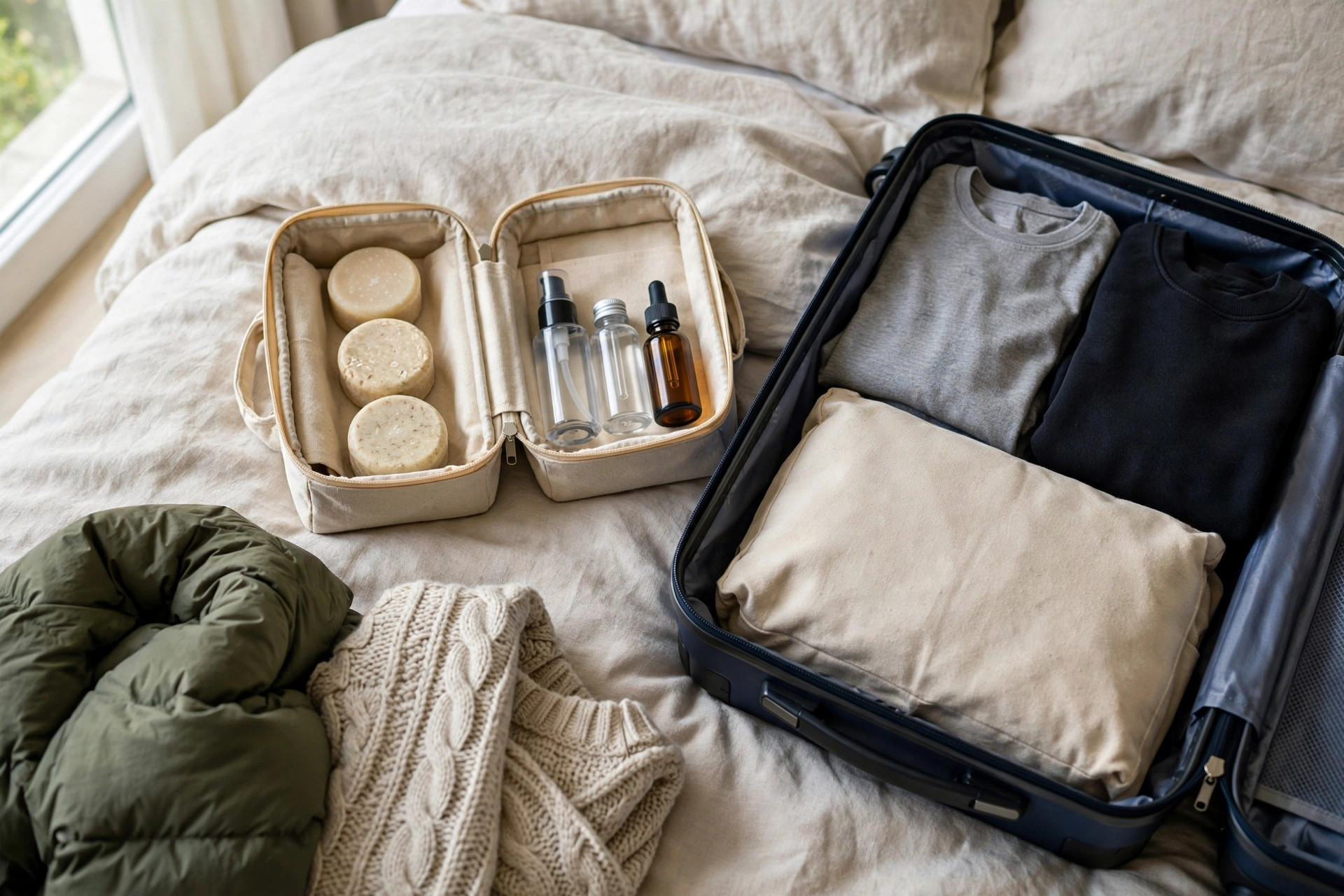
This is the oldest packing trick because it works. The coat, the sweater, the sneakers — all on your body at the gate, not in the bag. A knee-length coat eats a third of a carry-on; worn, it eats zero. Same logic for boots if you’re bringing them instead of the second shoe.
Layer strategically for the flight itself. Planes run cold, airports run warm, and you’ll be peeling layers in security. The sweater over the tee, coat over everything — you can strip down to the tee at the gate and rebuild when you board. Comfortable and space-efficient at once.
Laundry Math: The Mid-Trip Wash
Twelve pieces for fourteen days requires exactly one laundry session, usually around day seven. That’s the whole secret — nobody wears twelve pieces for fourteen days straight. Plan for it the way you plan museum tickets.
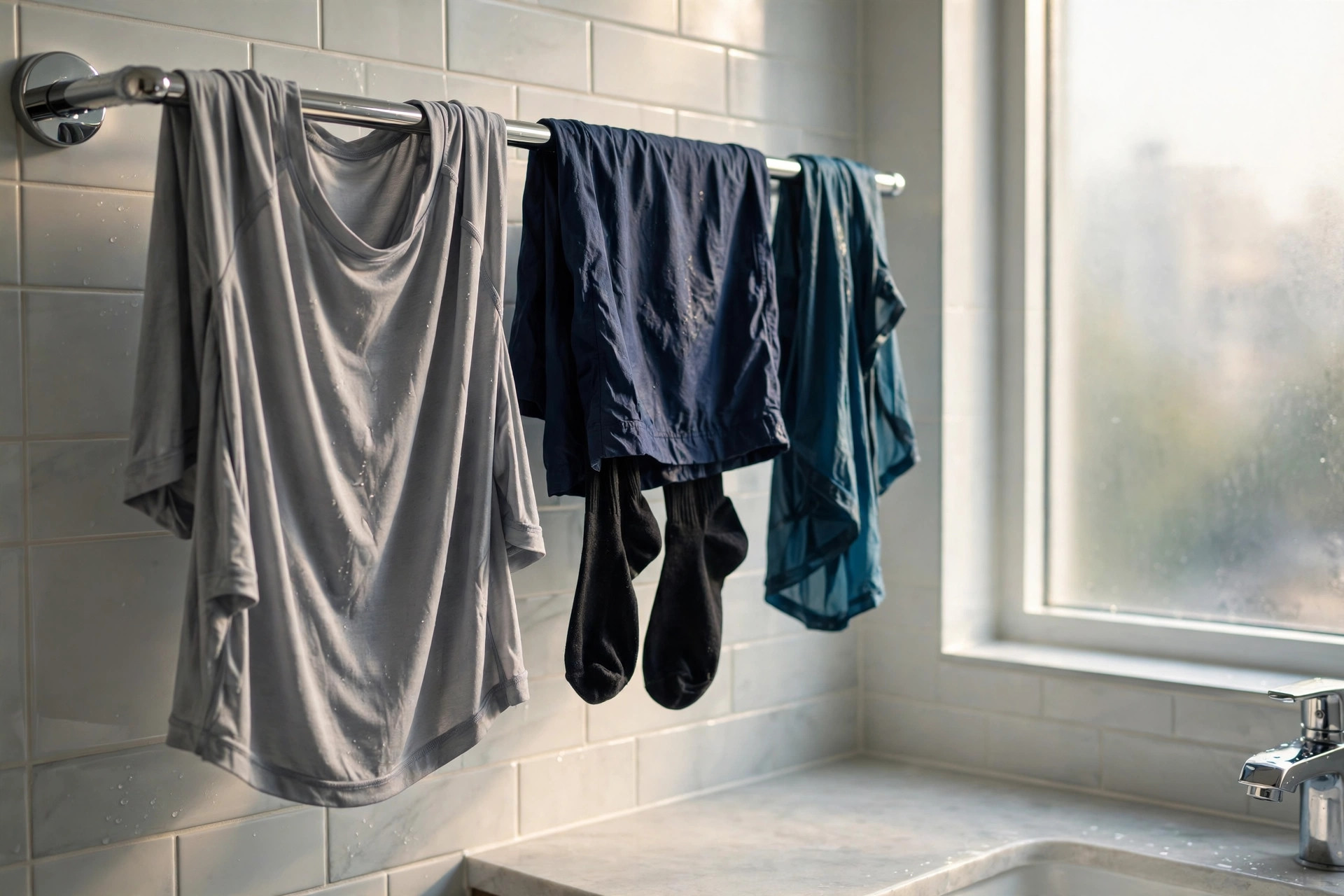
Hotel sinks work fine with detergent sheets (they weigh nothing and sail through security). Wash the tees and underwear, roll them in a towel and stomp out the moisture, then hang overnight — merino and synthetics dry by morning in most climates. Many hostels and Airbnbs have washers; a laundromat in any city on earth costs a few dollars and an hour of people-watching. The travelers who “can’t” pack light are usually travelers who won’t do one load of laundry.
Shoes: The Two-Pair Limit
Shoes are where carry-ons go to die, so the rule is absolute: two pairs, period. Sneakers on your feet handle walking days, travel days, and casual dinners. The second pair — loafers, low boots, or dressy flats — covers everything else. Pick the second pair in a dark color that works with the dress and the trousers.
Here’s the trade-off nobody mentions: the “perfect” shoe for every occasion doesn’t exist, and chasing it is how you end up checking a bag. A loafer that’s slightly underdressed for the fancy restaurant beats lugging heels across cobblestones for twelve days. Comfort wins on day nine when your feet are tired and you still have a week to go.
Toiletries: Go Solid Where You Can
The 3-1-1 liquids rule is the real carry-on constraint for most people, not the clothes. Solid toiletries dodge it entirely: bar shampoo and conditioner, a solid deodorant stick, toothpaste tablets, and powder sunscreen have no size limits and can’t leak. Switching even half your kit to solids usually empties the liquids bag.
For what stays liquid, decant into 3.4-ounce containers and keep the quart bag in an outer pocket — you’ll pull it out at security and repack in seconds. The TSA’s official liquids, aerosols, and gels rule page is worth a two-minute read before you pack, since the “what counts as a liquid” list surprises people (mascara counts; lipstick doesn’t).
What I’d Leave Behind
The “just in case” items are the enemy.
The third pair of shoes for the dinner that might be fancy. The heavy hardcover you might read. The full-size umbrella when a packable rain shell does the job.
Every just-in-case item costs space every single day for a scenario that probably never happens.
Also leave: more than one “nice” outfit unless your trip genuinely includes multiple formal events, anything white that shows every stain (one white tee is enough risk), and gym clothes unless you’ll actually work out — hotel-room bodyweight routines don’t need special outfits. Pack for the trip you’re taking, not the person you wish you were on vacation.
A Sample 14-Day Outfit Map
Days 1–3: jeans with the three tees in rotation, sneakers. Day 4: trousers with the blouse, loafers — the “nice dinner” reset. Days 5–6: dress alone, then dress with the sweater over it. Day 7: laundry day — wear the jeans and blouse while everything dries.
Days 8–10: repeat the first block; nobody notices. Day 11: trousers, sweater, blazer — the polished combo. Days 12–13: dress with blazer, jeans with sweater. Day 14: travel home in the plane outfit.
Twenty-plus distinct combinations from twelve pieces, and the only repeat anyone might catch is the jeans — which, worn with different tops, read as entirely different outfits.
The Honest Caveat
This system bends but doesn’t break across climates. Two weeks spanning a beach and a mountain town needs the sweater and coat to work harder, and truly formal events (weddings, business conferences) may demand a dedicated outfit that sits outside the capsule. That’s fine — the capsule is a framework, not a religion. Add the one exception piece, pack it carefully, and keep everything else disciplined.
What the twelve-piece system can’t do is dress someone who changes outfits three times a day. If that’s you, check a bag and enjoy yourself. But if you’d rather skip baggage claim and keep every option in the overhead bin, twelve pieces is genuinely enough. Pack a couple of camera-friendly tops and the same capsule doubles as your work-from-home wardrobe when you get back — the blazer-and-tee combo in particular earns its keep on video calls too.
Yes, with twelve versatile pieces and one mid-trip laundry session around day seven. The key is a shared color palette so everything mixes, plus fabrics like merino and synthetics that handle multiple wears and dry overnight.
A standard 22-inch carry-on (around 40 liters) fits the twelve pieces with room for toiletries and a personal item. Soft-sided bags pack more flexibly than hardshells, and packing cubes keep the pieces organized across two weeks.
Wash quick-dry items in a hotel sink with detergent sheets around day seven, roll them in a towel to remove moisture, and hang overnight. Laundromats and Airbnb washers work for a full load — plan the stop the way you’d plan any other activity.
Two pairs: comfortable walking sneakers worn on the plane, plus one dressier pair (loafers, low boots, or flats) packed inside. Shoes eat the most space, so the two-pair limit is the single biggest factor in fitting everything.
It works with adjustments: wear the coat and boots on the plane, choose a packable down layer, and lean on merino base layers that add warmth without bulk. Cold-weather capsules skew closer to fourteen pieces, but the same principles hold. 6.
If Paris is on your itinerary, these Paris outfit ideas will help you pack chic looks that actually look Parisian.