

14 Make-Ahead Thanksgiving Breakfast Ideas for a Stress-Free Morning
14 Make-Ahead Thanksgiving Breakfast Ideas for a Stress-Free Morning
Thanksgiving morning is the most under-planned meal of the entire holiday. The turkey has a timeline taped to the fridge. The pie has its oven slot. But breakfast? Breakfast is usually a cold piece of toast eaten standing up while the oven preheats. The result is a hungry, slightly grumpy house full of people hovering around a cook who hasn’t eaten since yesterday.
The fix isn’t waking up earlier — nobody wants a 5 a.m. alarm on a holiday. It’s moving the work to Wednesday night. Every idea on this list is finished, or nearly finished, before bed the night before, so Thanksgiving morning asks for little more than turning on the oven and pouring the coffee. Overnight soaks, slow cold rises, fridge-ready batters, and slow-cooker magic do the heavy lifting while you sleep.
These fourteen cover the full range of appetites: sweet and savory, hearty casseroles for a house of twelve, quiet little jars for a family of three. For each one you’ll find what to prep, how it holds overnight, and the small details — the bread to buy, the pan to use, the step people skip — that make it taste like you tried much harder than you did.
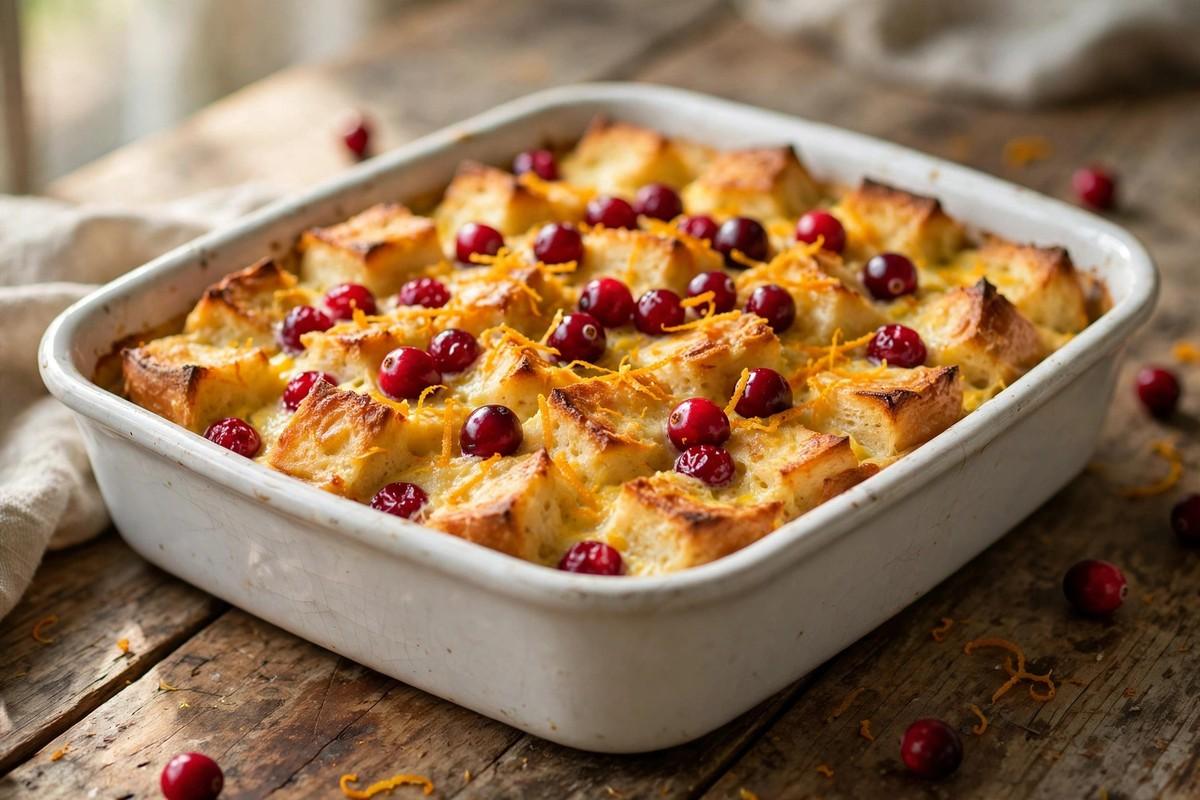
1. Overnight French Toast Casserole with Cranberries and Orange
This is the make-ahead breakfast that started them all, and it still earns its place. Cube a loaf of sturdy bread — brioche or challah if you want richness, a day-old country loaf if you want structure — and spread the pieces in a buttered 9×13 dish. Whisk together a dozen eggs, two cups of milk, a splash of cream, brown sugar, vanilla, and cinnamon, then pour it over the cubes. Scatter fresh cranberries and a shower of orange zest across the top.
Cover and refrigerate overnight. The bread drinks up the custard like a sponge, which is exactly what you want; dry pockets in the middle are the one thing that ruins this dish. In the morning, bake at 350°F for 40 to 50 minutes until the center is set and the top is deeply golden. Serve with warm maple syrup.
One practical note: frozen cranberries work fine here, straight from the bag, no thawing. They bleed a little more color into the custard, which looks festive rather than wrong.
2. Cranberry-Orange Overnight Oats
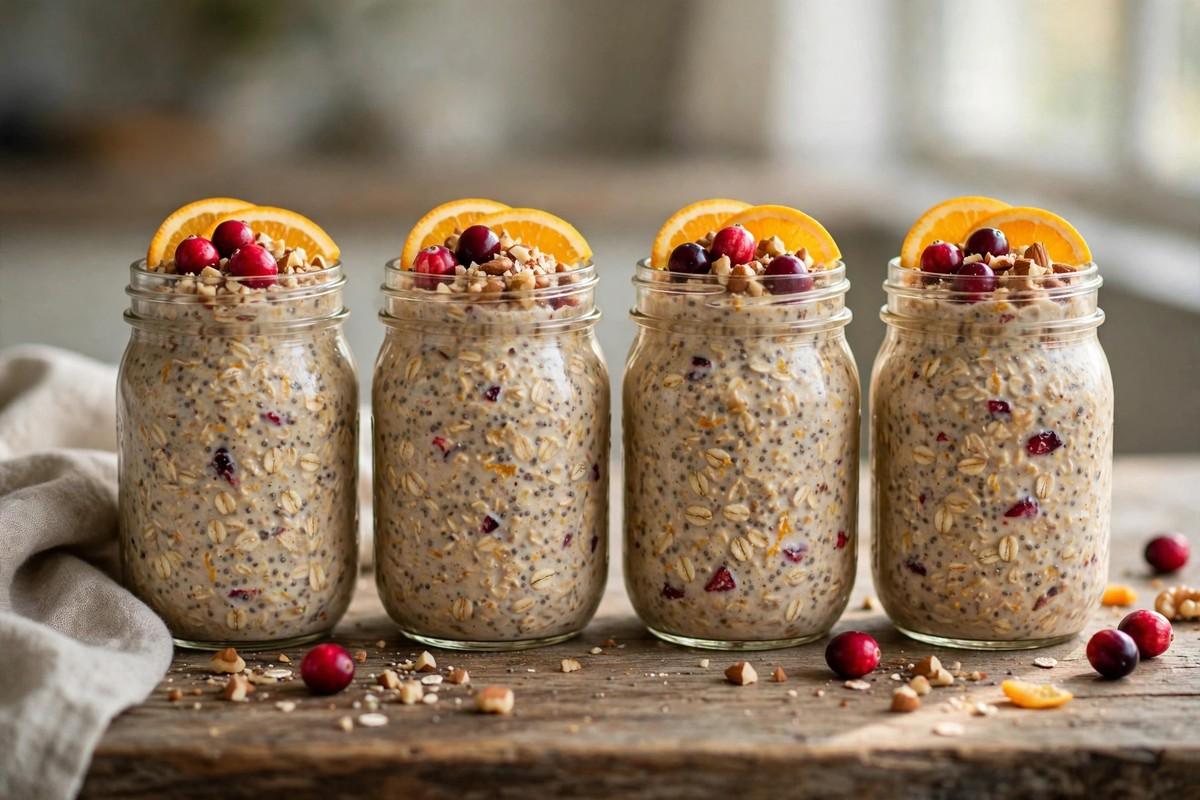
Not everyone wants a hot casserole at 8 a.m., and not every kitchen has spare oven space on Thanksgiving — the turkey usually claims it. Overnight oats need no oven at all, which makes them the quiet workhorse of the list. Combine rolled oats, milk, a spoonful of plain yogurt, dried cranberries, a drizzle of honey, orange zest, and a pinch of salt in mason jars, one jar per person. Stir well, cap, and refrigerate.
The ratio that holds up best is about half a cup of oats to two-thirds of a cup of liquid; go heavier on liquid if you like them loose. By morning the oats have softened into something creamy without ever seeing heat. Top each jar with a spoonful of toasted pecans or walnuts for crunch, and the contrast does all the work.
Use old-fashioned rolled oats, not instant — instant oats collapse into paste by morning. These keep two to three days in the fridge, so they can double as Friday’s breakfast too, when the leftover turkey coma sets in.
3. Savory Breakfast Strata
If French toast casserole is the sweet anchor, strata is its savory twin: cubed bread, whisked eggs and milk, and a filling of your choosing, all married together overnight. A classic Thanksgiving-morning version layers Italian sausage, sautéed mushrooms, and sharp cheddar. The meat matters less than the method — browned sausage, roasted vegetables, or wilted greens with gruyère all work the same way.
Two details separate a great strata from a soggy one. First, salt the custard properly — bland eggs are the most common complaint, and the bread soaks up seasoning along with everything else. Second, give it a full overnight rest, eight hours at least. The bread needs time to fully absorb the custard; a two-hour soak leaves dry patches.
Bake at 350°F for 45 to 55 minutes until puffed and browned, then let it rest ten minutes before cutting — it sets as it cools. A strata reheats better than almost anything on this list, so leftovers are genuinely welcome.
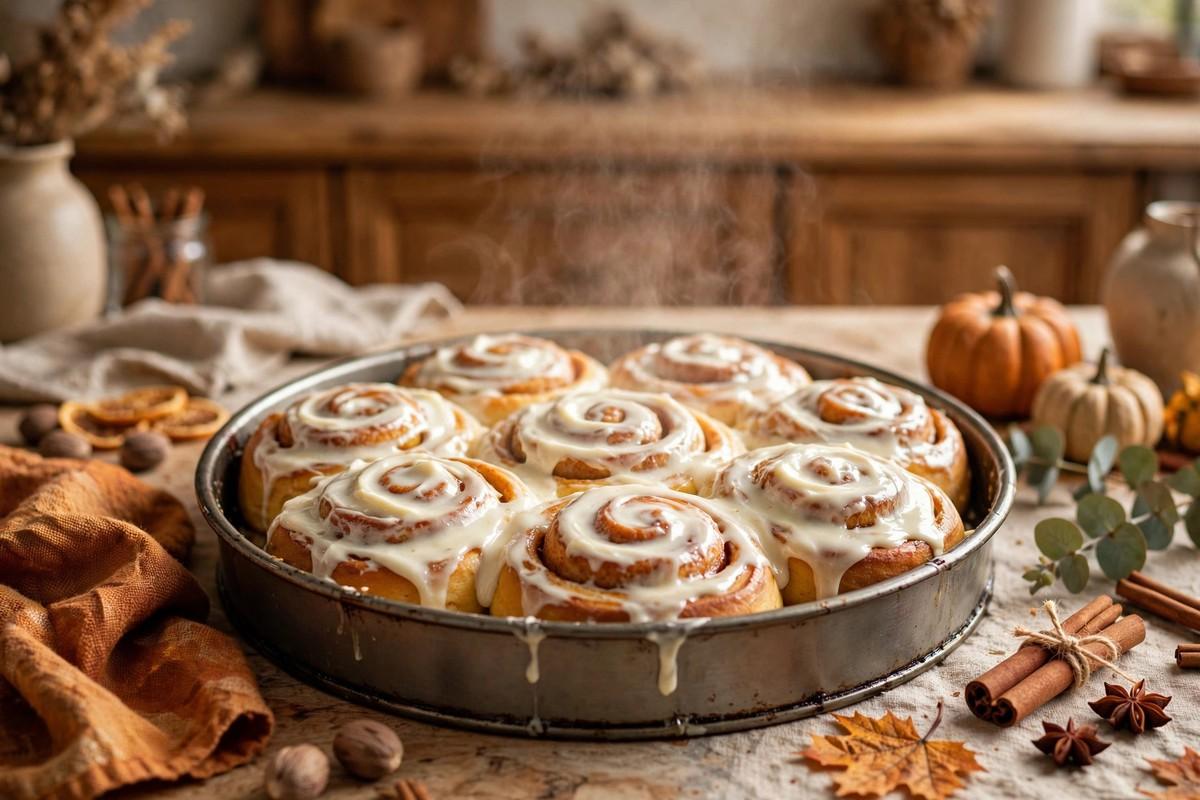
4. Overnight Pumpkin Cinnamon Rolls
Thanksgiving and cinnamon rolls have a longstanding arrangement, and the pumpkin version makes it official. The dough gets its color and moisture from pumpkin purée, plus cinnamon, ginger, and a little nutmeg in the filling. Here’s the make-ahead part that matters: you do every bit of the shaping on Wednesday. Roll, fill, cut, arrange in the pan, then cover tightly and refrigerate for the cold rise overnight.
The cold does something useful — it slows the yeast way down, so the rolls rise gently and develop more flavor than a same-day batch. In the morning, pull the pan out 30 to 45 minutes before baking so the dough loses its chill, then bake at 350°F for 25 to 30 minutes. Spread cream cheese frosting over the warm rolls and let it melt into the swirls.
A practical caution: seal the pan tightly with plastic wrap before refrigerating. Refrigerator air dries out exposed dough, and nothing deflates a morning like a crusty roll surface.
5. Sheet-Pan Sausage and Pepper Egg Bake
Feeding a crowd changes the math. Casserole dishes feed eight; a sheet pan feeds the whole extended family. Whisk a dozen and a half eggs with a cup of milk, then fold in browned breakfast sausage, diced bell peppers, a chopped onion, and shredded cheese. Pour it all into a parchment-lined half-sheet pan and you have breakfast for twelve to fifteen, cut into squares.
You have two make-ahead options. Assemble the whole thing raw the night before, cover, and refrigerate — it bakes straight from the fridge at 350°F in 25 to 30 minutes, though you may need to add five. Or bake it Wednesday evening, cool, cover, and refrigerate; reheat slices on a tray at 325°F for 12 to 15 minutes. Both work; the fully baked version frees your Thursday oven entirely.
Parchment is non-negotiable here — egg bakes weld themselves to bare sheet pans. And don’t crowd the vegetables too small; dice them a half-inch so they stay distinct instead of dissolving.
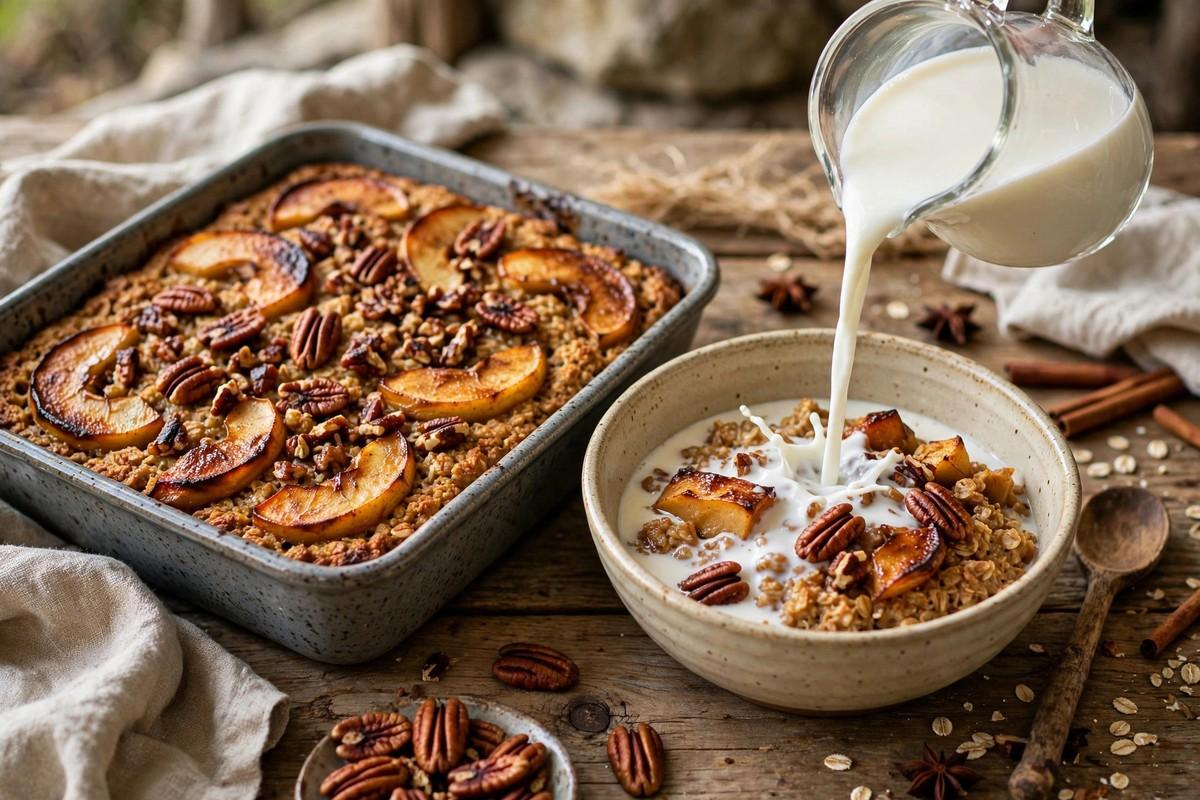
6. Baked Apple-Pecan Oatmeal
Regular oatmeal is a fine weekday breakfast. Baked oatmeal is a different animal: custardy in the middle, crisp-chewy on top, sliceable like a bar. Stir old-fashioned oats with milk, eggs, brown sugar, melted butter, cinnamon, diced apples, and a cup of toasted pecans, then bake in a 9×13 dish at 350°F for 35 to 40 minutes until the center is just set.
The make-ahead play is simple: bake it Wednesday evening and refrigerate the whole dish. Thursday morning, warm covered portions in a 325°F oven for 12 to 15 minutes — the foil keeps the top from over-browning — and serve with warm milk poured over each slice. The apples soften further overnight and the flavor actually deepens.
Firm, tart apples hold their shape best; Honeycrisp or Braeburn are the usual picks. Mealy apples disappear into the oats and you lose the texture contrast that makes this dish worth making.

7. Slow-Cooker Apple Butter
Some Thanksgiving mornings call for something to spread on toast while the big dishes bake. Apple butter cooks itself overnight in a slow cooker — roughly ten pounds of apples, quartered, plus brown sugar, cinnamon, and cloves, set on low for 8 to 10 hours. You wake up to a house that smells like October.
The beauty of this one is how little prep it needs. No peeling, no coring if you run it through a food mill or blend it smooth at the end — the slow heat breaks the apples down completely. Blend, then cook another hour with the lid ajar to thicken. Jar it warm and refrigerate; it keeps two to three weeks, so it covers the whole holiday weekend.
Use a mix of apple varieties rather than one type. A few tart ones among the sweet ones gives the butter dimension that single-variety batches lack.
8. Freezer-Ready Sausage and Cheese Biscuits
Biscuits from scratch on Thanksgiving morning sound heroic. They become practical when you freeze the dough raw. Make your biscuit dough Wednesday — flour, baking powder, cold butter cut in, buttermilk, shredded sharp cheddar, and crumbled cooked sausage folded through. Cut the biscuits, freeze them solid on a tray, then bag them.
Thursday morning, bake straight from frozen. Set them on a parchment-lined sheet, brush with a little melted butter, and bake at 425°F for 18 to 22 minutes — about five minutes longer than fresh biscuits need. No thawing, no guesswork, and the oven does everything.
The butter temperature is the whole game with biscuits. Keep it genuinely cold — cubes straight from the fridge, or even ten minutes in the freezer — so it steams in the oven and creates the layers. Warm butter makes flat, dense biscuits no technique can rescue.
9. Pumpkin Spice Granola
Granola is a background player that elevates everything around it — the parfaits, the yogurt bowls, the apple butter toast. Toss rolled oats with pumpkin seeds, chopped pecans, pumpkin purée, maple syrup, a little oil, and pumpkin pie spice until everything is evenly coated. Spread thin on a parchment-lined sheet and bake low, at 300°F, for 40 to 50 minutes, stirring once halfway.
The make-ahead window here is the widest on the list: two full weeks in an airtight jar, no refrigeration. Make a big batch the weekend before Thanksgiving and you’re set for the entire holiday stretch. For the big, bakery-style clusters, press the granola down firmly before baking and don’t stir it the second half — undisturbed edges are what form clumps.
Let it cool completely in the pan before breaking it up. Warm granola feels soft; the crunch arrives as it cools, and bagging it early traps steam that kills the crispness.
10. Make-Ahead Muffin Batter
Fresh-baked muffins on Thanksgiving morning, with zero morning prep — the batter does that. Certain batters actually improve with an overnight rest in the refrigerator. A sturdy bran batter or a cornmeal batter is ideal: the flour hydrates fully, the texture evens out, and you scoop and bake straight from the fridge.
Mix the batter Wednesday — wet ingredients into dry, stir just until combined, fold in cranberries or chopped pecans if you like. Cover the bowl and refrigerate. Thursday morning, portion into a lined muffin tin and bake at 375°F for 18 to 22 minutes. The cold batter takes a minute or two longer, and the tops dome beautifully.
Keep this trick to sturdier batters. Delicate, high-sugar muffin batters with lots of leavener can lose their lift after a long rest; dense, hearty ones only get better.
11. Baked Egg Muffin Cups
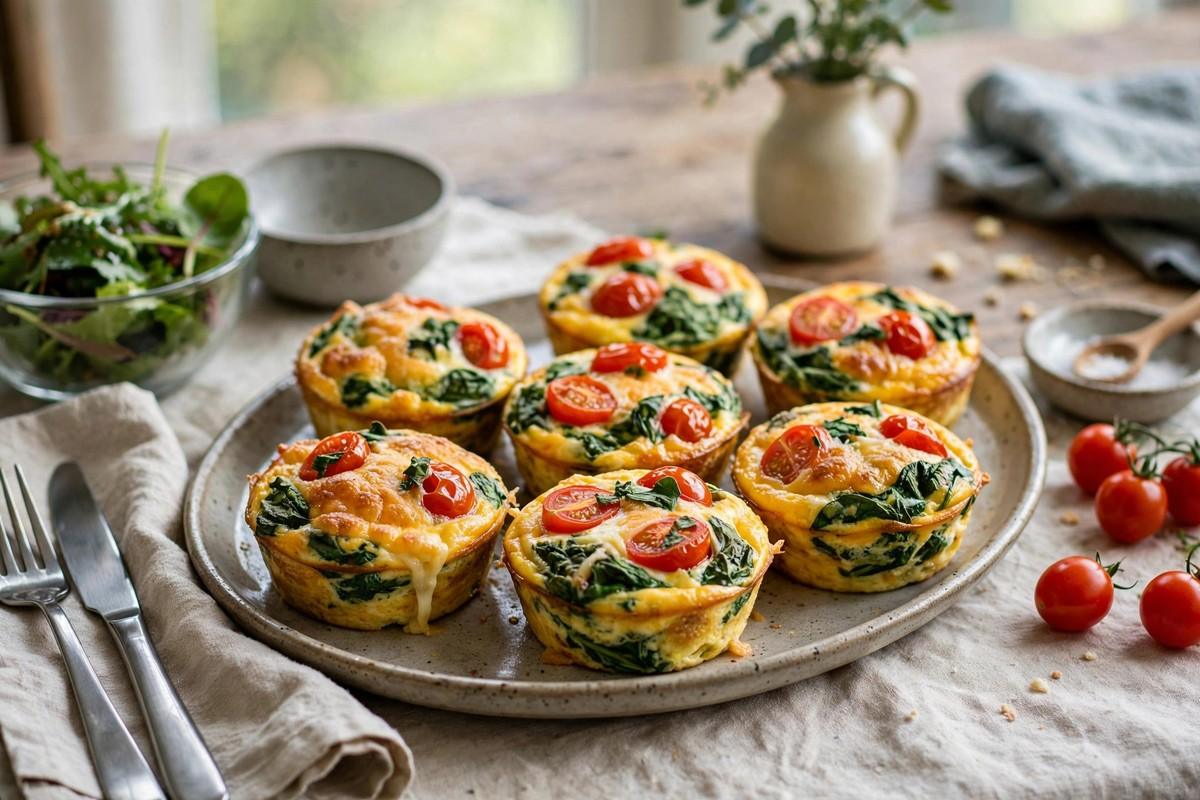
Individual egg cups solve the serve-yourself problem. Whisk eggs with a splash of milk, then divide diced vegetables and shredded cheese among the cups of a well-greased muffin tin — spinach and cherry tomato, mushroom and Swiss, ham and cheddar, whatever the crowd likes. Pour the egg mixture over, filling each cup about three-quarters full.
Bake at 350°F for 20 to 25 minutes until set and lightly golden. Cool completely, then refrigerate in a covered container — they keep three to four days. Thursday morning, warm them on a tray at 325°F for about ten minutes, or microwave a few at a time for the early risers. They’re equally good at room temperature, which matters when people drift in at different hours.
Greasing is the step people underdo. Use a generous coat of butter or cooking spray, or line with parchment cups — baked egg bonds to bare metal with real commitment.
12. Cranberry Chia Seed Pudding
Chia pudding sounds like a health-store cliché until you make it with cranberry compote and serve it in small glasses. Whisk chia seeds into milk with maple syrup and vanilla — roughly a quarter cup of seeds per cup of milk — then whisk again after ten minutes. That second whisking is the crucial step; it’s what stops the seeds from settling into clumps.
Refrigerate overnight in individual jars or glasses. By morning the seeds have swelled into a thick, spoonable pudding. Spoon a layer of cranberry sauce or cranberry compote over each one — the tart, jammy layer against the mild pudding is the whole appeal — and top with a few crushed pistachios or a mint leaf if you’re garnishing.
Any milk works, dairy or otherwise, though richer milks give a creamier set. The pudding keeps two to three days, so it’s one of the few things you can make Tuesday and forget about entirely.
13. Overnight Yogurt Parfait Jars
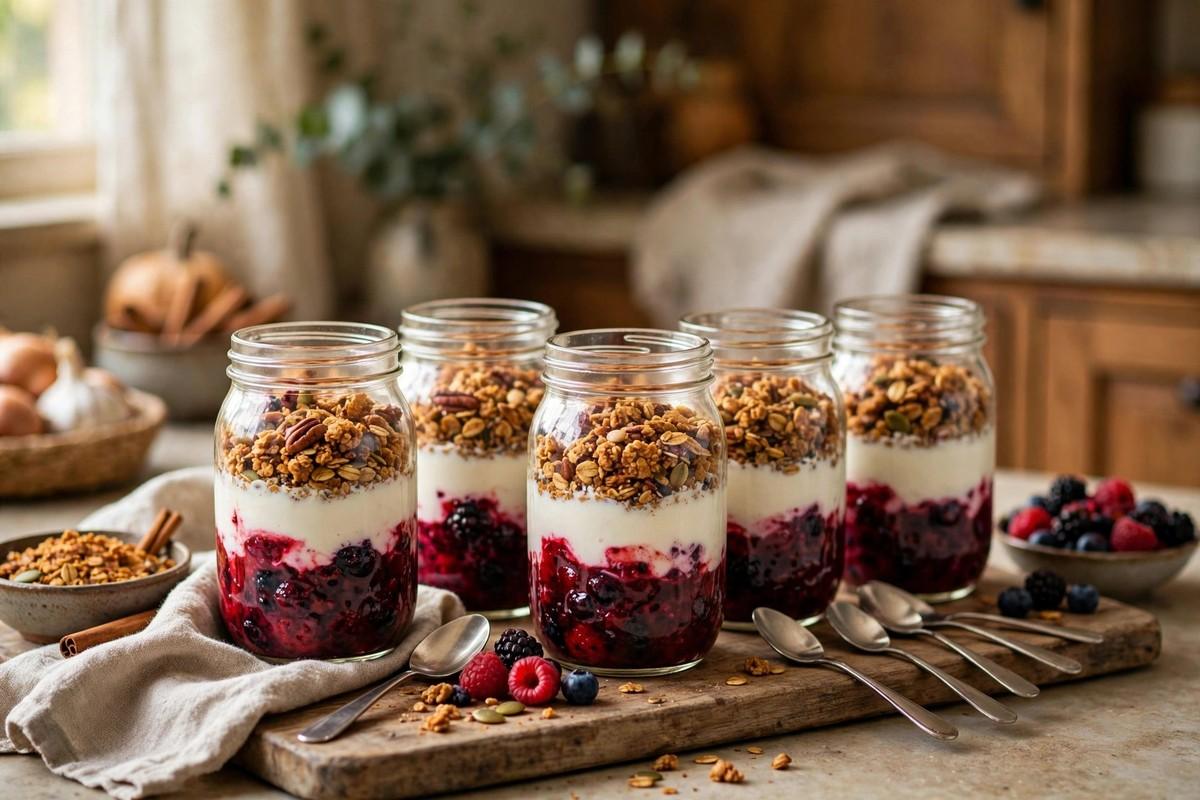
Parfaits are the assemble-your-own breakfast that requires no cooking at all. The night before, layer cranberry or berry compote at the bottom of mason jars, add thick Greek yogurt, and cap them. That’s the whole prep. The granola stays in a separate jar or bag until serving — that’s the rule that keeps it crunchy.
Thursday morning, set out the jars, the granola, and a bowl of fresh berries, and let everyone build their own. Some people want all yogurt, some want a parfait tower; the format absorbs every preference without extra work. A drizzle of honey and the pumpkin spice granola from earlier in this list make the standard version feel seasonal.
Use full-fat or 2% Greek yogurt rather than the thin regular kind — it holds its layers overnight instead of weeping liquid into the compote. If you only have regular yogurt, a spoonful of cream cheese beaten in will firm it up.
14. Slow-Cooker Cinnamon Apples
This is the universal topping — the one dish on the list that improves four others. Slice firm apples thick, toss them with brown sugar, cinnamon, a pinch of nutmeg, and a few tablespoons of butter, and cook on low in the slow cooker for 3 to 4 hours, or overnight on the warm setting if your cooker runs low enough. The apples collapse into a glossy, fragrant compote.
Spoon it over the baked oatmeal, the French toast casserole, plain pancakes, or a bowl of yogurt. It’s the kind of thing guests assume took hours — technically true, but the hours were the slow cooker’s, not yours. Leftover cinnamon apples are excellent over vanilla ice cream later in the weekend.
Cut the apples in thick wedges, not thin slices. Thin slices disintegrate into sauce; thick wedges stay tender but intact, which is what you want for spooning over things.
Fourteen breakfasts, and not one of them asks you to wake up before the coffee’s done. The through-line is simple: Wednesday night does the work, Thursday morning reaps it. Whether it’s the overnight soak of a French toast casserole, the slow cold rise of pumpkin cinnamon rolls, or a jar of oats that needed nothing but a stir, the strategy is the same — prepare when you have time so you can enjoy the morning when you don’t. Pick two or three that fit your crowd, prep them the night before, and Thanksgiving morning becomes what it should be: unhurried.
Frequently Asked Questions
How far ahead can you make Thanksgiving breakfast?
It depends on the dish. Assembled casseroles and stratas hold 24 hours in the refrigerator before baking — longer than that and the texture starts to suffer. Overnight oats, chia pudding, and parfait jars keep two to three days. Baked goods like granola hold two weeks in an airtight container at room temperature, and raw biscuit dough freezes well for up to a month. The sweet spot for most of the list is Wednesday night: everything on it is designed around a single overnight hold.
Can you reheat a breakfast casserole without drying it out?
Yes, with a little care. Cover the dish tightly with foil and reheat at 325°F for 15 to 20 minutes, until warmed through. The foil traps steam and keeps the top from hardening. For extra insurance, sprinkle a tablespoon or two of milk over the casserole before covering it — the liquid absorbs as it warms. Avoid the microwave for whole casseroles; it heats unevenly and leaves rubbery edges. Individual slices are fine to microwave, covered, for a minute or so.
What is the best make-ahead breakfast for a big crowd?
A sheet-pan egg bake or a full 9×13 strata, simply because of the math — one pan feeds twelve to fifteen people with a single trip to the oven. Both can be assembled raw the night before or baked the evening before and reheated, so neither competes with the turkey for oven space. For crowds with mixed appetites, pair one hot pan with a no-cook option like overnight oats or parfait jars, and every schedule and preference is covered.
How do you keep overnight oats from getting mushy?
Start with old-fashioned rolled oats — instant oats turn to paste overnight. Keep the oat-to-liquid ratio around one part oats to one-and-a-quarter parts liquid, and add a spoonful of chia seeds or yogurt, both of which thicken without thinning the texture. Add delicate fruit and nuts in the morning rather than the night before, since berries break down and nuts go soft in liquid. Stored properly, they’re at their best between 8 and 24 hours.
Should Thanksgiving breakfast be light since dinner is the big event?
A moderate breakfast beats both extremes. Skipping it leaves a hungry, impatient crowd grazing on appetizers all afternoon, while a heavy feast of your own spoils the main event. Aim for mid-morning — around 9 or 10 — and lean toward protein-forward dishes like egg bakes, strata, and yogurt parfaits, which keep people satisfied for hours without the post-sugar-crash dip. Save the cinnamon rolls for the crowd that insists; one sweet option alongside the savory ones is the right balance.