Thanksgiving Sides Planned Around One Small Oven: A Timing Plan That Fits
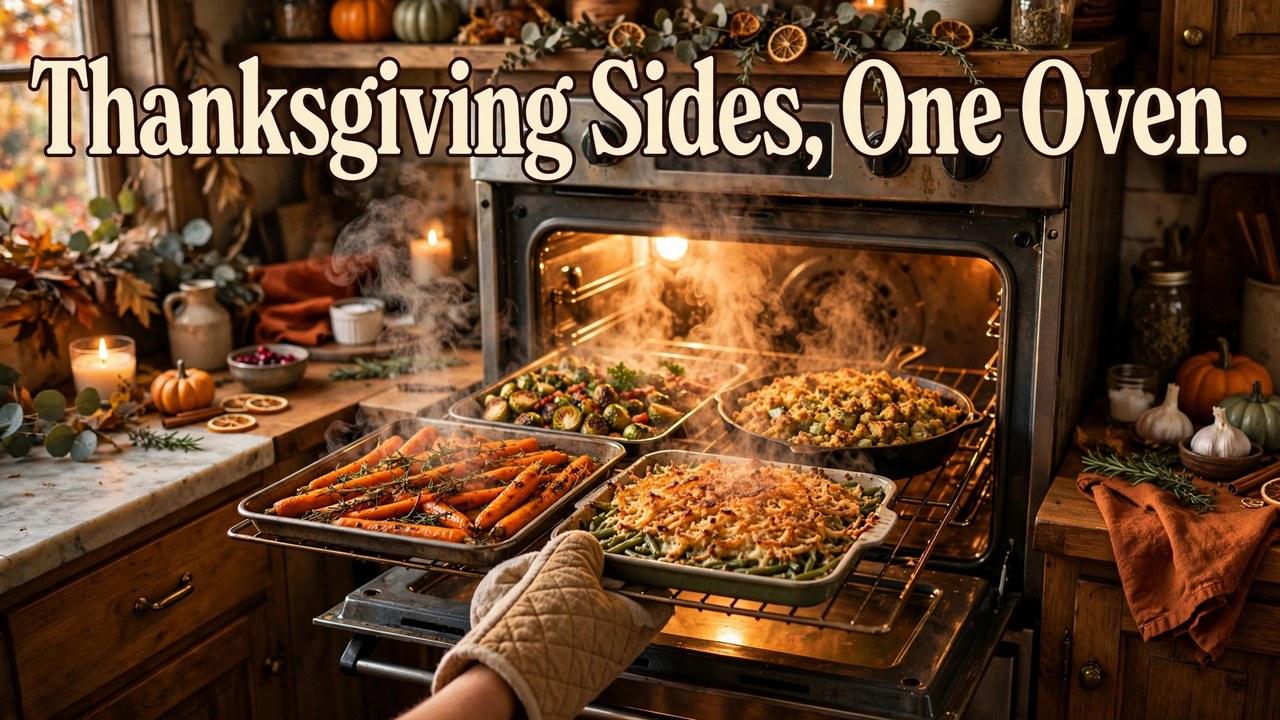
Here’s the short version of this thanksgiving sides small oven timing plan: the turkey owns the oven all morning, starchy sides go in the moment it comes out to rest, vegetables and rolls share whatever space is left, and anything that can be made a day ahead already is. Thanksgiving from a rental with a 24-inch oven that barely fits a 12-pound bird can still land on the table hot. The trick was never more oven. It was a strict order and no improvising after 10 a.m.
A small oven doesn’t change what’s possible so much as it forces you to sequence like you mean it. You get one rack that works well and a second one that’s just close enough to the element to make you nervous. Once that constraint is accepted, everything else —” the pans, the timing, the reheats —” falls into place.
The day-of bake order: what goes in, and when
Start with the turkey, obviously, because it won’t budge. While it roasts for three-plus hours, the oven is a single-occupant room and you should plan the rest of your day around that fact. Everything that can’t tolerate a lukewarm hold goes in after the bird comes out.
Here’s the order that works reliably: turkey out at roughly 1 p.m. (or whenever your bird’s done), then the stuffing and mac and cheese go in first since they need a solid 30—“40 minutes and can hold heat the longest. While those bake, you build your pan of roasted vegetables. When the starches come out at about 1:40, the vegetables go in for their 25 minutes. Rolls slide in beside the vegetables for the last 12—“15 minutes if there’s room —” and if there isn’t, they go on the counter next to everything else and you call it good.
That sequence works because it front-loads the dishes that stay hottest the longest. Stuffing and mac and cheese hold beautifully under foil; roasted carrots cool off and get sad fast. Put the fragile things last.
One more thing: write the times on a sticky note and stick it to the fridge. Not because you’ll forget, but because someone will ask “can I put my pie in?” at exactly the wrong moment, and a written plan is a lot easier to defend than a memory.
Which sides can share the oven (and which shouldn’t)
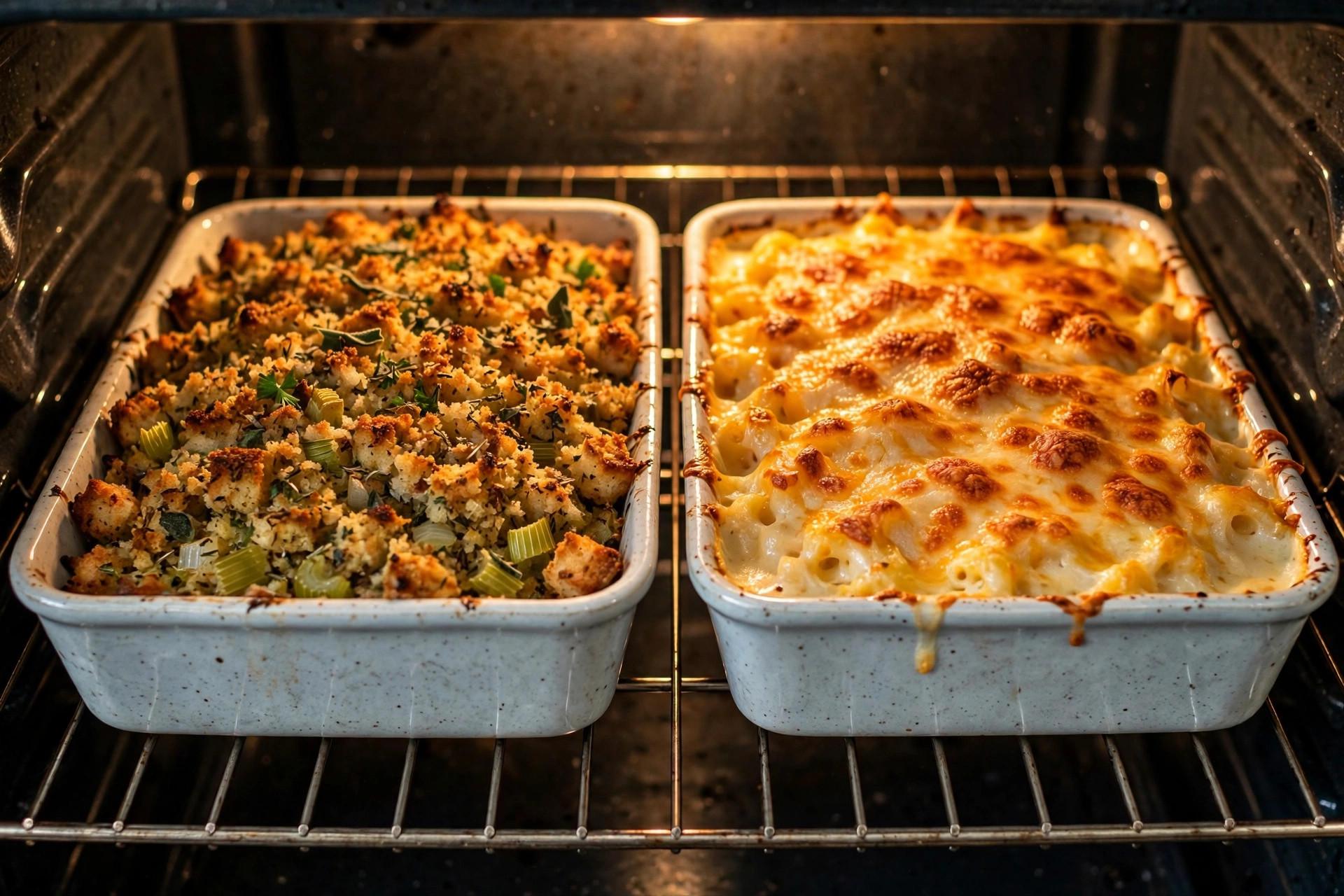
Two dishes can share a small oven if they’re within about 25 degrees of each other’s target temperature. Mac and cheese at 350°F and stuffing at 350°F are a natural pair. Green bean casserole at 350°F can join them too —” three 8×8 pans actually fit on one rack of a standard oven if you turn them sideways (measure the week before; it feels ridiculous until it saves dinner). Measure anyway.
Don’t pair a custardy dish with a high-heat roast. Sweet potato casserole with a marshmallow top wants steady moderate heat; shove it in next to Brussels sprouts at 425°F and the marshmallows will brown in six minutes while the center stays lukewarm. The host then spends ten minutes apologizing for a dish nobody actually cared about.
The honest rule: casseroles share with casseroles, roasts share with roasts, and rolls are freeloaders who’ll take any leftover corner at 350—“375°F. If a dish has a dairy-heavy sauce or an egg-based custard, give it its own bake window. Those are the ones that punish temperature compromises.
Downsize the pans before you downsize the menu
The biggest mistake I see in small-oven Thanksgivings is full 9×13 pans for everything. A 9×13 of mac and cheese is dinner for twelve; if you’re feeding six, that pan is eating your oven real estate for no reason. An 8×8 feeds about six as a side, bakes a little faster, and leaves room for a second pan beside it.
Go buy two 8×8 ceramic bakers and one 9×13 if you don’t already own them —” most of your sides will live in the 8x8s on the day. Quarter-sheet pans (9×13 inches, rimmed) are the real workhorses though. Two of them stack in one oven at different rack positions, and roasted vegetables spread thinner on a quarter sheet actually crisp instead of steaming. Crowded vegetables are the difference between caramelized and soggy, and it’s purely a pan-density problem. If you want more combinations to fill those pans, these roasted veggie bowl ideas translate well to a holiday table —” just skip the grain bowls and roast the vegetables straight.
Cast iron skillets earn their keep here too. A 10-inch skillet of cornbread or a skillet of Brussels sprouts goes from stovetop sear to oven finish without occupying a rack with a trivet dance. And skip the disposable foil pans if you can —” they’re flimsy, they heat unevenly, and they warp, which makes them worse neighbors for other pans. If you must use them, set each one on a real sheet pan so it doesn’t buckle mid-transfer.
What to make ahead (and what to leave alone)
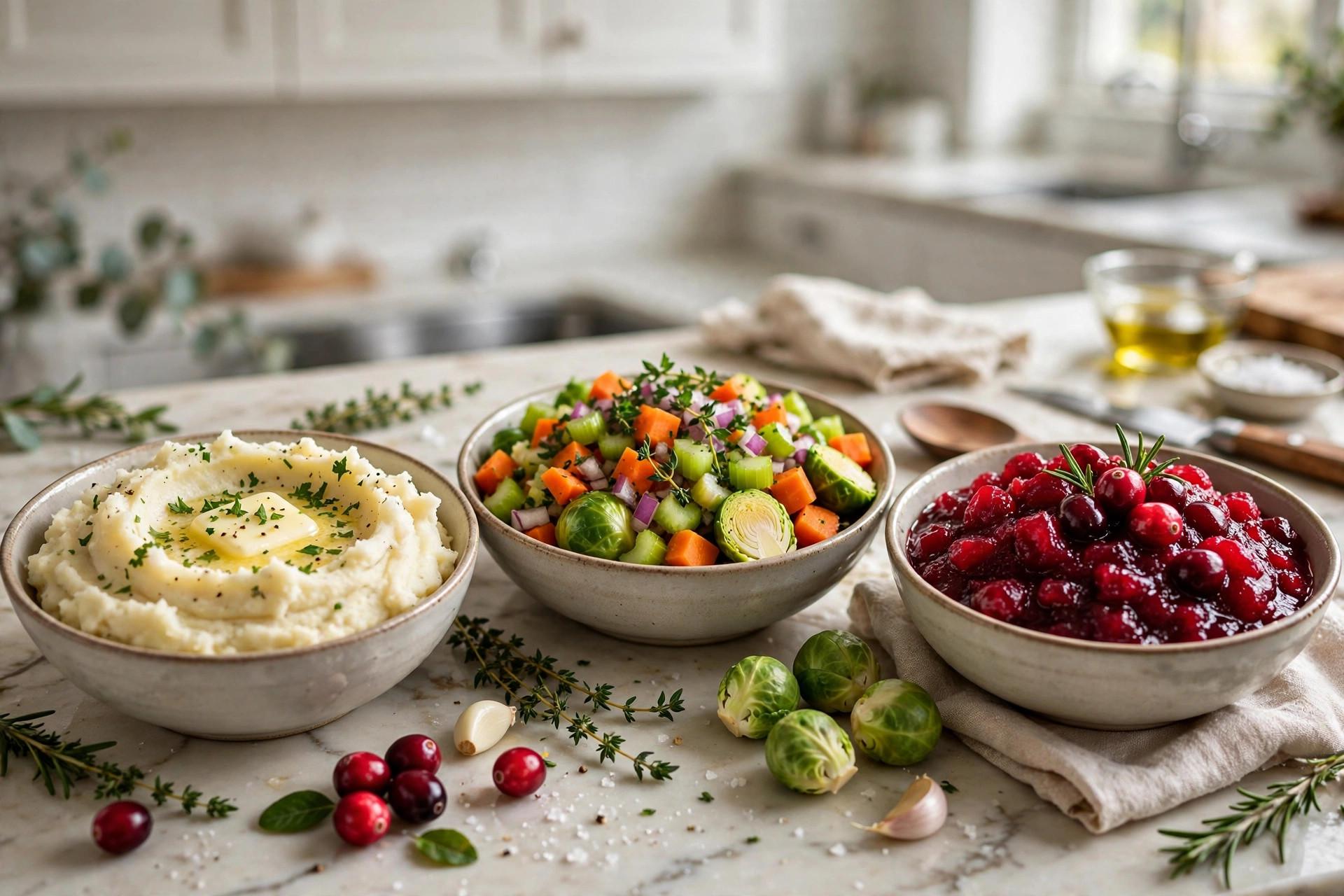
Mashed potatoes are the king of make-ahead sides. Make them fully the day before —” butter, cream, salt, the whole thing —” then reheat in a covered pot over low heat with a splash of milk, stirring until they’re smooth again. They come back to about 95% of fresh, which nobody at a noisy table will notice.
Stuffing components can be prepped ahead even when the assembled dish can’t: dry the bread cubes overnight, cook the celery and onion and sausage the day before, refrigerate, then toss and bake on the day. Green bean casserole’s mushroom base reheats fine; add the fried onions on the day or they’ll go limp. Cranberry sauce is better on day two and needs no oven at all, which is exactly the kind of side a small oven loves.
What not to make ahead: anything fried, anything with a crisp topping that’s meant to be eaten crisp, and roasted vegetables. Roasted vegetables are a same-day dish, full stop. You can chop them the night before —” big bags of cut carrots, parsnips, Brussels halves —” but the roasting happens on Thursday. Reheated roasted vegetables taste like a compromise, and Thanksgiving has enough of those already.
Holding and reheating without drying everything out
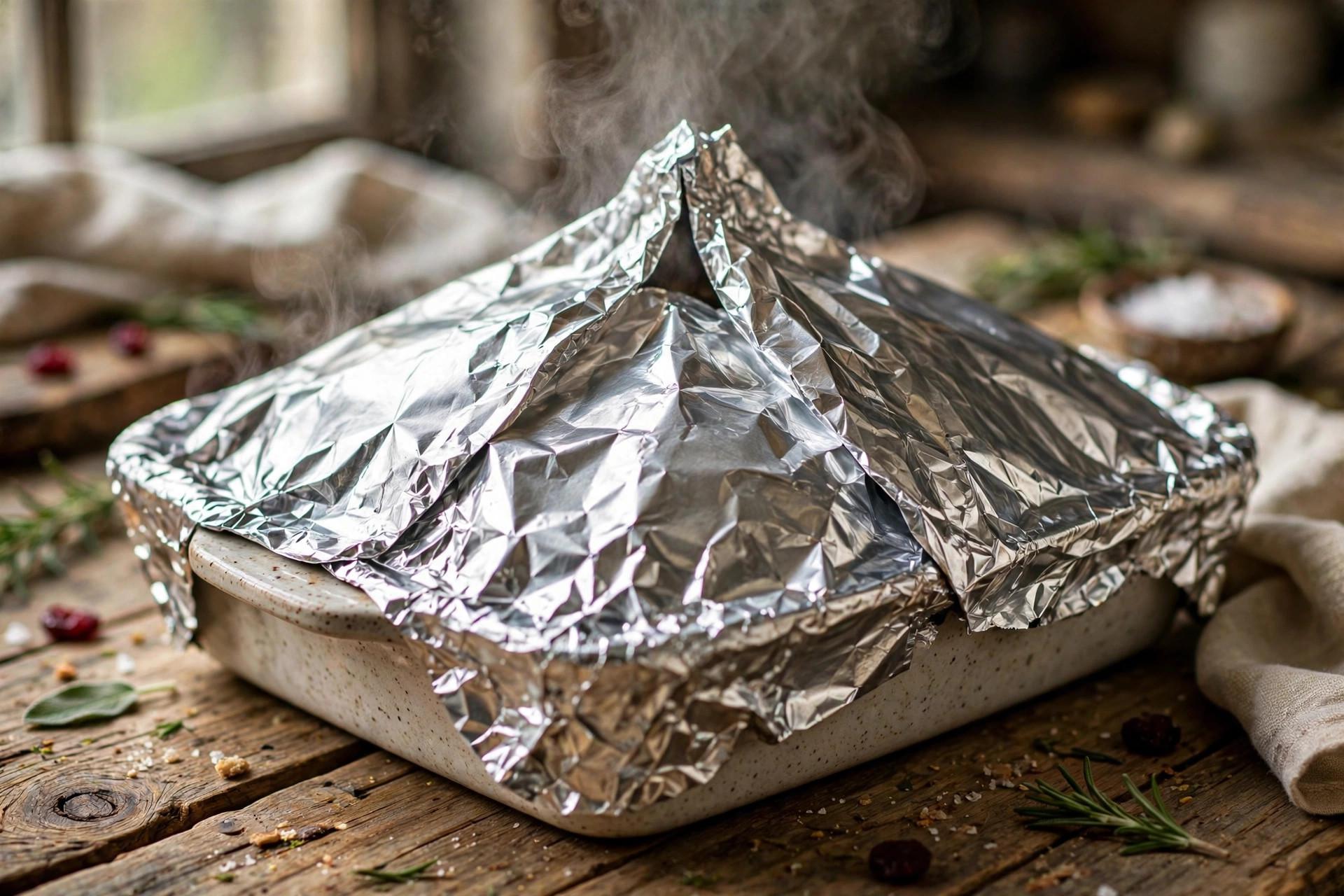
Here’s the part that makes or breaks the day: once a dish leaves the oven, you need to hold it for 30 to 60 minutes while everything else finishes. Foil is your best friend. Tent casseroles tightly in foil and they’ll stay serving-hot for about 45 minutes; leave them untented on the counter and they start cooling immediately.
For food safety, keep this practical rule in mind: hot food shouldn’t sit at room temperature for more than about two hours total, and cold dishes shouldn’t either. That window is usually plenty if you’re eating within an hour of the last dish coming out. If dinner’s running late —” it happens —” a 200°F oven turns any finished dish into a safe holding zone, though breads and anything with a crisp top will soften in there. Prioritize holding the dense, saucy dishes and let the rolls fend for themselves; rolls are fine at room temp.
Reheating dried-out sides is a rescue operation, not a plan, but here’s the kit anyway: a splash of broth revives stuffing, a knob of butter plus a lid revives mashed potatoes in the microwave, and a few minutes under a hot broiler re-crisps gratins that went soft. Sprinkle a tablespoon or two of water over rice or grain sides before covering and reheating —” the steam does the work the oven won’t.
Get dishes off the oven’s back entirely
The real secret of a small-oven Thanksgiving isn’t better oven math. It’s getting three sides to never touch the oven at all. Mashed potatoes live on the stovetop. Gravy lives on the stovetop. Cranberry sauce is made Wednesday and sliced cold. A slow cooker holding green beans or keeping mashed potatoes warm is a second appliance doing real work —” set it to warm (not low, which can keep cooking) and it’s a heated serving dish for two hours.
The microwave is not the enemy here either. Nobody’s suggesting you microwave the turkey, but reheating the small bowl of gravy you set aside, or warming rolls for 20 seconds in a damp towel, is completely fine. Use it for the last-mile stuff so the oven stays reserved for the dishes that actually need dry heat.
And the grill —” if you have one and the weather cooperates —” roasts vegetables beautifully at 400°F-ish indirect heat. That’s one full oven cycle you don’t have to schedule. Brussels sprouts on a gas grill come out better than the oven versions because the heat is fiercer.
The trade-off most guides skip
Every guide pretends you can have it all. Here’s the honest trade-off: the more from-scratch sides you attempt, the more oven cycles you need, and in a small oven those cycles are the scarce resource. A fourth casserole doesn’t just add 35 minutes of baking —” it adds 35 minutes of holding for everything else, plus the cooling, plus the stress. At some point the marginal side makes the whole meal worse.
The rule: four oven sides, maximum. Two starches, one vegetable roast, one wild card. Everything else is stovetop, slow cooker, or cold. Six baked sides in a little rental oven means dinner 90 minutes late, with the rolls the only thing served hot —” because they’re the only thing anyone remembers. Fewer dishes, all hot, beats an ambitious menu where half of it arrives lukewarm.
The key lesson: stop trying to serve everything simultaneously piping hot. It’s a fantasy. Serve the turkey hot, serve two sides hot, and let the rest be warm. Warm food eaten together beats hot food eaten in shifts, and nobody —” nobody —” has ever complained that the cranberry sauce was room temperature.
A sample timeline for a 2 p.m. dinner
Putting the whole thanksgiving sides small oven timing plan on one clock, assuming the turkey needs the oven until about 1 p.m. (If you’re cooking for two, run this timeline alongside the small-batch Thanksgiving sides guide so the portions match the schedule.)
Wednesday evening: Make cranberry sauce. Dry bread cubes for stuffing. Chop all vegetables and bag them. Make mashed potatoes fully and refrigerate.
Thursday 9 a.m.: Turkey in. Assemble stuffing (don’t bake), assemble green bean casserole base, grate cheese for mac and cheese.
1 p.m.: Turkey out, tent with foil to rest. Stuffing and mac and cheese in at 350°F.
1:35 p.m.: Starches out, tented in foil. Roasted vegetables in at 425°F. Mashed potatoes start reheating on the stovetop; gravy reheats in a saucepan.
2:00 p.m.: Vegetables out. Rolls in for 12 minutes if there’s room —” or serve at room temp and skip the stress.
2:10 p.m.: Carve, plate, sit down.
That leaves you about 30 minutes of buffer for the turkey running long, because turkeys always run long. The plan absorbs it: everything after the turkey just shifts, and the make-ahead dishes don’t care when they get reheated.
If oven space is the real bottleneck, these cold Thanksgiving potluck dishes that need no reheating free up the oven entirely.
Bringing kids? Set them up at their own table with low-mess Thanksgiving kids’ table craft paper so they stay busy (and clean).
Yes — most of them, and you should. Mashed potatoes, cranberry sauce, stuffing components, and casserole bases all hold well overnight in the fridge. Roasted vegetables and anything with a crisp topping are the exceptions; make those on the day.
If both dishes want temperatures within about 25 degrees of each other, they can share. Most casseroles bake happily together at 350°F. Don’t pair a custard or dairy-heavy bake with a high-heat roast — one of them will suffer.
Tent casseroles tightly in foil and they’ll hold heat for roughly 45 minutes. A slow cooker set to warm works as a heated serving dish, and dense sides like mashed potatoes reheat well on the stovetop with a splash of milk or broth.
Make them fully up to two days ahead and refrigerate in a covered container. Reheat gently on the stovetop over low heat with a little extra milk or butter, stirring until smooth. Keep cold mashed potatoes refrigerated and don’t leave them out at room temperature for more than about two hours.
An 8×8-inch baker is the sweet spot for most sides feeding four to six people — it bakes a bit faster than a 9×13 and leaves room for a second pan. Quarter-sheet pans are best for roasted vegetables since spreading them thin is what makes them crisp.