

12 Cozy Christmas Mantel Decor Ideas That Feel Festive, Not Fussy
12 Cozy Christmas Mantel Decor Ideas That Feel Festive, Not Fussy
The mantel is the one surface in the house that practically asks to be decorated in December. It sits at eye level, it frames the fireplace — or the wall where the fireplace would be — and everyone who walks into the room looks at it first. A good Christmas mantel doesn’t need to be symmetrical, expensive, or coordinated down to the last pinecone. It needs warmth: greenery that looks freshly cut, light that glows instead of glares, and a few personal touches that suggest someone who lives here had fun putting it together.
That is the whole philosophy behind the twelve ideas below. Nothing here requires a craft room, a ladder, or a trip to three different stores. Most of them start with a simple garland and build in layers — lights, stockings, candles, something dried or natural — so you can stop at any point and the mantel still looks finished. The fuss-free part is real: every idea accounts for pets, small children, and the reality that you will be the one dusting it in January.
Think of this less as a set of instructions and more as a menu. Pick three or four that suit your mantel and your mood, layer them the way that looks right to your eye, and leave the rest for next year.
1. Start With a Base of Fresh Cedar and Pine
Everything good on a mantel starts with a generous garland, and cedar mixed with pine looks the most natural. Cedar drapes in soft, flat sprays that fall over the mantel edge; pine fills the gaps with denser, shorter needles. A six-foot mantel usually takes about nine feet of garland so the ends can swoop down each side.
Lay the garland on the mantel first and step back to look at it bare. Fluff the branches outward so it reads full rather than flat, and let a few sprigs hang over the front edge — that overlap keeps it from looking machine-placed. With fresh garland, keep it away from direct heat; a working fireplace dries cedar out fast, and dry greenery near flames is a risk worth avoiding.
Good faux garland has come a long way for a longer-lasting option. Look for mixed textures — one uniform green still reads fake from across the room — and bend wired branches into irregular shapes rather than one smooth wave.
2. Weave Warm Fairy Lights Into the Greenery
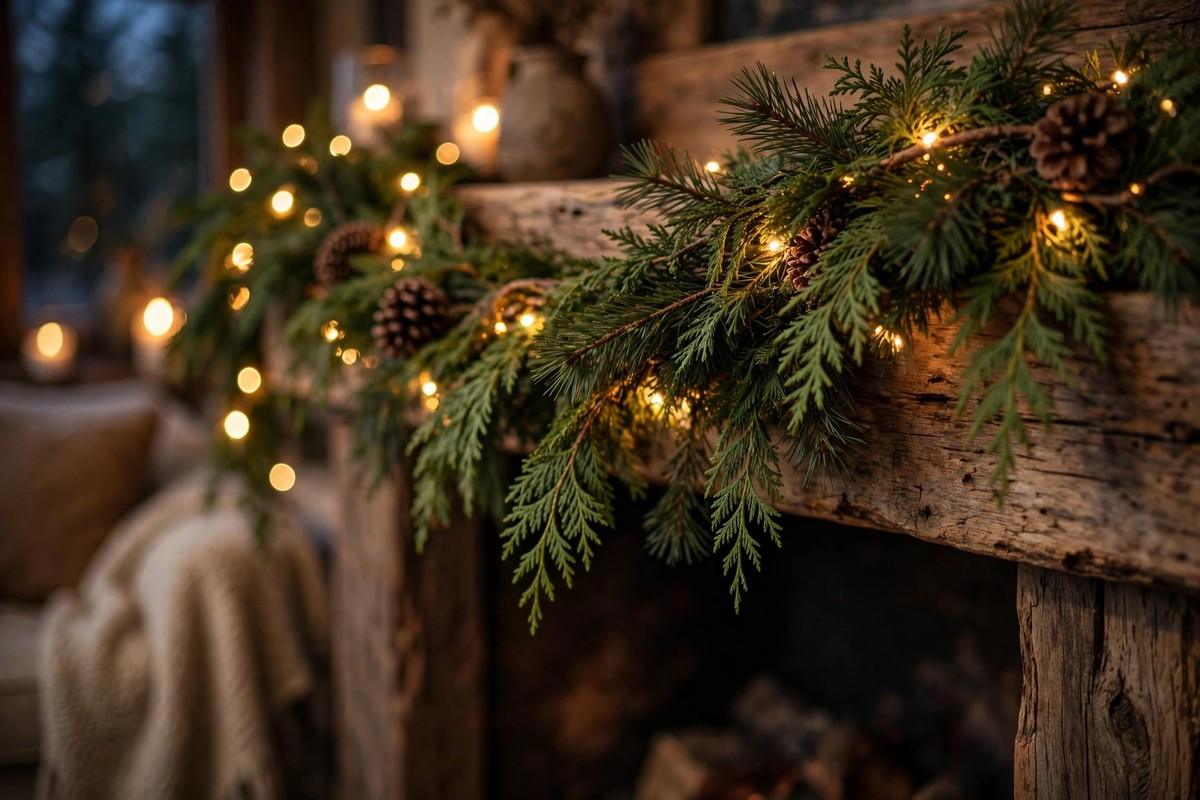
Fairy lights — the tiny battery-operated strands on hair-thin wire — do more for a mantel than any single ornament. Tuck the strand deep inside the garland so the bulbs hide and only the glow shows through the needles. Two strands of fifty lights each is usually plenty for a standard mantel; more than that and the effect stops being cozy and starts being showroom.
Stick with warm white, in the 2700K range if the packaging says. Cool white lights turn greenery blue-tinged and clinical, which is exactly the wrong mood for a room lit by a fireplace. Run the wire from the back of the garland so no battery pack sits visible on the mantel — hide it behind a candle or a small pile of pinecones at one end.
Set them on a timer if yours has one. Six hours of evening glow is the sweet spot: the mantel lights itself at dusk, and you never have to remember to turn it off before bed.
3. Hang Stockings That Don’t Match
A row of identical stockings reads like a store display. A row of stockings in different colors, textures, and sizes reads like a family. Cable-knit wool in cream, a velvet one in forest green, an old red one that has been in the family for years — the mismatch is the charm, and it is also the easiest way to make a mantel look collected rather than purchased.
The trick is keeping one thing consistent while everything else varies. Same general size works well, or a limited palette of two or three colors — red, green, and cream can each appear in completely different fabrics and still hang together. When stockings share a color family, different textures look intentional instead of accidental.
Leave the loop or hanging tab long enough that the stocking hangs with its cuff visible. Short loops bury the stocking’s top inside the garland, which wastes the best-looking part.
4. Use Holders That Can Actually Carry the Weight
A filled stocking is heavier than people expect — a couple of pounds once it is stuffed — and nothing ruins the look faster than a stocking holder that creeps forward and crashes onto the hearth. Weighted holders with a low, wide base grip a mantel shelf far better than tall, decorative ones, which act like levers and tip easily.
Test them before the big day. Hang the stockings, fill them with the actual contents, and leave them overnight. If a holder walks forward even a little, move it farther back on the shelf or swap it out. Adhesive hooks rated for the weight are a decent alternative on smooth mantels, but they need a clean, dry surface and a full day to cure before you trust them.
And if the fireplace gets used regularly, hang stockings from hooks mounted on the mantel face or the wall below, not from the shelf edge — stockings and live flames are a combination to keep apart.

5. Cluster Brass Candlesticks in Odd Numbers
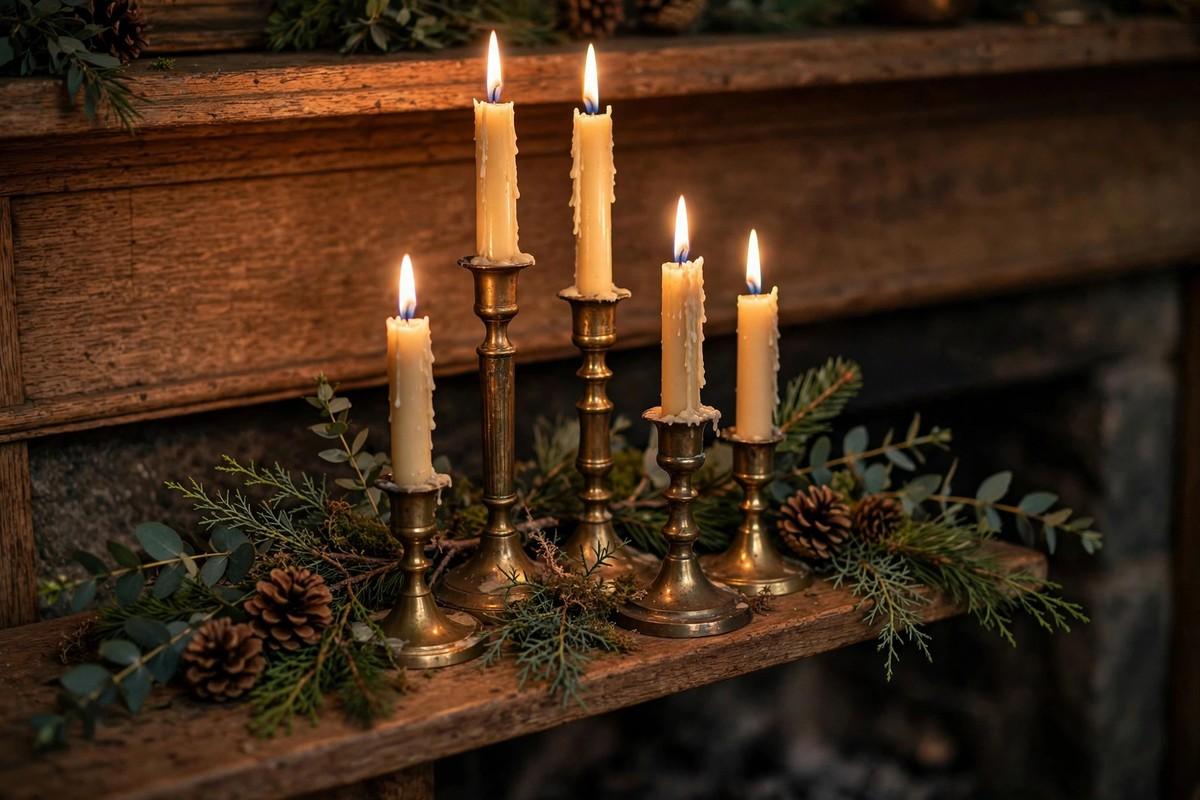
A group of brass candlesticks in different heights is one of those arrangements that looks considered without requiring any particular skill. Three or five is the classic count — odd numbers break up the symmetry the eye expects, which is what makes the cluster feel gathered rather than arranged. Tarnished brass is fine, even preferable; it catches candlelight in a warmer way than polished metal.
Keep the heights close enough to read as a group — six to twelve inches apart at most — and push the cluster toward one end of the mantel rather than centering it. Centered candle groups split the mantel in half visually; pushed to one side, they leave room for the garland and stockings to breathe.
Stick to one candle color throughout, cream or ivory. Colored tapers in a brass cluster fight the metal for attention, and the brass is doing enough work on its own.
6. Leave the Other End Mostly Empty
This is the idea people resist, and it is the one that makes everything else look better. Once the candles sit at one end, resist filling the opposite end with a matching cluster. Negative space — plain mantel, a few inches of visible shelf — is what keeps a decorated mantel from tipping into clutter.
One small thing on the quieter end is plenty: a single pinecone, a short stack of old books tied with twine, a small framed photo. The contrast between the full end and the calm end creates the rhythm the whole mantel runs on. Without that pause, every element competes and nothing stands out.
If the asymmetry feels wrong at first, give it a day. Most mantels look best slightly off-balance — centered arrangements read formal, and formal was never the goal here.
7. String Dried Orange Slices for Old-Fashioned Color
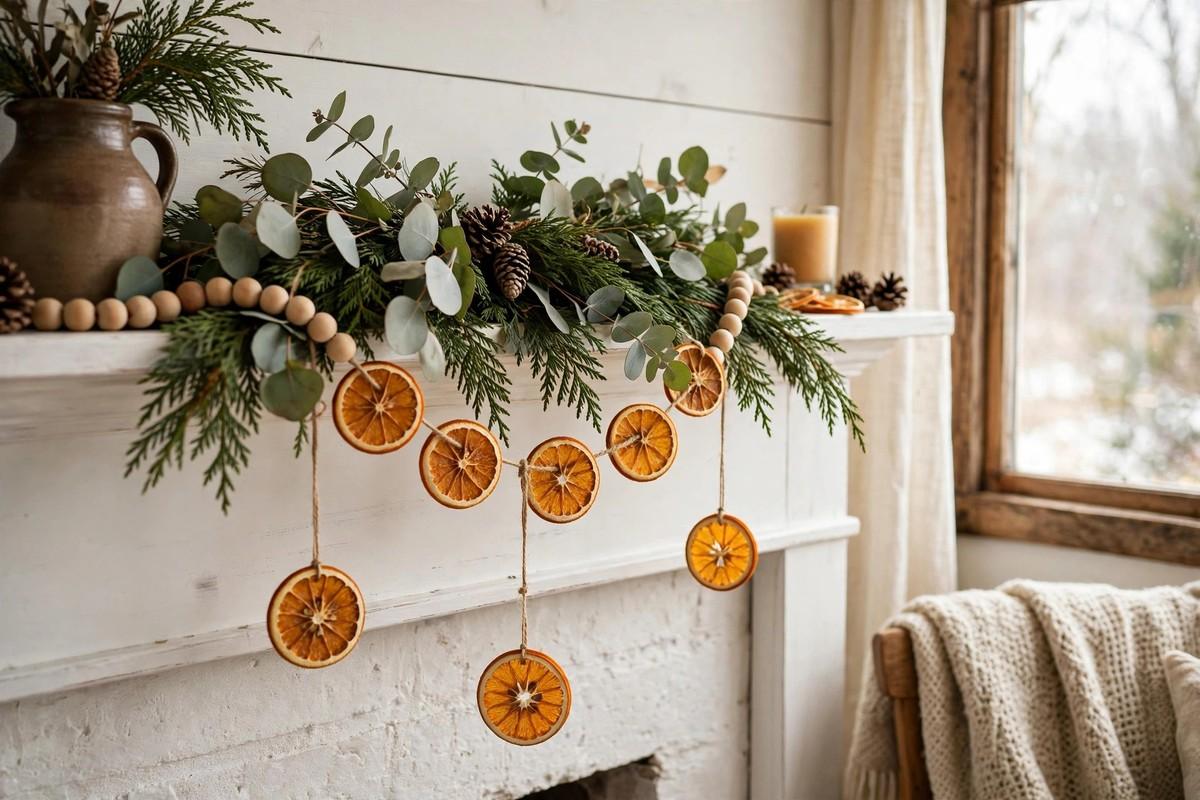
Dried orange slices are the cheapest color a mantel can get. Their amber translucence glows when backlit — hanging them in front of a window or near the fairy lights turns each slice into a little lantern. Slice oranges a quarter inch thick, dry them low and slow in the oven at 200°F for two to three hours, flipping once, and thread them on twine with a darning needle.
They pair especially well with plain greenery because the orange is the only warm color doing any work — no red, no gold, just citrus against green. Drape the strand across the front of the garland so the slices hang just below the mantel edge, or wind it through the branches so the orange peeks out in clusters.
They last the whole season indoors and smell faintly of Christmas the first few days. Once January comes, toss them — they go brittle and pale if stored a full year.
8. Soften the Greenery With Eucalyptus
Straight cedar-and-pine garland can look a little dense and dark on its own. Tucking in sprigs of eucalyptus — silver dollar or seeded, whichever the florist has — breaks up the needle texture with round, pale leaves and adds a silvery tone that reads softer in lamplight. Three or four stems per side is enough; eucalyptus is a seasoning, not the main ingredient.
Fresh eucalyptus dries well and keeps its shape for weeks, so it holds up as long as the rest of the garland. Trim the woody ends at an angle and wedge each stem into the garland’s branches at a downward angle so they don’t slide out — gravity does the rest once they are seated.
The scent is a bonus that divides opinion: some people love the clean, sharp note, others find it too much in a small room. If you are unsure, use less and see how the room smells after a day.
9. Build a Bottle-Brush Tree Village
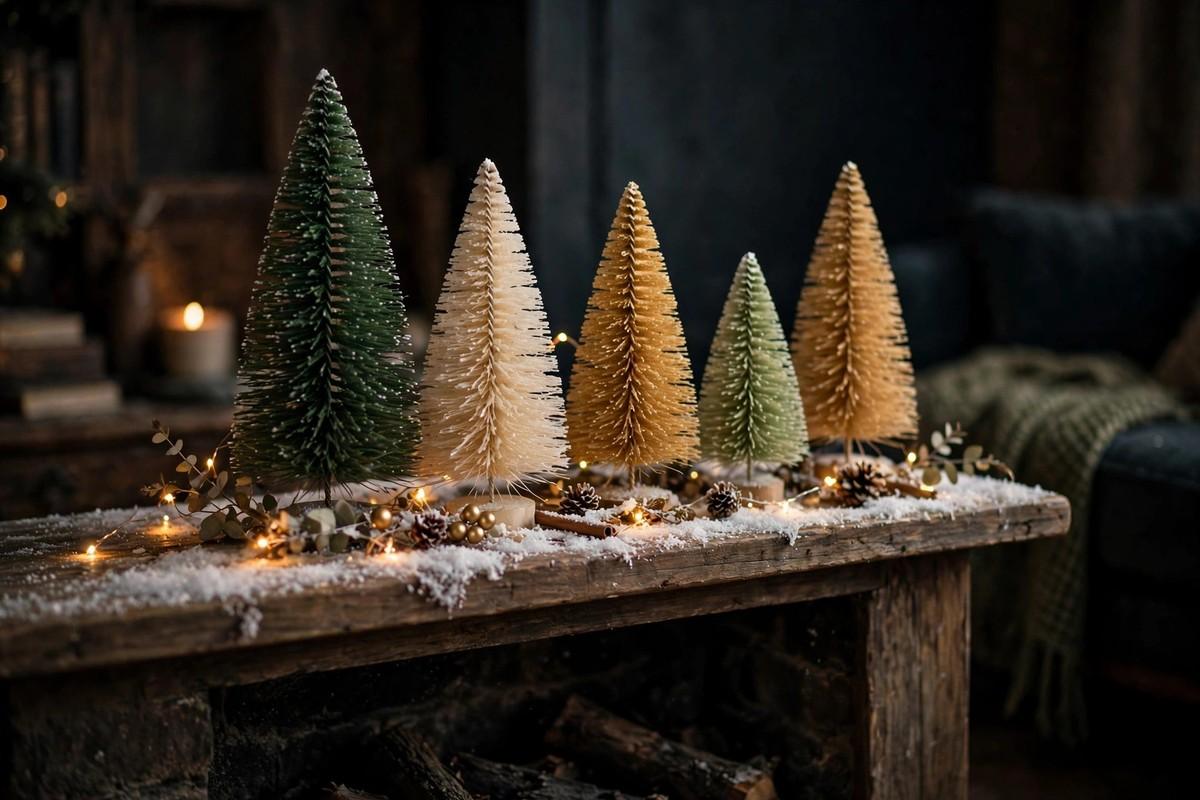
Miniature bottle-brush trees are the mantel’s answer to a second Christmas tree — all the charm, none of the ornament storage. Gather them in mixed heights, anywhere from four to twelve inches, and in more than one color: classic green, champagne, white, even a dusty blush if that suits the room. The variety is what makes them look like a collection instead of a multipack.
Group them the way a forest grows — tight clusters with a few outliers — rather than spacing them evenly like fence posts. Set the tallest at the back of the mantel and step the heights down toward the front, and tuck a few pinecones or a strand of fairy lights around the bases so the little trees don’t look like they are floating on bare wood.
A light dusting of faux snow over the whole village ties mixed colors together. One can, used sparingly, covers a full mantel — a heavy hand turns the scene from woodland to snow globe.
10. Use Faux Snow Sparingly, Not Snowily
Faux snow is a seasoning, like the eucalyptus — a pinch improves things, a cup ruins them. The goal is the look of a fresh dusting, not a blizzard: light passes over the garland tips, a little caught in the bottle-brush branches, maybe a sparse drift along the mantel edge. Shake the can from a foot away and stop early; you can always add more.
Apply it after everything else is in place, since it lands on whatever is there. Keep it off open flames and hot bulbs — most spray snows are flammable before they dry, and the label usually says so in small print worth reading. Battery fairy lights and flameless candles are the safe neighbors for a snow-dusted mantel.
It wipes up with a damp cloth in January, which is more than can be said for the glitter it replaced in most households.
11. Lean Art or a Mirror Behind the Display
The wall above the mantel is half the composition, and leaving it blank wastes it. A framed vintage-style holiday print — skaters on a pond, a snowy barn, an old-fashioned Santa — leaned against the wall gives the mantel a backdrop and makes the whole arrangement look finished from across the room. Leaning, not hanging, keeps it renter-friendly and lets you swap it next year.
A mirror does the same job differently: it doubles the candlelight and the glow of the fairy lights, which matters in a room that runs dark in December. A thrifted gilt frame, even chipped, looks right at home above a rustic mantel — the wear reads as age, not damage.
Keep the frame’s width inside the mantel’s width. Anything wider than the shelf reads top-heavy and fights the garland for the top edge of the composition.
12. Finish With a Tray of Plain Pillar Candles
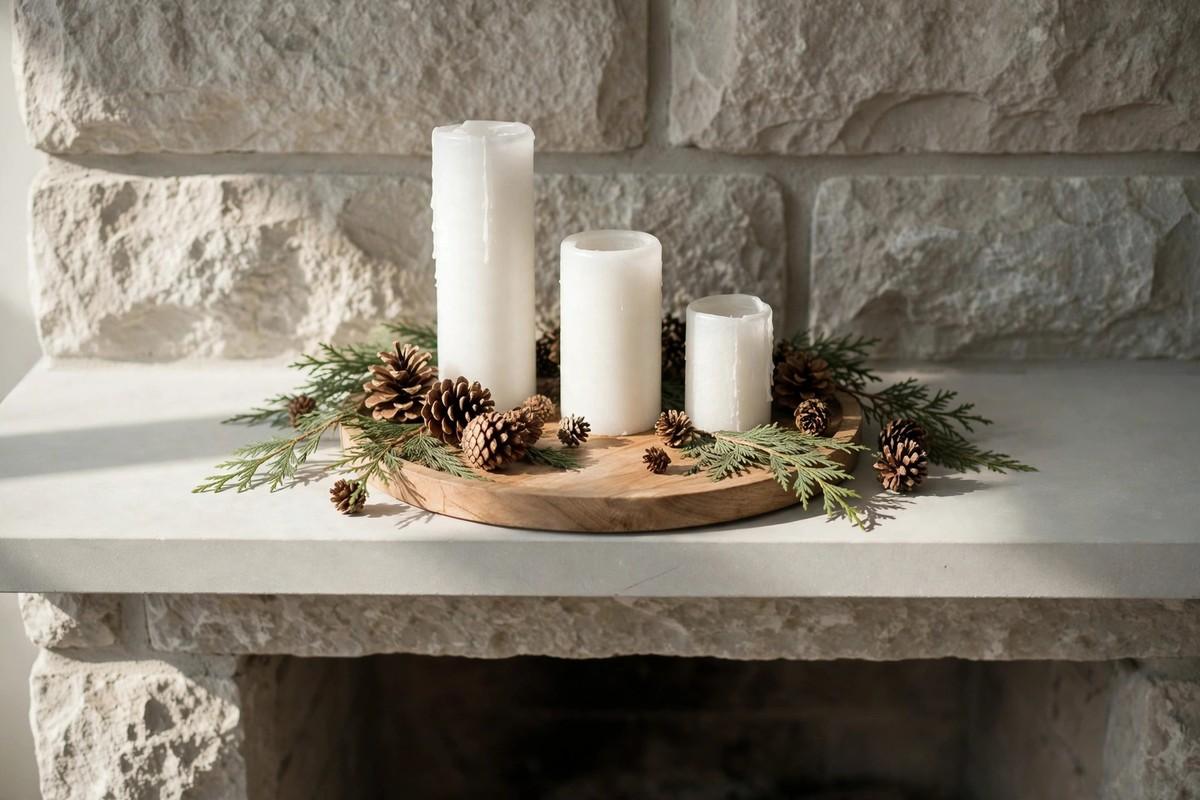
If the mantel is still feeling busy after eleven ideas, this one is the reset button. Three plain white pillar candles of descending heights on a wooden tray, ringed with pinecones and a few cedar sprigs, is a complete decoration on its own — calm, warm, and impossible to get wrong. No color, no glitter, no theme; it works in every room because it asks nothing of the eye.
The tray matters as much as the candles. It corrals the arrangement into one visual unit, protects the mantel surface from wax, and gives you a single thing to lift when it is time to dust. Round trays suit shorter mantels; rectangular ones fit long shelves.
Real pillars or flameless, both work — but if the tray sits near the garland’s edge or under hanging stockings, flameless removes the one real worry on the whole mantel. Many of the better ones now have a flicker setting that reads convincingly from more than a few feet away.
Twelve ideas, one underlying rule: warmth beats precision. A mantel with generous greenery, a little warm light, and a few things that mean something to the people who live there will outshine a perfectly symmetrical display that nobody touches. Pick the three or four ideas that fit your shelf, layer them loosely, and leave yourself one quiet corner — the empty end is what lets the rest of it glow.
Frequently Asked Questions
How do you decorate a Christmas mantel without making it look cluttered?
Work in layers and stop before the mantel looks full — greenery first, then lights, then one or two statement groups like stockings or candles, and nothing else. Leave visible shelf space at at least one end; that empty stretch is what separates “decorated” from “crowded.” Step back and look from the doorway, not from two feet away — the doorway view is how everyone else sees it, and clutter shows up fast at that distance.
What is the best way to hang a garland on a mantel without damaging it?
For a wood or stone mantel, heavy garland sits fine on its own weight — drape it so the ends hang over each side and gravity does the holding. Removable adhesive hooks rated for the garland’s weight work on smooth painted mantels; apply them to a clean, dry surface and wait the full curing time on the package before loading them. Avoid nails and staples in wood you care about, and keep any adhesive off unfinished or antique wood, where it can pull the finish when removed.
Can you put real candles on a mantel with a garland and stockings?
You can, with distance and attention — keep open flames well clear of greenery, stockings, and dried decorations, never leave them burning unattended, and extinguish them before leaving the room or going to sleep. That said, the practical choice on a decorated mantel is flameless: modern LED pillars and tapers with a flicker setting look convincing in evening light, and they remove the one genuine fire risk from the whole display. Many people mix — real candles at the dinner table, flameless on the mantel.
How do you keep fresh garland from drying out before Christmas?
Buy it as close to decorating day as practical, keep it away from heat vents and a working fireplace, and mist the greenery lightly with water every few days. Cedar and pine hold up for three to four weeks indoors in normal conditions; eucalyptus lasts as long or longer. When the needles start shedding with a touch, the garland is done — pull it down before it becomes a cleanup job, and compost the greenery if your area takes it.
What do you do with the mantel decorations after the holidays?
Sort as you take down: greenery and dried orange slices get composted or tossed, faux garland and fairy lights get coiled and boxed, and everything reusable gets labeled so next December does not start with a mystery box. Stockings, candlesticks, and the bottle-brush trees all store well in a single labeled bin. Take a phone photo of the mantel before you dismantle it — it is the fastest way to remember what went where, and it gives next year’s decorating a ten-minute head start.