

13 Minimalist Study Room Ideas That Still Feel Warm
Minimalism works beautifully in a study room because it gives your eyes fewer things to process while you work. The mistake is assuming that minimal means bare: a room with no texture, no personality and harsh lighting can feel more tiring, not less. These minimalist study room ideas focus on editing what you see while keeping the space warm and useful.
Ideas to Try
1. A Full-Width Desk Against One Clean Wall
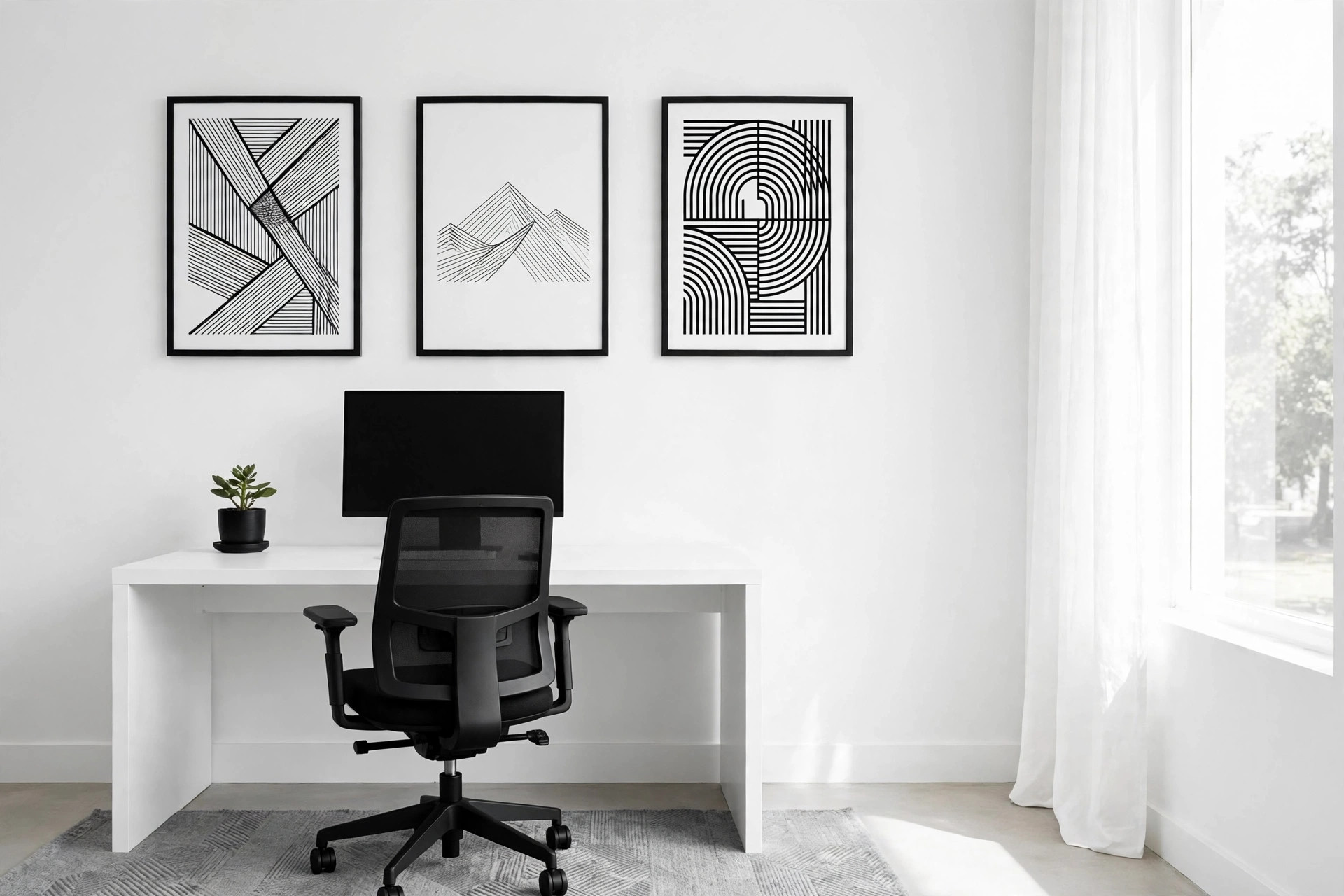
A long, simple desktop can be more practical than several small pieces of furniture. It gives you one continuous work zone for books, a laptop and writing materials while keeping the floor visually quiet. Add drawers underneath if you need hidden storage. For the desk itself, the minimalist study table approach keeps the furniture as edited as the room.
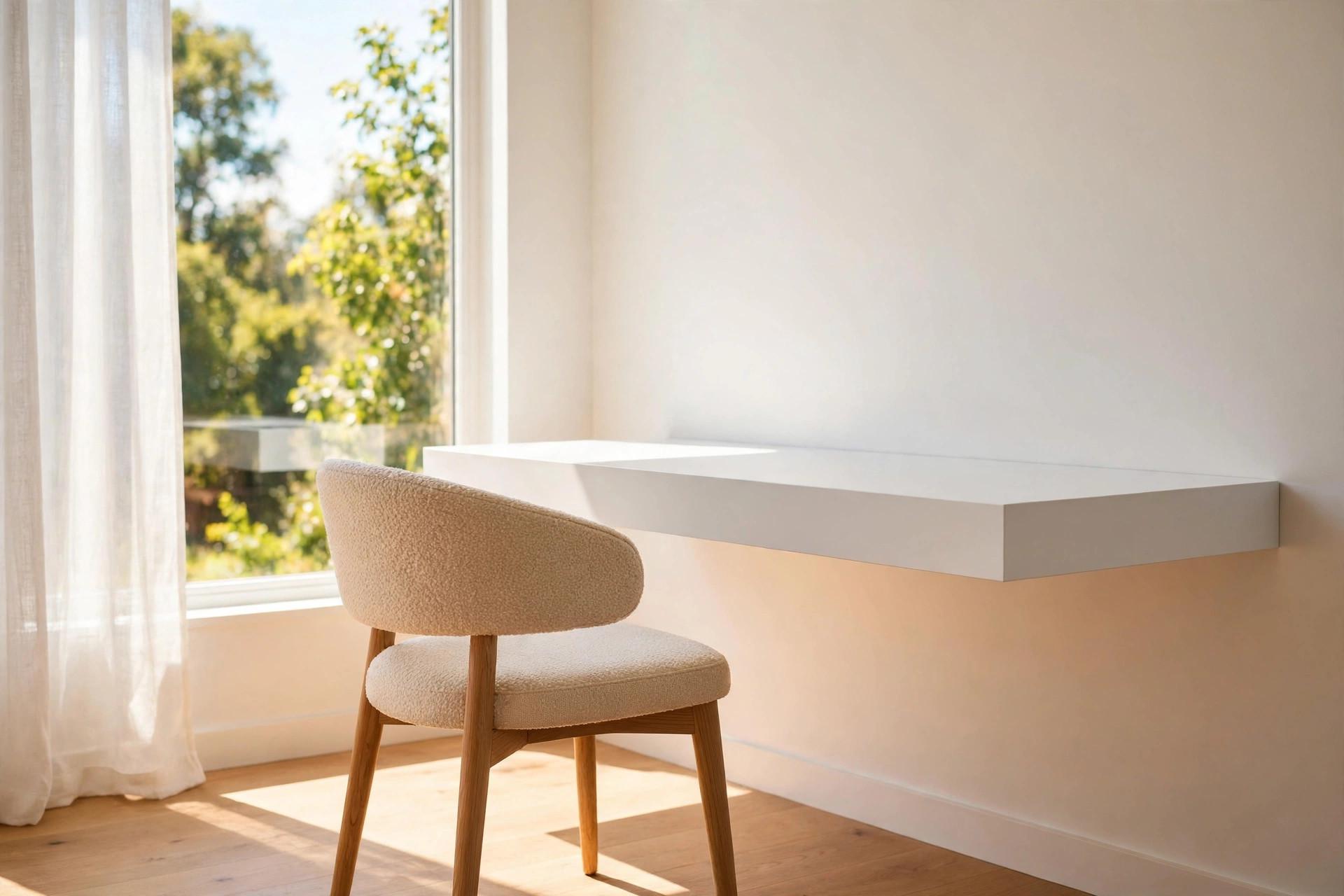
2. Pale Walls With One Warm Material
Use a light wall color as the backdrop, then introduce warmth through oak, cane, linen or cork. That single material contrast keeps the room from looking sterile. The same approach works when the room is rented and you cannot change the flooring.
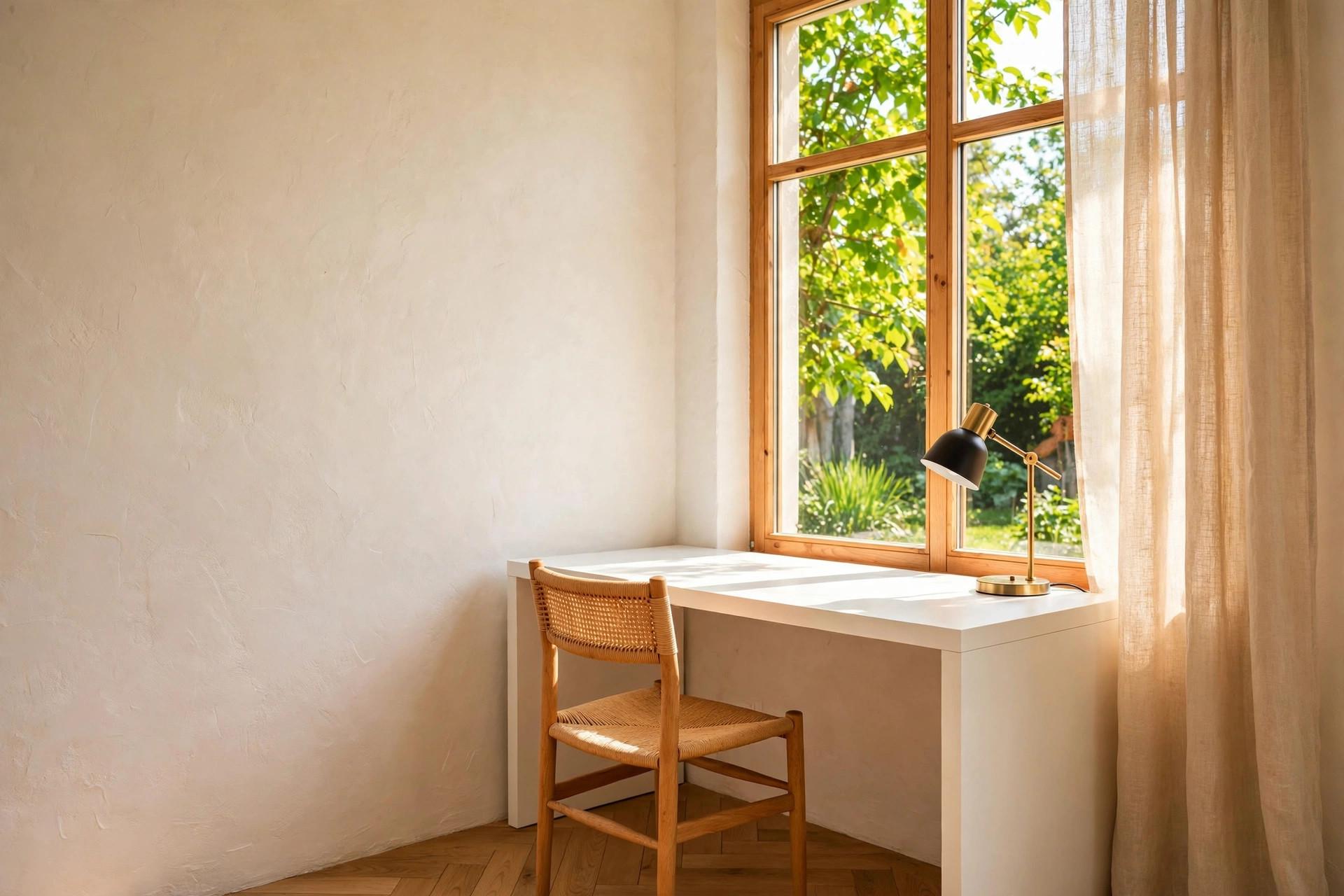
3. Closed Storage Below Eye Level
Put the mess where you can’t constantly see it. Low cabinets, drawers or baskets underneath the desk absorb cables, stationery and paperwork while the upper wall remains open. This is one of the easiest ways to make a small room appear calmer.
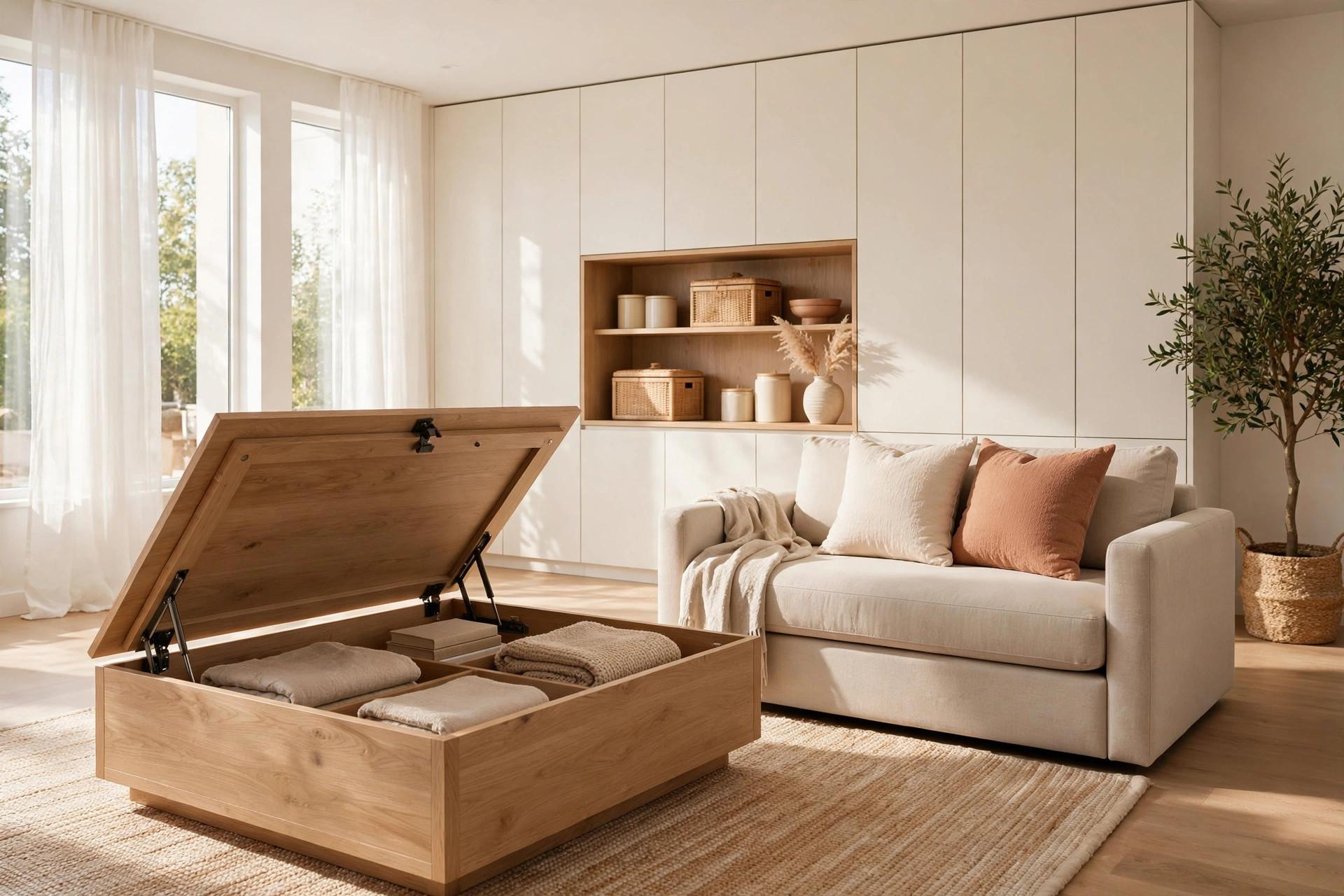
4. One Statement Pendant
Instead of several decorative lights, use one simple pendant as the room’s visual anchor. A fabric or opal shade can soften the light, while an adjustable task lamp handles the desk. Layered lighting is still possible without filling the ceiling with fixtures.
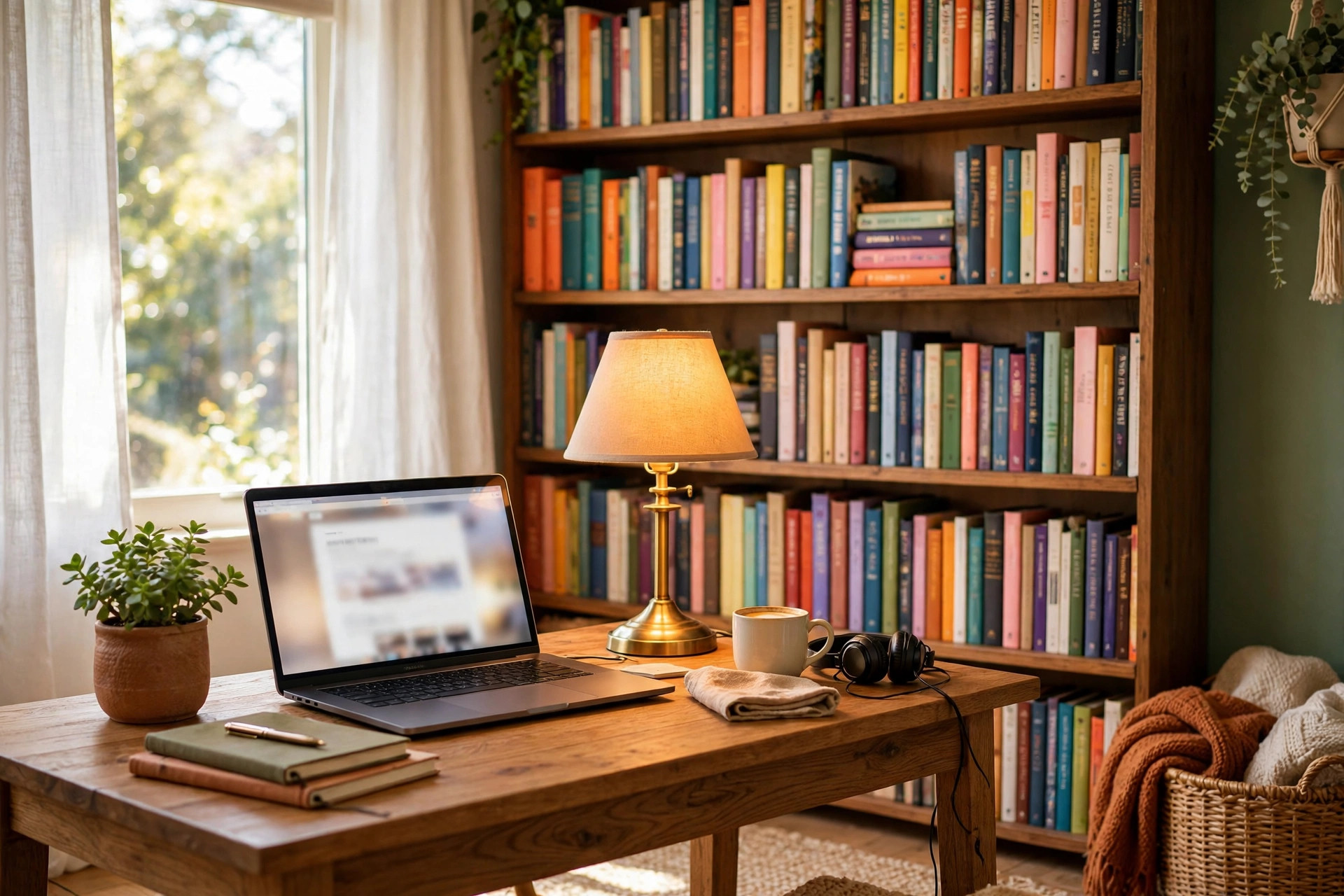
5. A Slim Floating Shelf
A single floating shelf can display a few books, a framed print and one object while leaving floor space untouched. Keep the gaps between items generous. The negative space is part of the design, not wasted storage.
6. Tone-on-Tone Textiles
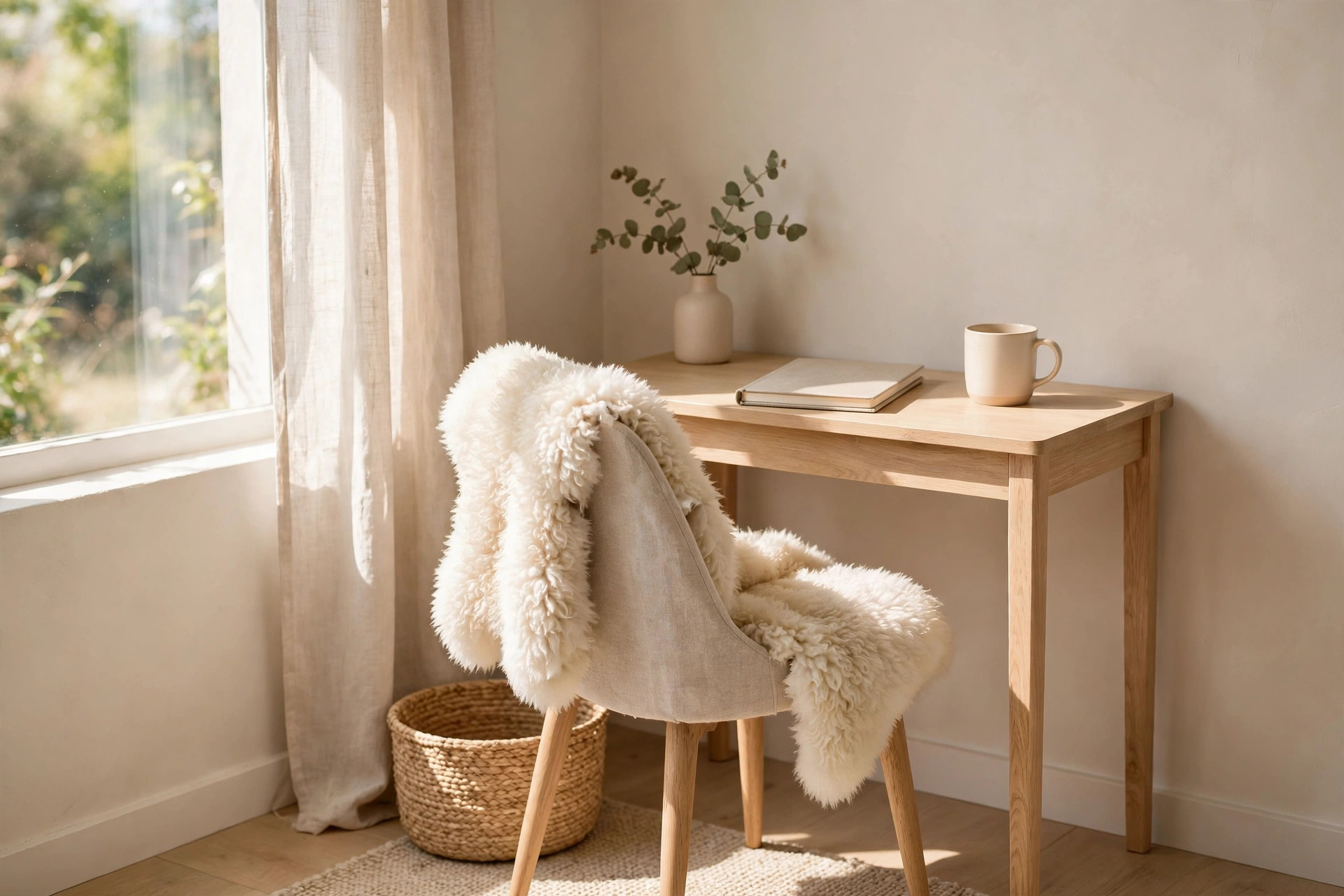
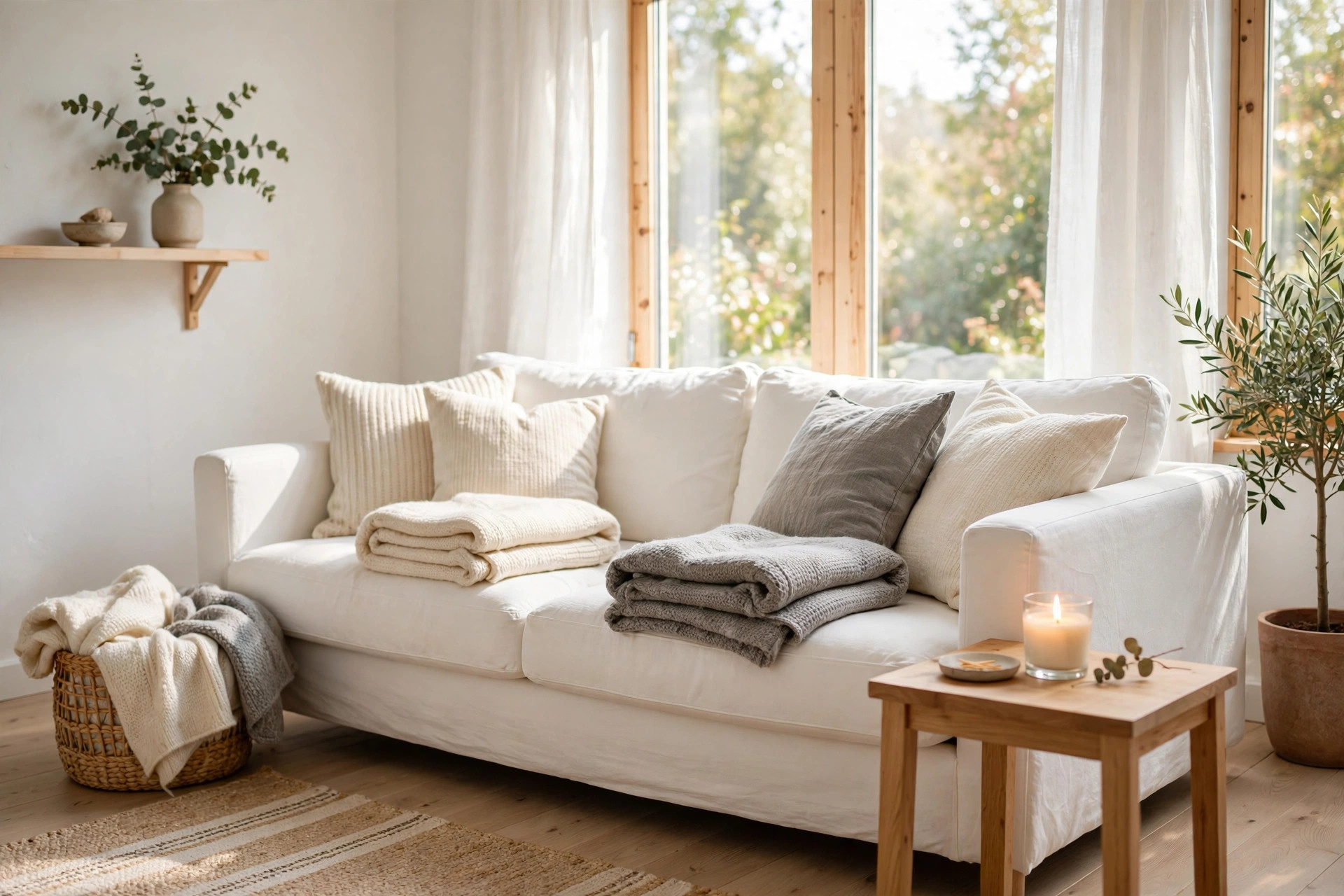
If you have a chair cushion, curtain or small rug, keep the shades close rather than contrasting strongly. Beige with cream, warm gray with stone, or soft green with sage creates depth through texture instead of color. It feels minimal without looking flat.
7. A Rounded Desk Chair
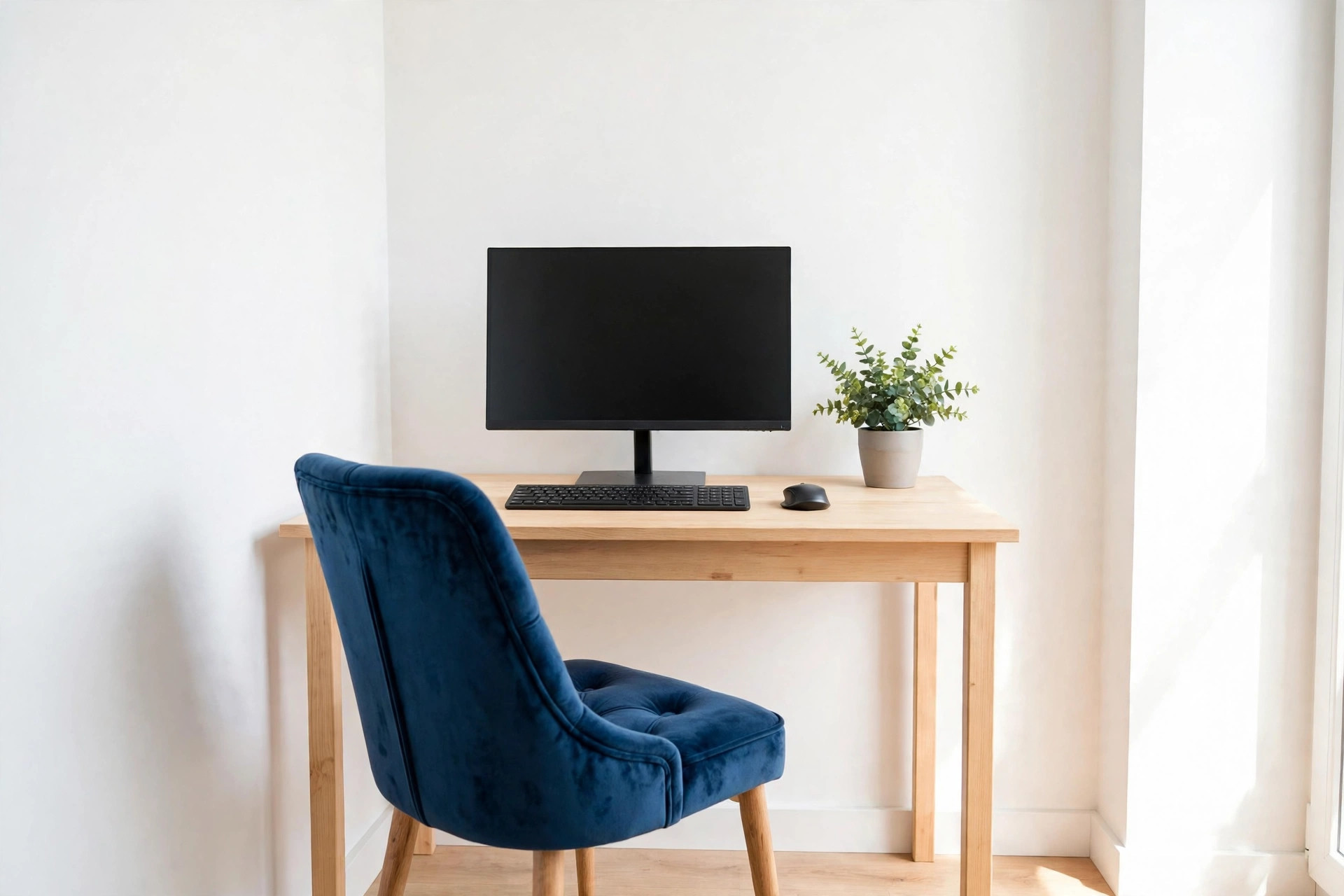
Minimal rooms can become overly boxy when every line is straight. A chair with a curved back introduces one soft shape without becoming decorative clutter. Look for supportive upholstery rather than a chair that is attractive but uncomfortable for long sessions.
8. One Oversized Artwork Panel
A single larger artwork piece often looks cleaner than a gallery wall in a minimalist study room. Choose something with a limited palette so it connects to the furniture. Hang it where it gives the room personality without sitting directly in your eyeline.
9. Floor-to-Ceiling Curtain Panels
Long curtains can visually stretch a compact room and soften hard furniture edges. Mount the rod slightly above the window frame and let the fabric reach the floor. A plain woven fabric is usually enough; patterns are optional.

10. A Desk Lamp With a Simple Silhouette
Choose a lamp with one strong shape rather than a highly detailed base. Black, cream or brushed metal can work depending on the room palette. Keep the lamp close enough to the dominant hand side so it actually improves your work setup.
11. Cable-Free Sightlines
Route power strips and chargers behind furniture whenever possible. Use a small cable box near the outlet and adhesive clips along the desk’s rear edge. A minimalist room can tolerate a few visible cords; it just shouldn’t look like the cords are the main feature.
12. One Personal Display Zone
Reserve a small section for something that makes the room yours—a photo, sketch, collectible or favorite book. Deliberately limiting the display makes the personal touch feel stronger. Minimalism is easier to maintain when it still reflects the person using the room.
13. An Empty Corner on Purpose
Do not feel pressured to fill every corner with a plant, stool or basket. One open corner can make the whole room feel larger and give your eye a place to rest. I often prefer leaving that space empty rather than buying another piece just to complete the room.
How to Choose the Right Ideas
Before buying anything, stand in the doorway and look at the room as a whole. What catches your eye first? In a good minimalist study, the answer is usually the desk, the window, a single artwork piece or another deliberate focal point—not a pile of cables or a collection of storage boxes.
A useful finishing test is to photograph the room from the doorway and from the chair. Those two views reveal different problems. The doorway shows overall visual weight, while the chair shows the distractions you actually live with while working. This quick check helps before adding another shelf or decorative item, because a piece can look good up close and still make the whole room feel heavier.
Frequently Asked Questions
How do I make a minimalist study room feel cozy?
Use warm wood, woven textiles, soft lighting and one or two personal objects. Minimalism feels warmer when texture replaces visual clutter.
What furniture does a minimalist study room need?
Usually a desk, comfortable chair, useful storage and good lighting are enough. Add other pieces only when they solve a specific problem.
How do I keep a minimalist study room organized?
Give each type of item a home, prioritize closed storage and do a short reset at the end of the day. Keeping fewer things in the room also makes organization easier.
Can a small room be minimalist?
Yes. Smaller rooms often benefit the most from fewer visual elements and better vertical storage. The key is preserving clear walking space.
A Practical Next Step
A minimalist study room should reduce friction, not personality. Start with the furniture footprint, then control storage, light and materials before adding accessories. The same philosophy works nicely with a minimal study room layout and a minimalist study table when you want the desk itself to stay visually simple.