
Interior Door Types, Materials & Costs: A Buyer’s Guide
A standard hollow-core interior door typically runs $50 to $150 unfinished, while solid-core and solid-wood doors can run $150 to $600 or more before installation. Installation itself usually adds $100 to $300 per door if you’re hiring it out. That’s the range — the rest of this comes down to which type actually fits your situation.
The door itself is rarely the expensive part of the project. Hardware, framing adjustments, and paint or stain are where budgets quietly creep — so it pays to plan the full cost, not just the slab price.
Hollow-Core vs. Solid-Core vs. Solid Wood
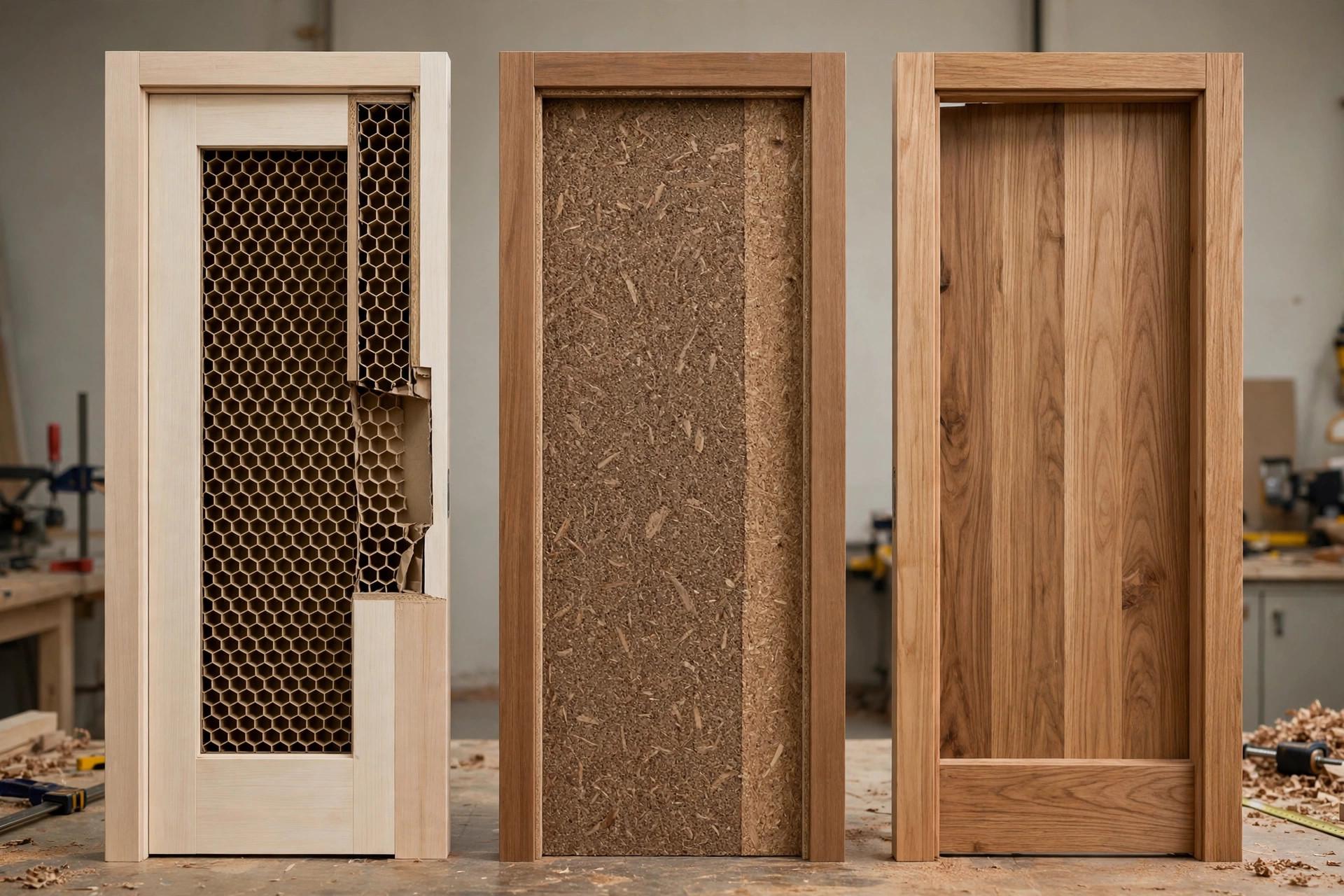
Hollow-core doors are lightweight, budget-friendly, and fine for closets or low-traffic rooms, but they dent easily and don’t block sound well. Solid-core doors cost more but feel and sound closer to real wood, making them a solid middle ground for bedrooms and home offices. Solid wood doors are the most expensive and heaviest option, typically reserved for statement entries or older homes being restored to match original trim.
Common Interior Door Styles
Panel doors remain the standard for a reason — they suit almost any home style. Flush doors have a smooth, minimal face that fits modern interiors. French doors bring in light between rooms but sacrifice privacy and wall space for the swing. Barn-style sliding doors save floor space and have become popular for tight hallways, though they don’t block sound as well as a hinged door.
What Actually Drives the Price Up
Custom sizing for older homes with non-standard rough openings can add significantly to cost, since off-the-shelf doors are built to modern standard dimensions. Pre-hung doors, which come already mounted in a frame, cost more upfront but save labor time during installation. Glass inserts, raised panel detailing, and solid wood species like oak or mahogany all add cost on top of the base door.
DIY Installation vs. Hiring a Pro
Swapping a door slab on existing, undamaged hinges is a reasonable weekend project for most homeowners. Installing a full pre-hung door with new framing is a different job entirely — if the opening isn’t square, you can end up with a door that won’t close properly no matter how carefully you hang it. If your walls are older or you’re unsure about the framing, it’s worth paying for at least one hour of a contractor’s time to check the opening before you buy.
Where to Spend More and Where to Save
Solid-core doors are worth the splurge for bedrooms, since the sound difference is noticeable every single night. Decorative glass inserts for closet doors aren’t worth the extra cost — nobody notices, and they cost meaningfully more to replace if damaged.
Slab vs. Pre-Hung: Which One Do You Actually Need
A slab is just the door — no frame, no hinges, no holes drilled. A pre-hung door comes mounted in its own frame with hinges attached and the strike plate mortised. If your existing frame is square, solid, and the right size, a slab saves money. If the frame is damaged, out of square, or you’re changing the door size, pre-hung is the sane choice — hanging a slab in a crooked frame is skilled work, and the labor to do it right usually erases the savings. For most bedroom and bathroom replacements where the old frame is fine, a slab works. For new openings or anything where the frame has seen better days, go pre-hung.
Measuring Before You Buy
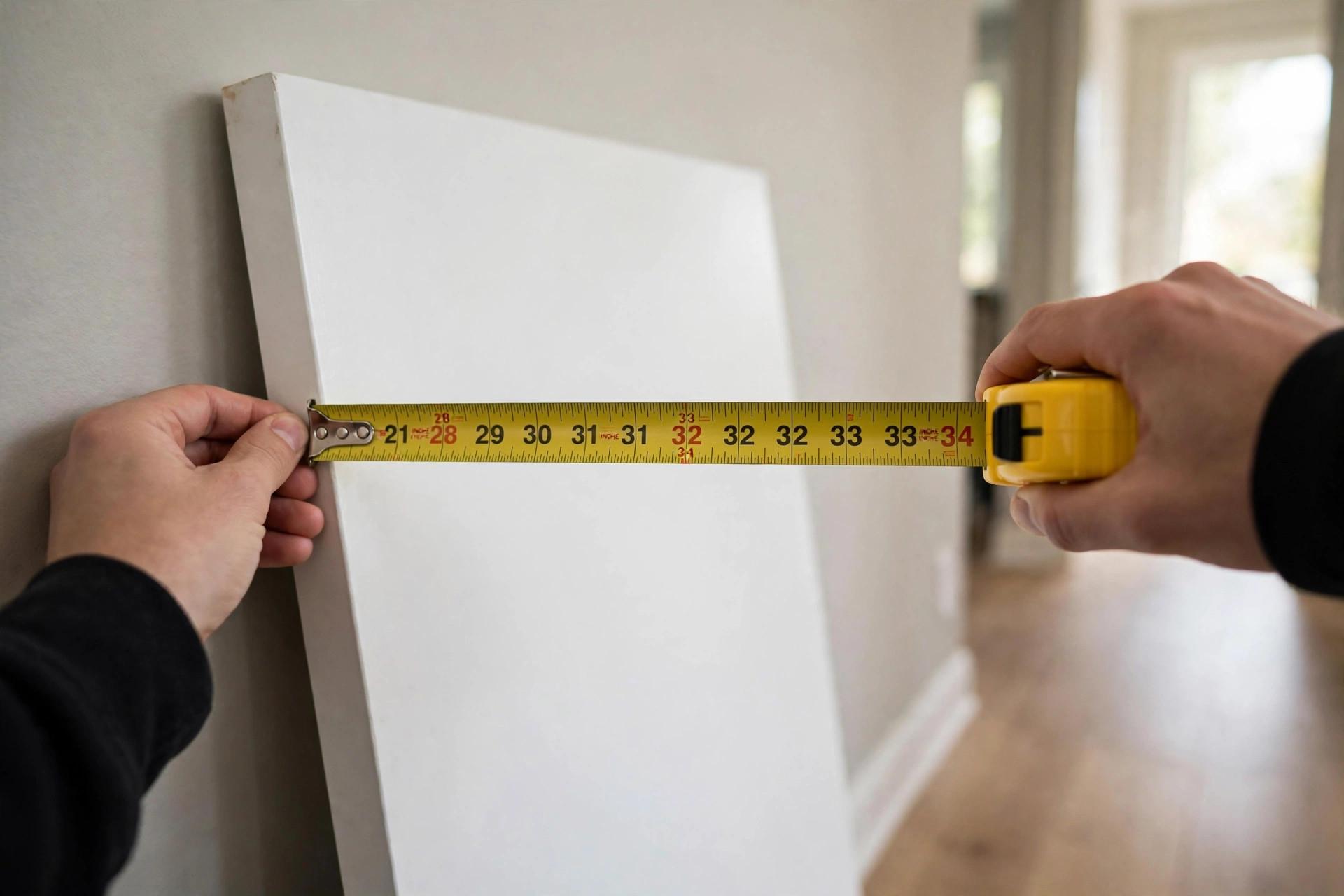
Measure the existing slab — height, width, and thickness — not the frame opening. Standard interior slabs run 80 inches tall and come in 2-inch width increments (24, 28, 30, 32, 36), with 1-3/8 inch thickness standard for interior doors. Measure width in three places (top, middle, bottom) and use the smallest number; houses settle and frames go out of square. Replacing a pre-hung unit? Measure the rough opening stud-to-stud instead, and buy a unit about 2 inches narrower and 2-1/2 inches shorter to leave room for shims and leveling.
Which Way Should It Swing?
Stand in the doorway facing the direction the door swings toward you — hinges on your left means a left-hand door, hinges on the right means right-hand. Getting this wrong is one of the most common ordering mistakes, and it’s an expensive one: a handed door can’t be flipped. Also check what the door opens against. A bathroom door shouldn’t swing into the vanity; a bedroom door shouldn’t block the closet. Sketch the swing on paper before ordering — thirty seconds that saves a return.
Hardware and the Details People Forget
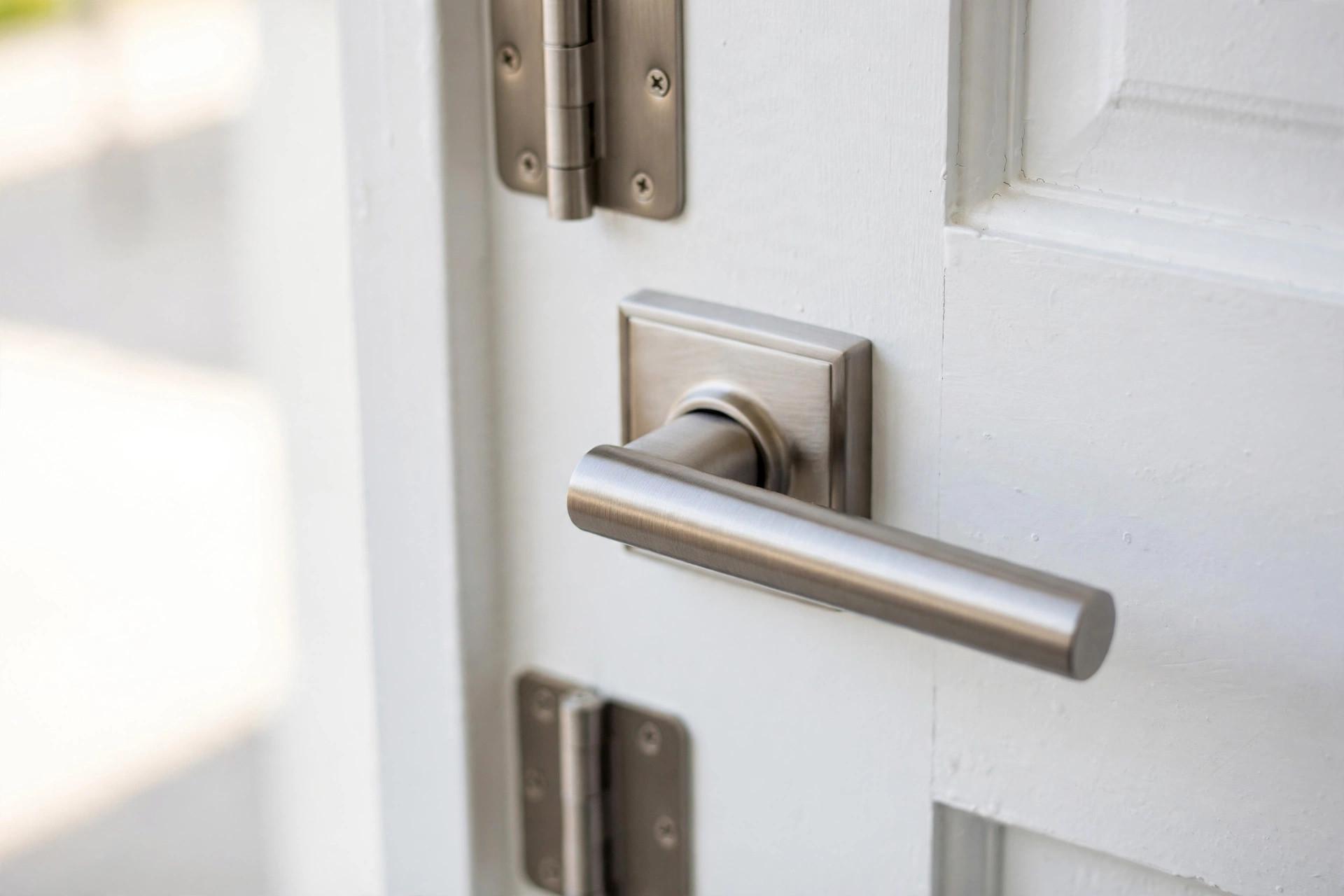
Budget for hinges, knobs or levers, and a strike plate — slabs often don’t include them, and matching existing hardware matters more than people expect. Levers are easier for kids and older hands than knobs. Bedrooms and bathrooms want privacy locks (push-button, not keyed). And check hinge mortise depth against your frame — a 1/8-inch mismatch means the door won’t close right, and it’s the kind of thing you discover at 9 p.m. on a Sunday.
Frequently Asked Questions
What’s the difference between hollow-core and solid-core interior doors?
Hollow-core doors have a cardboard or lightweight honeycomb interior and cost less but offer little sound insulation, while solid-core doors are filled with denser material, weigh more, and block sound significantly better.
How much does it cost to replace an interior door?
Expect roughly $150 to $450 total per door including the slab and basic installation, with solid wood or custom-sized doors pushing that higher.
Can I install an interior door myself?
Replacing just the door slab on working hinges is manageable for most DIYers, but installing a full pre-hung unit with new framing is more advanced and worth hiring out if you’re not confident measuring and shimming an opening square.
Do interior doors need to match throughout the house?
It’s not required, but matching door style and finish throughout main living areas generally looks more cohesive; it’s common to use a slightly simpler style for closets and utility spaces.