
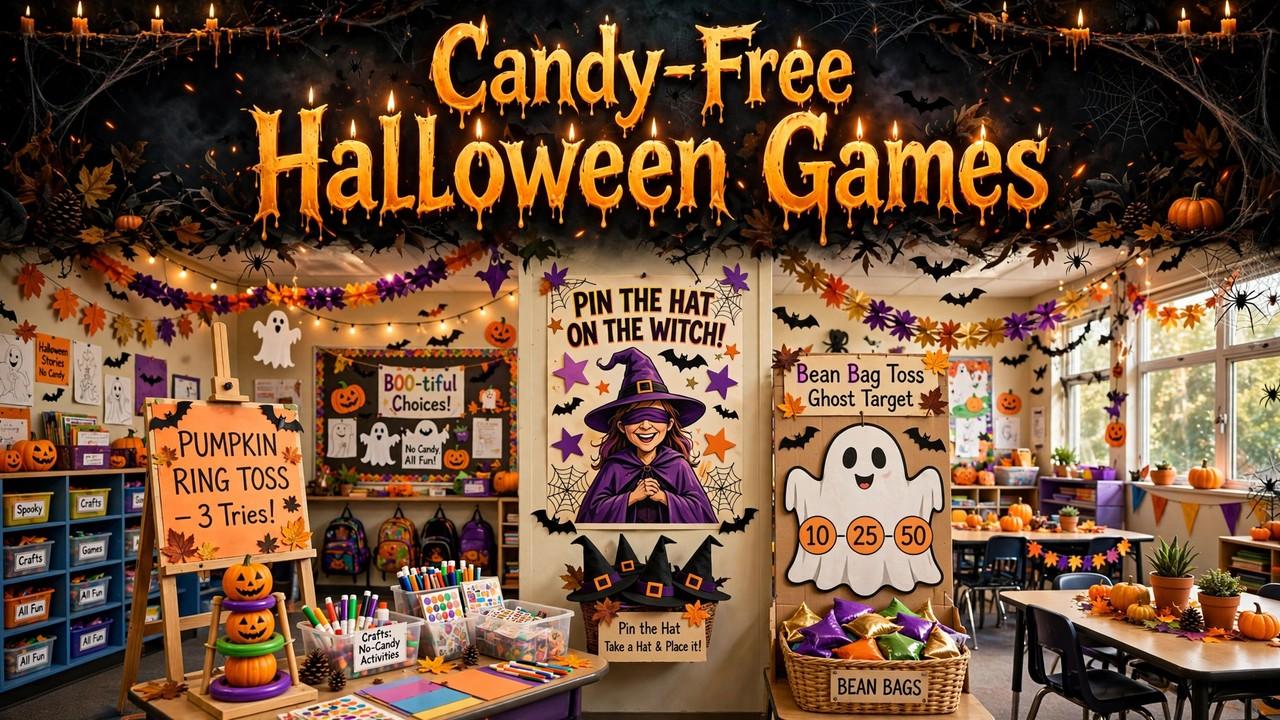
Candy-Free Halloween Game Stations for Grades K-2: A Room That Runs Itself
Skip the sugar and you skip the 2 p.m. crash — and honestly, K-2 kids care more about the games than the candy anyway. The system that works: six simple stations, small groups rotating every eight minutes, one volunteer per station with a script card. With a clear rotation and scripted volunteers, even a first-time room parent can run the whole block without raising their voice once.
How the rotation actually works
Split the class into six groups of three to four kids. Each group starts at a different station and rotates clockwise when the timer chimes — eight minutes per station, one minute to move. That's 54 minutes total, which fits inside a standard party block with time for cleanup. Give each volunteer a laminated card with the station rules in three bullet points; volunteers stop managing and start hosting when they don't have to remember anything.
The groups need names, not numbers. "Pumpkins," "Ghosts," "Bats," "Cats," "Owls," "Spiders" — call them out by name and six-year-olds move like it's a game already. Numbered groups get confused; named groups get competitive about being the best Ghosts.
Station 1: Pumpkin Ring Toss
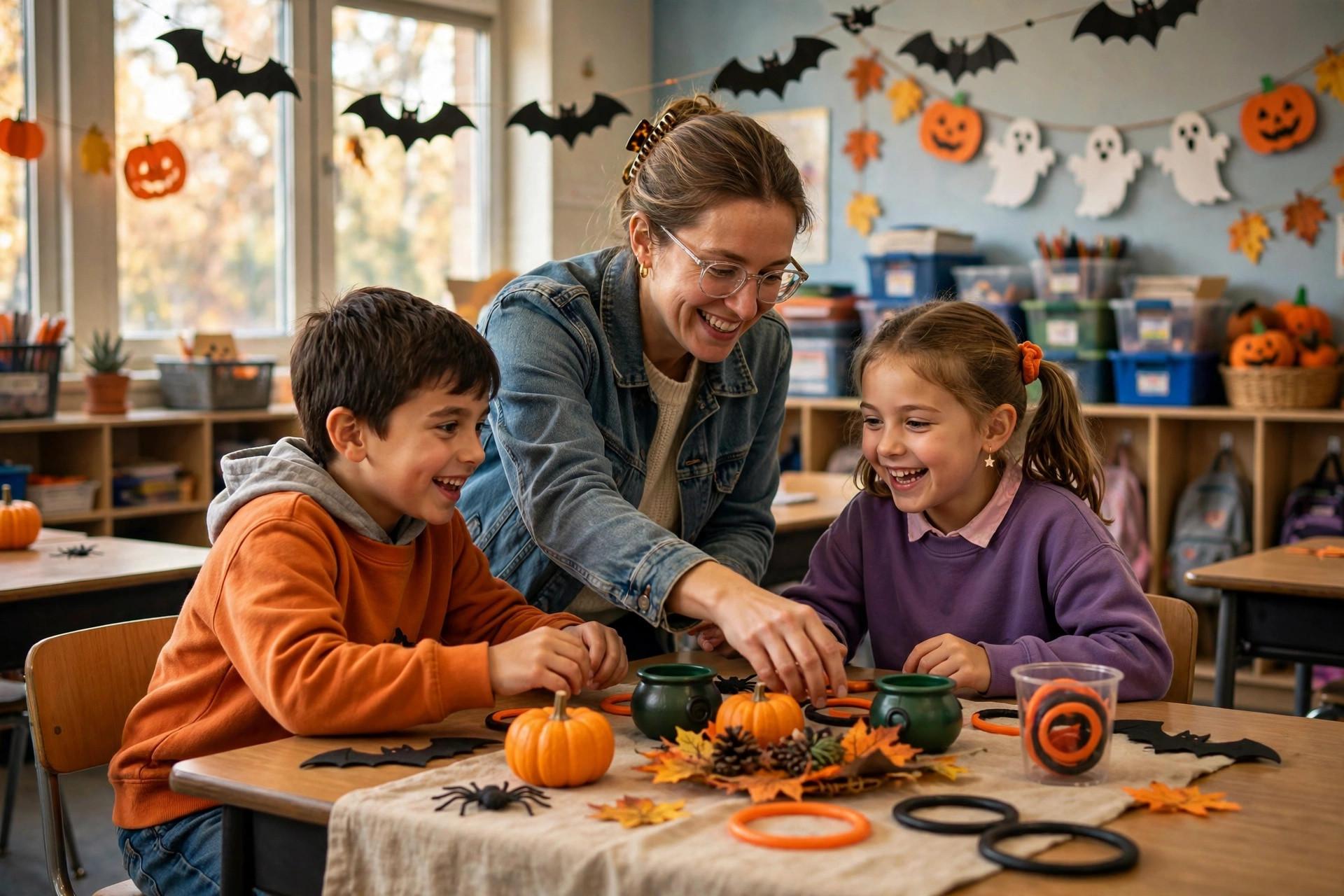
Push the pointed ends of three traffic-cone-style paper cups (or rolled poster board) into small pumpkins — mini pumpkins work best because the cups sit stable. Kids toss glow bracelets or rubber rings from a taped line on the floor. Rings, not beanbags: beanbags knock the pumpkins over and you spend the station resetting instead of cheering.
Reset time between groups: about 30 seconds to re-stand any toppled pumpkins. This station runs itself once the first group learns the throwing line.
Station 2: Pin the Hat on the Witch
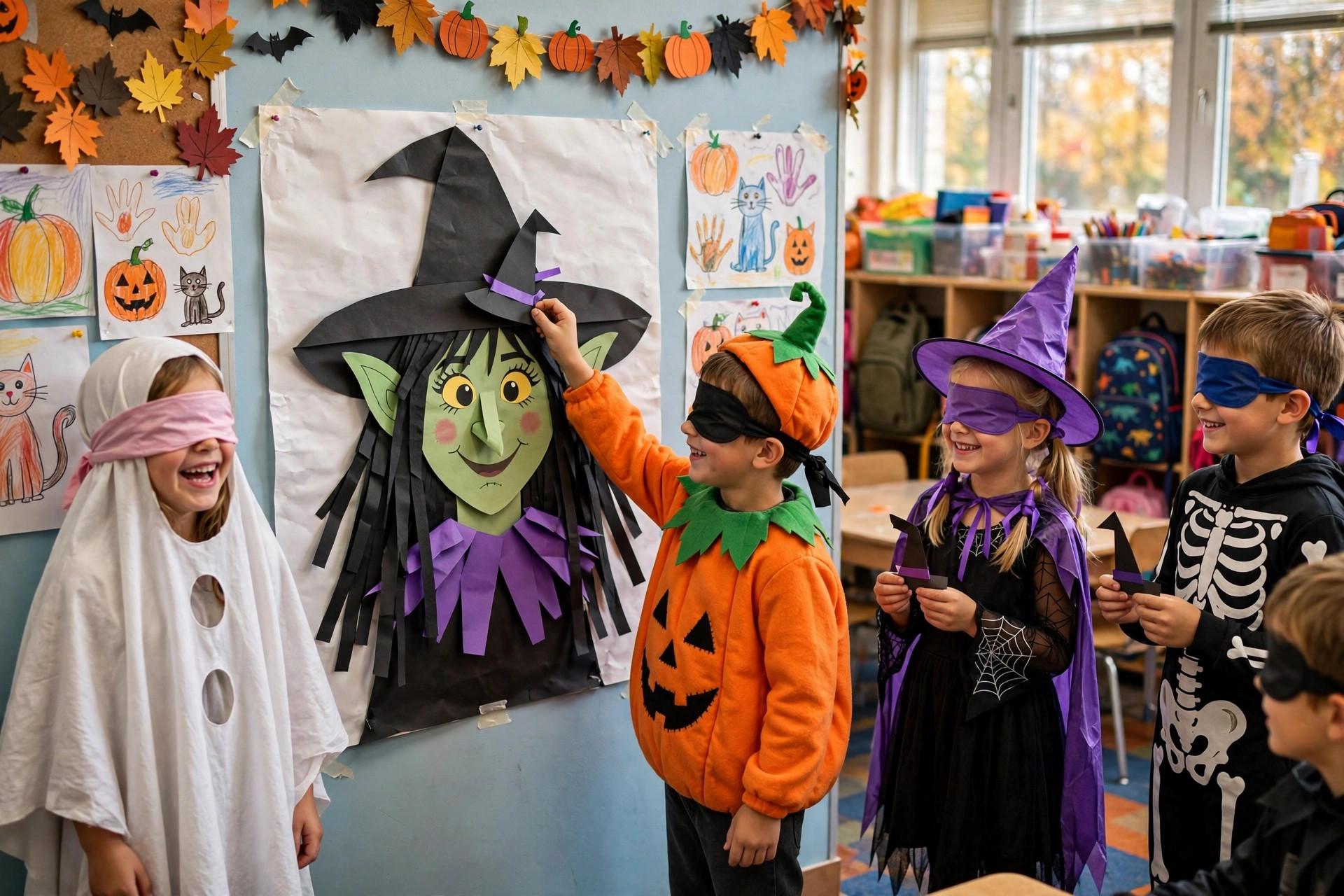
A large witch face drawn on poster board — freehand is fine, kids don't critique your art — with a paper hat per child and a sticker dot on the back instead of a pin. No blindfolds for K-2; just have them close their eyes and spin once, slowly, with the volunteer steadying their shoulders. Blindfolds on six-year-olds end in tears or collisions, and the sticker version is honestly funnier because the hats land on noses.
Each child gets one hat with their name on the back, so there's no arguing about whose is whose. The witch poster becomes classroom decor afterward.
Station 3: Monster Freeze Dance
Play Halloween music (the Monster Mash on repeat is traditional for a reason), kids dance, music stops, everyone freezes in their scariest pose. The volunteer picks the best freeze — not the winner, the "best freeze" — and that child picks the next song. No elimination. Elimination games with twenty kindergarteners take forty minutes and end with crying; everyone-dances-every-round keeps the energy up and the volunteer sane.
Station 4: Feed the Monster Beanbag Toss
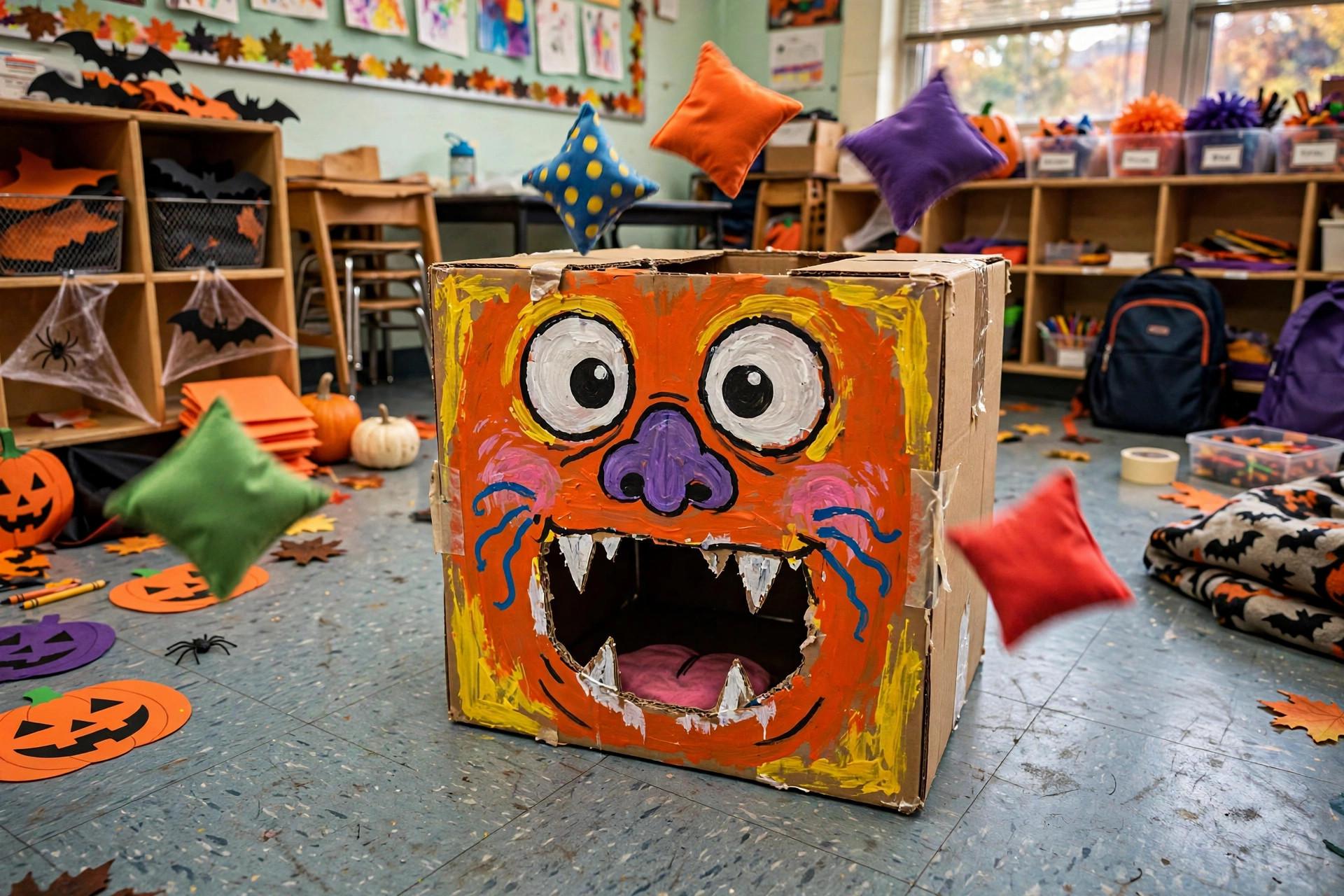
Cut a big mouth hole in a large cardboard box, paint a monster face around it, and kids toss soft beanbags or crumpled paper balls into the mouth from a line. Weight the box with a textbook inside so it doesn't slide. Score it simply: one point per bag in the mouth, and the group total goes on a whiteboard for bragging rights. Team scoring means the kid who misses every throw still contributed to a group number.
Station 5: Mummy Wrap Relay
One child per turn stands still while their teammates wrap them in toilet paper or crepe streamers — arms at sides, gentle wrapping, no faces covered, ever. Then they do a slow "mummy walk" to a cone and back while the team cheers, and the next child goes. Set the rule up front: wrapping stops at the neck. Say it twice. The walk-back is the funniest part and it burns off energy, which is the real purpose of this station.
Toilet paper tears, which is actually ideal — it keeps the wrapping loose and the cleanup is just gathering strips. One roll per group per rotation is plenty.
Station 6: Pumpkin Decorating (No Carving)
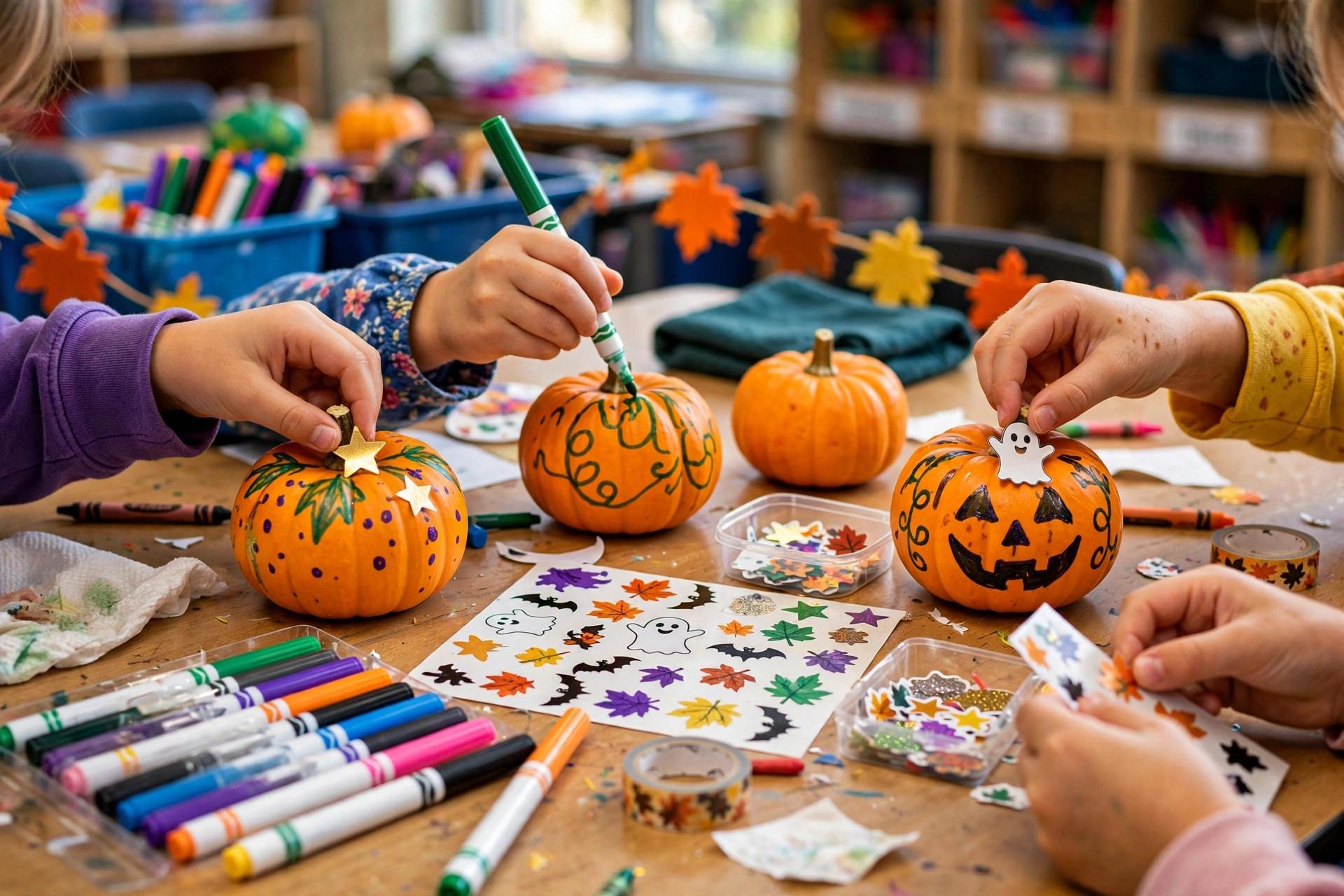
Mini pumpkins, stickers, washable markers, and glue dots — no carving tools, no paint that needs drying time. Each child decorates one pumpkin to take home, which doubles as the party favor and eliminates the goodie-bag question entirely. Put newspaper or a plastic tablecloth down first; washable markers on a desk still cause a ten-minute scrubbing session.
This station takes the full eight minutes — decorating can't be rushed — so place it last in the rotation if you can. Kids leave the party holding their pumpkin, which means parents see the evidence of fun at pickup.
Volunteer roles and the one script that matters
You need six station volunteers plus one floater who handles bathroom trips, spills, and the timer. That's it. The script card at each station reads: the rules (three bullets), the reset step, and the rotation cue ("when the timer chimes, point your group to the next station"). Volunteers don't need a meeting beforehand — hand them the card when they arrive and they'll be fine.
The trade-off nobody mentions: more volunteers isn't always better. Eight extra parents hovering turns stations into audiences and kids perform instead of play. Six committed volunteers beat twelve drop-ins every time. If you're short on volunteers, combine stations 3 and 4 into one larger group activity and run five stations instead.
Timing, prizes, and the candy question
Prizes: skip individual prizes entirely. The take-home pumpkin from station 6 is the prize, plus each group gets a round of applause for their best moment. Individual prizes create a hierarchy of winners in a room of five-year-olds, and you'll spend the last ten minutes managing disappointment instead of celebrating.
Parents will ask about candy. The honest answer that works: "We're doing candy-free stations this year so every kid can participate fully, including kids with allergies." Nobody argues with that framing. If your school requires treats, the decorating pumpkin covers it.
Cleanup that takes ten minutes
Build cleanup into the rotation: the last two minutes at each station, kids help reset for an imaginary next group — restack rings, gather beanbags, peel stickers off the table. Then it's just tablecloths in the trash and pumpkins into backpacks. Assign the floater to trash duty and you're out of the room on time, which the teacher will remember favorably next year.
Run it once and you'll reuse the whole system for Valentine's and spring parties — only the decorations change. For the older siblings, our Halloween party games for adults (easily toned down) and teen party games cover the rest of the family.
For the older siblings, these indoor Halloween party games for teens bring the same candy-free fun to the 13–17 crowd.
Ring toss, pin-the-hat, freeze dance, beanbag toss into a monster box, mummy wrap relay, and no-carve pumpkin decorating all work for K-2. Keep rules to three bullets, rounds under eight minutes, and skip elimination games.
Split the class into groups of 3-4, rotate every 8 minutes with a timer, and give each volunteer a script card with the rules. Named groups (Pumpkins, Ghosts) move faster than numbered ones.
A decorated mini pumpkin from a decorating station is the classic take-home — it's the activity and the favor in one. Stickers and temporary tattoos also work as non-candy treats.
Six station volunteers plus one floater for a class of 20-24. More volunteers isn't always better — too many adults turns stations into performances.
Candy-free stations sidestep most allergy issues entirely. For any food-adjacent activities, check with the teacher on classroom allergies beforehand and keep the take-home item non-edible.
Frequently Asked Questions
what are good candy-free halloween games for kindergarten
Six stations cover a full party: pumpkin ring toss with glow bracelets, pin the hat on the witch (sticker dots, no blindfolds for K-2), monster freeze dance with no elimination, a feed-the-monster beanbag toss, a mummy wrap relay, and no-carve pumpkin decorating. Keep every game's rules to three bullet points and skip elimination entirely - elimination games with twenty kindergarteners take forty minutes and end in tears.
how do you run halloween party stations in a classroom
Split the class into groups of three or four, start each group at a different station, and rotate clockwise every eight minutes when a timer chimes - that is 54 minutes total, fitting a standard party block with cleanup time. Give each volunteer a laminated script card with the rules in three bullets plus the reset step. Name the groups (Pumpkins, Ghosts, Bats) instead of numbering them; named groups move faster and get competitively proud.
what can kids take home from a candy-free halloween party
A decorated mini pumpkin is the classic - it is the activity and the party favor in one, so the goodie-bag question disappears. Stickers and temporary tattoos also work as non-candy treats. Kids leave holding their pumpkin, which means parents see the evidence of fun at pickup.
how many parent volunteers do you need for classroom halloween stations
Six station volunteers plus one floater who handles bathroom trips, spills, and the timer - that is the whole crew for a class of twenty to twenty-four. More volunteers is not always better; eight extra parents hovering turns stations into audiences and kids perform instead of play. Short on helpers? Combine the freeze dance and beanbag toss into one larger group activity and run five stations.
how do you play the mummy wrap relay with kids
One child per turn stands still, arms at sides, while teammates wrap them in toilet paper or crepe streamers - then a slow mummy walk to a cone and back while the team cheers, and the next child goes. Set the rule up front and say it twice: wrapping stops at the neck, and faces are never covered, ever. Toilet paper tears, which is actually ideal - it keeps the wrapping loose and cleanup is just gathering strips.