15 Halloween Party Games for Teens (Indoor, Small Group, Zero Cringe)
:
Teens can smell a babyish party game from across the room, which makes indoor Halloween party games for teens genuinely tricky to get right. What works for 13 to 17 year olds indoors is games with stakes, strategy, or genuine surprise — stuff that needs almost nothing beyond what a host's kitchen and junk drawer already hold. Every game below is built for 4–10 players in one room, takes under 20 minutes a round, and can be explained in about a minute. Most of these hold up at actual parties — including the sleepover classic where the power goes out, which only makes it better.
1. Murder Mystery in One Envelope — 60 minutes of suspense with five props
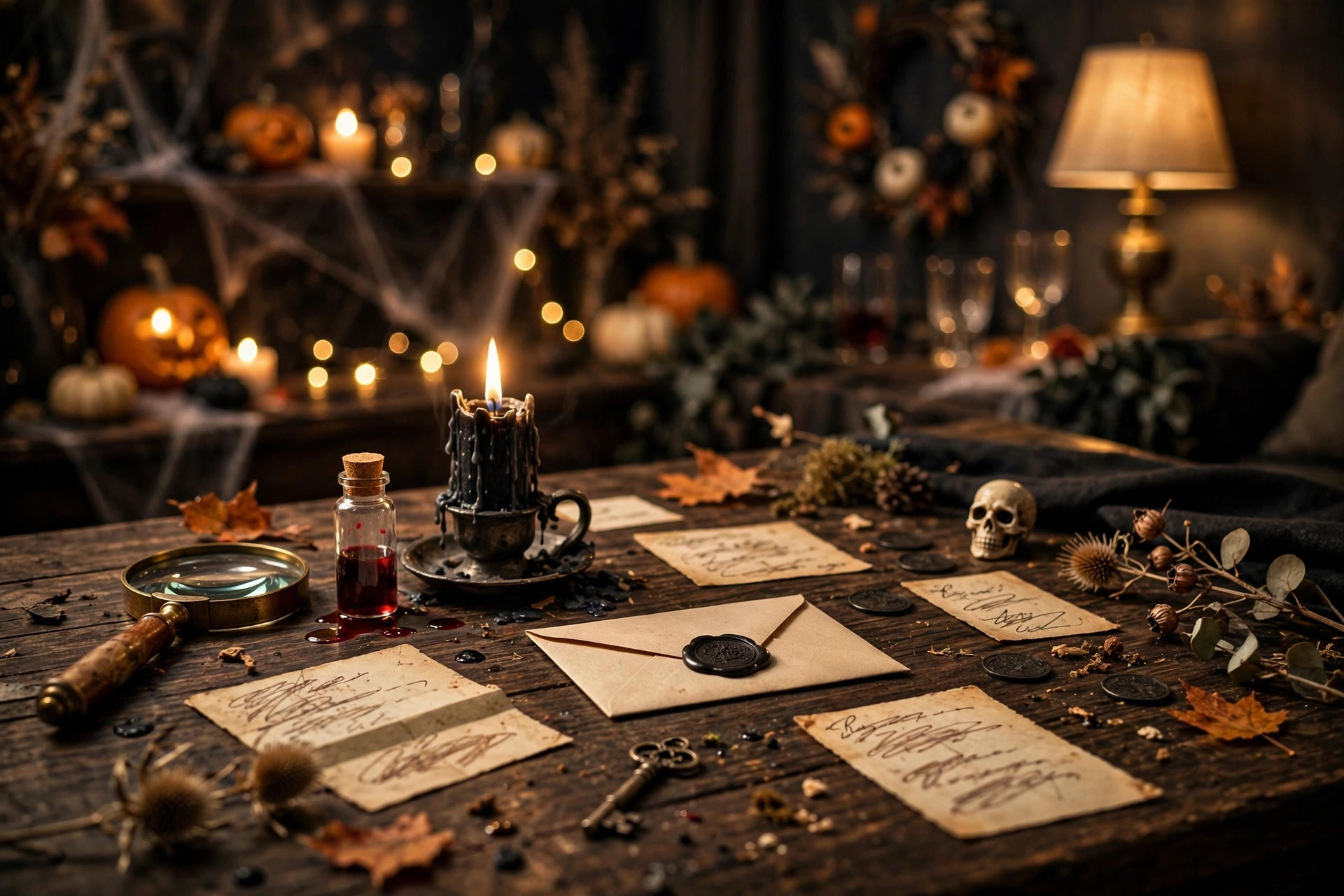
Deal each player a folded card: one "murderer," two "witnesses," everyone else innocent. Lights low, one room of the house taped off as "the crime scene." The murderer "kills" by tapping someone's shoulder in a dark room or blind hallway; victims have to lie where they fall until discovered. Witnesses know the murderer's identity but can only answer yes-or-no questions during the accusation round. This scales perfectly for small groups because everyone gets a role and nobody sits out. Skip the bought murder-mystery kits — a handwritten set of cards is scarier, somehow.
2. Flashlight Tag with a Twist (Indoors, No Running)
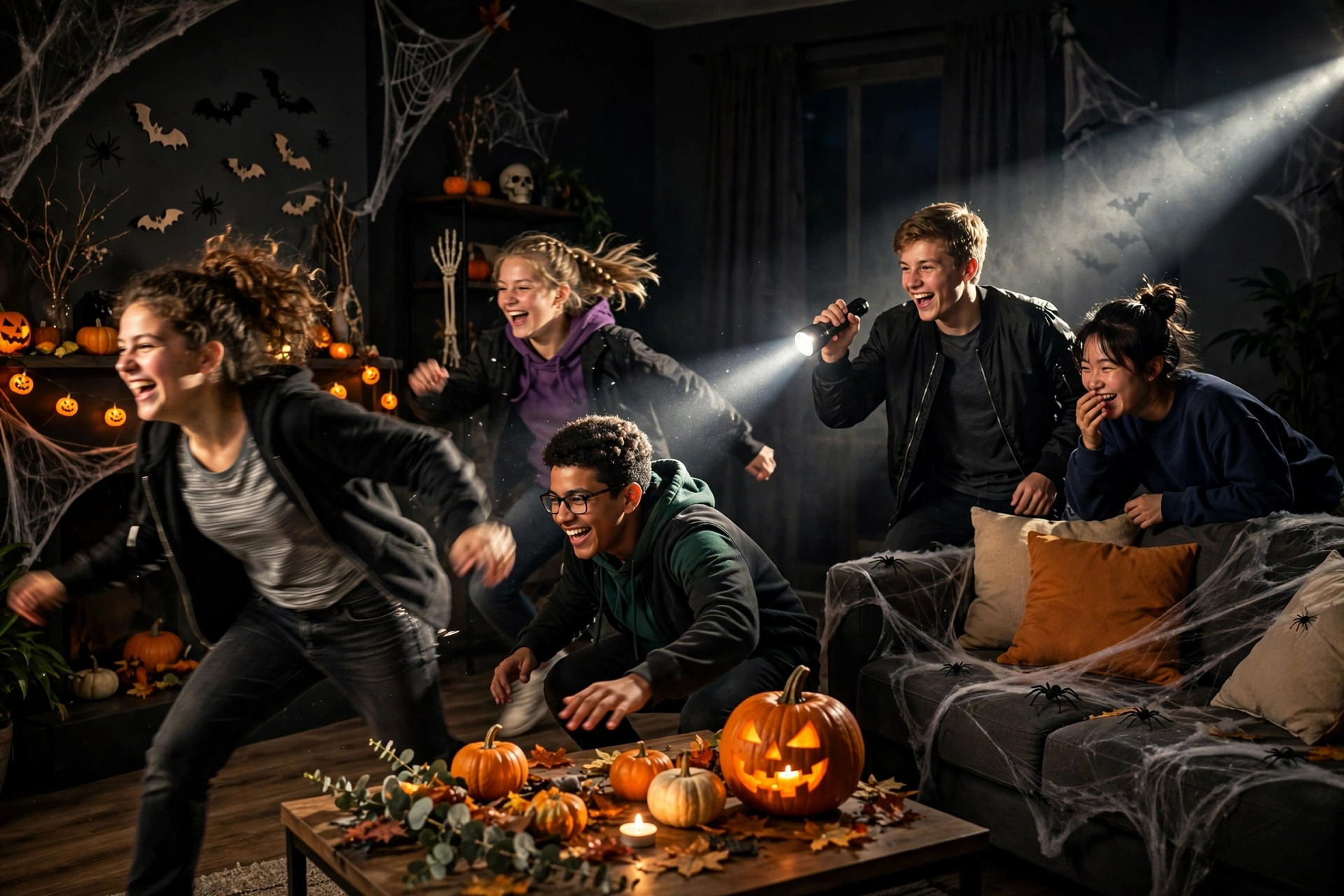
One player is "it" with a flashlight; everyone else hides in one dark room — no leaving the room, no running, just slow creeping. If the beam touches you, you're caught and become a co-seeker. The catch: seekers can only move while the flashlight is off. It turns into a tense, silent shuffle with people freezing mid-step. Works best with 6–10 players and all overhead lights off. Give it 15 minutes, then rotate who's it. The person hiding behind the couch will hold their breath the entire time — that's the point.
3. Fear Factor Bite Challenge — taste-testing the gross stuff blindfolded
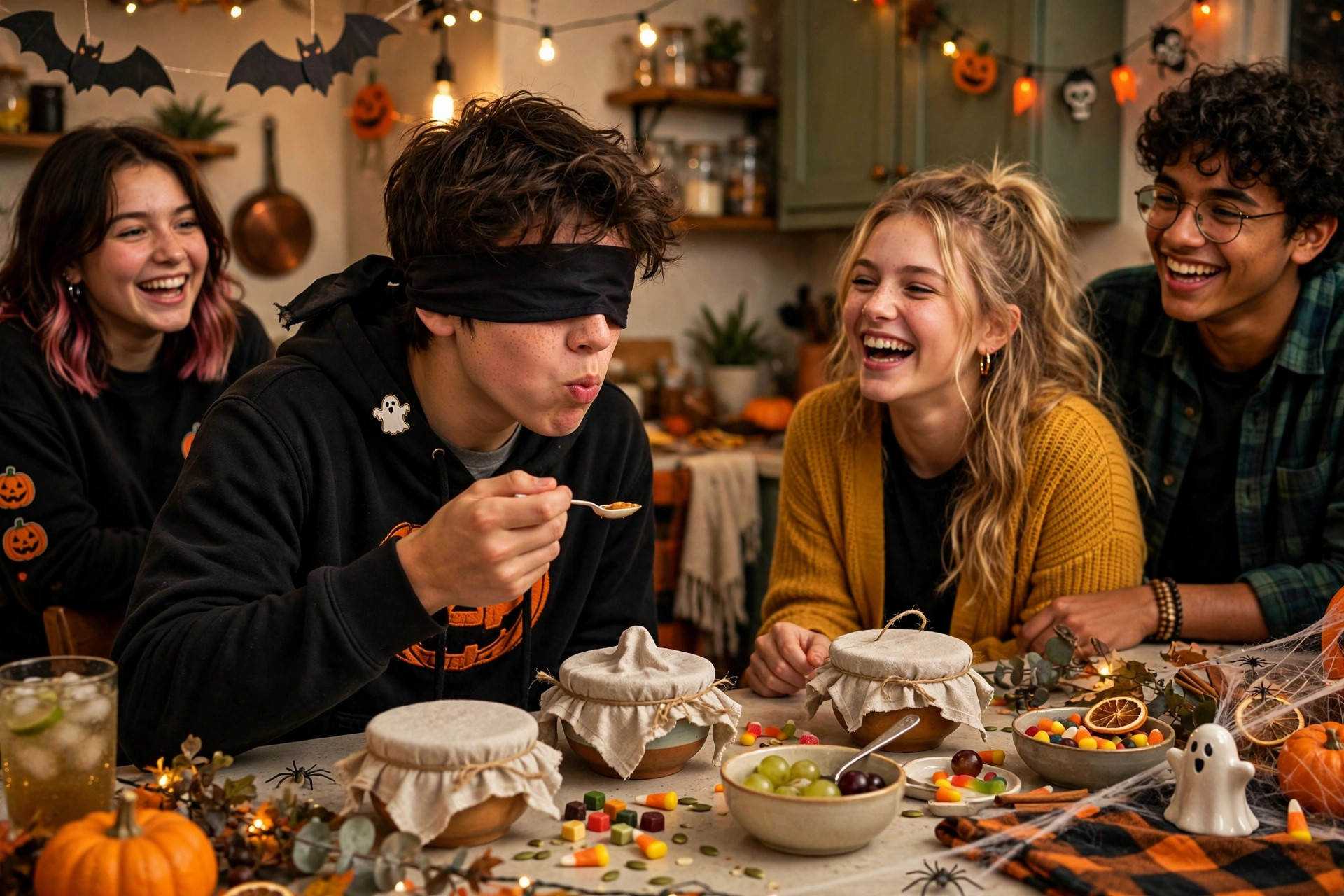
Line up five to seven covered bowls of harmless-but-weird foods: cold spaghetti, peeled grapes, gummy worms in slime-colored gelatin, ketchup-covered marshmallows, tapioca "eyeballs." Blindfolded players have to identify each one by taste or touch alone, writing guesses on paper. One point per correct guess; the lowest scorer has to eat a spoonful of the mystery bowl everyone voted grossest. Keep it strictly food — nothing inedible, no dares with actual risk, and check allergies before you start. If your crew is also doing easy Halloween party appetizers, this is the fun, rowdy middle of the night.
4. Would You Survive — the horror-movie debate game
Pose scenarios: "It's 2 a.m., the power's out, and something just knocked over the trash cans outside — do you go check?" Everyone argues for their choice, then the host reveals the "twist" card (drawn from a stack you make beforehand) that punishes lazy answers. Points for the most creative survival plan, voted by the group. Teens love this because it's really a storytelling game wearing a costume — and the arguments get genuinely heated. Round it at 10 minutes per scenario, three scenarios per game.
5. Costume Swap Relay — dress each other, then strut
Pairs of players get one laundry basket of random clothes, accessories, and old costumes — hats, scarves, wigs, too-big shoes. One partner dresses the other blindfolded (or with a 90-second timer), then the dressed player has to walk a "runway" and stay in character for the group's questions. The pair with the funniest transformation wins. This is why keeping a box of last-minute DIY Halloween costumes supplies around pays off year after year. Works beautifully for 4–8 players and needs zero setup beyond the basket.
6. Halloween Trivia Smackdown — themed, fast, and bet-your-snacks
Five rounds, five questions each: horror movies, Halloween history, spooky pop culture, true crime basics, and a "lightning round" of Halloween would-you-rathers scored as points. Teams of two or three. Here's the trick that makes it work for teens: winners get first pick of the snack table and losers have to refill the chip bowls for the rest of the night. Real, tiny stakes beat prizes nobody cares about. Keep questions on the easier side for round one so everyone lands a few — confidence early, chaos later.
7. The Whisper Chain of Doom — telephone, but the message haunts you
Classic telephone with a twist: the starting message is a spooky rumor ("The guy in the attic keeps moving my shoes while I sleep"). It passes ear-to-ear around the circle, and the final version is read aloud — then everyone votes on which version was actually creepier. Play three rounds and compare how fast the message mutates. Zero supplies, genuinely funny almost every time, and it fills five minutes of dead space while you're setting up the next game.
8. Pumpkin Bowling — hallway edition
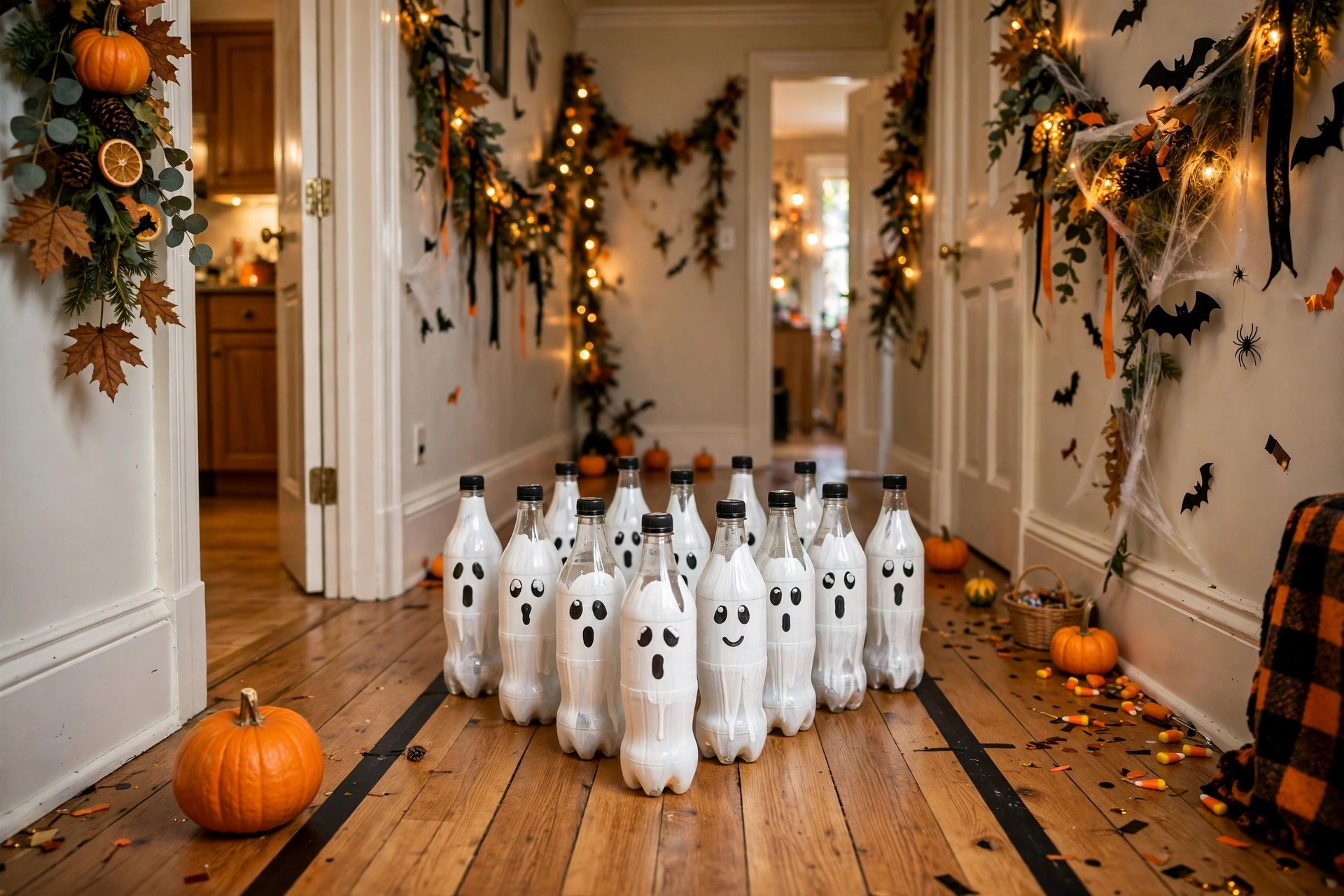
Line up empty soda bottles (painted like ghosts if you're feeling crafty) at the end of a hallway and bowl with a small pumpkin. Two tries each, points for pins down; a strike earns a candy prize, a gutter ball earns a "cursed" dare card (harmless stuff — sing the chorus of a song in a vampire voice). For groups of 4–6 this fills a solid half hour because everyone wants revenge rounds. Put a folded towel behind the pins to protect the wall — your host will thank you.
9. Zombie Freeze Dance with Elimination
Dark room, spooky playlist, one person as the "zombie caller." When the music stops, everyone freezes mid-groove; the caller walks around and taps anyone still moving. But — tapped players don't leave, they become zombies who shamble around and try to make the remaining dancers crack up and move. Last human standing wins. The zombie-interference twist keeps eliminated players in the game instead of scrolling their phones, which is the fastest killer of party energy.
10. Story Builders: The Cursed Object
Place one weird object in the center — a doll, an old key, a jar of something. Going around the circle, each player adds one sentence to the object's backstory. The rule: your sentence has to raise the stakes, not resolve them. If someone tries to end the story early ("and then they threw it away"), the group votes them out for that round. The final story gets written down and read aloud in the dark with a flashlight under the reader's chin. This one consistently produces the night's best inside jokes.
11. Werewolf / Mafia — the one-night classic that rarely misses
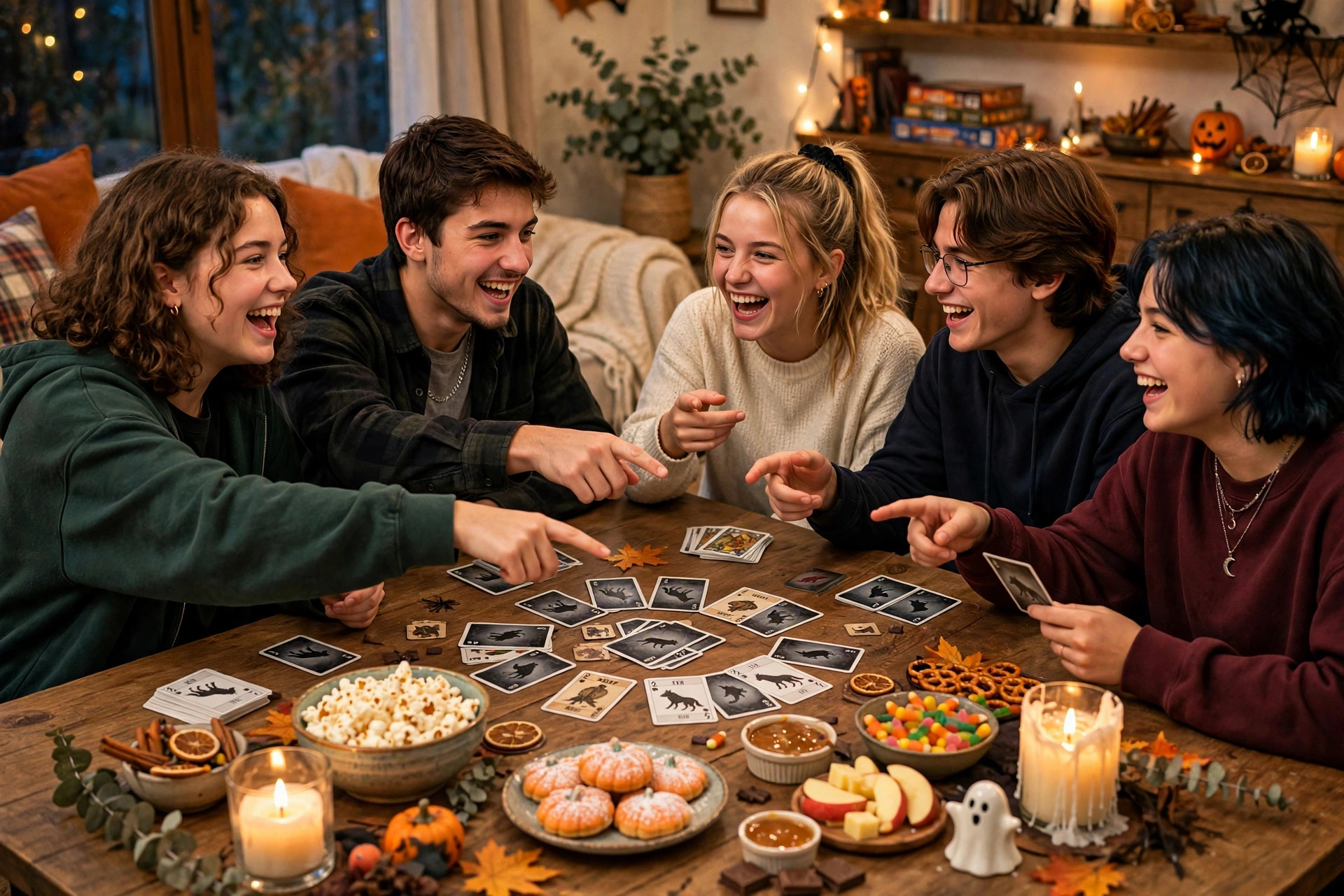
If your group hasn't played social deduction before, fix that. Cards for werewolves, a seer, a doctor, and villagers; one round of accusations and defense, then a vote. It needs nothing but scraps of paper and runs 20–30 minutes, and small groups of 6–10 are the sweet spot — big enough for bluffing, small enough that everyone talks. The trick to keeping it from dragging: one minute per accusation, enforced with a phone timer. Someone will dramatically accuse their best friend in the first round. Someone always does.
12. Scavenger Hunt: 20 Things in 20 Minutes (indoor-only list)
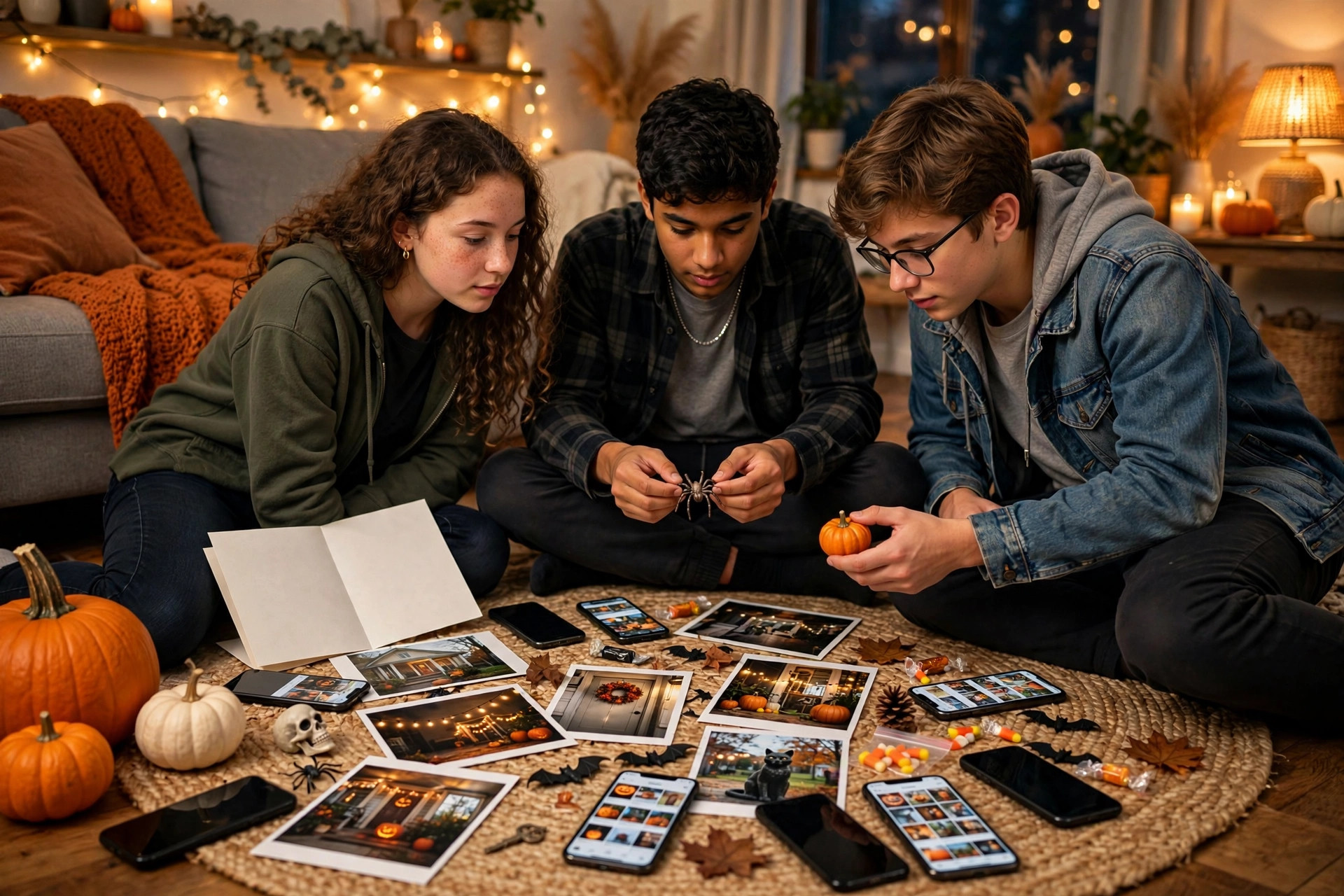
Give teams a list of spooky-finds that all exist somewhere in the house: something orange, something that makes noise, the scariest face in the fridge, something older than the host, a hiding spot you'd survive a zombie movie in. Photo evidence required, 20 minutes on the clock, no leaving the house. Award bonus points for creativity over accuracy. Keep the list to items you know exist so nobody tears the place apart looking for a candelabra. Pair this with some Halloween decor and the house basically decorates the hunt for you.
13. Truth or Dare: Halloween Edition — the card version
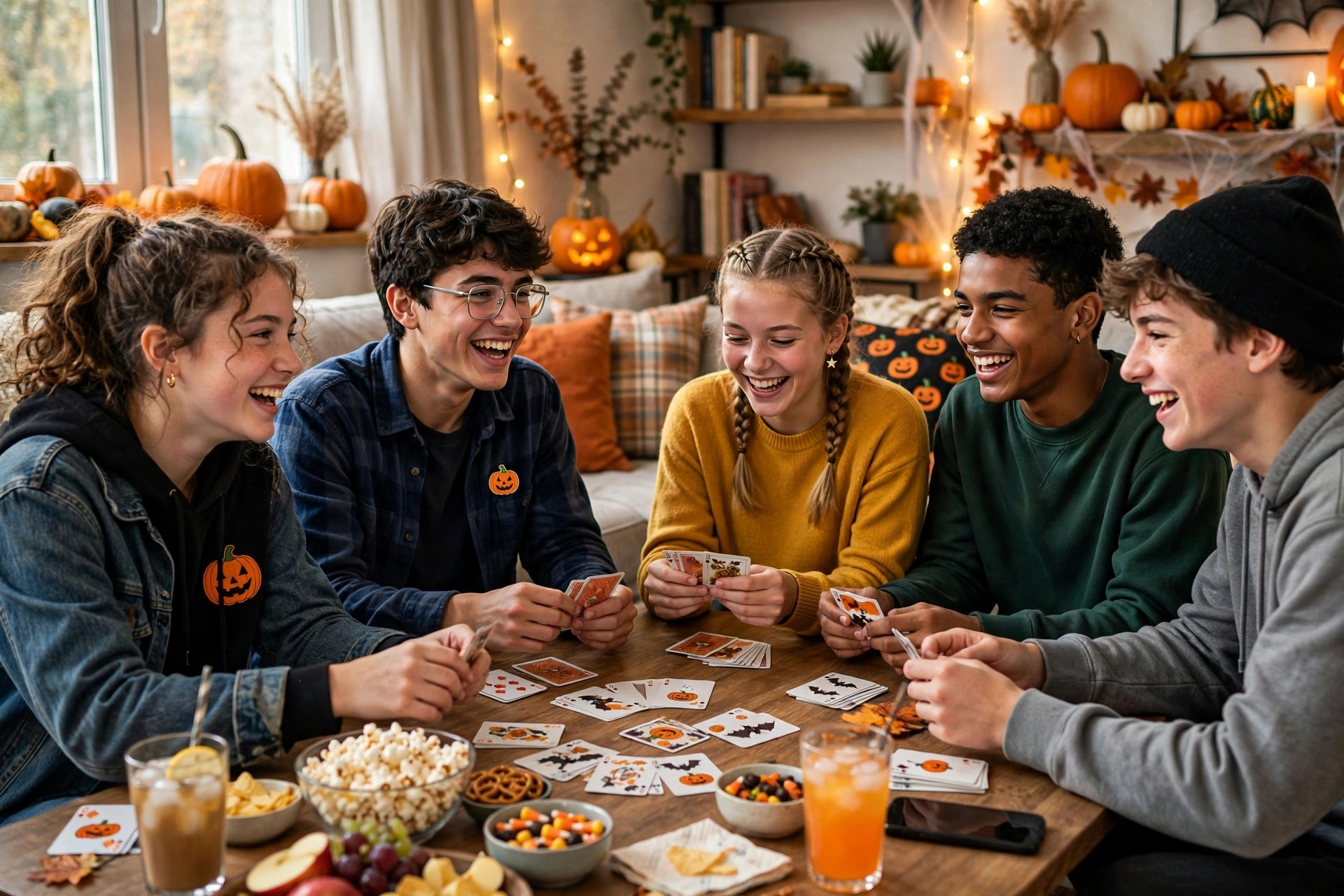
Pre-write 20 truth cards and 20 dare cards before the party — Halloween-themed, edgy but safe (dares like "text your crush a pumpkin emoji with no explanation" or "do your best villain monologue"). Drawing from cards instead of shouting dares on the spot keeps it from going feral and gives shy players cover to participate. Keep the cards face-down in a jack-o'-lantern bowl. Teens will play this longer than you'd expect if the cards are well written — the pre-written part is the whole game.
14. Balloon Pop Roulette — dares hidden inside the pop
Slip a dare or challenge slip inside each balloon before inflating; tape them to a wall. Players take turns choosing a balloon and popping it (safety pin provided, obviously). Inside: dares, bonus-point tokens, or the occasional "cursed" blank that means the player gets to assign a dare to someone else. This is loud and chaotic in the best way, and the physical popping keeps energy high when the night starts to sag. Clean-up takes five minutes with a trash bag per team — make it a race and even that becomes a game.
15. End-of-Night: The Fear Ranking Vote
Close the party with this. Everyone secretly ranks the night's games from best to worst on a scrap of paper; the host reads the results and crowns the winner. Sounds simple, but teens genuinely enjoy the post-mortem — and the host learns what to run again next year. Hand the winning game's "champion" a ridiculous trophy (a plastic skeleton from the dollar store works perfectly). It ends the night on a high instead of the awkward "so… are we done?" drift.
Indoor Halloween Party Games for Teens I'd Skip (and What to Run Instead)
Pin the Tail on Anything, bobbing for apples, and musical chairs feel patronizing to anyone over 12 — they read as "kid games with a Halloween label." The pattern in the winners above: teens want agency, mild embarrassment, and something to argue about. If a game doesn't give them at least one of those three, it dies in five minutes. When in doubt, pick the game where they get to perform, debate, or bluff.
Next step: lock in your party look — grab a costume from these last-minute DIY Halloween costumes and set up the snack table with these easy Halloween party appetizers.
Four is the real minimum for most of these — anything below that and team games fall apart. Six to ten is the sweet spot where social deduction, scavenger hunts, and relays all work without long waits between turns.
Almost nothing. Scraps of paper, a flashlight, a timer on someone’s phone, random clothes from a closet, and whatever snacks are already out. The scavenger hunt and pumpkin bowling use stuff you’d find in any house, which is the point — no party-store run required.
Give them stakes, strategy, or performance. Social deduction, timed debates, and blind taste tests work because teens are competing, bluffing, or being funny on purpose — not following instructions like little kids. Anything with a “crown the winner” ending lands better than anything with participation trophies.
Plan 10 to 20 minutes per game, and always have the next one queued before the current one dies. Teens lose interest fast once energy dips — three or four short games in a row beats one 45-minute epic that fizzles halfway through.
Frequently Asked Questions
How do you play murder mystery with a small group of teens?
Deal each player a folded card: one murderer, two witnesses, everyone else innocent. Tape off one room as the crime scene, and the murderer kills by tapping someone's shoulder in a dark room. Victims lie where they fall until discovered, and witnesses can only answer yes-or-no questions during the accusation round, which keeps everyone in the game.
Can you play flashlight tag indoors?
Yes, with rules that kill the running. One player is it with a flashlight while everyone else hides in one dark room, no leaving the room, just slow creeping. The twist: seekers can only move while the flashlight is off. Caught players become co-seekers, and it works best with 6 to 10 players and all overhead lights off.
What is the Fear Factor bite challenge for a teen Halloween party?
Line up five to seven covered bowls of harmless-but-weird foods, like cold spaghetti, peeled grapes, gummy worms in slime-colored gelatin, ketchup-covered marshmallows, and tapioca eyeballs. Blindfolded players identify each by taste or touch and write guesses on paper, one point per correct guess. Keep it strictly food, nothing inedible, and check allergies before you start.
What prizes actually motivate teens at a party?
Tiny real stakes beat bought prizes nobody cares about. Winners get first pick of the snack table and losers have to refill the chip bowls for the rest of the night. For a closing trophy, a plastic skeleton from the dollar store handed to the night's champion lands better than any participation prize.
What party games should you avoid with teenagers?
Pin the Tail on Anything, bobbing for apples, and musical chairs feel patronizing to anyone over 12; they read as kid games with a Halloween label. Teens want agency, mild embarrassment, and something to argue about, so pick games where they perform, debate, or bluff. If a game gives them none of those three, it dies in five minutes.