Low-Mess Thanksgiving Kids’ Table Ideas: The Craft Paper Method
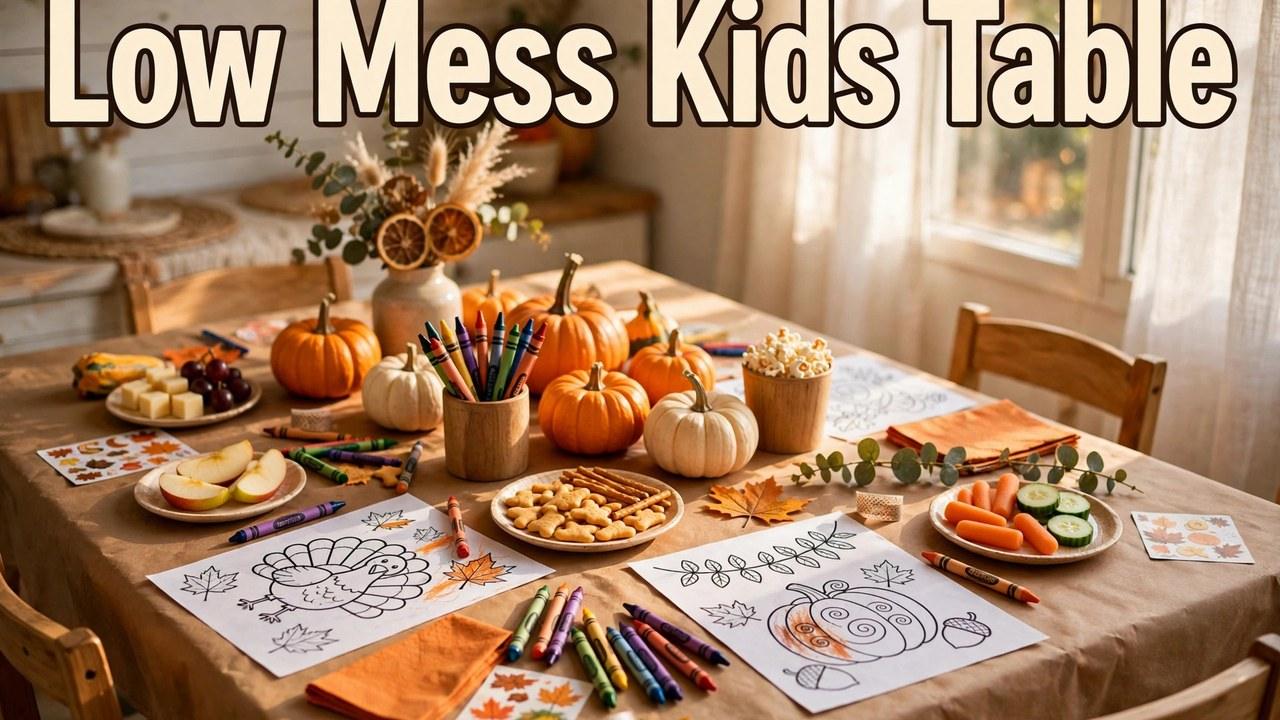
Here's the whole system in one sentence: cover the kids' table with kraft paper, tape it down hard, and let the paper be the tablecloth, the entertainment, and the trash bag. These low-mess thanksgiving kids table ideas are built around that single move, and if you take nothing else from this guide, take that. You'll spend about twenty minutes setting up, the kids will stay busy through two courses, and cleanup is literally rolling the paper into a tube.
The separate-kids'-table setup works best when nobody is policing the table — the whole point is a zone where mess is allowed. The paper does the policing for you.
Why does kraft paper beat a tablecloth or a plastic cover?
A tablecloth at a kids' table is just a stain you're pre-ordering. Cranberry sauce, gravy, marker — something's going on it, and you'll be spot-treating at 10 p.m. while everyone else watches the game. Plastic covers sound smart until you watch a crayon skate across one and a marker smear into a gray streak. Kids can't draw on plastic, so they get bored, and bored kids are the actual mess.
Kraft paper solves all three problems at once. It grips crayons and markers the way real paper should. It absorbs a small spill instead of letting it run across the table. And it costs a few dollars a roll, so when dinner's over you don't wash it — you roll the entire crime scene up like a burrito and recycle it. What's not to like?
One honest caveat: thin paper can let a heavy marker bleed through onto the wood underneath. The setup section below covers how to handle that — it takes about thirty extra seconds.
What do you actually need to buy?
Short list. A roll of kraft paper, 24 to 36 inches wide — the brown kind, not white butcher paper, because brown hides a multitude of sins and looks properly autumnal. Painter's tape for a wood table you care about, regular masking tape for a folding card table. Washable markers for kids five and up, chunky crayons for the under-five crowd. Paper plates with rims (the flat ones are just frisbees waiting to happen), and lidded cups or sippy cups.
That's genuinely it. If you want to get fancy, a cheap cookie sheet from the dollar store makes an excellent "drink tray" — all the cups live on it, so one tipped cup floods a tray instead of the table. One tipped cup of apple juice across an entire place setting is all it takes to convert to this method. The tray caught the whole thing.
How do you tape it down so it doesn't slide?
This is the step people half-do, and then they spend dinner re-smoothing the paper while a three-year-old "helps." Do it right and it won't budge.
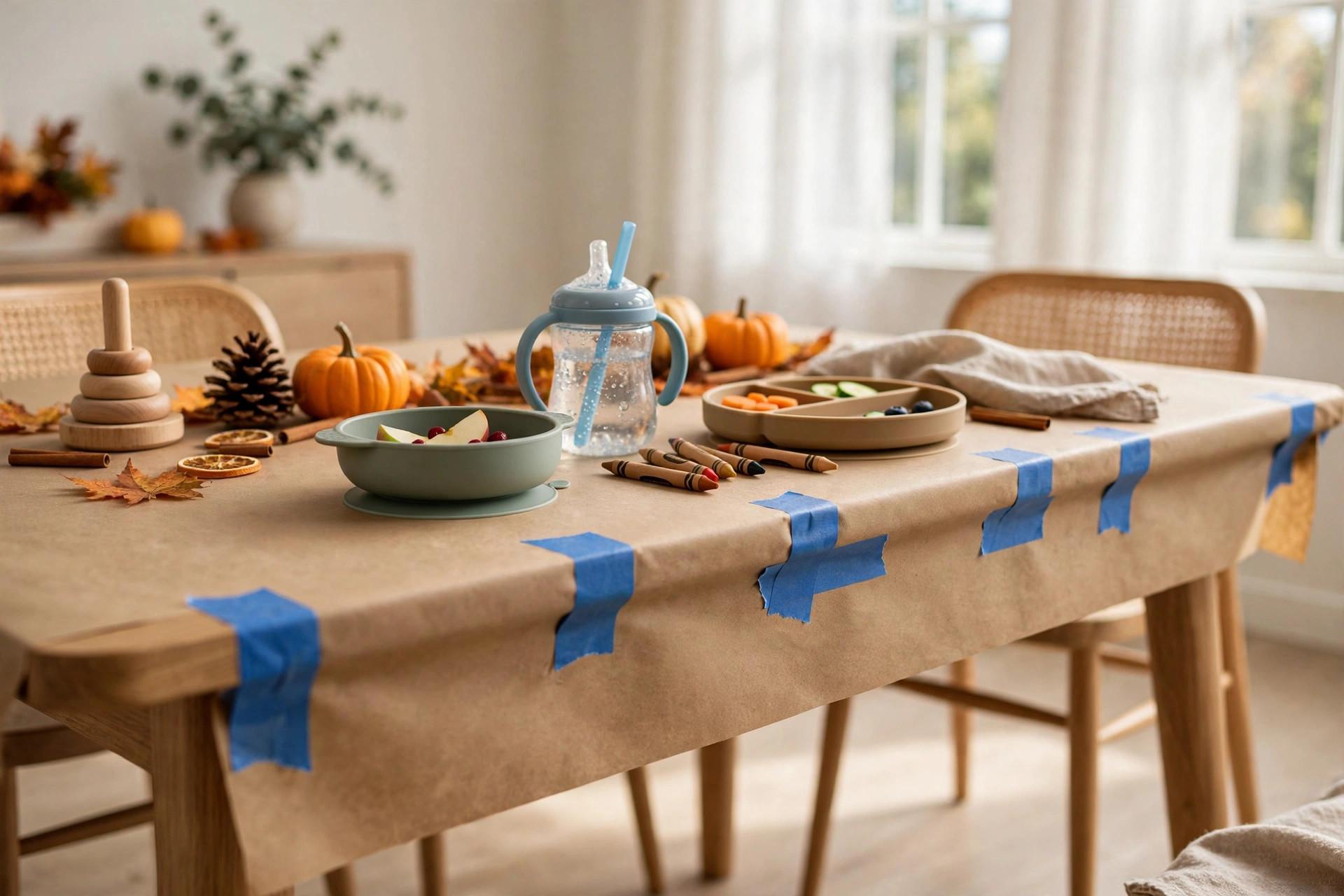
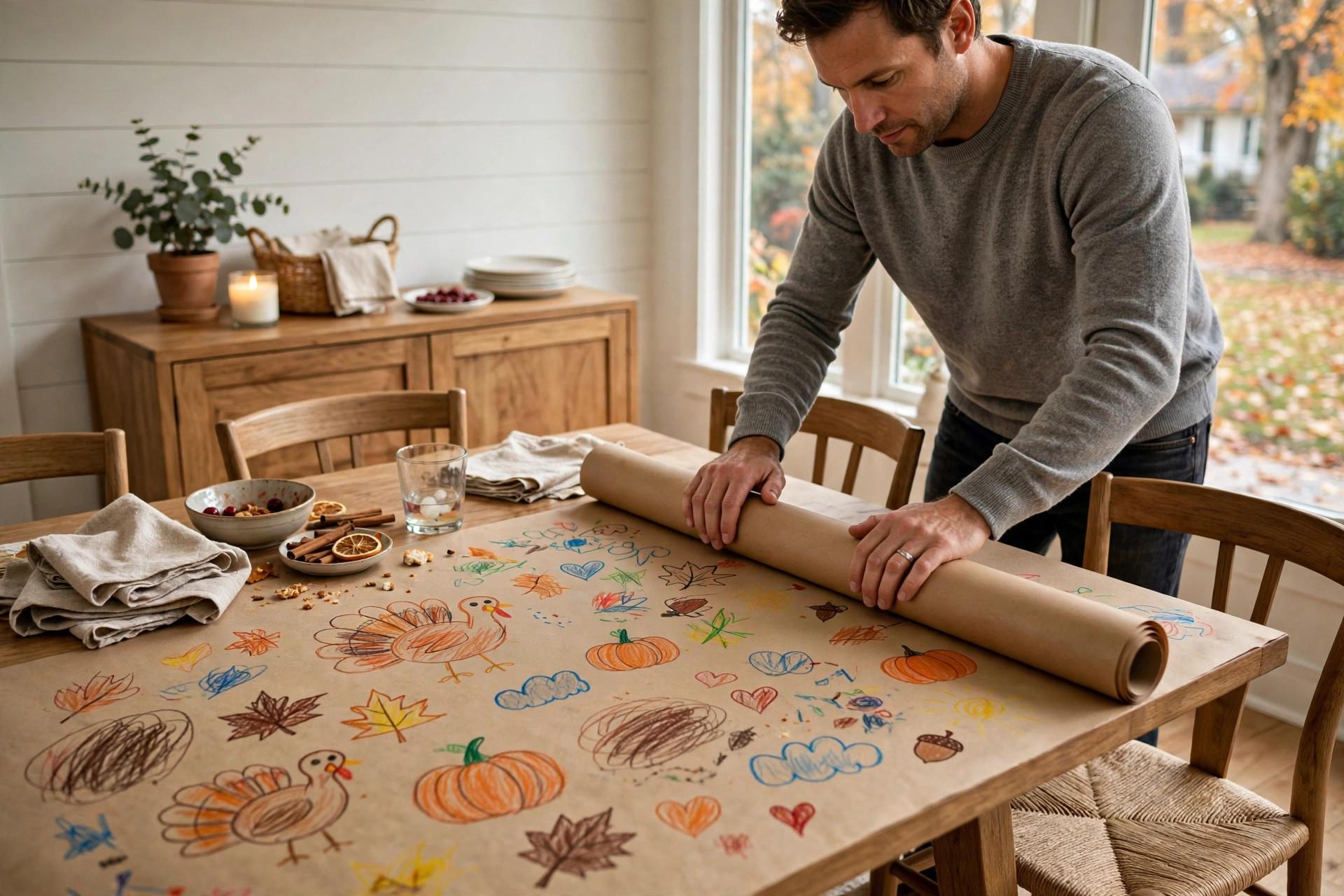
Wipe the table first — dust kills tape adhesion. Unroll the paper with six to eight inches of overhang past each short end, and let it hang. Then tape the overhang to the underside of the table, not the top: a strip of tape every six inches or so underneath the edge. Taping under the edge means little fingers can't pick at it, and there's no tape ridge on the drawing surface.
Here's the bleed-through insurance: if the table underneath matters to you — grandma's dining table, a rental — lay a cheap plastic tablecloth or a cut-open trash bag on the table first, then the paper over it. Thirty seconds of work, and you can hand out markers with total confidence. For a folding card table nobody loves, skip it; the paper alone is fine.
What activities work right on the paper — no printing, no prep?
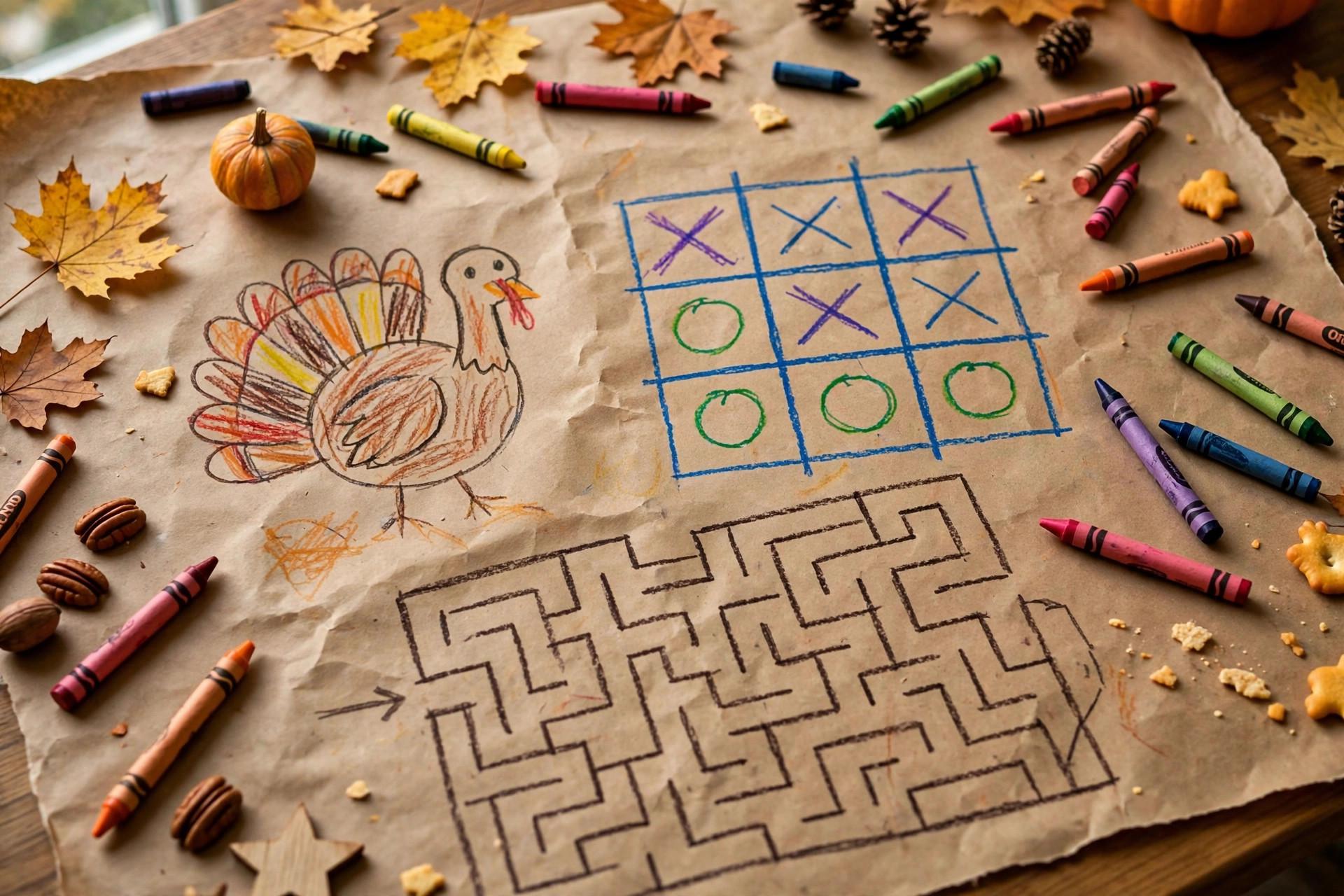
This is where the system earns its keep. Before the kids arrive, take five minutes with a black marker and pre-draw a few things directly on the paper. Tic-tac-toe grids, three or four of them, scattered down the table. A simple maze running down the center. Half a pumpkin with "finish me" written next to it. A column at each seat that says "I'm thankful for ___" with a few blank lines.
Then let them loose with the hand-turkey, the classic for a reason: trace your hand, the thumb becomes the head, the fingers become feathers, and every kid decorates differently. It works for a four-year-old and a ten-year-old, which is rare. Connect-the-dots is another good one — dot out a rough turkey or leaf shape with a pen, number the dots, and let a bigger kid connect them while the littles color nearby.
And leave one stretch of paper completely blank. Kids always fill blank space faster than structured prompts. Kids just do.
Should toddlers and big kids get the same supplies?
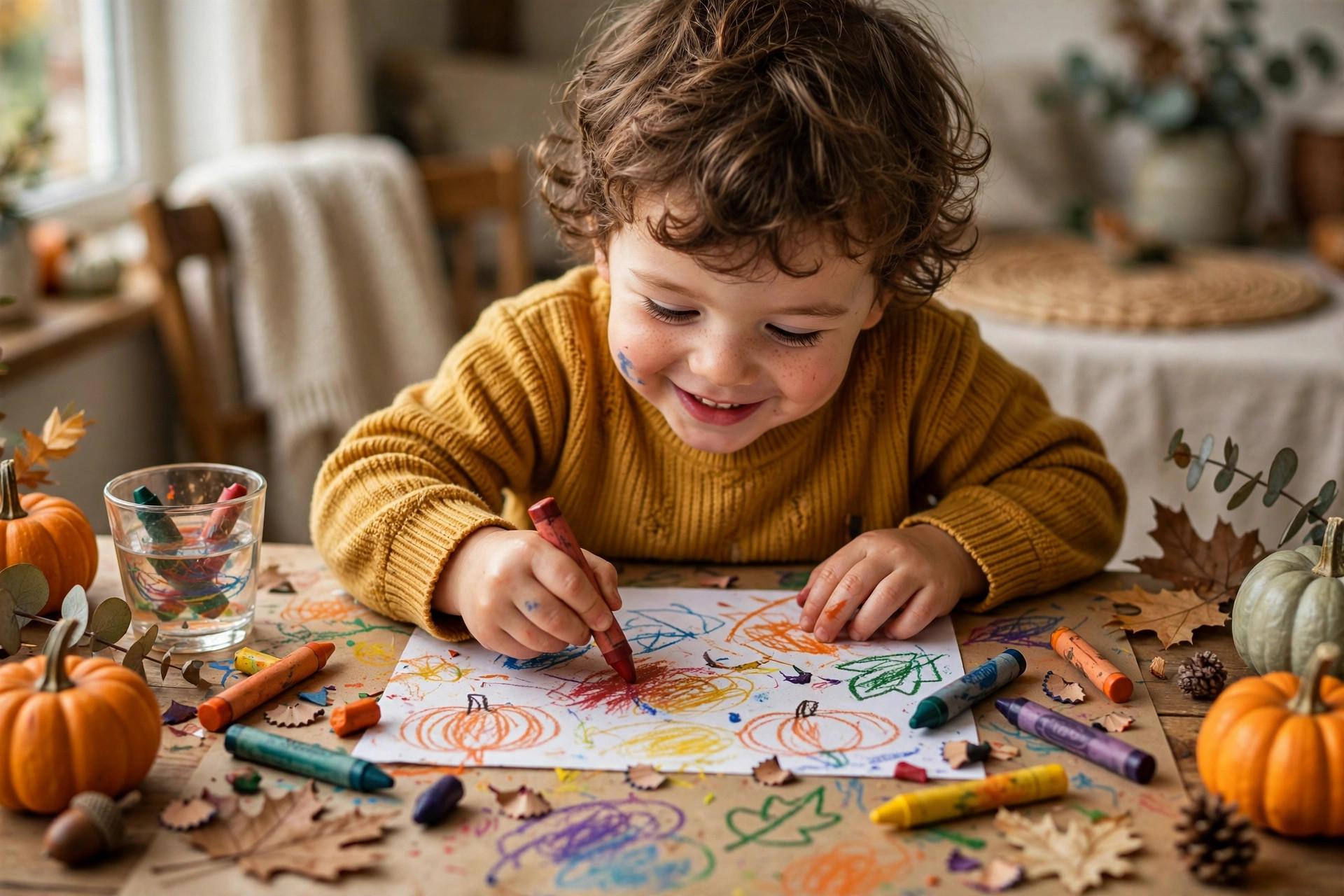
No, and this is the age-zoning part. Under about four, it's crayons only. No caps to lose, nothing that stains if it goes on a cheek, and a crayon rolling off the table is a non-event. Five and up can have washable markers — the color payoff is so much better that it's worth it, and at this age they can mostly be trusted with caps.
One hard rule worth settling on: no glitter, ever, in November or otherwise. It does not come out of carpet, it migrates to the adult table, and you'll find it in February. Stickers are borderline — kids love them, but half end up on the dog or the wall. If you bring stickers, bring the puffy kind; they're easier to peel off surfaces later.
If there's a big age gap — say, a two-year-old and a nine-year-old — seat the littlest one next to a parent at the end of the table. The parent can quietly redirect without running the whole show, and the big kids get their own stretch of paper to go wild on.
What kind of place setting survives a four-year-old?
Rimmed paper plates, always. The flat ones launch food at the slightest bump, and a rim is the difference between mashed potatoes staying put and mashed potatoes becoming wall art. Forks only for the little ones — skip the knife, nobody needs a four-year-old sawing at a dinner roll.
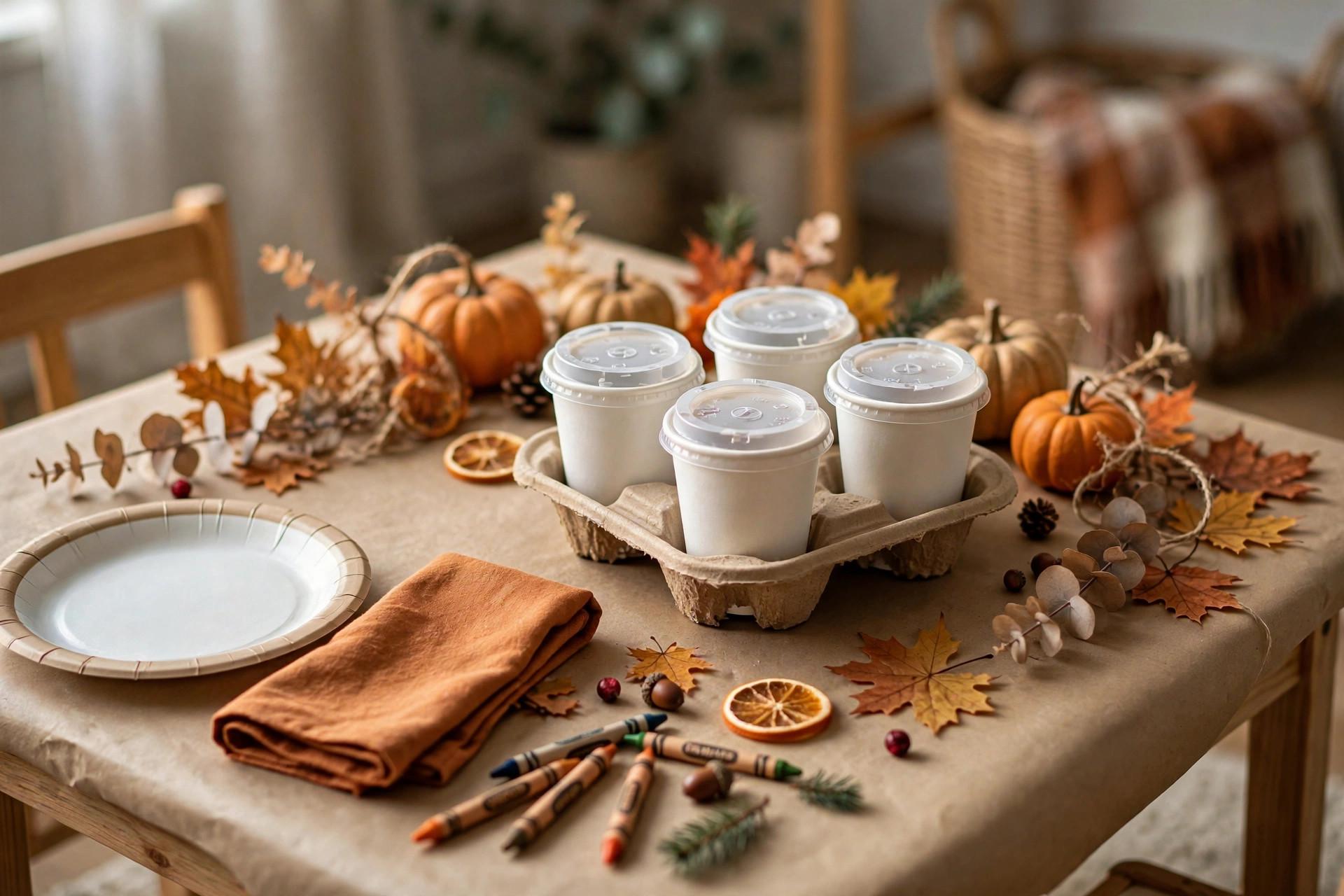
Lidded cups are the single biggest spill-prevention upgrade you can make. Sippy cups for toddlers, cups with lids and straws for the bigger kids. And here's a small thing that saves shirts: serve water or apple juice, not red juice or cranberry juice. Clear drinks stain nothing. If a kid really wants the red stuff, that's a decision for their parent, not for your table.
Tuck a napkin under each plate so it doesn't blow away, and keep the drink tray mentioned earlier at the center of the table. All cups live on the tray. It looks a little like a cafeteria, and it works like one too — which is the point. If you're putting out pre-dinner snacks for the table, our nut-free Halloween treats list has a few ideas that carry over well — just check with parents on allergies first, since every kid's list is different.
What's the setup order on Thanksgiving Day?
Morning, whenever you have ten spare minutes: tape the paper down. That's it for the morning — the table can sit there looking like a wrapped present all day.
An hour before the kids arrive: pre-draw your tic-tac-toe grids, the maze, the thankful columns, the half-pumpkin. Set out crayons and markers in cups or small bowls — one cup per three kids is plenty, and cups tip less than a big shared pile. Set the place settings on top. Put the drink tray in the middle with the cups already on it.
When the kids arrive, walk them to the table and show them the paper is for drawing on. Say it out loud — "you can draw right on the table" — because the first minute, they won't believe you, and then they will never forget it. That's the moment the system clicks.
What do you do with the kid who won't sit at the kids' table?
There's always one. Usually a five-year-old who has decided they're "basically a grown-up" and wants the adult table, or a toddler who treats any chair as a suggestion. Don't fight it — the paper system is flexible.
For the aspiring grown-up, offer a compromise: they can sit at the adult table for the first course if they want, and the kids' table stays set up for later. Most of them migrate back within twenty minutes once they realize the adult table has no crayons and a lot of boring conversation. For the toddler who won't stay put, don't chase them around the dining room. Put their plate where they'll actually eat — the coffee table, a booster at the adult table, wherever — and let the kids' table be home base rather than a prison. The paper will still be there when they circle back to draw, which they will.
Can you reuse these low-mess Thanksgiving kids' table ideas for other holidays?
Absolutely — the system doesn't care what holiday it is. The same kraft-paper trick works for Christmas cookie decorating (the paper catches the sprinkles), birthday parties, and Easter mornings when the egg dye stays on the paper instead of the tablecloth. The only change needed for dye or paint: double up the paper or put the plastic layer underneath, because liquids soak through single-ply faster than you'd think. Same twenty-minute setup, same one-roll cleanup, any occasion where kids and food share a table.
How does cleanup actually go?
You lift the plates and cups, peel up one taped end, and roll. The crayons, the crumbs, the dried gravy, the hand-turkeys — it all rolls into one tube. Straight into the recycling or the trash. Timed: under five minutes, and that includes wiping the table underneath.
Compare that to a tablecloth year, where you're scraping plates, shaking crumbs onto the floor, and starting a load of laundry before dessert. The paper system doesn't just reduce the mess — it deletes the entire category of "things to clean" and replaces it with one satisfying roll. Honestly, it's the most relaxed part of Thanksgiving.
If your crew is the crafty type year-round, our no-sew DIY kids Halloween costumes run on the same philosophy — simple materials, minimal prep, big payoff for little hands. And for the snack side of the table, these easy Halloween party appetizers have a few finger-food tricks that transfer straight to a kids' Thanksgiving spread.
Tape the paper’s overhang to the underside of the table, not the top — a strip of painter’s or masking tape every six inches. Underside taping means little fingers can’t peel it up and there’s no tape ridge on the drawing surface.
They can, especially with thin paper and heavy coloring. Lay a cheap plastic tablecloth or a cut-open trash bag under the paper first if the table matters to you — it takes thirty seconds and removes the worry entirely.
Hand-trace turkeys, pre-drawn tic-tac-toe grids, a maze down the center of the table, “I’m thankful for” columns at each seat, and half-drawn pumpkins for kids to finish. Leave one stretch blank — kids fill empty space on their own.
Use lidded cups or sippy cups, put all drinks on a cookie-sheet “spill tray” in the center, choose rimmed paper plates, and serve clear drinks instead of red juice. Small spills get absorbed by the paper; big ones get rolled up with it.
It usually works well from about age three to ten. Seat toddlers at the end next to a parent, give under-fives crayons instead of markers, and let teens graduate to the adult table — they’ll want to, and the little kids will enjoy the extra elbow room.