15 Tiny House Wardrobe Storage Ideas That Fit 400 Square Feet
A tiny house wardrobe isn’t a smaller version of a regular closet. It’s a completely different design problem: your clothes have to live in the walls, under the floor, inside the stairs, and sometimes behind the couch — because there is no closet, and there never will be. The people who make tiny-house storage work all learned the same lesson: in 400 square feet, every garment has to justify its footprint.
1. Drawers Built Into the Loft Stair Risers
If your tiny house has a sleeping loft with stairs (not a ladder), each riser is a drawer waiting to happen. Standard stair drawers hold folded clothes beautifully — roughly two drawers per outfit category. This is the single highest-capacity hidden storage in most tiny houses, and it costs nothing extra if you plan it during the build rather than retrofitting.
2. The Under-Loft Dresser Wall
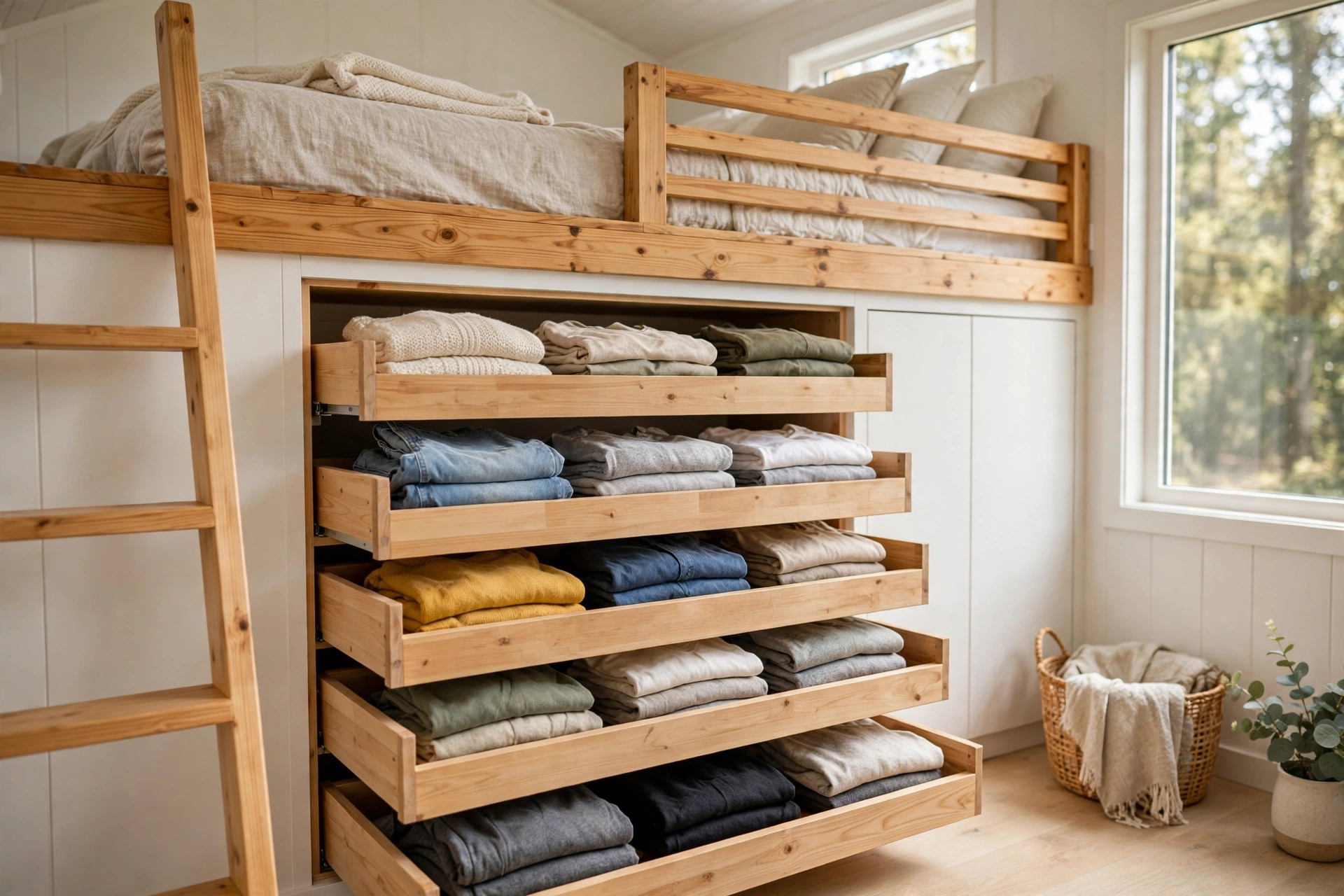
The wall beneath a sleeping loft is typically dead space with a sloped ceiling. A low dresser run — 24 to 30 inches tall — slides right under it and holds an entire folded wardrobe. Keep the top surface clear as a landing strip for tomorrow’s clothes; in a tiny house, horizontal surfaces are too precious to waste on decor.
3. Fold-Down Closet on a Hinge
A shallow cabinet (10–12 inches deep) hinged at the bottom folds down from the wall to reveal hanging clothes, then folds flat when not in use. It sounds gimmicky until you live with one: the hanging clothes stay wrinkle-free, and the wall is just a wall the other 23 hours of the day. Mount it where a door swing won’t collide with it.
4. The Rolling Garment Rack (Done Right)
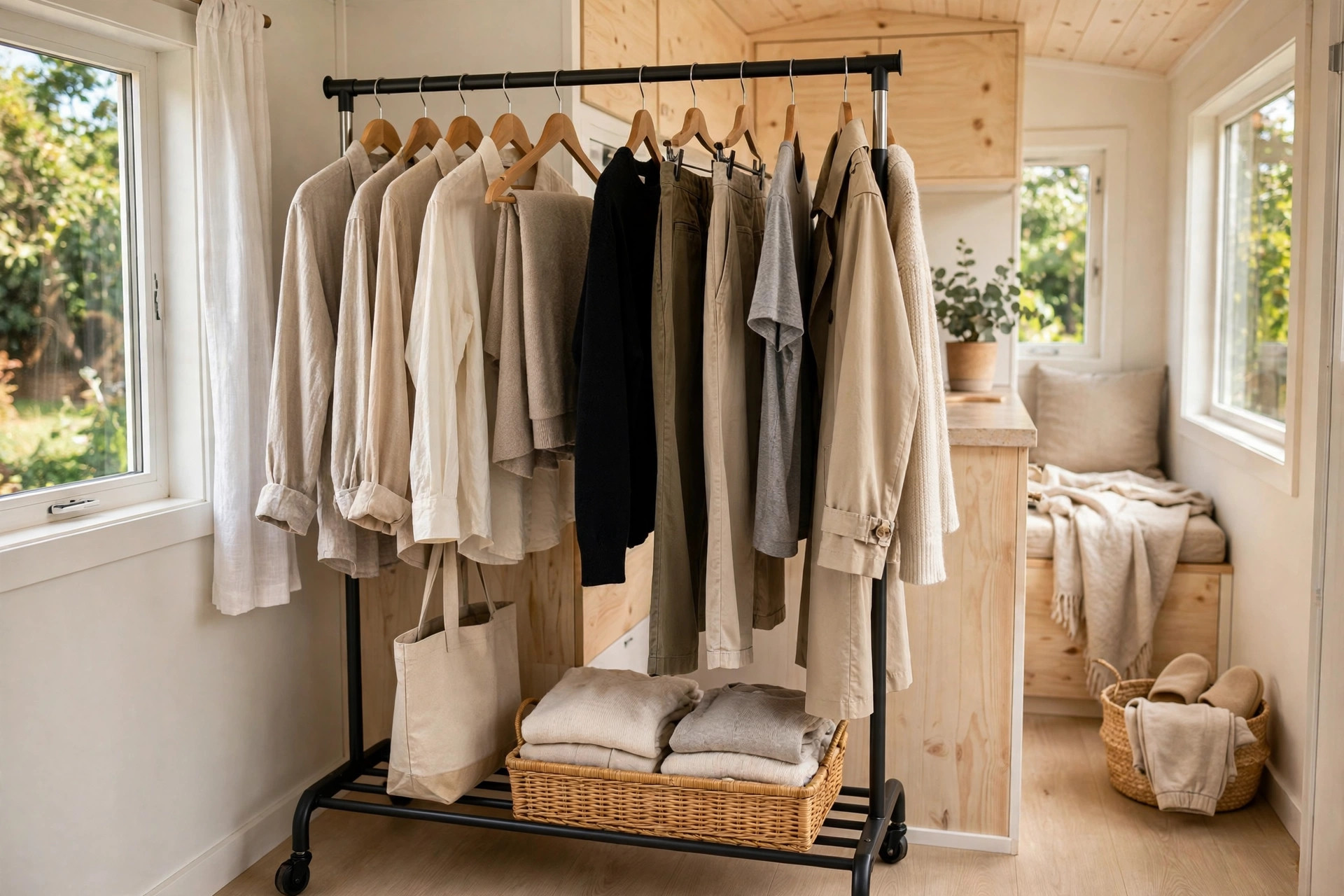
Every tiny house has a garment rack; the successful ones treat it as a curated display, not overflow. Cap it at 10–12 pieces — your current week’s rotation — and store everything else behind closed doors. A rack with a lower shelf for shoes and a top shelf for bins earns its floor space. A rack that’s just where clean laundry goes to die does not.
5. Under-Bed Drawers on Locking Casters
Tiny house beds sit high for a reason, and the space underneath should be drawers, not a void. Build them on locking casters so they roll out fully for access and lock in place for travel days (if your tiny house moves). Out-of-season clothes live here in vacuum bags; in-season folded clothes live in the top drawers.
6. Behind-the-Door Real Estate, Multiplied
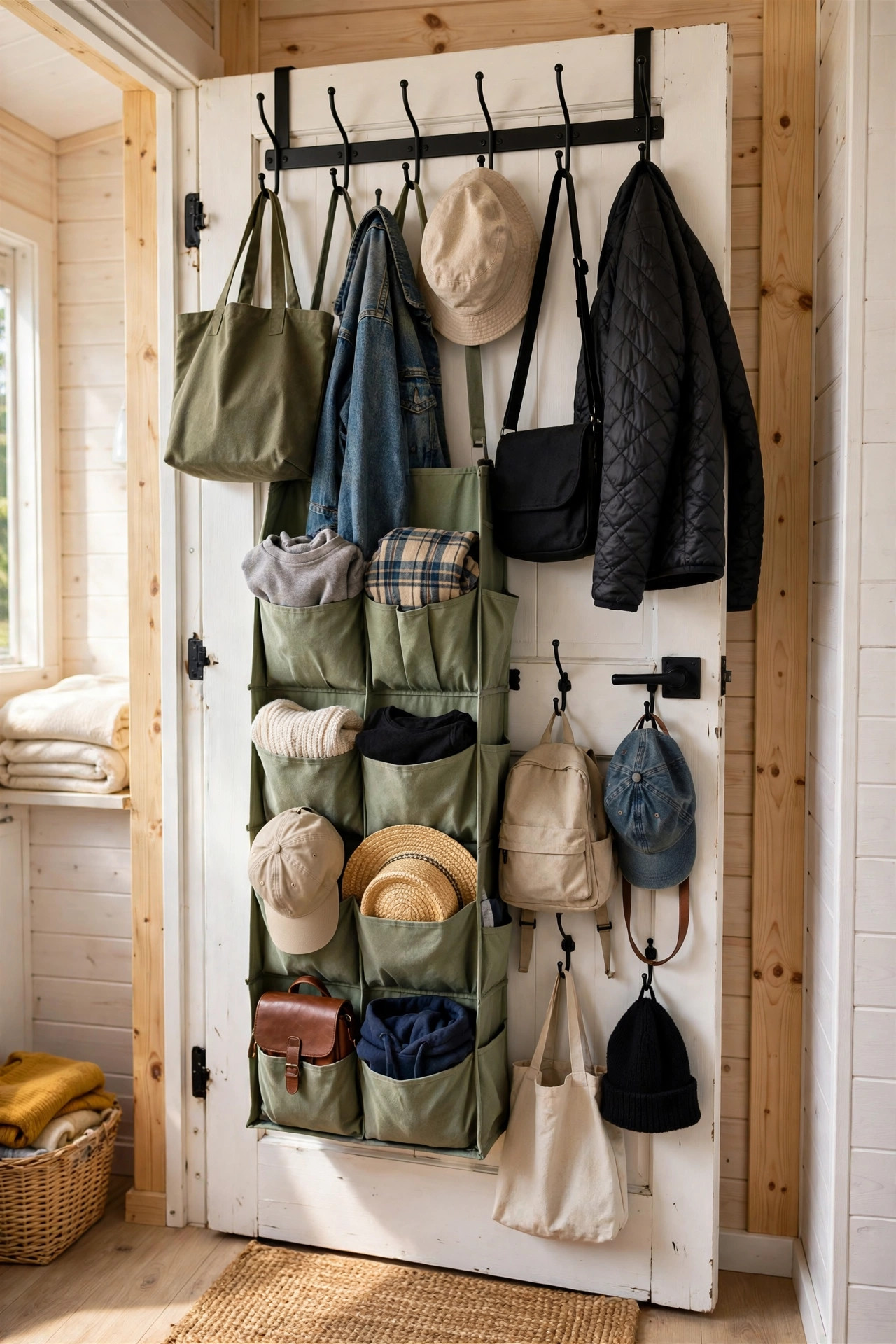
In a tiny house you might have three doors total, and each one is a storage wall. Over-the-door organizers on the bathroom door hold undergarments and sleepwear; on the entry door, jackets and bags; on the loft hatch, tomorrow’s outfit. It’s not glamorous, but three doors of pocket organizers replace an entire dresser.
7. Staircase Treads That Lift Up
Beyond the riser drawers: hinged stair treads that lift to reveal deep cubbies. These swallow bulky items — sweaters, jeans, boots — that don’t fold neatly into drawers. The trade-off is access speed; you won’t lift a tread for socks. Reserve these for the weekly-rotation stuff, not daily grabs.
8. The Capsule Math (Non-Negotiable)
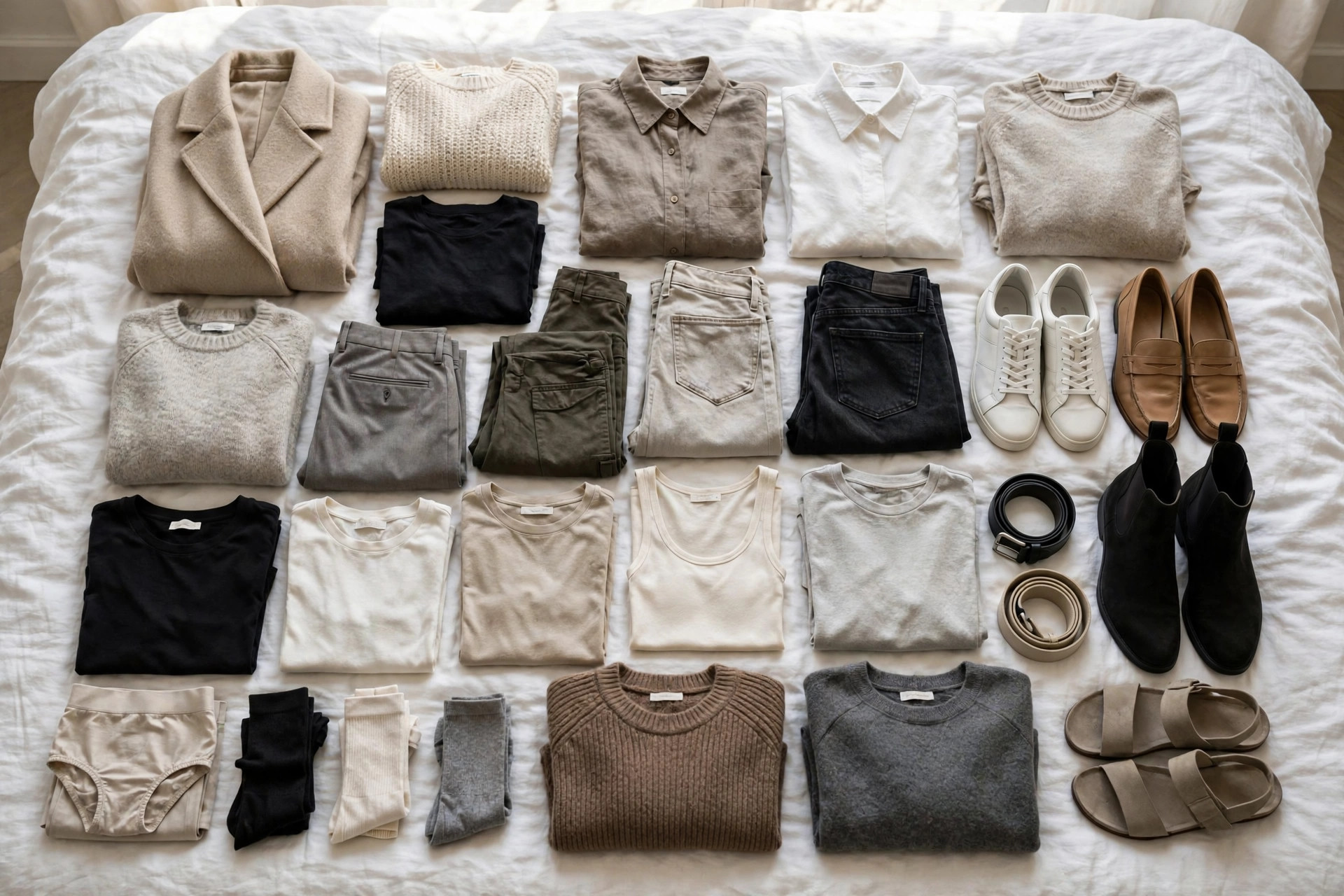
Here’s the honest part most tiny house content skips: no storage hack compensates for owning 80 garments in 400 square feet. The math that works is roughly 30–35 pieces total including shoes and outerwear, with a seasonal swap bin stored outside the living space (a shed, a vehicle, a family member’s garage). Tiny house dwellers who fight the wardrobe battle are almost always fighting a volume problem, not a storage problem.
9. Vacuum Bags as Structural Storage
In a sticks-and-bricks house, vacuum bags are for seasonal storage. In a tiny house, they’re everyday infrastructure. Off-season clothes compressed to a third of their volume slide into the 6-inch gap beside the water heater, under the couch, behind the loft knee wall. Buy the good bags with the double-zip seal; the cheap ones leak air within weeks and you’ll recompress everything monthly.
10. Magnetic Strips and Hooks on Every Stud
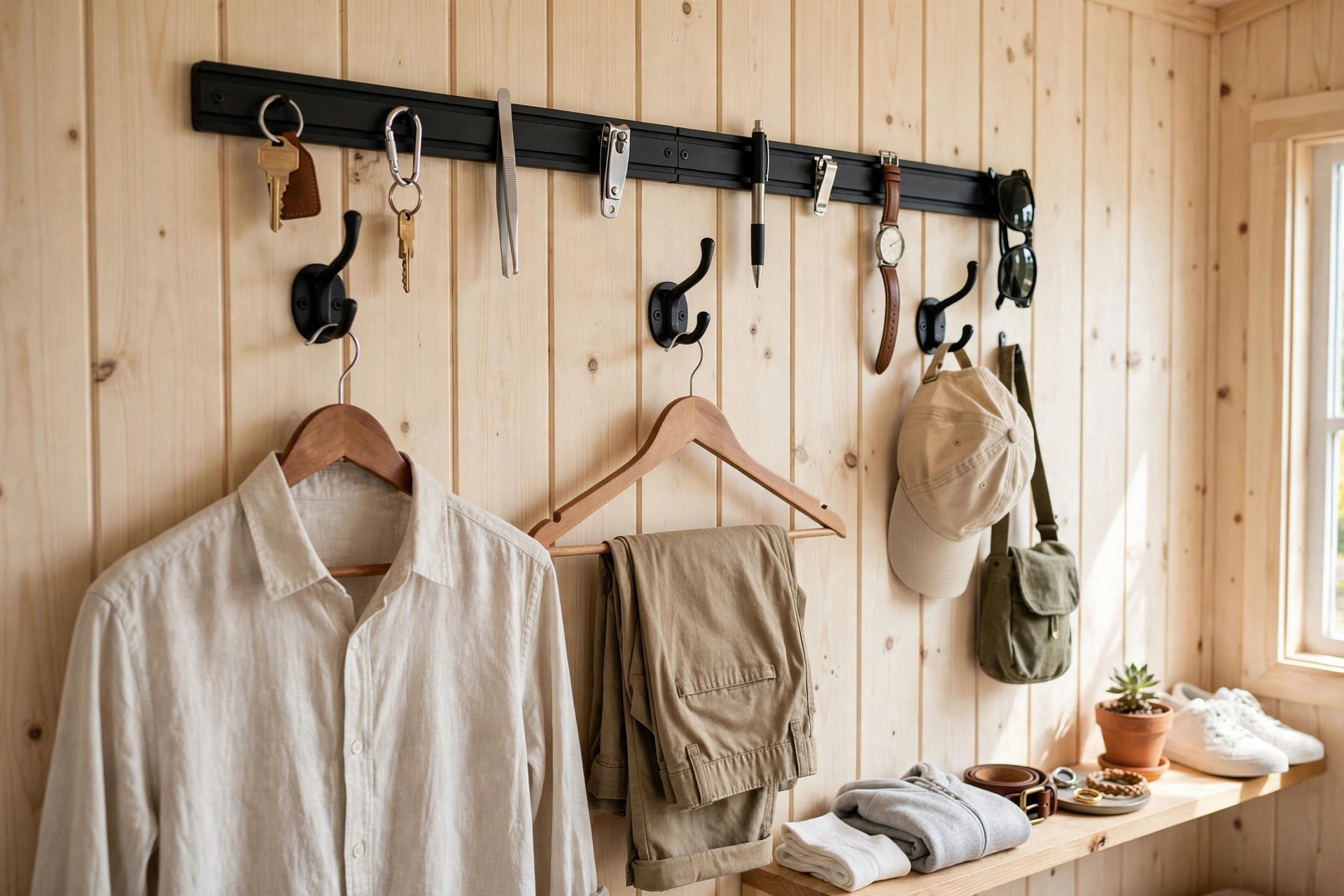
Tiny house walls are structural gold — every stud is a mounting point. Magnetic strips hold bobby pins and small metal accessories; heavy-duty hooks hold tomorrow’s outfit, robes, and bags. The “one hook per outfit” trick: each person gets a single hook by the bed, and tonight’s tomorrow-clothes live there. It ends the chair-drobe.
11. The Entry “Mud Closet” — Even a 2-Foot One
Carve out even 24 inches near the entry for a tall narrow cabinet: coats, shoes, bag, done. Without it, outerwear migrates across the entire house within days. This cabinet is the immune system of tiny house tidiness — small, but everything depends on it.
12. Loft Knee-Wall Cubbies
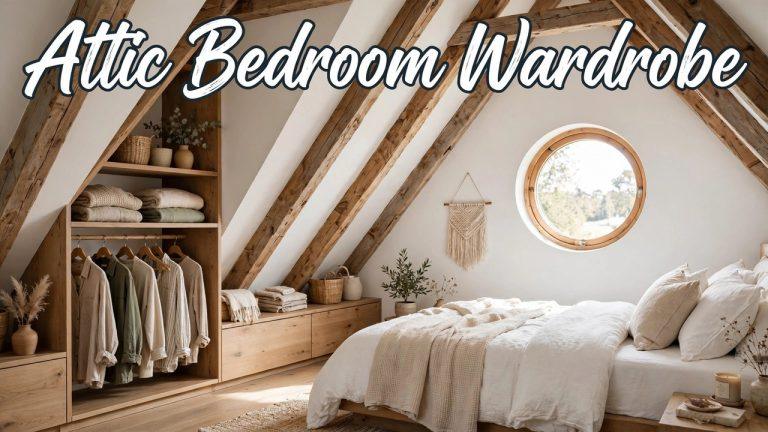
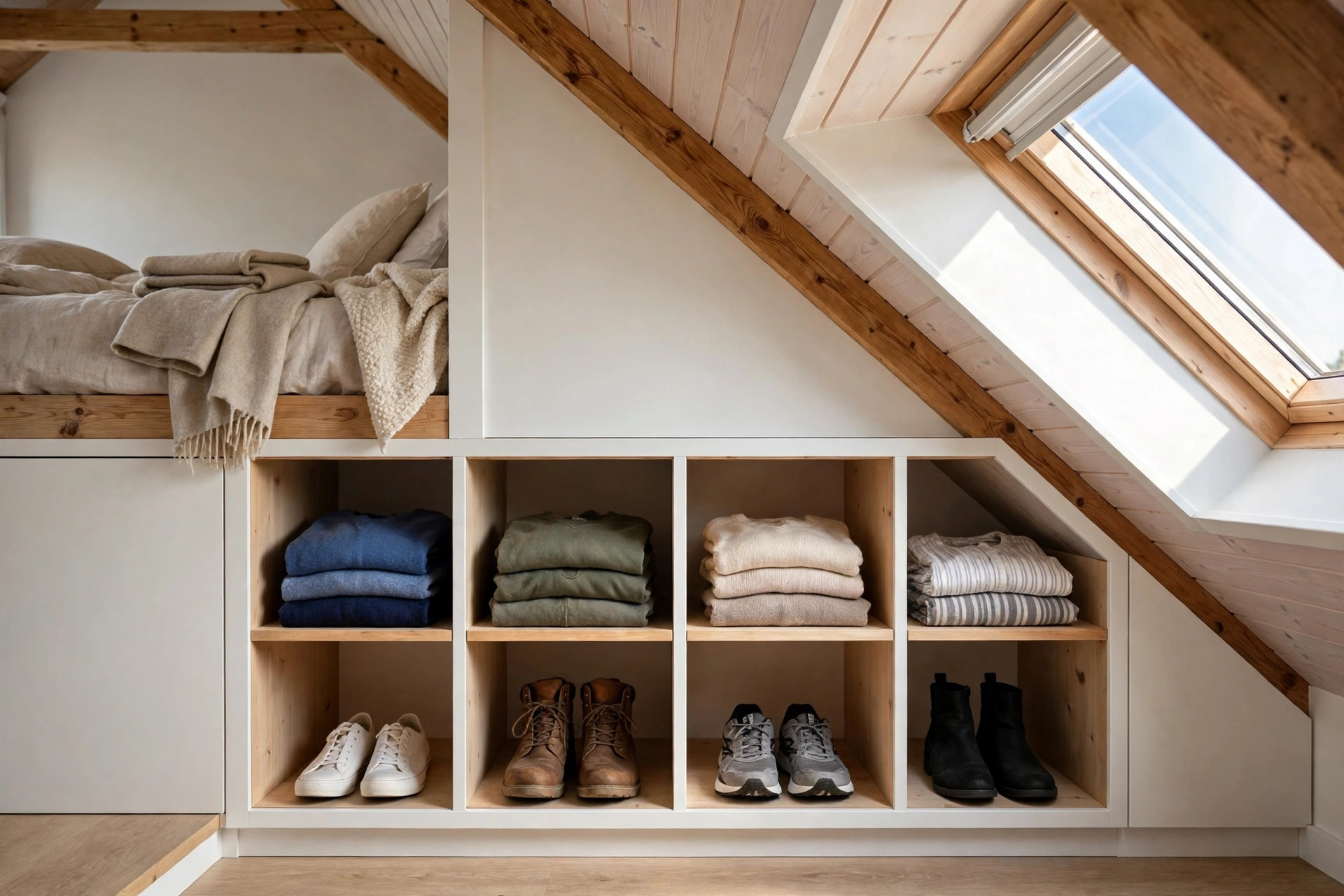
The knee walls flanking a sleeping loft (the short walls under the roof slope) are typically hollow. If a licensed contractor confirms they aren’t structural, cut in cubby openings and you’ve got shoe storage, folded-tee storage, and book shelves that cost zero floor space. Line the cubbies with bins so items don’t migrate into the wall cavity. The same knee-wall logic applies in full-size attic bedrooms — see these attic bedroom wardrobe ideas designed for sloped ceilings.
13. The Pull-Out Pantry-Style Wardrobe
Borrow from kitchen design: a tall, narrow pull-out unit (like a pantry pull-out, but for clothes) on full-extension slides. Hanging items on one side, shelves on the other, the whole thing slides out of a 12-inch-wide slot. It feels like magic the first time and like normal life by week three.
14. Seasonal Swap Bin Outside the Envelope
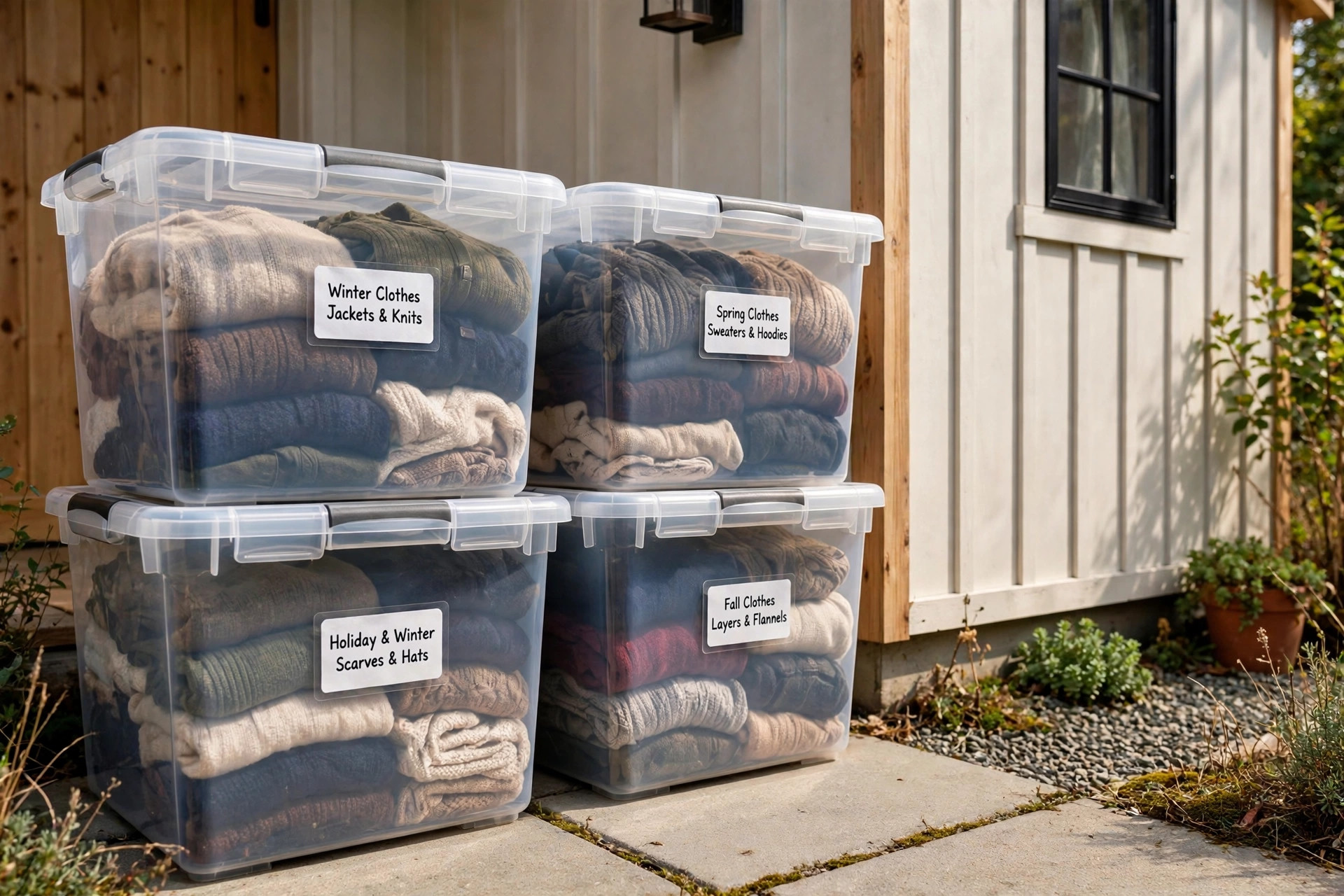
Keep one sealed bin per person outside the heated living space — in the shed, under the trailer, in the truck bed toolbox. Winter coats in July don’t belong in 400 square feet; neither do shorts in January. The swap takes twenty minutes twice a year and it’s the highest-leverage wardrobe habit in tiny living.
15. The “Does It Earn Its Hangers?” Audit
Twice a year, pull every garment out and ask one question: did I wear this in the last 60 days? In a tiny house, an unworn garment isn’t just clutter — it’s rent paid in square inches. Be honest about the aspirational pieces. The hiking boots for the hiking you don’t do are costing you a drawer.
Four hundred square feet doesn’t limit your style. It just forces every piece to prove it belongs — and honestly, most wardrobes could use that discipline.
Tiny houses usually skip the foyer entirely, so the coat-and-shoe problem needs its own fix — these no-foyer entryway coat storage ideas are made for homes without an entrance.
Use the structure itself: drawers in stair risers, a low dresser under the loft, fold-down wall closets, under-bed drawers on locking casters, and over-the-door organizers. Combine built-in storage with a strict ~35-piece capsule wardrobe.
Most tiny house dwellers find 30–35 total pieces (including shoes and outerwear) is the workable maximum for 400 square feet, with off-season items in a sealed swap bin stored outside the living space.
In a narrow entry cabinet (“mud closet”) if space allows, or vacuum-sealed in under-bed drawers or an exterior swap bin during the off-season. Coats are the bulkiest category, so they get priority placement near the door.
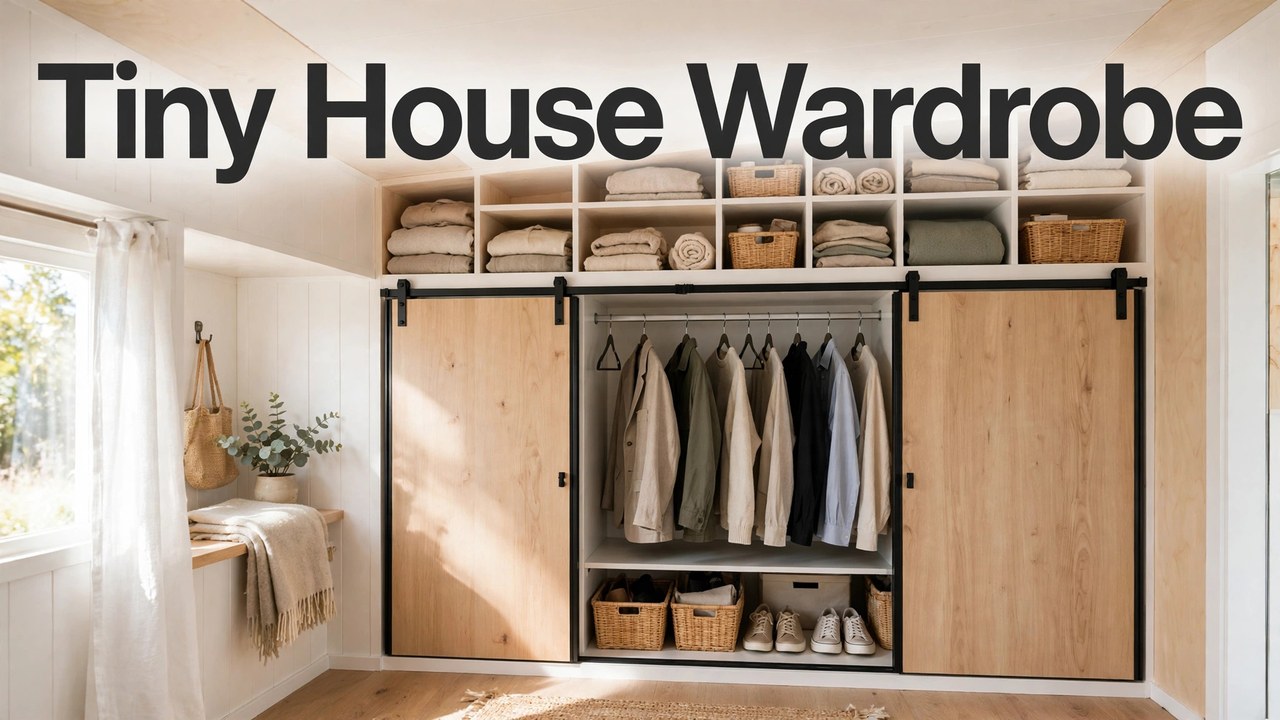
Yes — fold-down wall closets, pull-out pantry-style units, and a capped rolling garment rack (10–12 pieces) all work. Full-length hanging needs about 24 inches of depth and 40+ inches of height, so plan it during the build.
Most don’t have conventional closets. Storage is distributed through stair drawers, under-loft dressers, knee-wall cubbies, and multi-use furniture instead of a single dedicated closet space.