
Shelf Wallpaper Ideas: 12 Stylish Ways to Transform Shelves
Your shelves might not need new books, expensive accessories, or a fresh coat of paint. They might need a better backdrop. Shelf wallpaper ideas focus on adding physical wallpaper to the wall behind shelves, inside bookcase backs, or across a small shelving nook. The right print can make ordinary objects stand out, add depth to a plain wall, and turn a basic storage area into a deliberate design feature.
Shelf wallpaper ideas work particularly well in rental-friendly decorating projects, home offices, bedrooms, and living rooms where a small change can make a big visual difference.
Shelf wallpaper ideas are decorating concepts that use patterned, textured, or colored wallpaper behind shelving to create contrast and visual interest. They can work with floating shelves, built-in bookcases, freestanding furniture, and compact display niches without requiring a complete room makeover.
Why Wallpaper Behind Shelves Makes Such a Difference
A shelf holds objects, but the wall behind it determines how those objects look together. When the background and accessories blend into one another, even attractive pieces can disappear visually. Wallpaper introduces another layer. A dark print can frame pale ceramics, a delicate floral can soften a plain bookcase, and a geometric pattern can give simple floating shelves a more architectural feel.
Why does wallpaper behind shelves look so effective?
Wallpaper behind shelves works because it creates contrast, pattern, and visual separation between the wall and the objects in front of it. Instead of treating books, artwork, and decorative accessories as isolated items, the backdrop connects them into one composition. A carefully chosen design can also make a small shelving area feel like a purposeful feature. According to standard wallpaper preparation guidance, a clean, smooth surface is an important starting point for successful wallpaper application. That matters especially behind shelving, where uneven edges and visible seams can stand out against neatly arranged objects.
Which wallpaper styles work best behind bookcases?
The best wallpaper depends on the shelf color, room lighting, and objects you want to display. Botanical prints bring softness, geometric designs create structure, and linen-look textures offer subtle depth without competing with books. For a bold result, choose a contrasting background; for a quieter look, select a pattern with colors already present in the room. Most people assume that a dramatic shelf makeover needs dramatic furniture. Often, the opposite works better: keep the shelving simple and let the wall provide the visual interest.
12 Shelf Wallpaper Ideas to Try at Home
These 12 approaches cover different styles, from understated neutral rooms to colorful statement walls. Start with the idea that fits your existing furniture rather than choosing a print simply because it looks good in a photograph.
1. Botanical Wallpaper Behind White Shelves
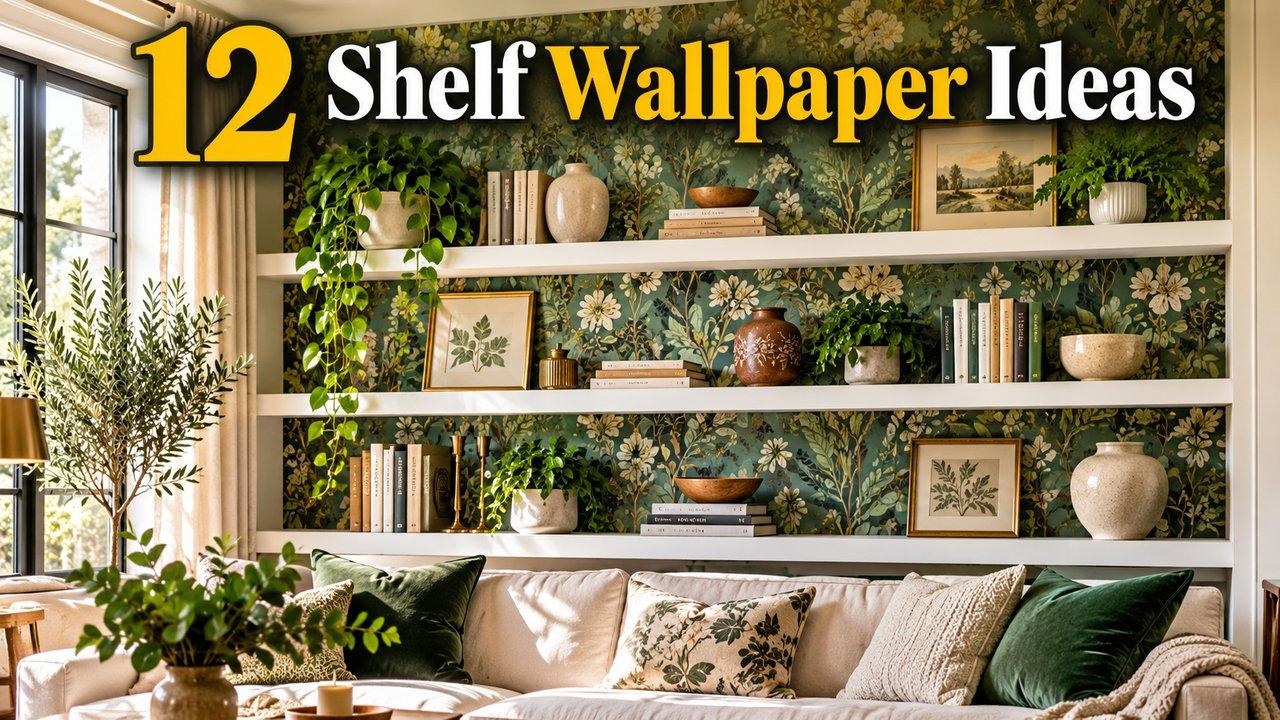
Botanical wallpaper adds a natural, relaxed feel to plain white shelves. Look for leafy branches, delicate ferns, or muted vintage florals in sage green, cream, and soft olive. White shelving keeps the arrangement from becoming too busy, while wooden frames, small plants, and handmade ceramics make the whole display feel connected.
Best for: Living rooms, reading corners, and bedrooms with natural materials.
2. Dark Floral Wallpaper for a Moody Bookcase
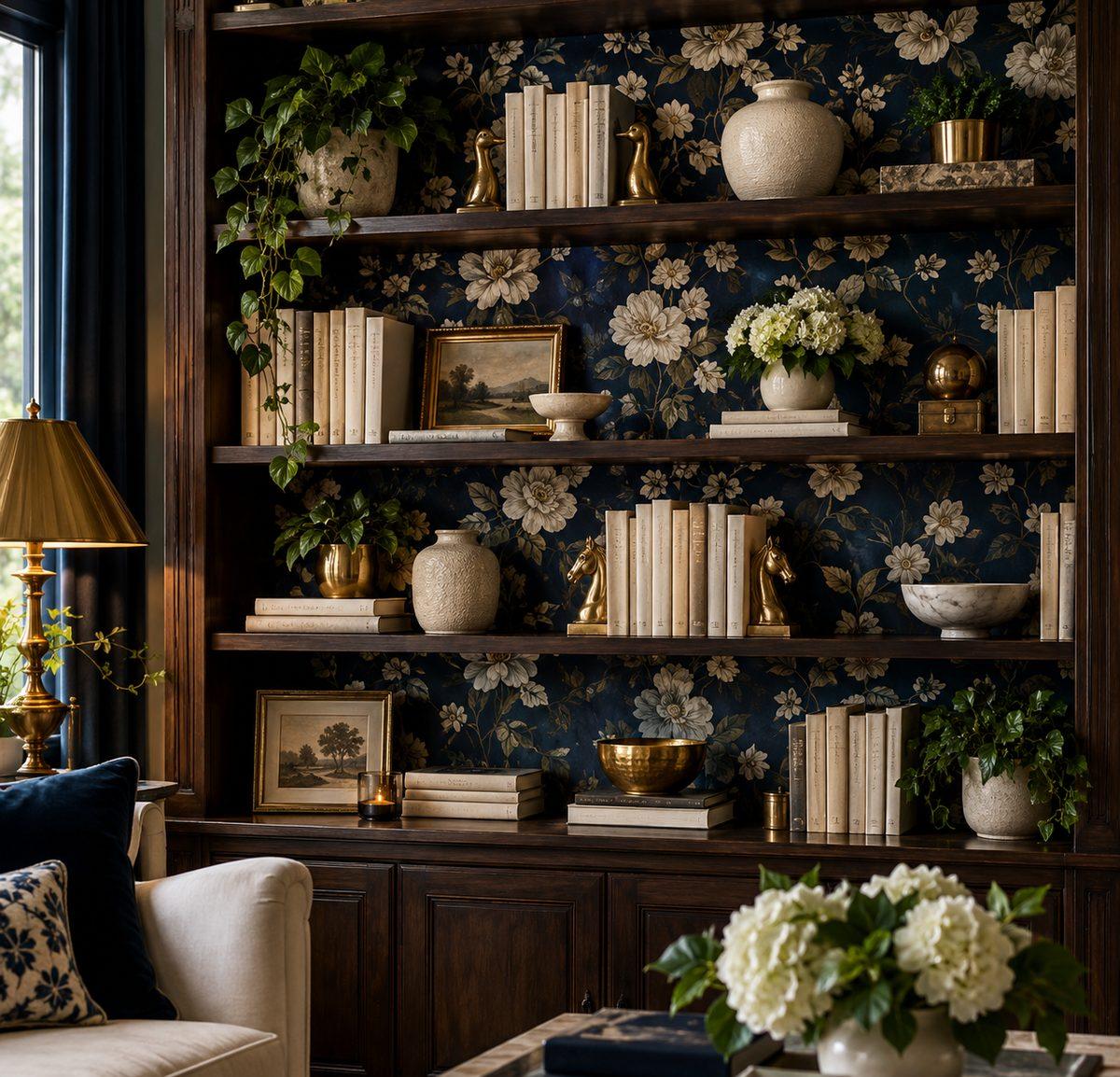
A deep navy, forest-green, or charcoal floral print creates a rich backdrop for books and decorative objects. Pale book spines, brass accents, and cream ceramics become easier to notice against a darker surface. This look suits traditional interiors, but it can also bring character to modern furniture.
Keep the accessories edited. A dark background already does plenty of visual work.
3. Geometric Wallpaper Behind Floating Shelves
Geometric wallpaper introduces rhythm through repeated lines, diamonds, arches, or overlapping shapes. It works particularly well behind floating shelves because the clean furniture lines echo the pattern. Choose a two-tone print if the shelves already hold colorful objects. A restrained black-and-cream design can look graphic without making the wall feel crowded.
Styling tip: Match one color in the pattern to a vase, book cover, or framed print.
4. Faux Linen Wallpaper for a Quiet, Textured Look
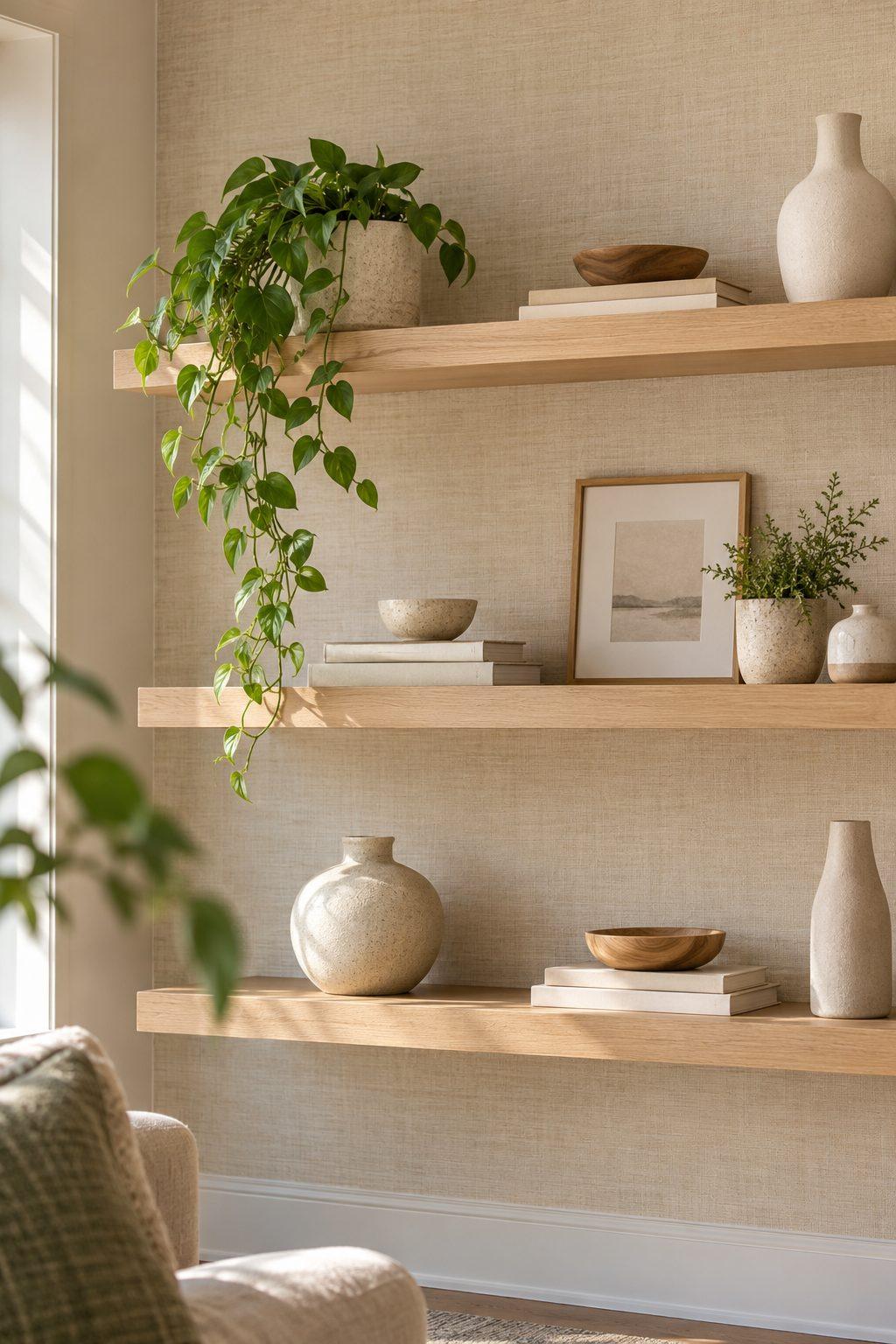
Not every backdrop needs a visible motif. Linen-look wallpaper adds subtle texture and makes a plain wall feel more considered while keeping the overall palette calm. Try warm beige behind oak shelves, soft gray behind white shelving, or a sandy tone behind dark walnut furniture. This is a strong option for minimalist and Scandinavian-inspired interiors where too much pattern could distract from the objects themselves.
5. Peel-and-Stick Wallpaper Inside a Bookcase
A freestanding bookcase offers a useful way to experiment with wallpaper without covering a large wall. Depending on the furniture construction, the wallpaper may be applied directly to a suitable back panel or to the wall visible through the shelves. Measure the exposed sections carefully. Repeating patterns can look disjointed if each shelf opening shows an awkward fragment of the design.
Best for: Furniture makeovers, rented homes where permitted, and small weekend decorating projects.
6. Vintage Toile Wallpaper for a Collected Look
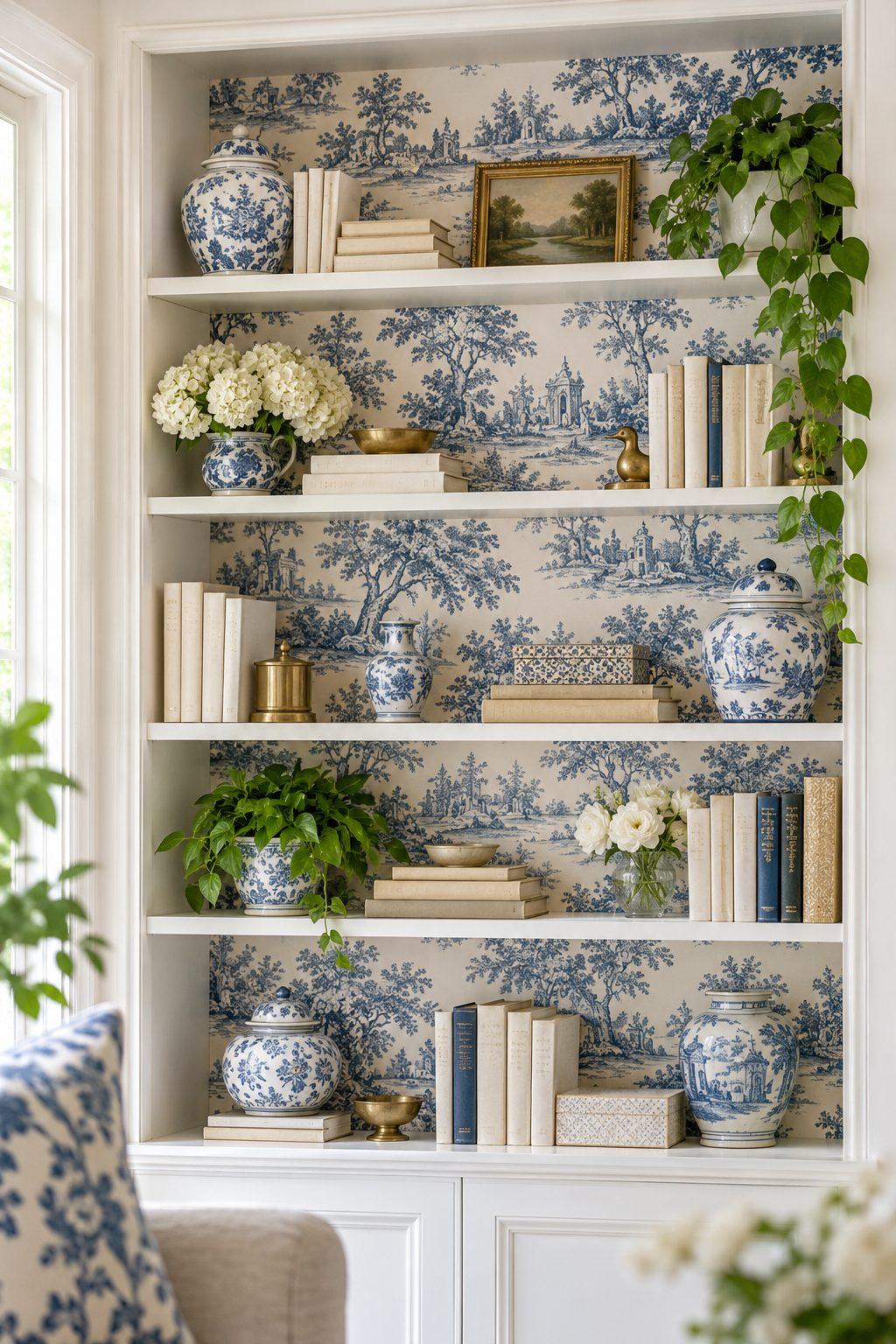
Toile wallpaper features detailed scenic illustrations, often in a limited color palette. Behind shelves, it creates the feeling of a carefully collected interior rather than a display assembled all at once. Blue-and-cream toile pairs beautifully with white bookcases, while muted sepia versions work with aged wood and antique-style accessories.
Leave a few sections of the wallpaper visible. Filling every shelf with objects would hide the detail that makes this idea special.
7. Color-Blocked Wallpaper for a Modern Statement
Large blocks of color offer a contemporary alternative to traditional repeating patterns. Think terracotta and blush, olive and sand, or dusty blue and warm white. Use this look behind a small shelving arrangement where the color transitions can be seen clearly. It can also help connect shelves to nearby upholstery or artwork.
Here’s the thing: a bold design doesn’t always need a bold pattern. Two carefully chosen colors can have more impact than a complicated print.
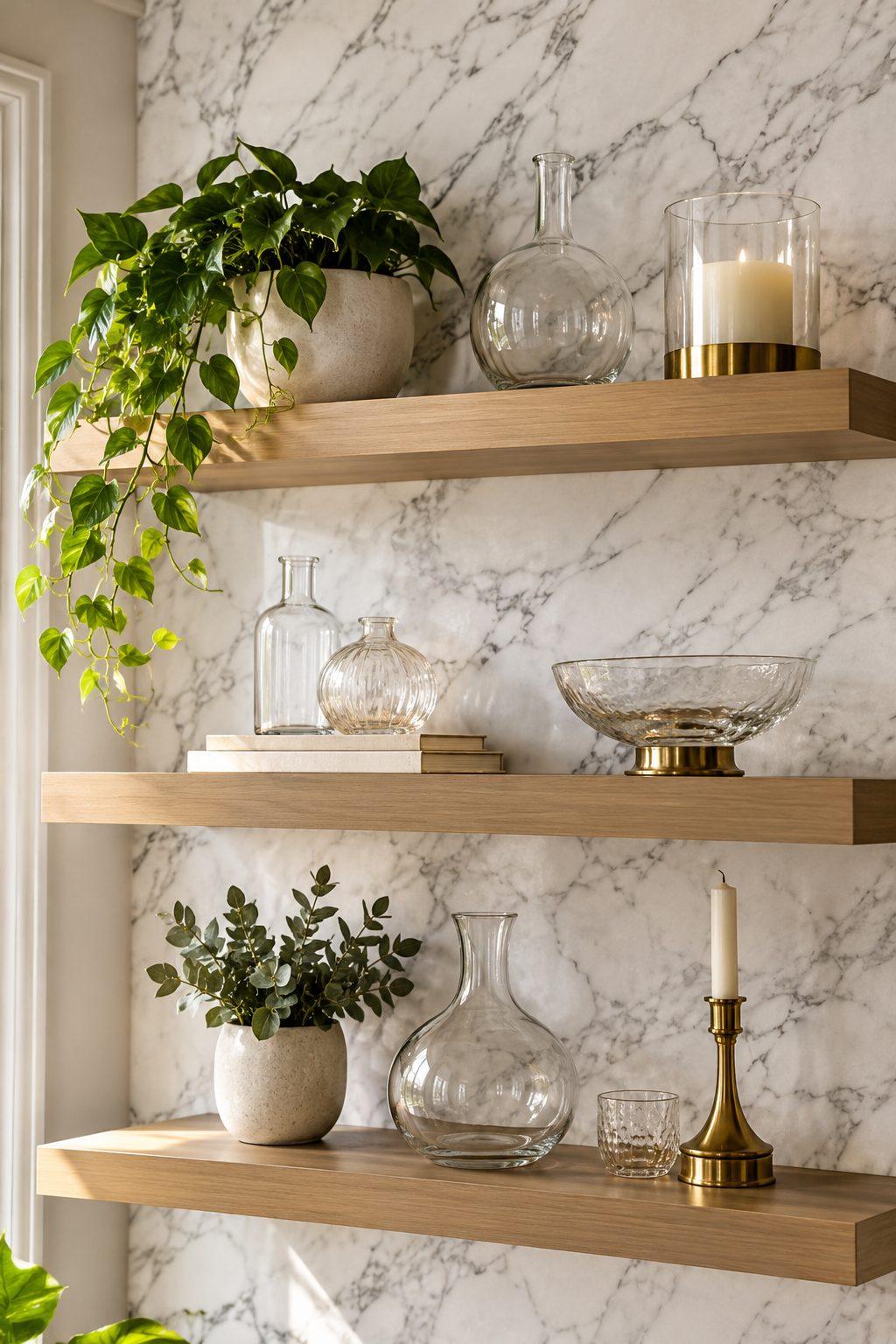
8. Marble-Effect Wallpaper Behind Decorative Objects
Marble-effect wallpaper introduces the visual movement of stone without the weight or expense of a stone installation. Soft white veining feels airy, while darker marble patterns create a more dramatic display. Pair the backdrop with simple ceramics, glass vessels, and a few metallic accents.
Avoid using a heavily veined print behind shelves packed with colorful books. The competing details can make the display harder to read.
9. Art Deco Wallpaper With Brass Accents
Fan shapes, stepped arches, and symmetrical gold-toned motifs bring a touch of Art Deco glamour to otherwise ordinary shelves. Walnut shelving, brass picture frames, sculptural vases, and a restrained palette help the pattern feel intentional rather than theatrical. For a modern interpretation, choose matte wallpaper with a subtle metallic detail instead of a highly reflective finish.
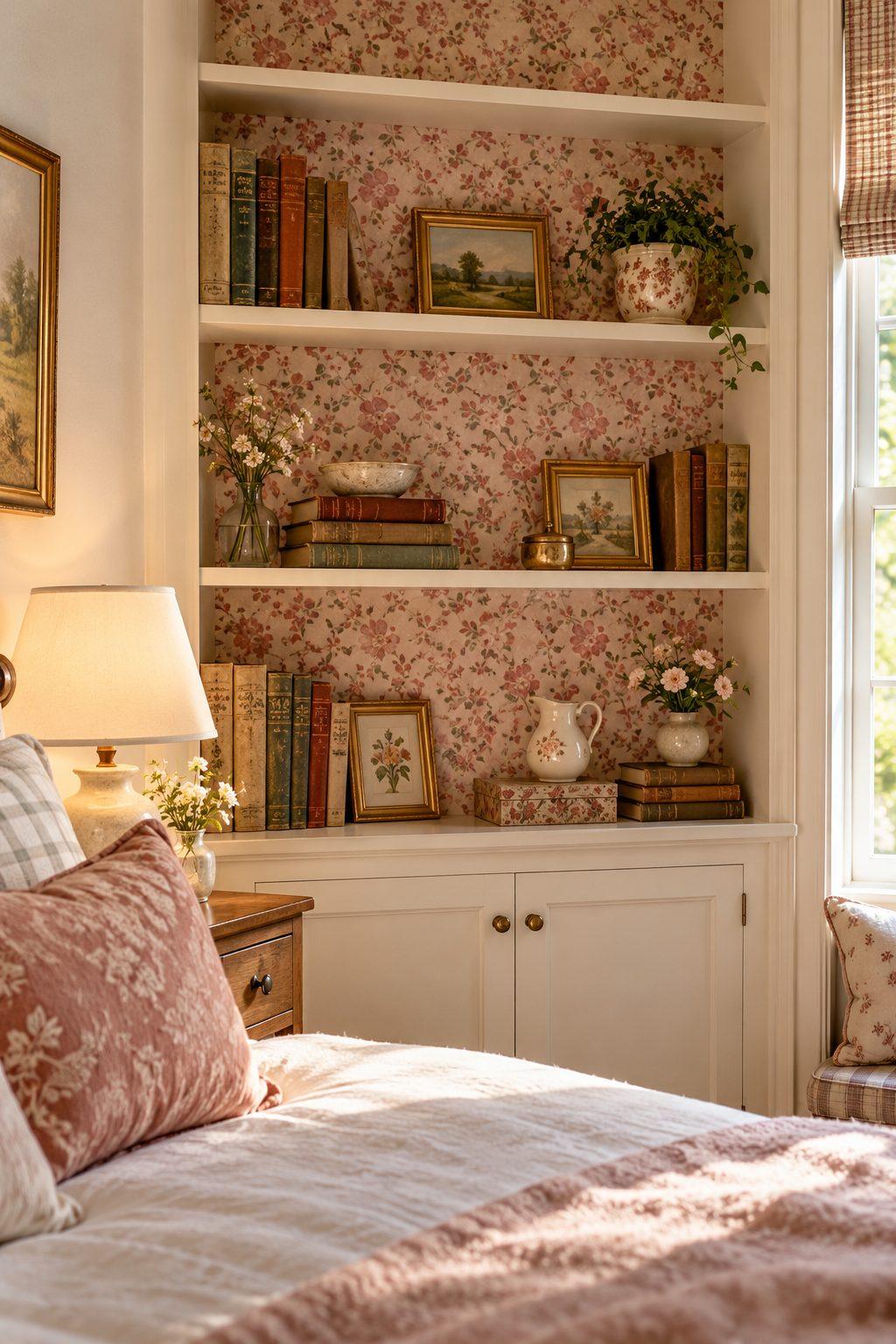
10. Small-Scale Floral Wallpaper for Cottage Style
Tiny floral repeats suit cottage, farmhouse, and English-country-inspired rooms. Their smaller scale allows books and accessories to remain visible without losing the charm of a patterned background. Try dusty rose, faded blue, butter yellow, or soft green against cream shelving.
This is particularly effective in bedroom bookcases, kitchen display shelves, and small reading nooks where a little decorative detail adds warmth.
11. Peel-and-Stick Wallpaper in a Reading Nook
A reading nook is a natural place to give wallpaper its own moment. Cover the wall behind a short run of shelves and add a comfortable chair, a reading lamp, and a small stack of favorite books. Removable wallpaper may suit renters or anyone who likes changing a room’s look, provided the wall surface and product instructions allow it.
Look for designs with enough contrast to be visible in evening lamplight. Very pale patterns may disappear once the room’s natural light fades.
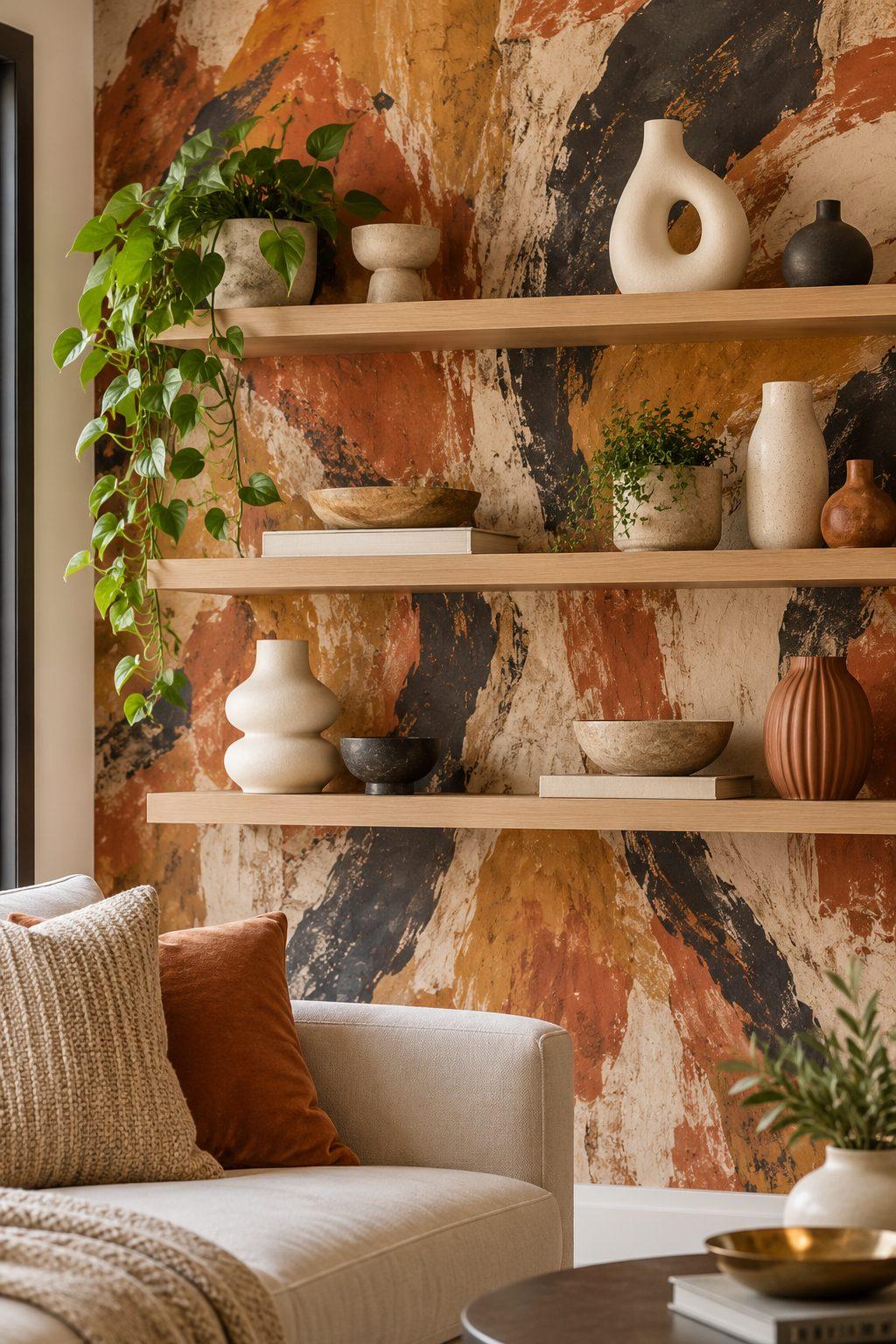
12. Bold Abstract Wallpaper for a Statement Wall
Abstract wallpaper turns shelving into a backdrop for a more expressive display. Oversized brushstrokes, irregular shapes, and painterly forms can make a basic shelf arrangement feel closer to an art installation. Choose accessories in just two or three colors pulled from the wallpaper. This gives the arrangement a common thread without requiring every object to match.
Best for: Creative studios, contemporary living rooms, and home offices that need a focal point.
How to Choose and Apply Wallpaper Behind Shelves
The pattern is only half the project. Surface preparation, measurements, and the type of shelving all affect the finished result.
Quick Comparison
| Option | Best For | Key Benefit | Limitation |
|---|---|---|---|
| Peel-and-stick wallpaper | Temporary updates | No separate paste required | Adhesion depends on wall finish |
| Traditional wallpaper | Long-term decorating | Broad range of materials and finishes | More involved installation and removal |
| Small-scale prints | Narrow shelf sections | Repeating detail stays visible | Seams and pattern matching need care |
| Textured neutrals | Minimalist rooms | Adds depth without strong contrast | Subtle effect may be less noticeable |
How do you wallpaper behind shelves without a messy finish?
To wallpaper behind shelves, follow these steps: 1. Measure the exposed wall or bookcase backing. 2. Prepare a clean, smooth, dry surface. 3. Align the first strip and match the pattern. 4. Smooth air bubbles outward with a suitable wallpaper tool. 5. Trim excess material with a sharp knife and straightedge.
According to The Home Depot’s wallpaper installation guide, the basic preparation process includes cleaning the wall, measuring the space, and gathering tools such as a level, smoothing tool, and utility knife. Follow the specific instructions supplied with your wallpaper because products differ.
What most guides skip about shelf wallpaper
The shelf itself can create a practical problem. If a bookcase is fixed tightly against the wall, you may not be able to wallpaper the area behind it without moving the unit. Wallpapering the back panel before assembling the furniture may be easier, but only if the material is suitable for that surface.
Look — if you’re decorating a rental, here’s what actually works: check the lease, test the wallpaper on an inconspicuous spot when permitted, and confirm the paint finish is compatible before covering a large area. Removable doesn’t always mean damage-free. Spoonflower’s installation guidance, updated in 2025, advises against using its peel-and-stick wallpaper on textured walls and certain paint finishes. It also notes that removal can depend on the surface and adhesive condition.
A small test is better than an expensive surprise.
Should you wallpaper the wall or the bookcase backing?
For a freestanding bookcase, wallpaper on the backing panel creates a contained decorative effect. Wallpaper on the actual wall behind floating shelves makes the whole area feel more connected to the room. Choose the backing panel for a furniture-focused makeover; choose the wall for a broader statement feature. There isn’t one universal winner. The right choice depends on whether you want the shelves themselves or the surrounding wall to be the main attraction.
How to make peel-and-stick wallpaper look professionally installed
The most common causes of a disappointing finish are poor surface preparation, misaligned patterns, and visible seams. Taking time to position the first strip can make the rest of the job much easier.
Use this practical checklist before starting: Check that the wall is smooth, clean, and completely dry. Confirm that the paint has fully cured according to the wallpaper manufacturer’s instructions. Measure the full area, including sections hidden behind shelf brackets. Match the pattern before cutting the next strip. Peel the backing away gradually rather than exposing the entire adhesive surface at once. Smooth from the center outward, then trim the edges carefully.
Expert caveat: Washable, stain-resistant, and some low-VOC paint finishes can interfere with adhesion. Check product-specific instructions before buying wallpaper, especially if your wall has a specialty coating.
For traditional wallpaper, the adhesive, wall primer, and removal process may differ. This article focuses on decorative wallpaper behind shelves and bookcases; it does not cover structural shelving installation, electrical work, or specialist wall repairs.
Common Questions About Shelf Wallpaper Ideas
Can you put wallpaper behind floating shelves?
Yes. Wallpaper can be applied behind floating shelves, ideally before installation when practical. Measure around brackets and choose a wall covering compatible with the surface.
Is peel-and-stick wallpaper good for bookshelves?
It can work well on suitable, smooth surfaces. Check whether the product is designed for walls or furniture backing panels, and follow its preparation and removal instructions.
What wallpaper makes a small bookcase look bigger?
Light-colored wallpaper, subtle textures, and small-scale patterns can keep a bookcase feeling airy. Vertical motifs may also draw the eye upward.
Can renters use wallpaper behind shelves?
Often, yes, if the lease permits it and the wallpaper is compatible with the wall finish. Test an inconspicuous area first and confirm the removal guidance.
Should wallpaper behind shelves match the rest of the room?
It should coordinate rather than match everything exactly. Repeating one or two colors from nearby furniture, cushions, artwork, or accessories usually creates a more cohesive result.
Final Thoughts: Let the Backdrop Do the Work
If commitment is the worry, start with peel-and-stick on a single bookcase back. It goes up in an afternoon, comes down without a fight, and teaches you whether you actually like living with pattern before you touch a real wall.
Renters get the most from this trick — it’s one of the few wallpaper projects that leaves no trace. Landlord-friendly and commitment-free is a rare combination; use it.