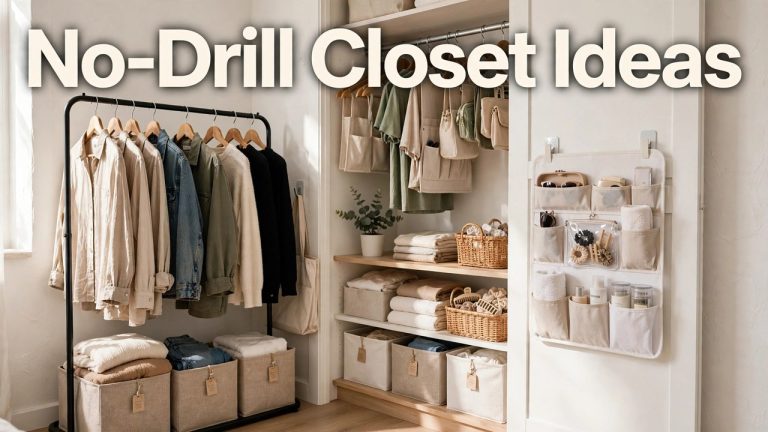

13 No-Closet Wardrobe Ideas for Renters That Actually Fit Small Spaces
No closet, no drilling, no problem.
What “No-Closet Storage” Means for Renters
No-closet storage is any clothing system that doesn’t rely on a built-in closet or permanent installation: freestanding racks, armoires, dressers, and under-bed bins. The renter’s constraint is simple — everything must be removable without a trace when the lease ends.
Measure First, Buy Once
Start with the math: measure your available wall space (length and height), note outlet and window positions, and count what you actually own. Most renters discover they need less storage than they fear — the average person regularly wears about 20% of their wardrobe. Knowing your real inventory keeps you from buying a massive armoire for clothes you don't wear.
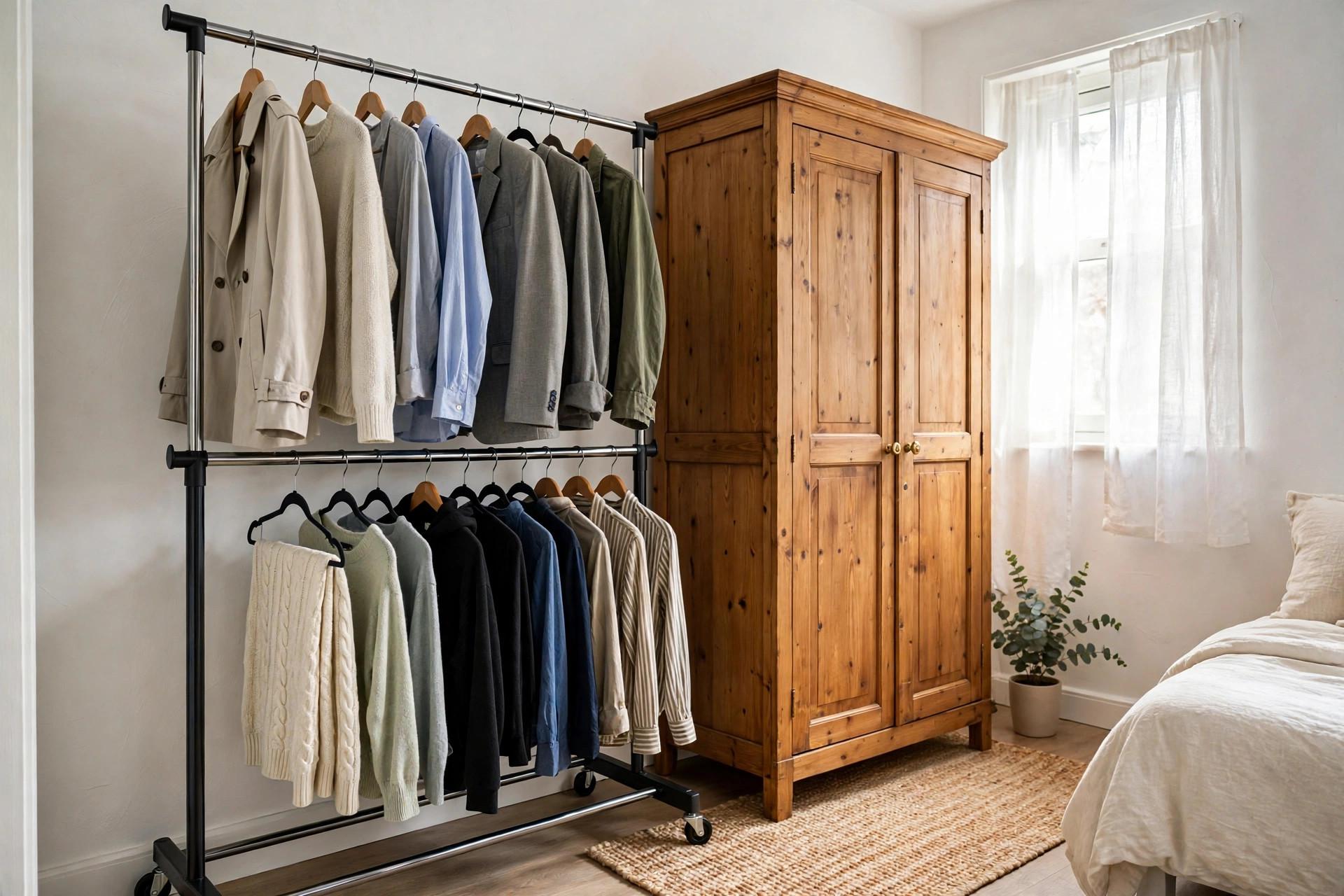
The Garment Rack: Your Primary Closet
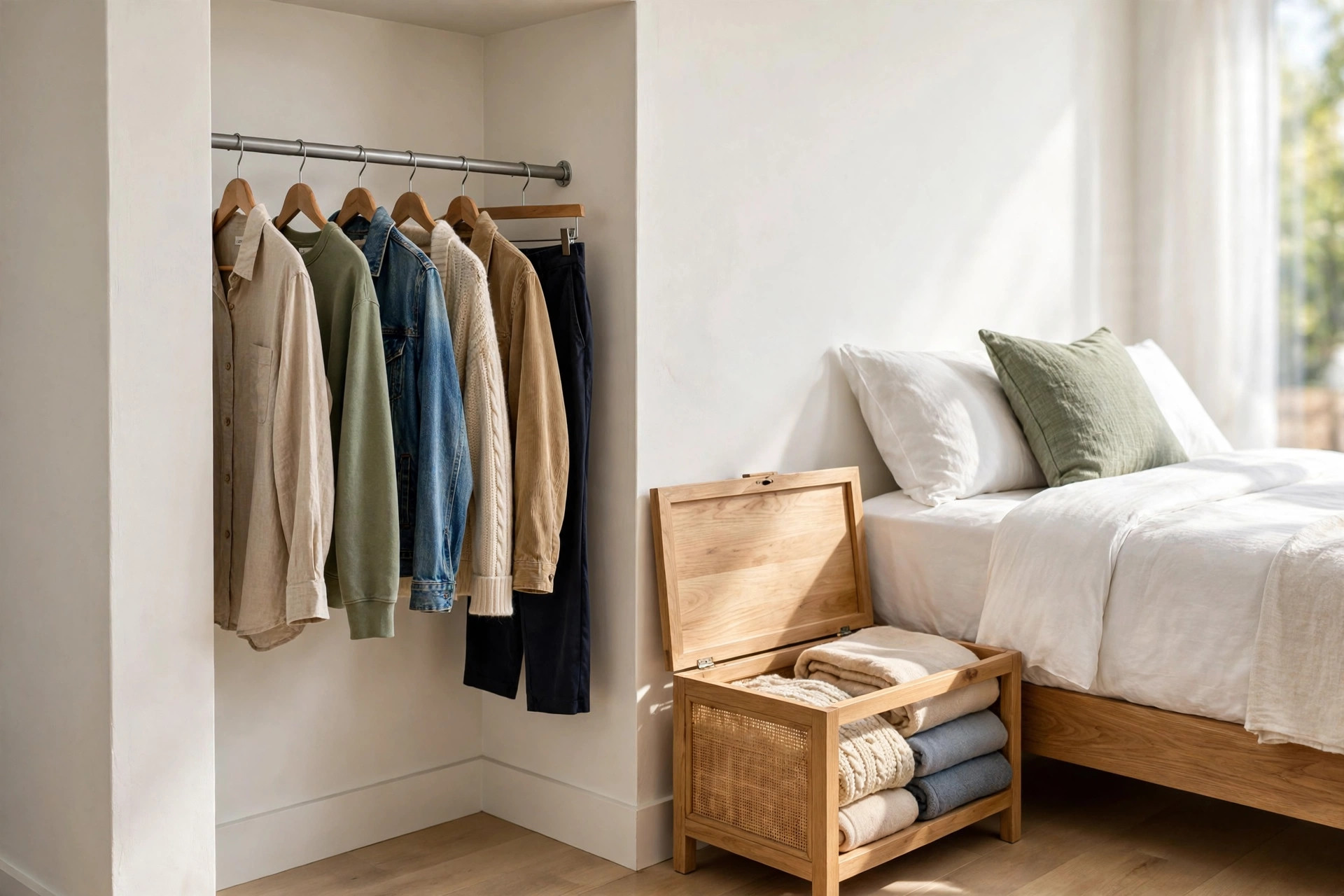
The garment rack is the renter's closet. Not the flimsy $20 kind that bows in the middle — get a heavy-duty single-rail or double-rail rack rated for real weight (look for 100+ lb capacity). A sturdy rack with matching hangers holds a full week-plus of outfits and looks intentional, not temporary. Position it on the longest clear wall, ideally near a window for natural light when choosing outfits.
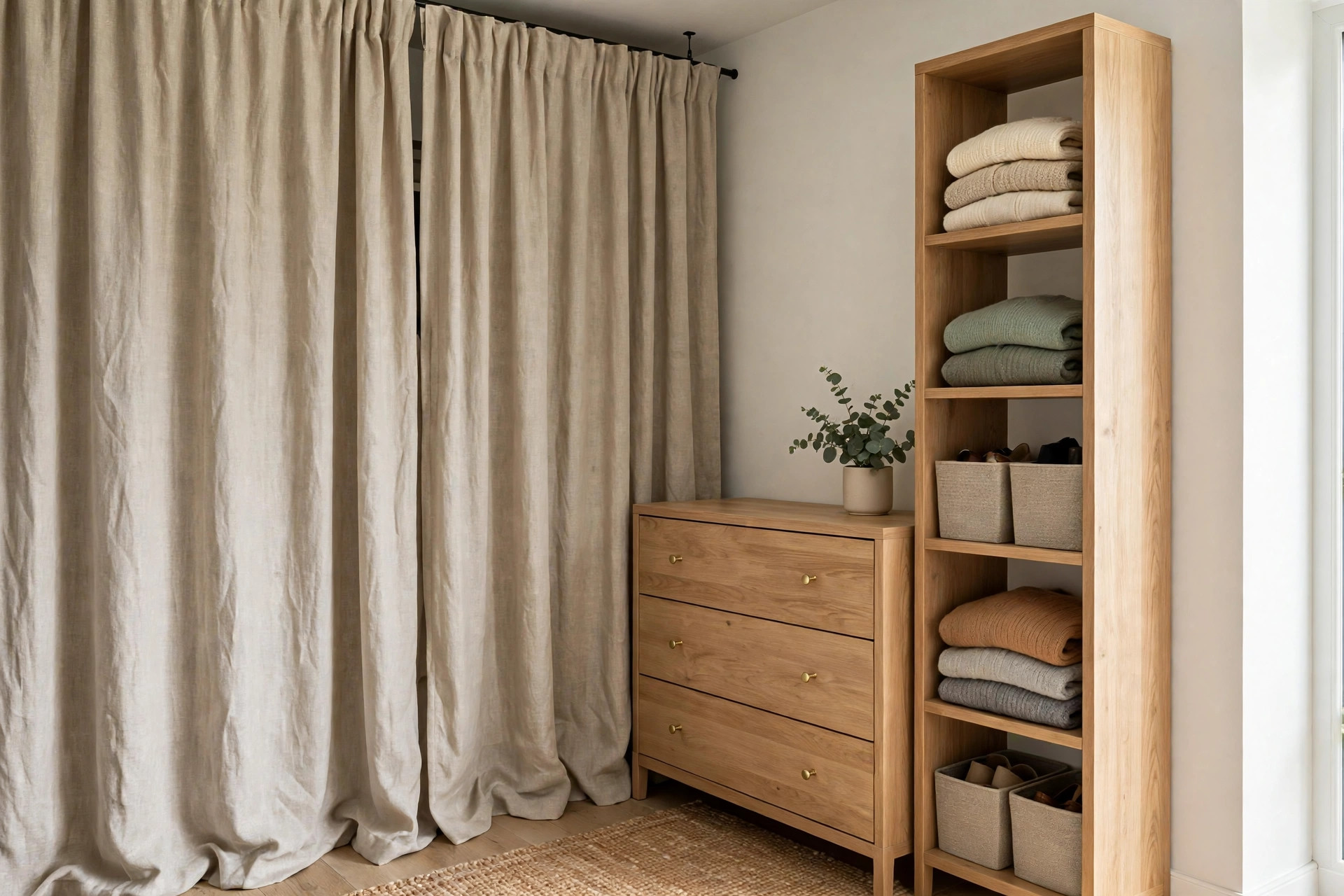
The Armoire: Hiding the Rest
For everything that shouldn't be seen: a freestanding armoire or wardrobe cabinet with doors. Flat-pack armoires from IKEA and similar stores cost less than a month's worth of coffee-shop visits and assemble without tools beyond an Allen key. Choose one with a hanging section and shelves — the mix matters more than the size. Anchor it with furniture straps if you're in earthquake country (most landlords approve safety anchors even when they forbid decor holes).
The Dresser Combo
Dresser + rack is the classic combo for a reason. A low, wide dresser under or beside the garment rack handles folded items, underwear, and accessories. The top surface becomes your "launch pad" — watch, wallet, keys, tomorrow's bag. If floor space is tight, a tall narrow dresser (a "lingerie chest" footprint) tucks into corners that can't fit anything else.
What Your Lease Usually Allows
Most leases forbid drilling into walls but permit freestanding furniture — which is all this system needs. The gray area is safety anchors: many landlords approve small anchor screws for tall furniture even when decor holes are banned, because liability favors secured furniture. Always check your specific lease and ask in writing before drilling anything. When in doubt, choose the freestanding option — a leaning shelf and a tension rod need zero permission.
Vertical Storage Without Holes
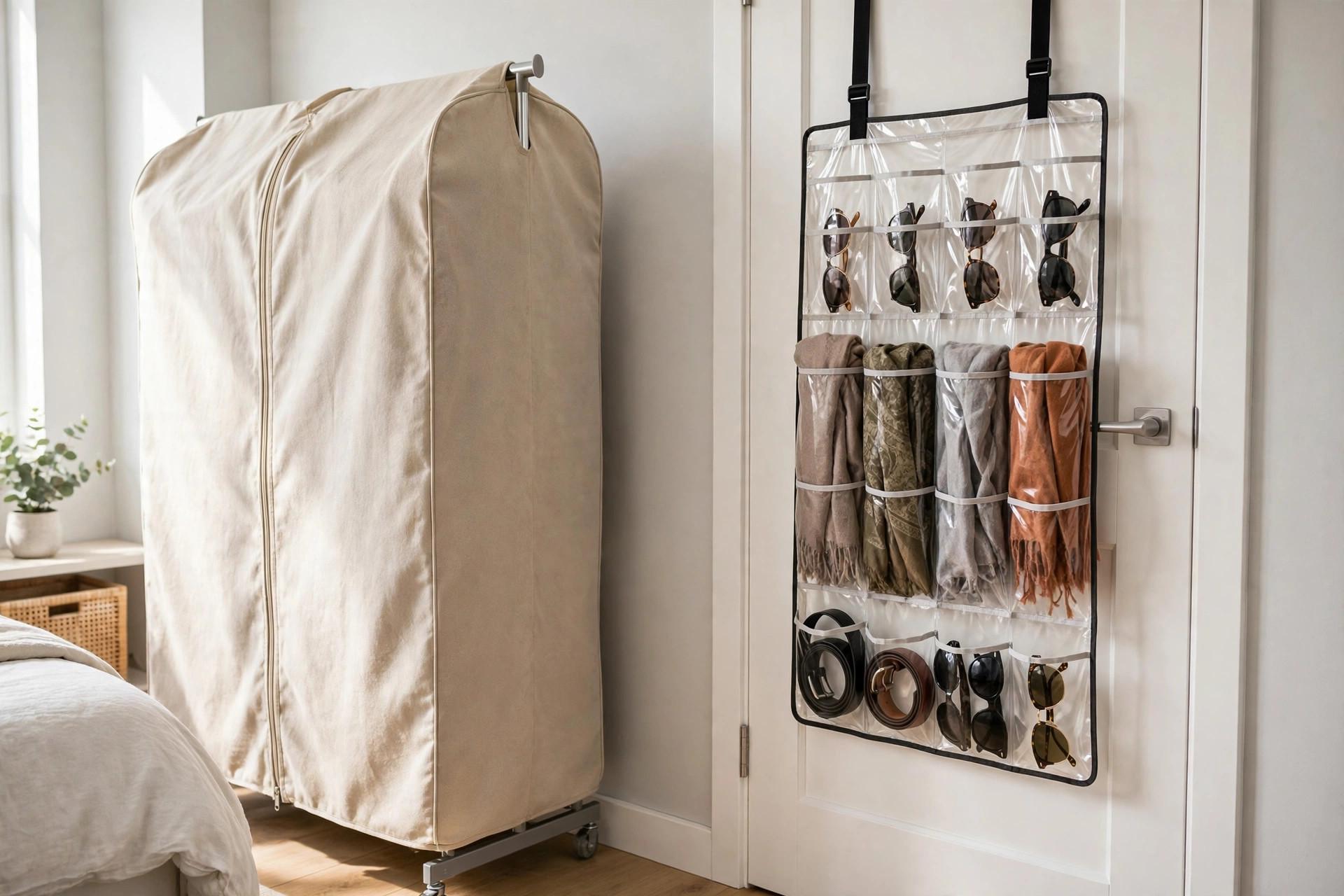
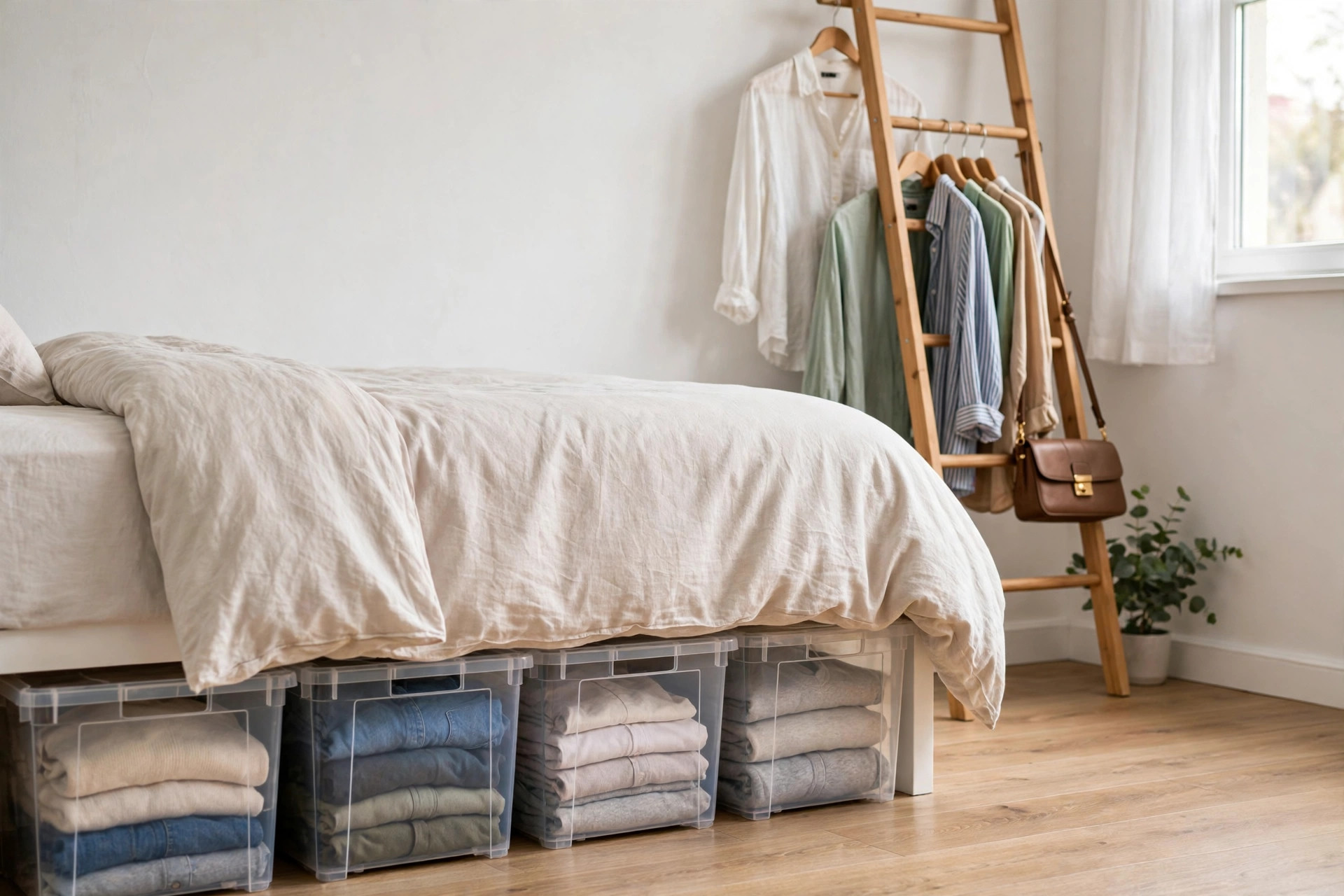
Rentals punish drilling, but closets are mostly vertical storage anyway. A tall leaning shelf unit (ladder shelf) needs zero wall attachment and holds folded clothes, bins, and shoes. Over-the-door hooks on the bedroom door handle bags, robes, and tomorrow's outfit. A tension rod inside a window alcove or between two walls creates a hidden hanging spot for less-worn items. None of these touch the walls permanently.
Under-Bed: The Secret Second Closet
Under-bed storage is the secret second closet. Low-profile bins on wheels slide under most bed frames and swallow off-season clothes, occasion wear, and the "I might need this" items. Vacuum bags compress bulky winter gear flat. If your bed sits directly on the floor, risers (the sturdy interlocking kind, not wobbly plastic) buy you six inches of hidden storage for under twenty dollars.
Making It Look Intentional
A visible wardrobe lives or dies on curation. Matching hangers (velvet slim-line, one color) make any rack look twice as neat. Face all hangers the same direction. Group by category and color — the eye reads order even when the quantity is large. Leave breathing room: a rack stuffed rail-to-rail looks chaotic no matter how nice the clothes are. The one-in-one-out rule matters more without a closet door to hide behind.
Garment Rack vs Armoire vs Dresser
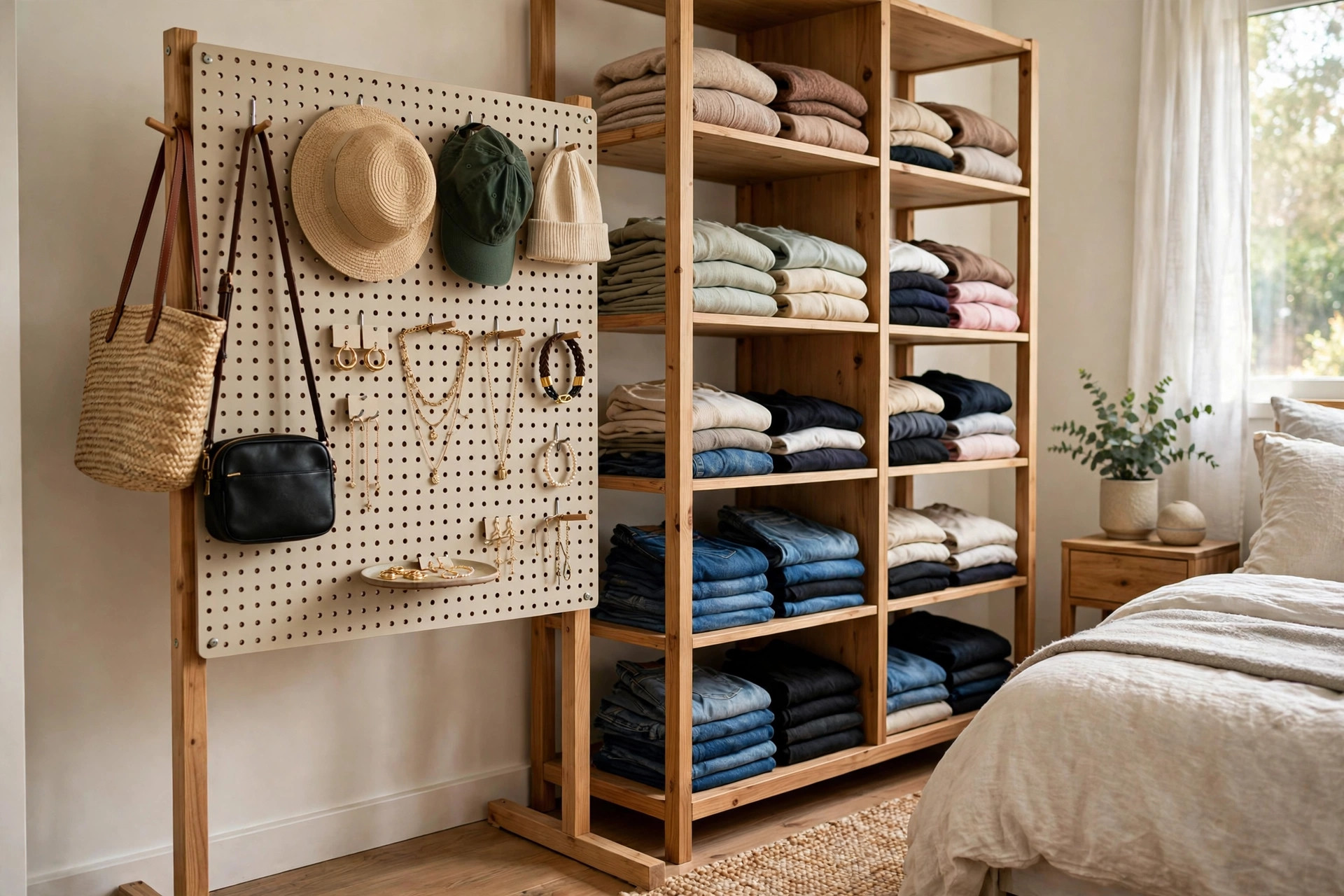
Garment rack vs armoire: the rack keeps daily clothes visible and accessible but demands curation — everything shows. The armoire hides visual chaos behind doors but eats more floor space. A dresser handles folded items neither does well. The key difference is visibility tolerance: if seeing your clothes stresses you, prioritize doors; if digging through drawers annoys you, prioritize the rack. Most no-closet bedrooms end up with two of the three.
The 5-Minute Daily Reset
Small bedrooms amplify every wrinkle and dust bunny, so the routine matters more than the furniture. Five minutes a day: hang up what you wore, toss laundry in the hamper (get one with a lid — it's furniture now), wipe the rack's baseboard weekly. Monthly: check the "maybe" bin under the bed and be honest. The system stays invisible when the maintenance is constant and tiny.
For a full closet system without drilling, see this renter-friendly closet organization without drilling guide.
If your rental does have a closet but it’s impossibly small, these small studio apartment closet organization strategies show how to make one tiny closet actually work.
Use a freestanding garment rack for daily clothes, an armoire or wardrobe cabinet for the rest, and under-bed bins for off-season items. No drilling or permanent changes needed.
A sturdy garment rack plus a small dresser covers most needs. For a more finished look, an affordable freestanding armoire with doors hides visual clutter.
Tension rods, freestanding garment racks, over-the-door hooks, and leaning shelf units all add storage without holes. Command hooks handle accessories and bags.
Use matching hangers, keep a consistent color palette, add a fabric cover or curtain, and limit what’s visible. A tidy rack looks intentional; an overloaded one looks chaotic.
A low shoe rack under the garment rack, a narrow rolling cart, or over-the-door organizers on the bedroom door. Keep daily shoes accessible and store the rest under the bed.
Yes — freestanding armoires and garment racks require no installation and leave no marks. Just measure your wall space first and check that doors can fully open in the room.
Use a garment rack cover or curtain for daily clothes, keep off-season items in lidded under-bed bins, and run the 5-minute daily reset so nothing sits out collecting dust.