Small Studio Apartment Closet Organization: Making One Tiny Closet Work
Here's the honest answer first: one tiny reach-in closet can absolutely hold a studio renter's whole wardrobe, but only if you stop treating it like a miniature walk-in and start treating it like a vertical machine. The typical studio closet is 4 to 5 feet wide with a single rod and one sad shelf. That's fine. You're going to layer hanging space in two rows, give the dead zones on the floor and door a real job, and move everything off-season out of your way.
The pattern never changes: the closet isn’t actually too small, it’s organized for someone who owns four shirts. Let's rebuild it.
Why does one closet feel impossible in a studio?
Because studios punish every wasted inch. There's no hallway closet for coats, no spare bedroom closet for overflow, and usually no entry closet at all. Everything — work clothes, jackets, shoes, bags, linens, sometimes even the vacuum — fights for the same 20 square feet.
The fix isn't buying more. It's assigning every square foot of that closet a single, specific purpose, so nothing drifts. When a space has no spare bedroom to absorb mistakes, clarity beats capacity.
Start by emptying it completely
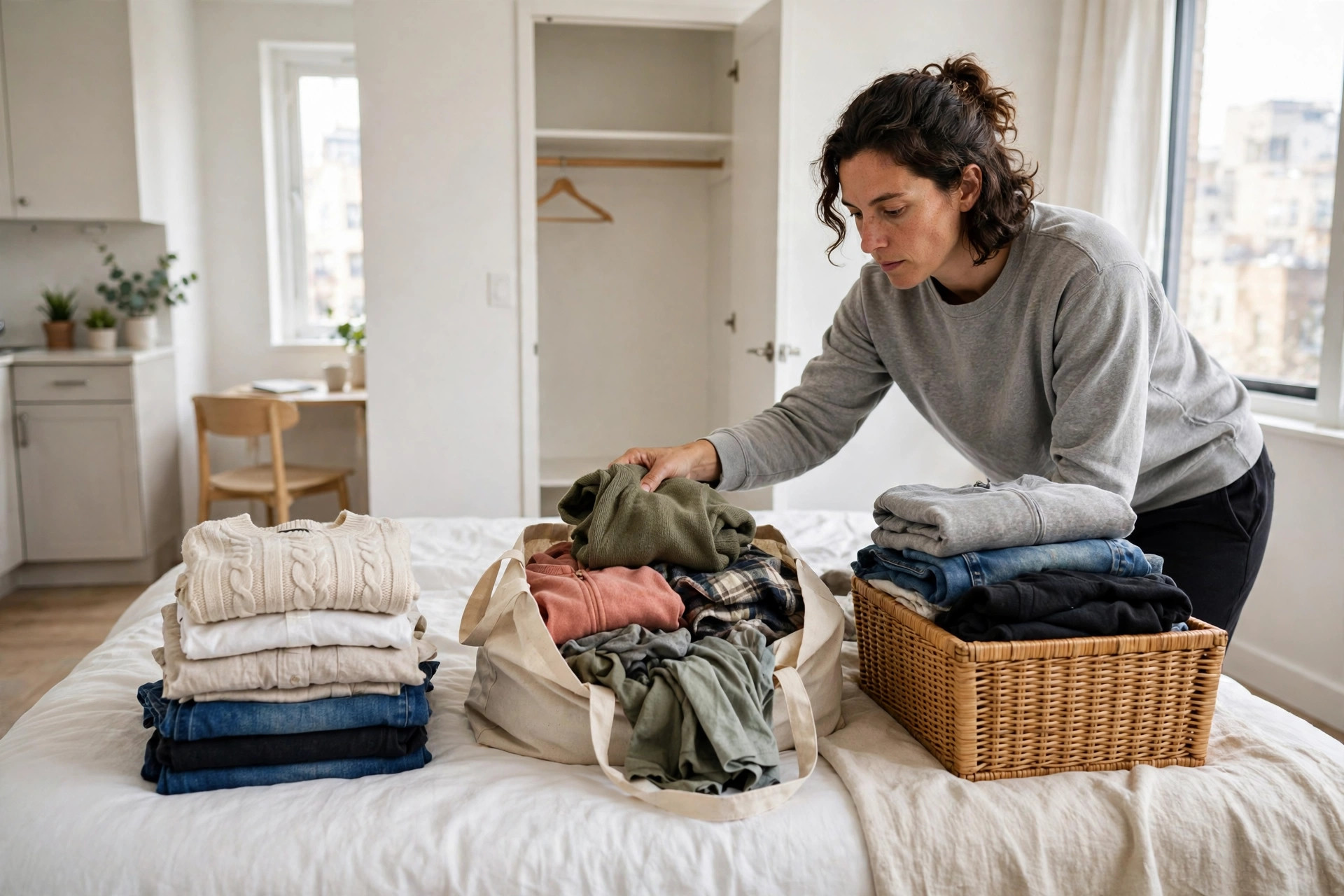
Yes, all of it, onto the bed. Then sort into three piles: daily wear, occasional wear, and doesn't earn its rent. Studio life is unforgiving — if you haven't worn it in a year, it's borrowing space from things you wear weekly. Bag up the third pile immediately; don't let it sit on the bed for a week.
Count what remains in the first two piles before buying a single organizer. You need real numbers — how many hangers, how many shoe pairs, how many folded stacks — because small closets fail when products are bought for imaginary inventory. This is the least glamorous step and the most important one.
Go double-hang: two rods change everything
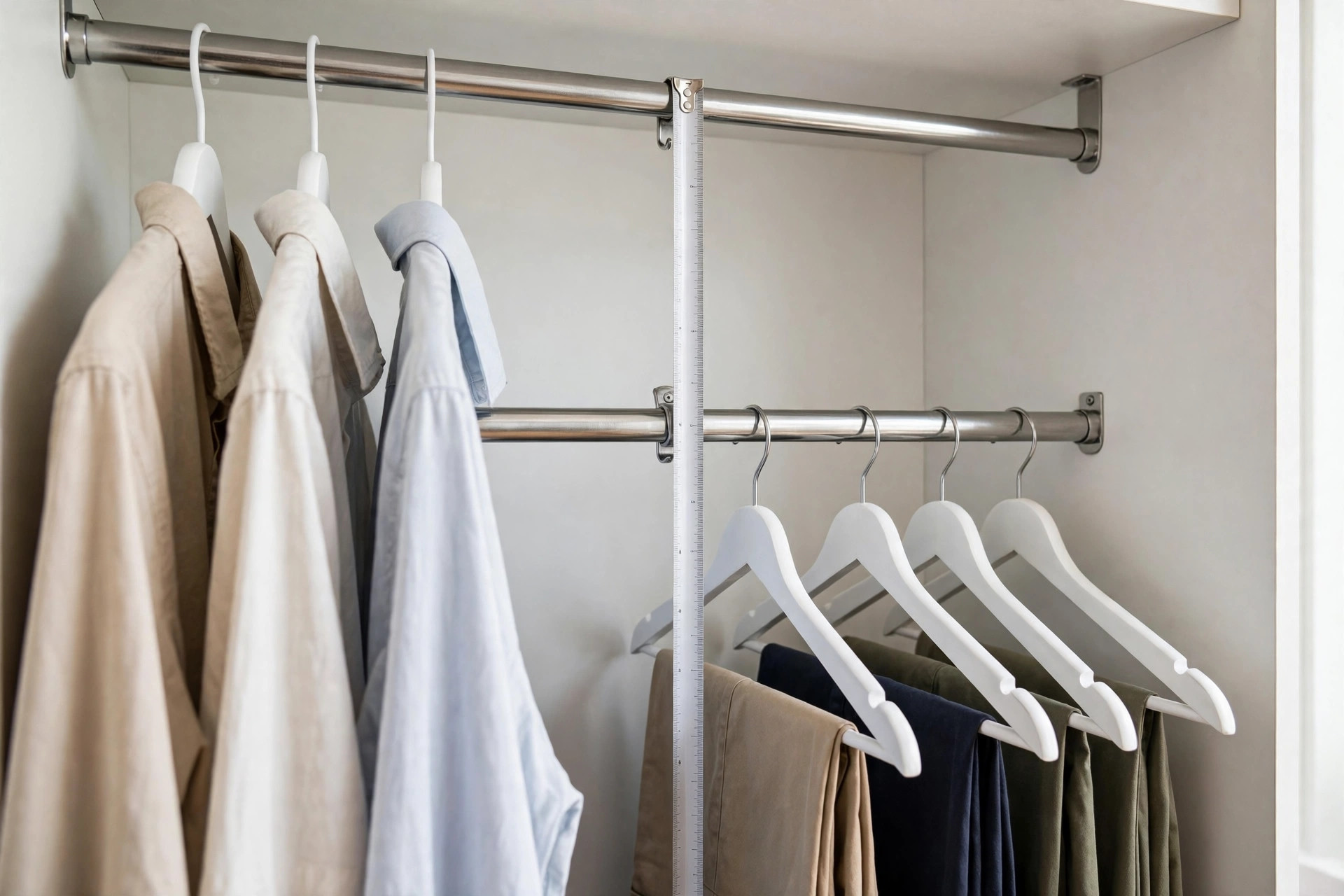
A standard closet rod sits at about 66 inches, sized for long dresses. Most of what people wear — shirts, blouses, jackets, folded pants — fits in 38 to 42 inches of height. So hang a second rod roughly 40 inches below the top one, and you've doubled your hanging capacity overnight without touching the walls.
Use an adjustable tension rod if you rent and can't drill, or a hanging rod kit that clips over the existing one — both hold a full load of shirts without marking paint. Put tops on one rod, pants and skirts on the other, and reserve the top rod's right side for your few long pieces. This one change usually absorbs a whole wardrobe by itself.
Zone the height: top, middle, bottom
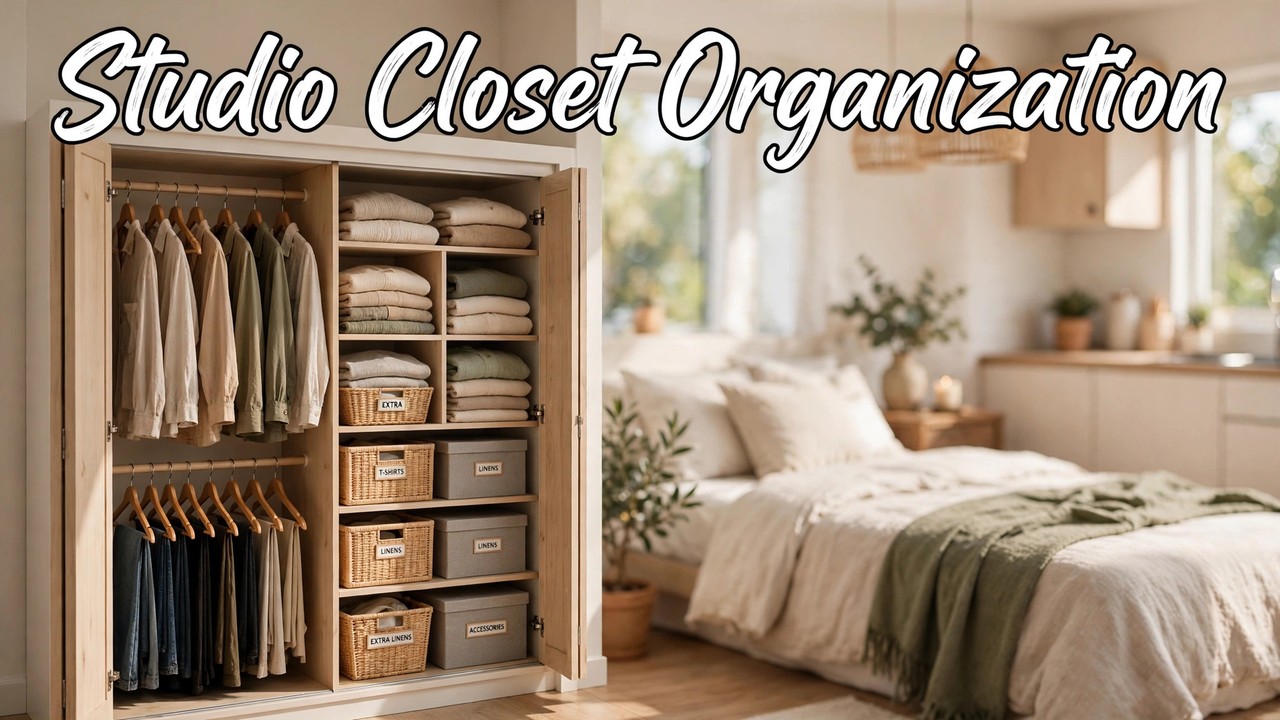
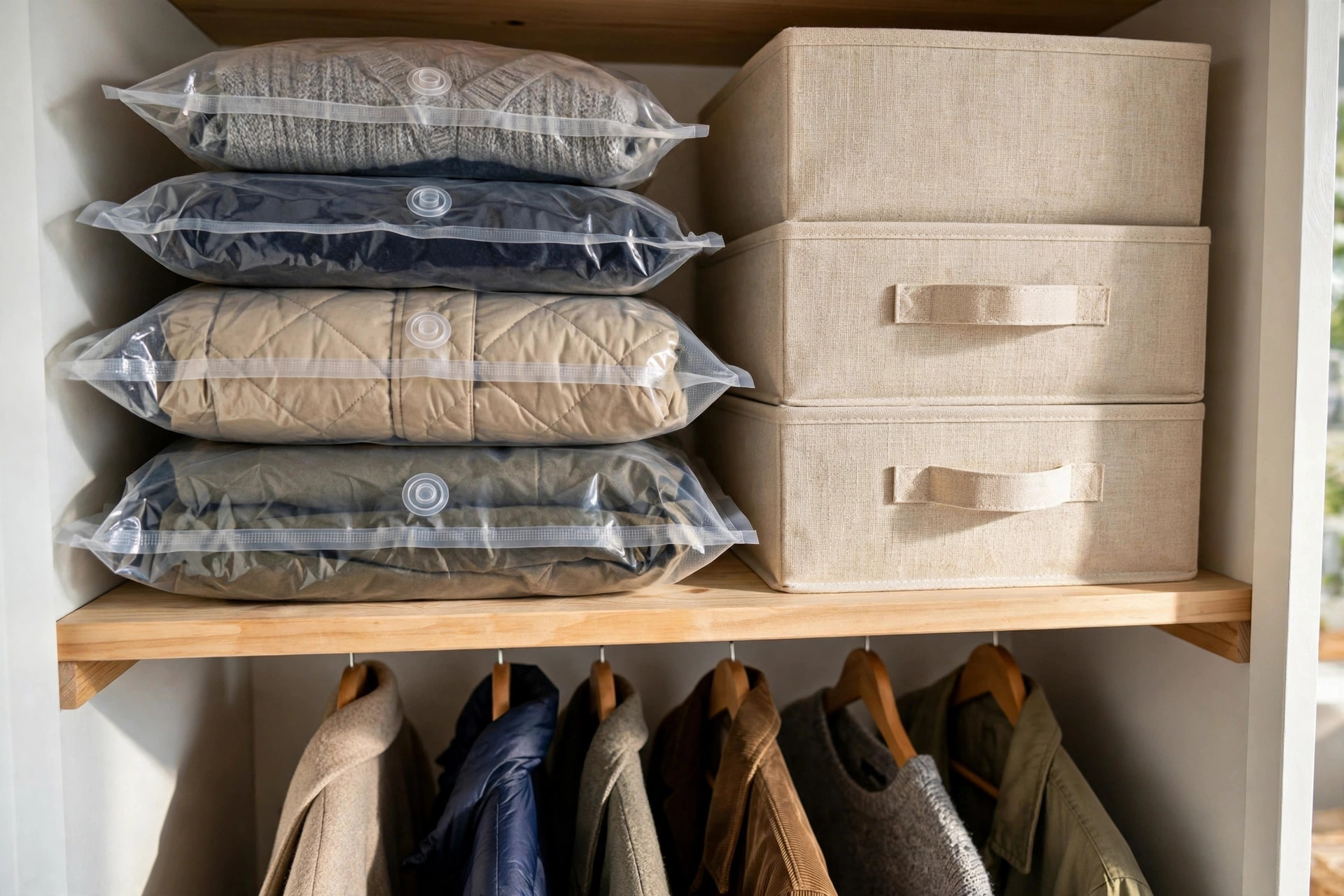
The top shelf (above eye level): off-season and rarely-touched items only. A couple of labeled fabric bins — one for heavy winter gear in summer, one for the reverse — plus spare bedding. Keep a small folding step stool nearby or you'll never actually rotate these, and then the system quietly dies.
The middle (the gold): your daily hanging, arranged so today's choices are all at one glance. Heaviest use goes front and center; the far left corner, which is hard to reach, holds whatever you grab least.
The floor (below the bottom rod): this is premium real estate in a tiny closet, not a dead zone. Two stackable shoe shelves, or a single row of rolling under-bed-style bins if your closet floor is deep enough, or boot trays angled so tall boots don't flop over. Measure the actual clearance — most studio closets give you 24 to 30 inches of usable depth at the floor, which is plenty.
Make the door back do real work
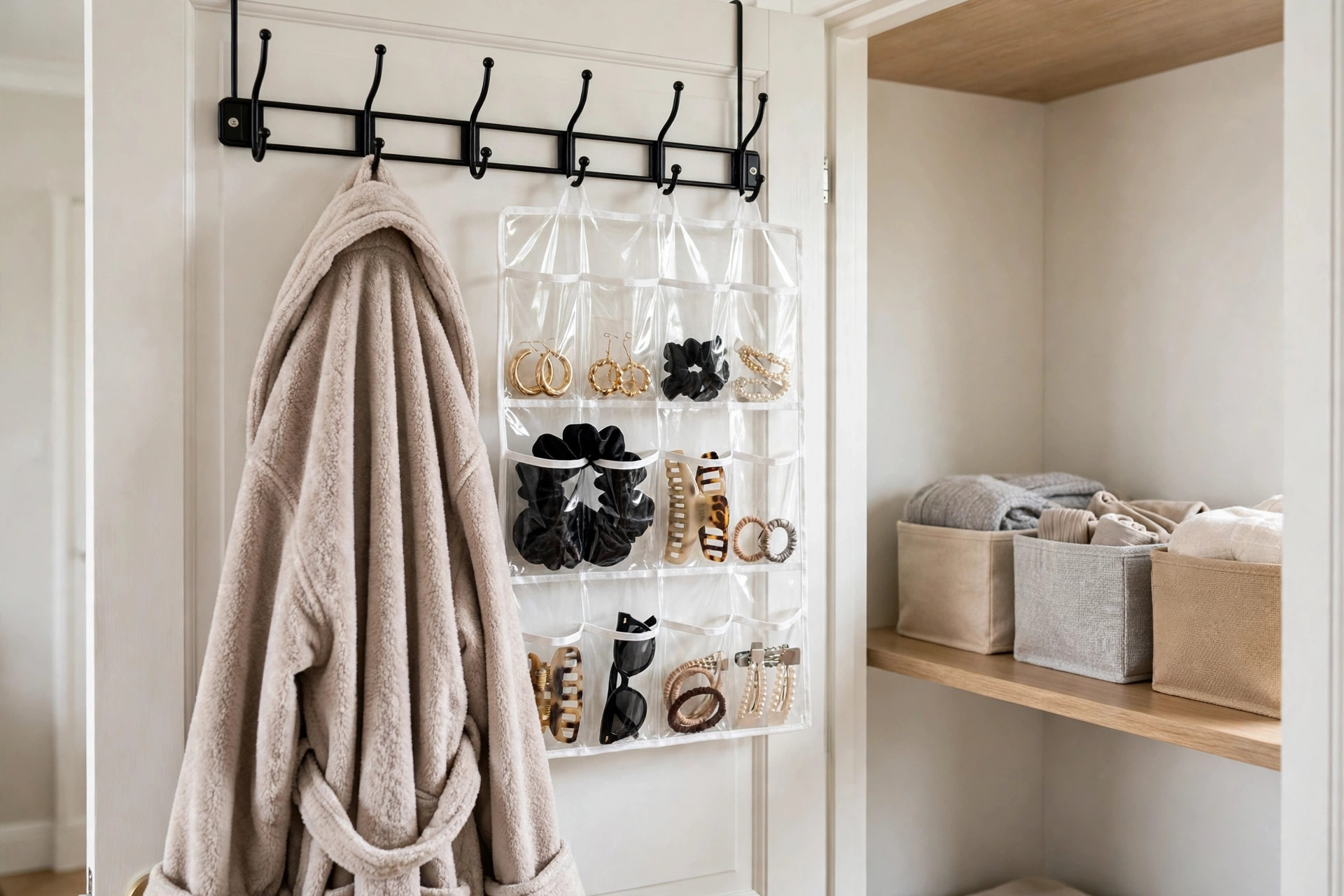
The inside of the closet door is usually the most ignored surface in a studio, and it's free storage. An over-the-door hook rack (the padded kind that won't scrape paint) holds tomorrow's outfit, robes, or a tote bag. A hanging shoe organizer on the door — the clear-pocket style — swallows scarves, belts, hats, and all the small stuff that normally explodes across shelves.
One rule for door organizers: if it makes the door not close, it’s failed. Load it, close the door, and check. Clear pockets are better than solid canvas here because you can see everything without pulling things out.
Contain the loose stuff in small, labeled bins
Socks, underwear, tights, gloves — the small soft things are what make a small closet look chaotic even when it's technically tidy. Three or four shallow fabric bins on a shelf, one category each, with a label you can read from the doorway. Skip the labels and within two weeks everything becomes one mystery bin. It happens constantly.
Matching hangers deserve a mention too: slim velvet or felt hangers are roughly half the thickness of plastic ones, and switching a full rod of them typically buys you 8 to 12 extra hangers' worth of space. It sounds like a small win until you count it.
Handle the off-season honestly
A studio closet cannot hold four seasons of clothes at once. That's not failure, it's physics. So decide: does the closet hold the current season plus one layer of transition, or does it hold everything year-round because you live somewhere with mild swings?
If you're in a real four-season climate, off-season clothes go to the highest shelf, the top of an armoire, or under-bed storage — vacuum bags work well if you squeeze the air out fully and don't overfill them. What stays in the closet is the current season plus the week-or-two of transition pieces on either side. Rotating twice a year takes about an hour, and it keeps the closet breathing instead of bursting.
The honest trade-offs
A few things nobody tells you. First, uniformity costs money — matching hangers, matching bins, a second rod — and you can easily spend $80 to $120 kitting out a small closet. Worth it, because a system you hate looking at doesn’t get maintained. Second, a tiny closet means your laundry cycle runs your wardrobe; you'll do slightly smaller loads slightly more often, and that's fine.
And if you're ever tempted to add built-in shelving or mount anything structural into the wall — shelves screwed into studs, a closet system anchored to drywall — that's the point where a licensed professional earns their fee. A bad anchor job fails when you least want it to, usually at 6 a.m. before work. For renters, stick to tension rods and freestanding units; they hold plenty without the risk.
What I'd do differently next time
If I could give every new studio renter one starting rule: buy nothing until you've lived with the closet for two weeks and logged what frustrates you daily. The people who buy organizers on move-in day always end up with a drawer of mismatched products they never use. The two-week frustration log tells you exactly what to fix, and nothing more.
Your tiny closet isn't the problem. An un-zoned closet is. Give every inch a job, keep the daily stuff at arm level, and the one closet you have is genuinely enough.
Sharing with a partner? These couples sharing one small closet ideas use the same zone system for two adults.
For bedrooms with no closet at all, see these no-closet bedroom wardrobe ideas for renters.
Zone the closet by height — off-season on the top shelf, daily hanging in the middle, shoes and bins on the floor — add a second hanging rod, and use the back of the door for accessories. The biggest gains come from double-hanging and using the door, not from buying products first.
Use an adjustable tension rod set about 40 inches below the existing rod, or a hanging rod that clips over the current rod. Both handle a full load of shirts and pants without marking walls, and they come out clean when you move.
With double-hanging rods, slim hangers, door organizers, and floor bins, a typical 4-to-5-foot reach-in closet comfortably holds a 30-to-40-piece rotating wardrobe plus shoes and accessories. What you can’t do is store all four seasons at once — off-season rotation is part of the system.
Usually yes. Slim velvet hangers are about half as thick as standard plastic ones, so switching a full rod typically frees space for 8 to 12 more hangers. The visual calm they create also makes a tiny closet feel less cramped.
The closet floor — two stackable shoe shelves or a boot tray setup under the bottom rod. Keep only your current-rotation shoes there and store the rest off-season style, or they’ll crowd out everything else.