
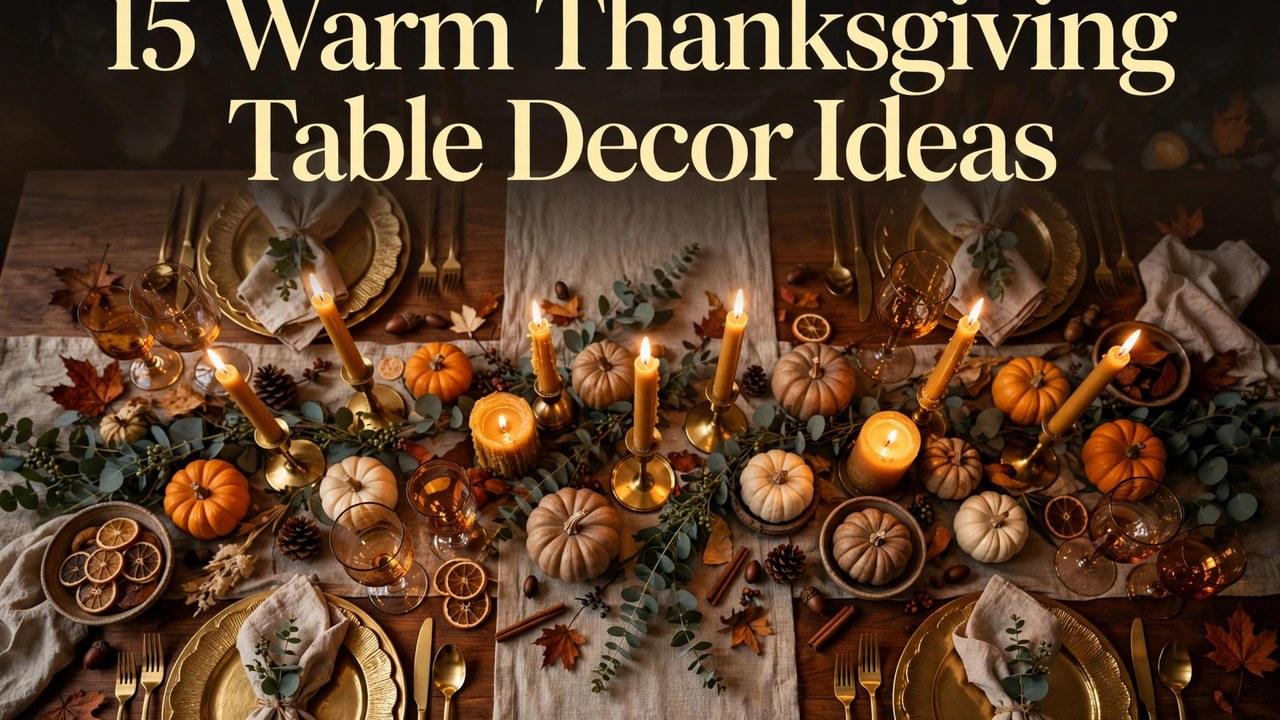
15 Warm Thanksgiving Table Decor Ideas for a Cozy Gathering
15 Warm Thanksgiving Table Decor Ideas for a Cozy Gathering
The best Thanksgiving tables never feel staged. They feel like someone thought about where everyone would sit, lit the candles a little early so the wax had time to pool, and didn’t mind if a few acorns rolled off the runner. Warmth at the table isn’t about spending much — it’s layering texture, light, and the colors of the season until the room feels settled before the first dish lands.
Every idea below works on that principle: start with a base layer (linen, wood, a runner), add something living or dried (eucalyptus, wheat, pumpkins), then add light (candles, tea lights, low lamps). Keep heights low enough that people can see each other across the table, and keep anything fragrant away from the food. The details are small, but stacked together they change how the evening feels.
The fifteen ideas run from the table itself outward — runner, candles, place cards, napkins — then widen to the sideboard and the chairs. Pick three or four and do them well; a crowded table reads busy, not cozy.
1. Run a Linen Runner and Layer a Eucalyptus Garland Down the Center
A tablecloth covers the table; a runner frames it. A natural linen runner — the kind with a loose, visible weave — down the center of bare wood leaves the warm wood visible on both sides, which reads cozier than a full cloth. Let it overhang about six inches past each end of the table so it drapes instead of stopping short.
On top of the runner, lay two or three overlapping garlands of seeded eucalyptus or baby blue eucalyptus, staggering the bunches so the stems tuck under the leaves of the next. Florists sell garlands by the foot; plan on about two feet more than the table’s length so the ends spill slightly. A light mist with water on the morning of keeps the leaves supple, and eucalyptus holds its shape and scent for days — assemble it the night before and it’s one less job on Thanksgiving day.
2. Cluster Brass Candlesticks at Mixed Heights
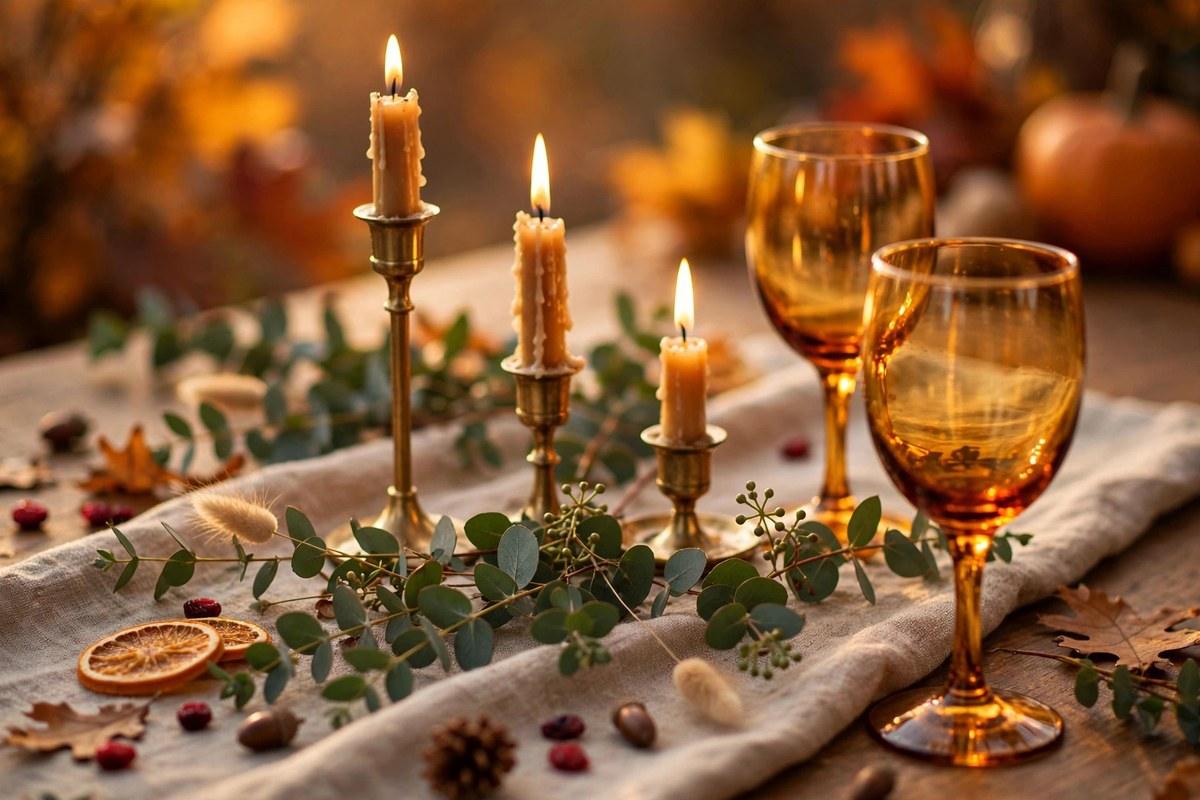
Brass does something nothing else does at a fall table: it throws candlelight back in warm, amber pools instead of absorbing it. Gather candlesticks in three heights — roughly 4, 7, and 10 inches — and group them in clusters of three or five rather than spacing them evenly down the runner. Odd numbers cluster more naturally than even ones.
The candles themselves matter less than the mix. Ivory tapers keep it classic; beeswax tapers, with their slightly irregular surface and honeyed tone, look better in brass than anything polished. Trim every wick to about a quarter inch before lighting so the flames stay steady and small. Light them fifteen minutes before guests sit down — a flame that’s just settling throws steadier light than one lit at the last second.
Thrift stores are the best source for brass: candlesticks are one of the few things that show up constantly, for a dollar or two, and the patina of age looks right on a Thanksgiving table anyway.
3. Use Mini Pumpkins as Place-Card Holders
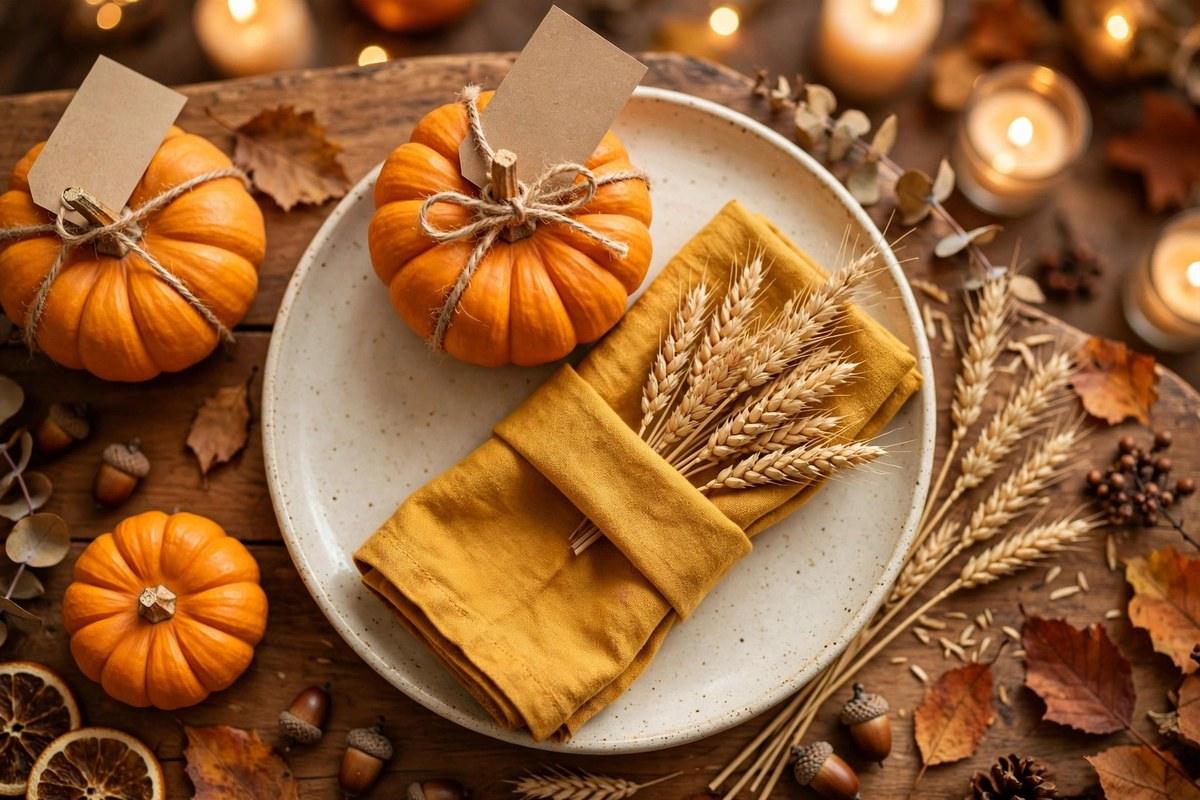
A mini pumpkin with a place card stuck into it does two jobs — decor and seating chart — which is exactly what a busy host needs. Choose pumpkins with sturdy stems, about the size of a tennis ball. White (Baby Boo) and orange (Jack Be Little) both work; mixing the two colors at alternating seats gives the table rhythm without looking random.
Cut a slit about half an inch deep into the top with a paring knife, right beside the stem rather than through it — the stem is tougher than the flesh and will crack if you cut into it. The slit holds a folded place card or a small tented card upright. Set one at each plate angled slightly toward the chair so guests can read their names as they arrive.
If any pumpkins wobble, shave a thin slice off the bottom so they sit flat. Test them on the table before guests arrive; a toppled pumpkin on someone’s lap is not the entrance you want.
4. Write Place Cards on Kraft Paper and Tie Them With Twine
Place cards feel formal until you make them from brown kraft paper. Cut the paper into rectangles about 2 by 3½ inches — heavyweight kraft from a craft store holds a crease better than the thin stuff. Fold each one tent-style and write the name in a brown felt-tip pen; block letters read better at a distance than cursive, and they’re more forgiving if your handwriting isn’t calligraphy-grade.
Punch a small hole in the top corner, thread a short piece of natural jute twine through, and tie it around the pumpkin stem with a simple bow. That one detail — twine instead of ribbon — is what keeps it rustic instead of wedding-y. If names are long, write first name only; the card is a kindness, not a legal document.
Cards double as keepsakes: guests often take them home, so the ten minutes of writing is the rare bit of decor that gets kept.
5. Build a Low Wooden-Box Centerpiece of Candles, Pumpkins, and Pinecones
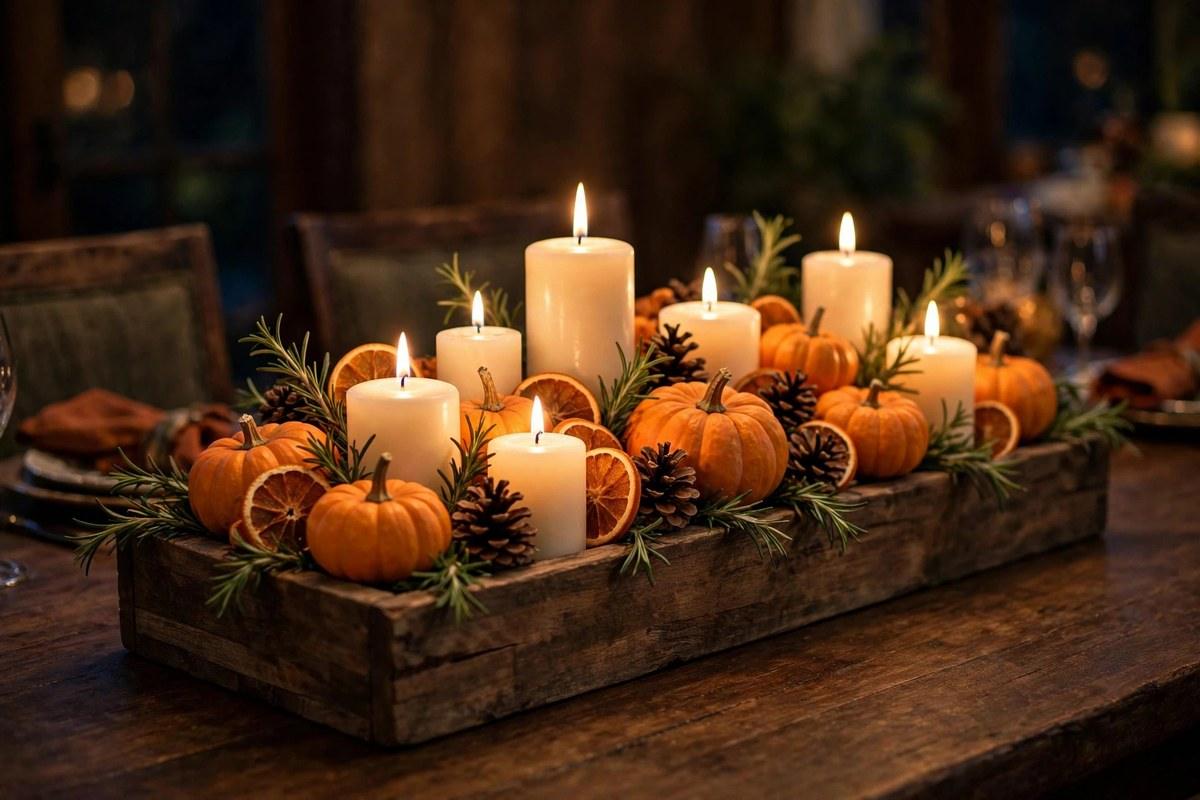
One contained centerpiece is easier to manage than decor scattered down the whole table — and it lifts off in seconds when the food arrives. A long, low wooden box (a planter box or a simple trough, about 24 inches long and 6 inches deep) is the ideal container. Line it with a sheet of plastic or a folded paper grocery bag first, since real pumpkins and greenery are damp.
Arrange in layers: pillar candles of three heights at the back and middle, mini pumpkins and gourds filling the gaps, pinecones tucked where you need height at the edges. Sprigs of rosemary or cedar fill the last thin gaps and add scent — fresh rosemary survives days in a dry arrangement.
Keep the tallest candle under 10 inches so sightlines stay open. The whole box can be assembled two days ahead; light the candles the evening of.
6. Scatter Dried Orange Slices, Cinnamon Sticks, and Acorns Along the Runner
After the big pieces are placed, the table still looks a little sparse — that’s where the scatter comes in. Dried orange slices are the standout: translucent amber, fragrant, and cheap to make. Slice oranges a quarter-inch thick, bake at 200°F for about three hours, flipping once, until they’re dry and leathery but not brittle.
Tuck two or three slices into the eucalyptus garland and lean a couple against candlesticks. Bundle cinnamon sticks in groups of three with twine and lay them between the candles. Acorns and unshelled walnuts fill the last gaps — gather them from the yard if you can, or buy a bag at a craft store. The rule is irregularity: drop them in small clusters, never in rows. A row of acorns looks staged; a cluster looks like it happened.
Everything in this layer is edible-safe and unscented except the cinnamon, which only smells when warm — fine near food.
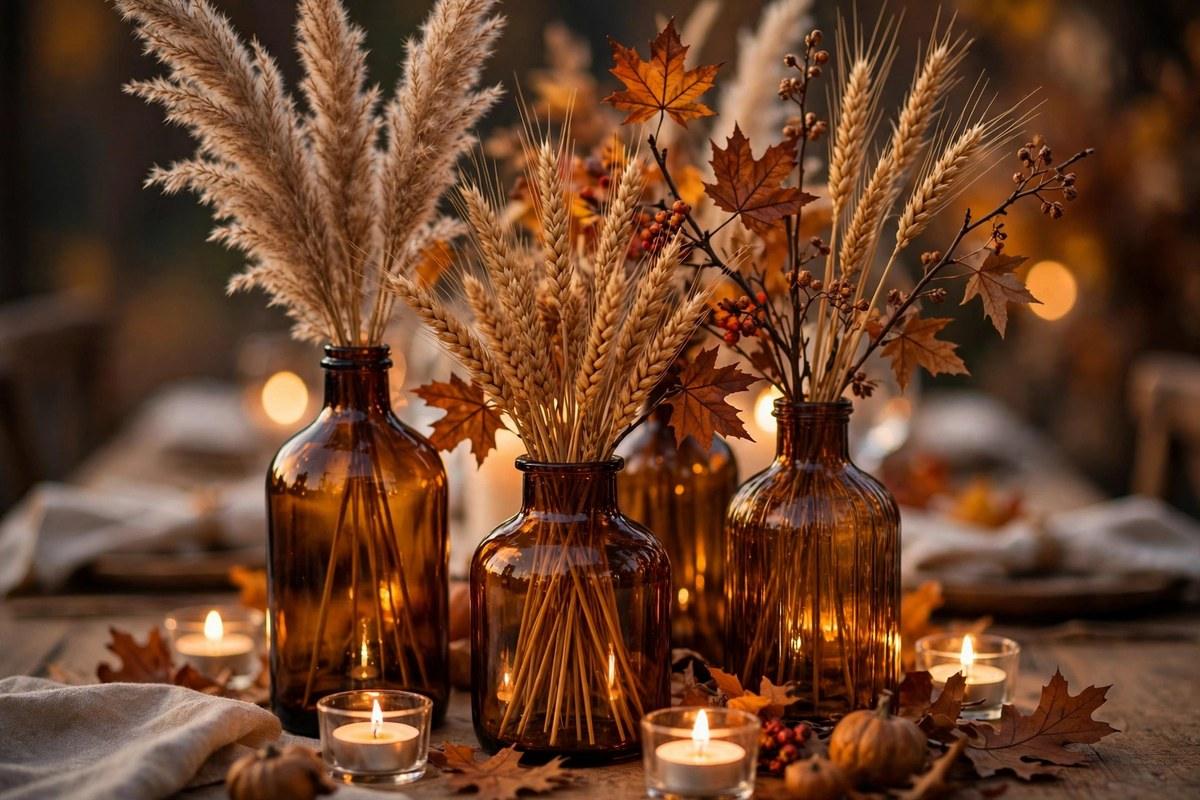
7. Fill Amber Bottles With Dried Wheat and Pampas Grass
Tall, slender dried stems bring height to the table without blocking conversation — the key is keeping the containers narrow and the stems sparse. Amber glass bottles, the kind that once held medicine or olive oil, are perfect: the glass glows when a tea light sits behind it, and a narrow neck forces stems upright in a natural fan.
Put three to five stems in each bottle — dried wheat, pampas grass plumes, or bunny tails — and group the bottles in twos or threes at the ends of the runner. Cut the stems so the arrangement stands 18 to 24 inches above the table; below eye level for seated guests. Pampas grass sheds a little at first, so shake it out outdoors before bringing it in.
This is the piece that photographs best at dusk, when the amber glass catches the last daylight and the tea lights are already on.
8. Run a Low Trail of Tea Lights Down the Runner
Taper candles give the table its drama; tea lights give it its warmth. A dozen glass tea-light holders, tucked into the garland between the bigger pieces, fill the dark gaps so the whole center line glows instead of just the tall candles. Use real candles, not LED — the flicker is the entire point. Sit them in low glass holders so the flame is sheltered from drafts when people move around the table.
Place them roughly a foot apart, closer near the ends where the table darkens. Light them last, after the tapers, and keep a long lighter or a lit taper handy to relight the ones that die mid-evening. Trim any eucalyptus stems that hang near a flame — dried greenery and open flame are a combination that deserves respect, and a couple inches of clearance keeps it safe.
Budget tip: buy tea lights in the hundred-count bags rather than the decorative tins. The glass holders are reusable year after year; the candles are the only consumable.
9. Fold Rust Linen Napkins and Tuck in Dried Lavender
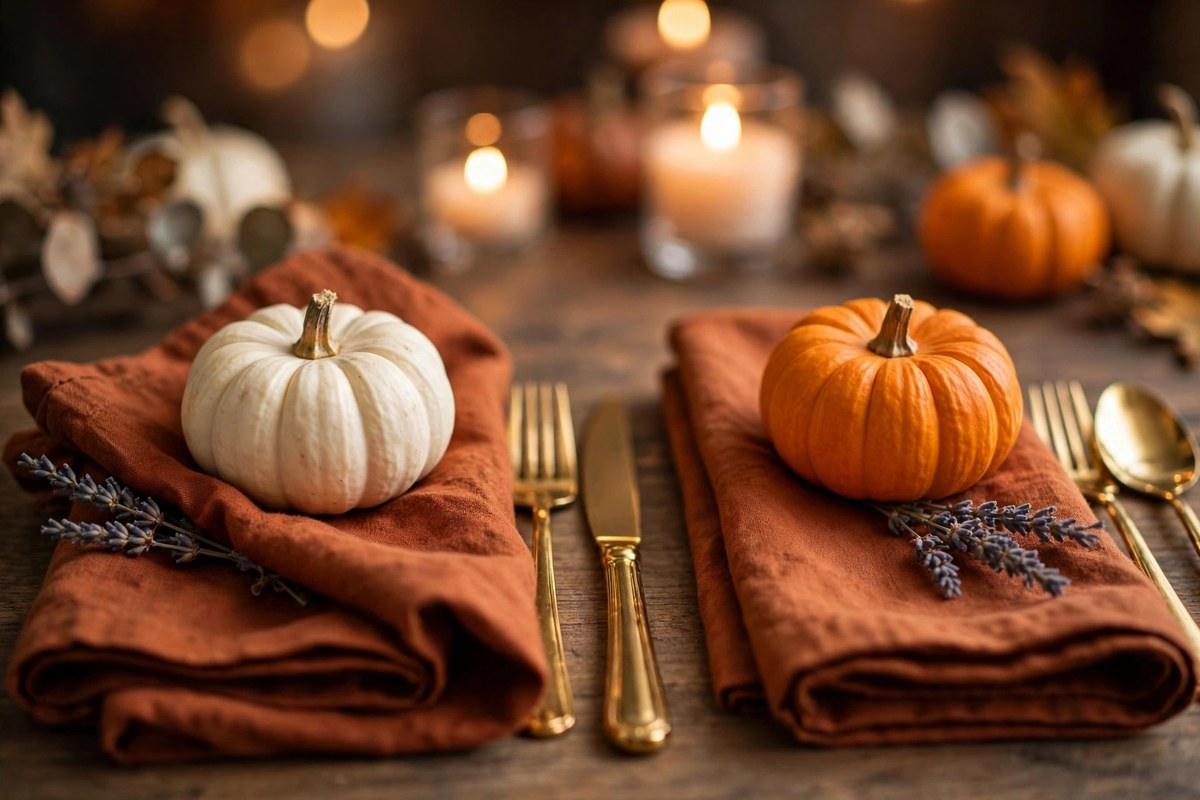
Napkin color sets the table’s temperature. White napkins feel formal; rust, burnt orange, or deep mustard napkins feel like November. Cloth napkins are worth it here — paper napkins wrinkle under a pumpkin and slide off linen; a heavier cloth napkin stays put.
Fold each napkin into a simple rectangle, lay it on the plate with the open edge to the right, and tuck three stems of dried lavender under the top edge. The lavender’s purple-grey against rust is one of the season’s best color pairings, and the scent releases faintly when the napkin is unfolded — subtle, not perfumey. If lavender feels too fragrant, dried wheat or a single eucalyptus sprig works the same way.
Press the napkins the night before with a hot iron; a crisp fold holds all evening, while an unpressed napkin slumps within the hour.
10. Let Small Pumpkins Double as Napkin Weights
Rest one mini pumpkin on each folded napkin and it stops the napkin from sliding, adds a second layer of color, and saves you a napkin ring. This works best when the pumpkin is small — two to three inches across — so it sits on the napkin rather than dwarfing the plate. White Baby Boo pumpkins on rust napkins are the classic pairing; the contrast is what makes it.
Place the pumpkin toward the outer edge of the napkin, not dead center, so there’s still room to pick up the napkin without knocking the pumpkin onto the floor. If the pumpkin is slightly top-heavy, nestle it into the fold rather than balancing it on top.
Guests can take these home — set a few extras on the sideboard for anyone whose pumpkin rolls away, and nobody has to guard theirs through dessert.
11. Set Up a Sideboard Drink Station With Spiced Cider in Copper
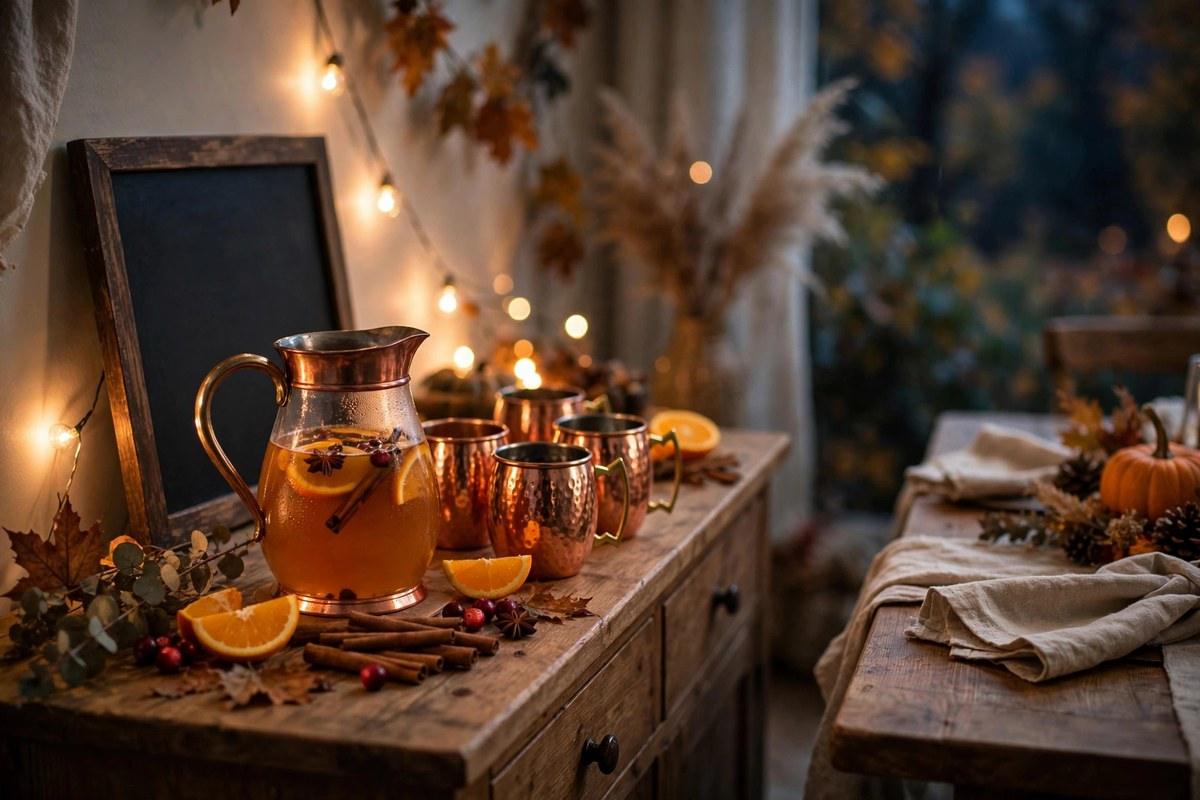
The table is for dinner; the sideboard is for everything before it. Setting drinks apart from the table keeps the table from crowding and gives guests somewhere to gather while the turkey rests. A copper pitcher or a hammered copper punch bowl filled with warm spiced cider is the centerpiece — the metal glows under string lights and the steam does the atmosphere work for you.
Keep the recipe simple: apple cider, cinnamon sticks, whole cloves, and orange slices, kept warm in a slow cooker or on a low burner nearby so the pitcher can be refilled. Set out small mugs — six to eight ounces is plenty — with cinnamon sticks for stirring. A small wooden crate or folded linen under the mugs keeps the sideboard from ringing.
Put the non-alcoholic option first and label it clearly; a tented kraft card that says “spiced cider” avoids every guest having to ask.
12. Drape String Lights Along the Sideboard and Window
Warm-white fairy lights are the easiest warmth in the room. A single 30-foot strand of copper-wire fairy lights, draped in loose swags along the back of the sideboard and across a window frame, adds a layer of light that candles can’t reach. Copper wire bends and holds its shape, so the swag stays where you put it without hooks.
Choose warm white (around 2700K), never cool white — cool white reads blue and kills every other warm tone in the room. Battery packs hide behind the pitcher or inside a pumpkin; run the wire’s tail down the back of the sideboard where nobody sees it.
Turn them on at dusk, well before guests arrive, so the room is already glowing when the door opens. Lights that click on mid-conversation are a distraction; lights that were always on are the mood.
13. Drape Plaid Wool Throws Over the Chair Backs
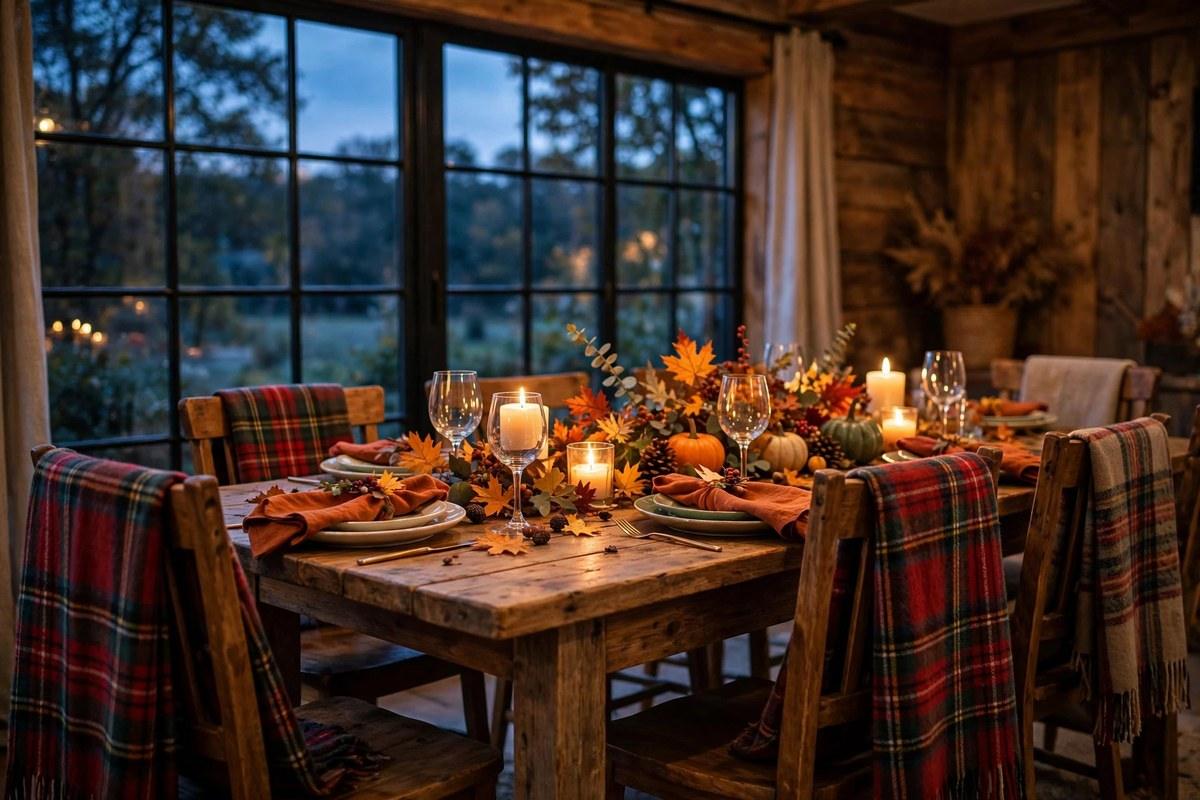
If the evening stretches past dinner — and the good ones do — guests get cold before they admit it. A folded wool throw over the back of every other chair is both decor and insurance: the plaid reads instantly as fall, and nobody has to be the first to ask for a blanket.
Stick to one or two patterns. A red-and-black buffalo check is the bold choice; a muted green-and-tan tartan is quieter. Drape the throw folded in half lengthwise over the chair back, with about a foot hanging on each side — full unfolded throws look messy. Skip the two chairs at the ends of the table if space is tight; the sides are where people linger.
Wool throws in the 50-by-60-inch size are the sweet spot: big enough to share, small enough to fold neatly. Wash and air-dry them the week before so they smell clean, not stored.
14. Build a Low Leaf-and-Berry Centerpiece From Foraged Branches
The most convincing centerpiece might cost nothing. The week of Thanksgiving, clip branches of maple, oak, or whatever is turning in the yard — aim for branches with leaves still attached and some color left. Trim them to 12 to 18 inches, strip the bottom leaves, and fan them low across the runner between the candles.
Add foraged berries for contrast: bittersweet, winterberry, or crabapple branches, if you can find them, bring the orange-red pops that leaves alone don’t give. Keep the whole arrangement under 12 inches high — this is a groundcover for the runner, not a bouquet, and anything taller fights the candlesticks.
Leaves wilt, so cut them the morning of and stand the branches in a low jar of water hidden under the garland until an hour before dinner. They won’t last forever, but they only need to last the evening.
15. Leave a Small Parting Favor on Each Plate
The last thing a guest touches is the thing they remember. A small parting favor on each plate — a bundle of dried herbs tied with twine, a little muslin bag of spiced nuts, a small jar of honey — turns the place setting into a goodbye. Keep it small enough to sit beside the pumpkin without crowding the plate: three to four inches long is right.
Dried herb bundles are the easiest: tie together rosemary, thyme, and a cinnamon stick with twine, and guests can hang them in their kitchen. Spiced nuts need a bag and a label; roast them the weekend before and store them airtight so they’re still crisp. Whatever you choose, make it something usable — decorative favors get left behind, and a favor left behind is worse than none.
Set the favors out when you set the table. It’s the final layer, the one guests discover as they sit down, and it makes the whole evening feel considered from the first minute to the last.
Fifteen ideas, and the thread through all of them is restraint: a linen runner, warm candlelight at mixed heights, pumpkins doing double duty, and a few things that smell like the season. You don’t need all fifteen. Three or four, done well — a runner with garland, candles at mixed heights, something on the napkins, and light on the sideboard — carry a table on their own. Start there, add the layers that sound like you, and light everything fifteen minutes early. That’s the whole secret.
Frequently Asked Questions
How far in advance can I decorate the Thanksgiving table?
The non-perishable layers — runner, candlesticks, bottles, throws — can go out two or three days ahead. Eucalyptus garland and pumpkin arrangements hold well if assembled the night before. Cut branches, fresh herbs on plates, and anything with real leaves should wait until the morning of, since cut foliage starts to wilt within a day. Candles go in their holders early but get lit only when guests are close — tapers burned down an hour before dinner are just shorter candles.
How do you keep candles from dripping on the tablecloth?
Use dripless tapers — they’re manufactured with a harder wax blend specifically to burn cleanly — and trim wicks to a quarter inch so the flame stays small and hot, which also reduces dripping. Set every candle in a holder with a proper drip cup or bobeche; brass candlesticks usually have a built-in lip. Keep candles away from drafts (open windows, heating vents, high-traffic edges), since a flickering flame is what throws wax sideways. If a drip does land, let it cool completely and peel it off rather than rubbing it warm.
How tall should a Thanksgiving centerpiece be?
Keep the main centerpiece below seated eye level — roughly under 12 to 14 inches — so guests can see and talk to each other across the table. Candles can go taller since they’re narrow and light passes around them; greenery, pumpkins, and boxes should stay low. Tall, slender elements (wheat stems in narrow bottles) can reach 18 to 24 inches because they don’t block much view. When in doubt, sit in a chair and look across before guests arrive — if you can’t see the opposite plate clearly, lower something.
What colors work for a warm Thanksgiving table besides orange?
Warm neutrals do the heavy lifting: cream linen, brass, honey-toned wood, and soft browns. Deep green (eucalyptus, rosemary) and warm metallics (brass, copper, gold flatware) pair with every fall color. Rust, mustard, and burgundy read as Thanksgiving without a single orange pumpkin; white pumpkins and dried wheat keep the palette light if you want to avoid orange entirely. The one combination to handle carefully is orange plus bright red, which reads more Christmas than harvest — keep reds deep (burgundy, oxblood) and sparingly used.
How do you decorate a small Thanksgiving table without crowding it?
Shrink the footprint, not the warmth. Use a runner instead of a full tablecloth to keep the wood visible, one low centerpiece instead of scattered pieces, and candles in clusters rather than spread out. Move anything that doesn’t need to be at hand — the drink station, extra throws, serving dishes — to a sideboard or counter. Pumpkins and place cards still work at small tables if they’re mini-sized; a three-inch pumpkin takes no more room than a napkin ring. And leave the table edges clear: guests need elbow room more than they need another acorn.