
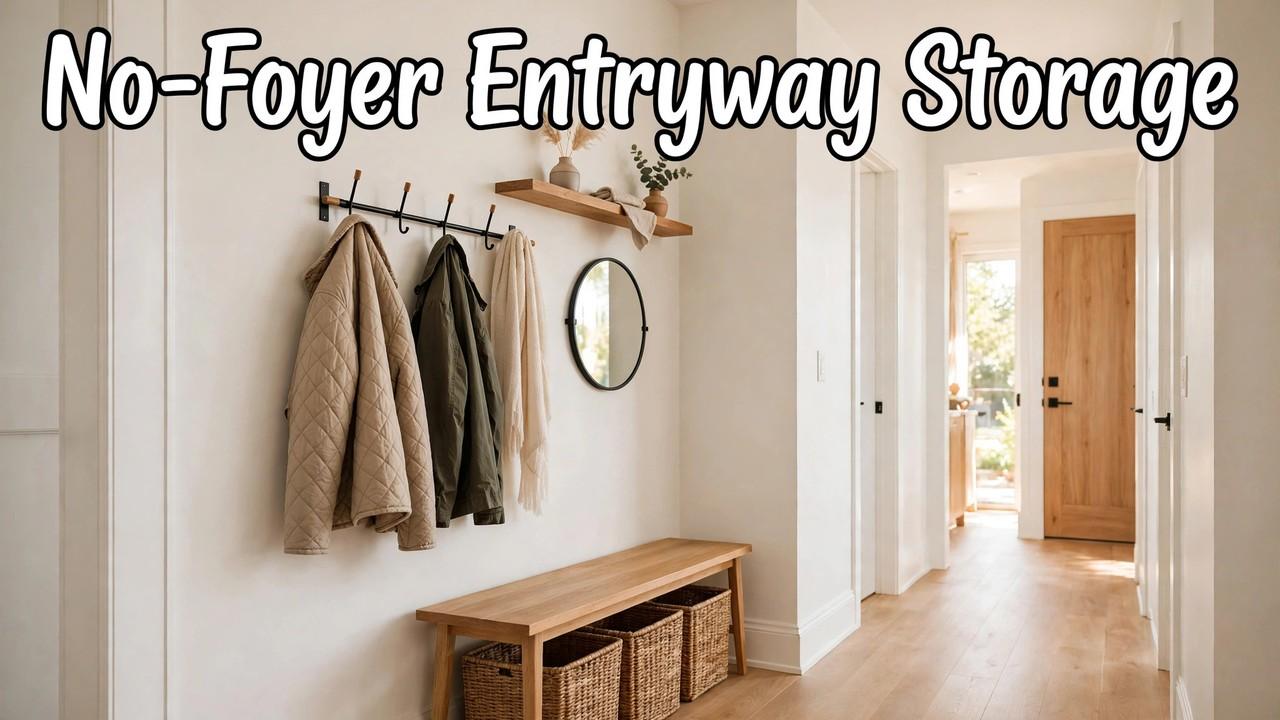
11 No-Foyer Entryway Coat Storage Ideas for Homes Without an Entrance
When your front door opens straight into the living room, coats have nowhere to belong — and within a week they’re draped over the couch, piled on the stairs, and blocking the door itself. The trick is never about finding square footage you don’t have. It’s about claiming one small patch of wall and treating it like a real entryway, even if it’s technically the living room. Your coats need a zone, not a room.
1. The 24-Inch Wall Zone
Pick a stretch of wall within arm’s reach of the door — 24 inches wide is enough — and declare it the entry. A slim wall-mounted hook rail here, nothing wider than 3 inches deep, holds four to five coats without swallowing the room edge. Once the zone exists, coats stop migrating to furniture because they finally have somewhere to go. This is the foundation everything else builds on.
2. Slim Freestanding Hall Tree
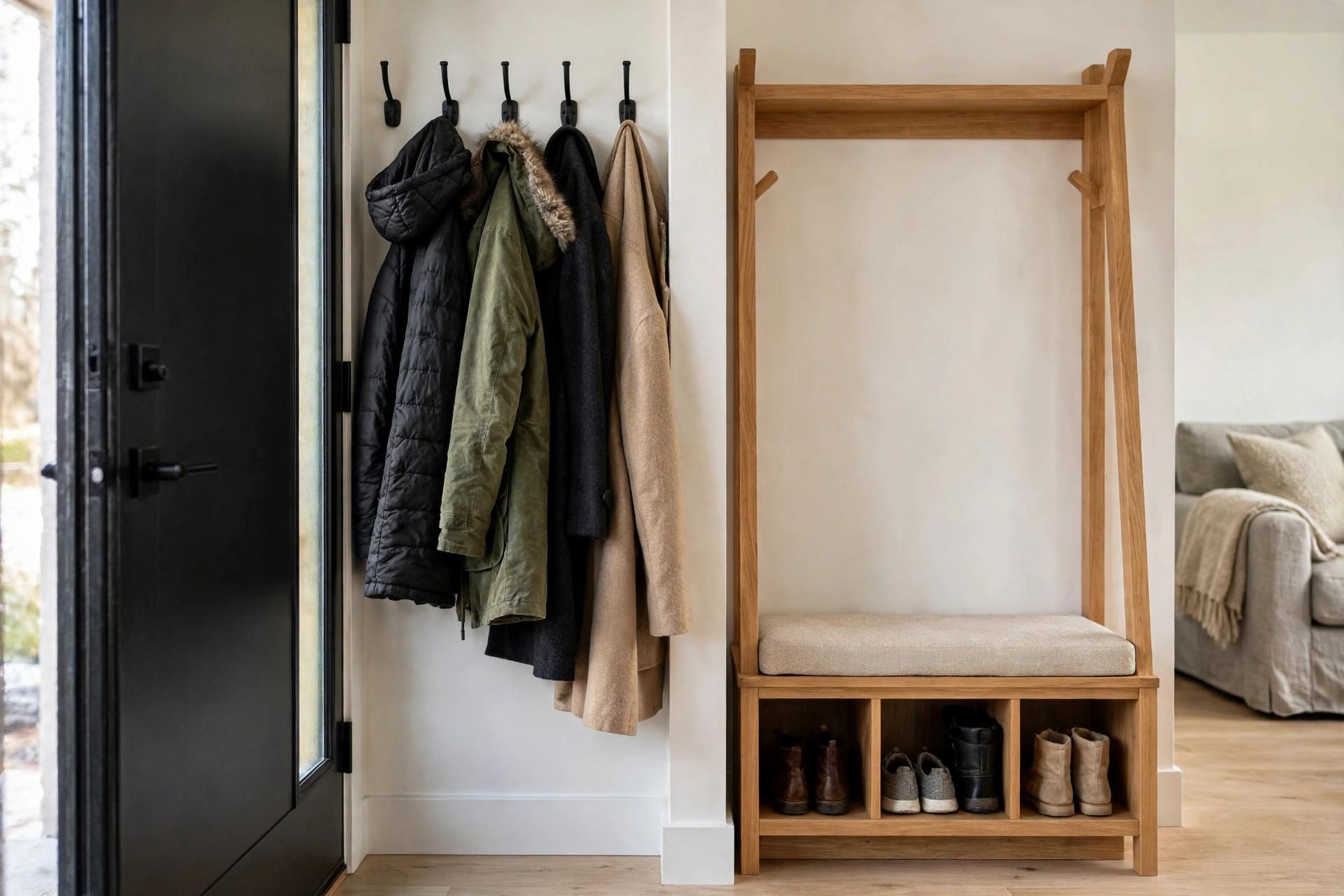
A narrow hall tree — the kind that’s 18 to 20 inches deep with hooks, a small bench, and shoe cubbies — slides against a living-room wall and reads like furniture rather than storage. For apartments, look for one under 36 inches wide so it doesn’t dominate. The bench gives you a perching spot for lacing boots, which is the difference between shoes going in the cubby and shoes ending up kicked under the coffee table.
3. Hooks Behind the Door
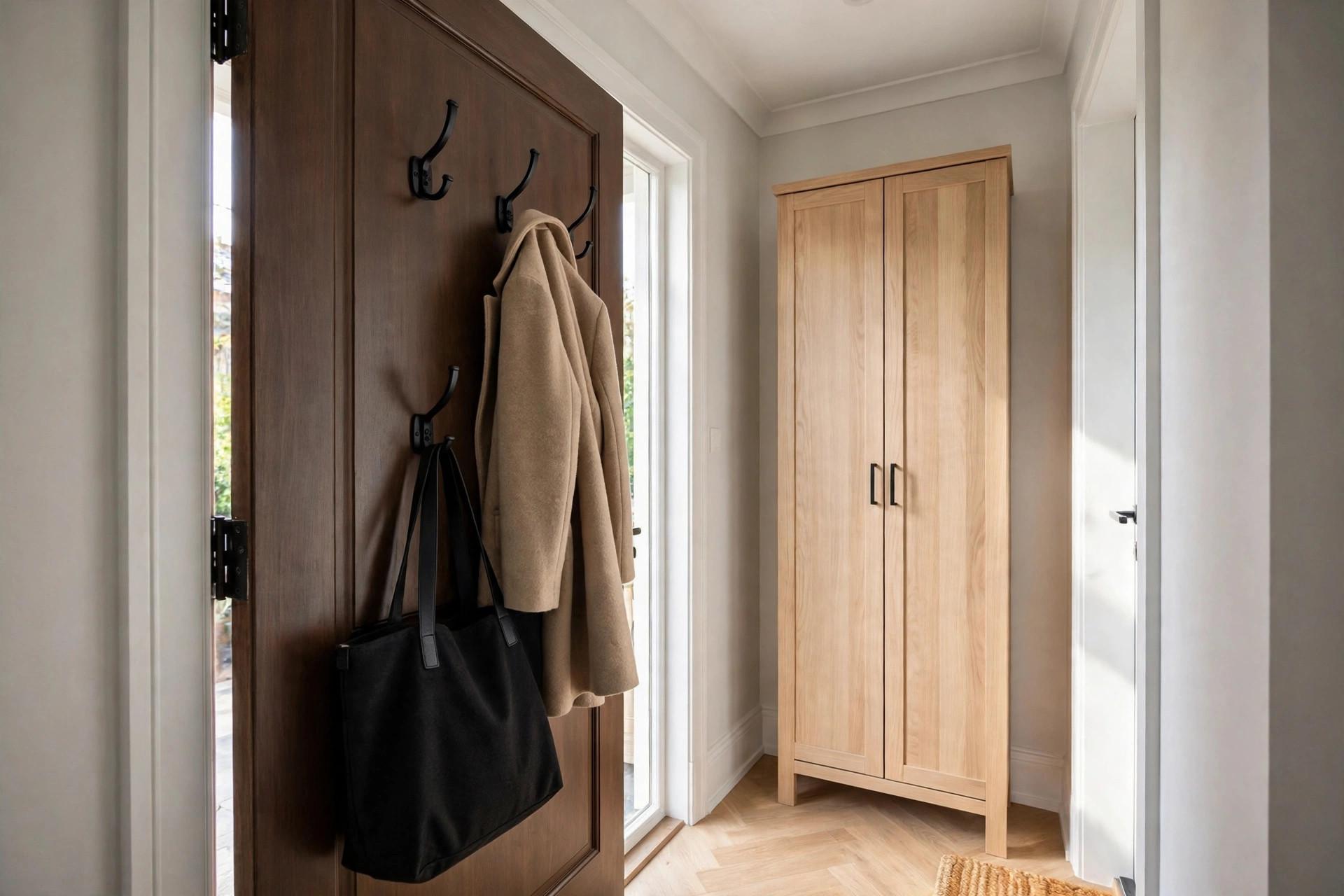
The back of the front door itself is prime real estate most people ignore. Two or three sturdy over-the-door hooks hold today’s coat and tomorrow’s, and they use literally zero floor space. Choose padded-hook styles that don’t scratch the paint, and keep the weight reasonable — doors aren’t built for a full winter wardrobe.
4. A Tall, Skinny Armoire
A 24-inch-wide wardrobe cabinet tucked beside the door creates an actual closed door for coats — visually, the mess disappears. This is the closest a no-foyer home gets to a coat closet, and it’s worth the floor space it takes if you’re someone whose open hooks always look chaotic. Buy used if the price stings; a solid-wood armoire from a thrift listing outlasts flat-pack versions by years.
5. Stagger Hooks at Two Heights
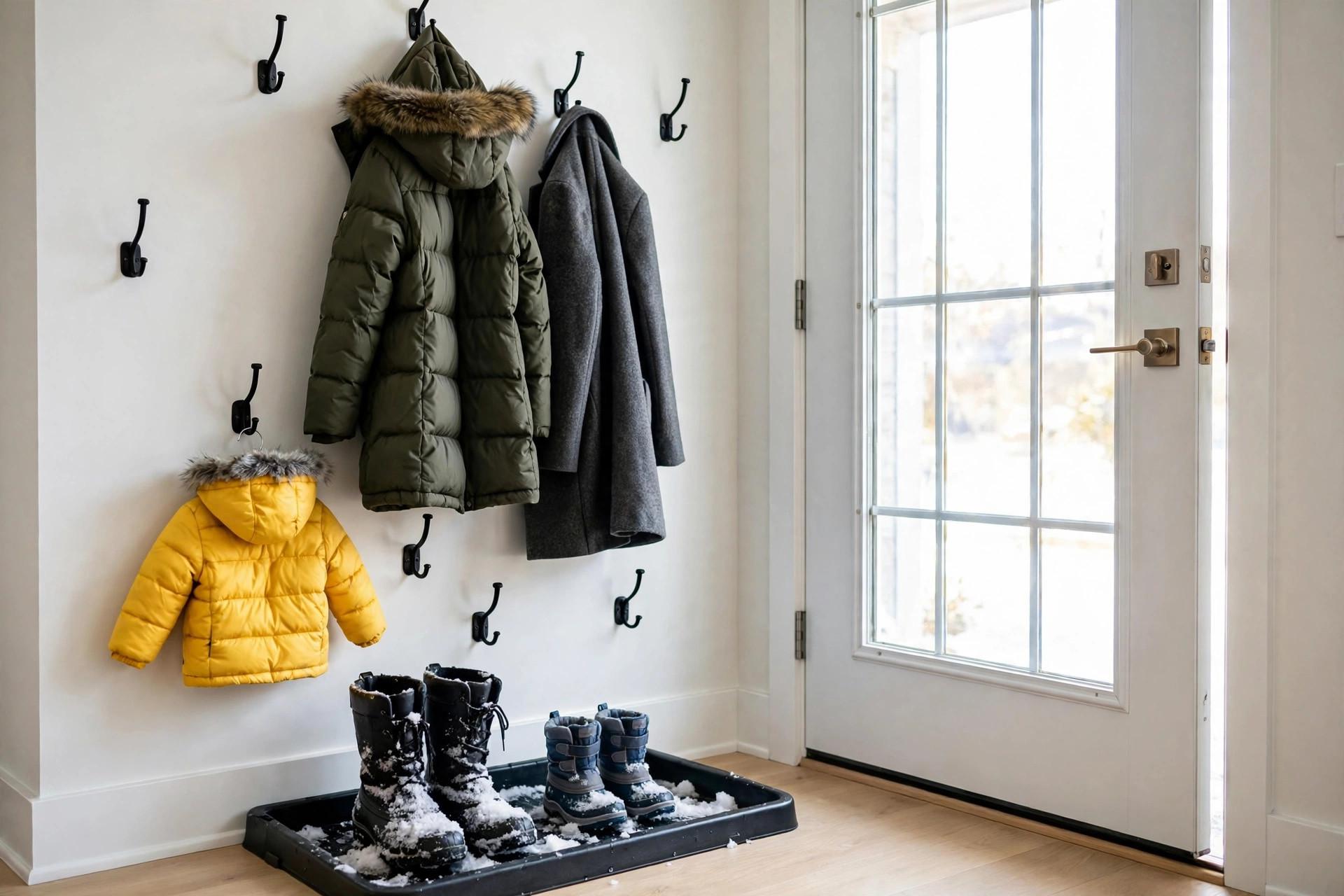
Mounting hooks in a zigzag — adult hooks at about 60 inches, kid hooks at 40 — doubles the capacity of the same wall strip and keeps children’s jackets from pooling on the floor. Kids can actually reach their own hooks, so their coats stop being your problem. This single trick fixes half the coat chaos in family homes without foyers.
6. The One-Coat-Per-Person Rule
Here’s the behavioral fix: in a no-foyer home, only the coat you’re wearing this week lives at the door. Everything else hangs in bedroom closets. Enforce it with one hook per person, and extras physically can’t accumulate. Sounds strict, but the alternative is six coats on a rail designed for four, and nobody’s coat ever looks good crushed in a pile.
7. A Boot Tray That Actually Catches Melt
Winter in a no-foyer house means snowmelt marching straight across the floor. A boot tray with a raised lip — 30 by 16 inches catches two pairs of boots — placed right at the door contains the slush where it lands. Line it with a washable mat insert so it doesn’t look like a mud pit, and empty it weekly in peak season or it becomes its own mess.
8. Repurpose a Narrow Bookcase
A 12-inch-deep bookcase, the kind sold for media storage, makes a surprisingly good coat-and-shoe station: hooks screwed into the top sides, shoes on the shelves below, hats and gloves in a basket on top. It’s cheaper than a purpose-built hall tree and blends into a living room better because it was designed for one. Renters: command-style adhesive hooks work here instead of screws.
9. An Umbrella Stand That Earns Its Spot
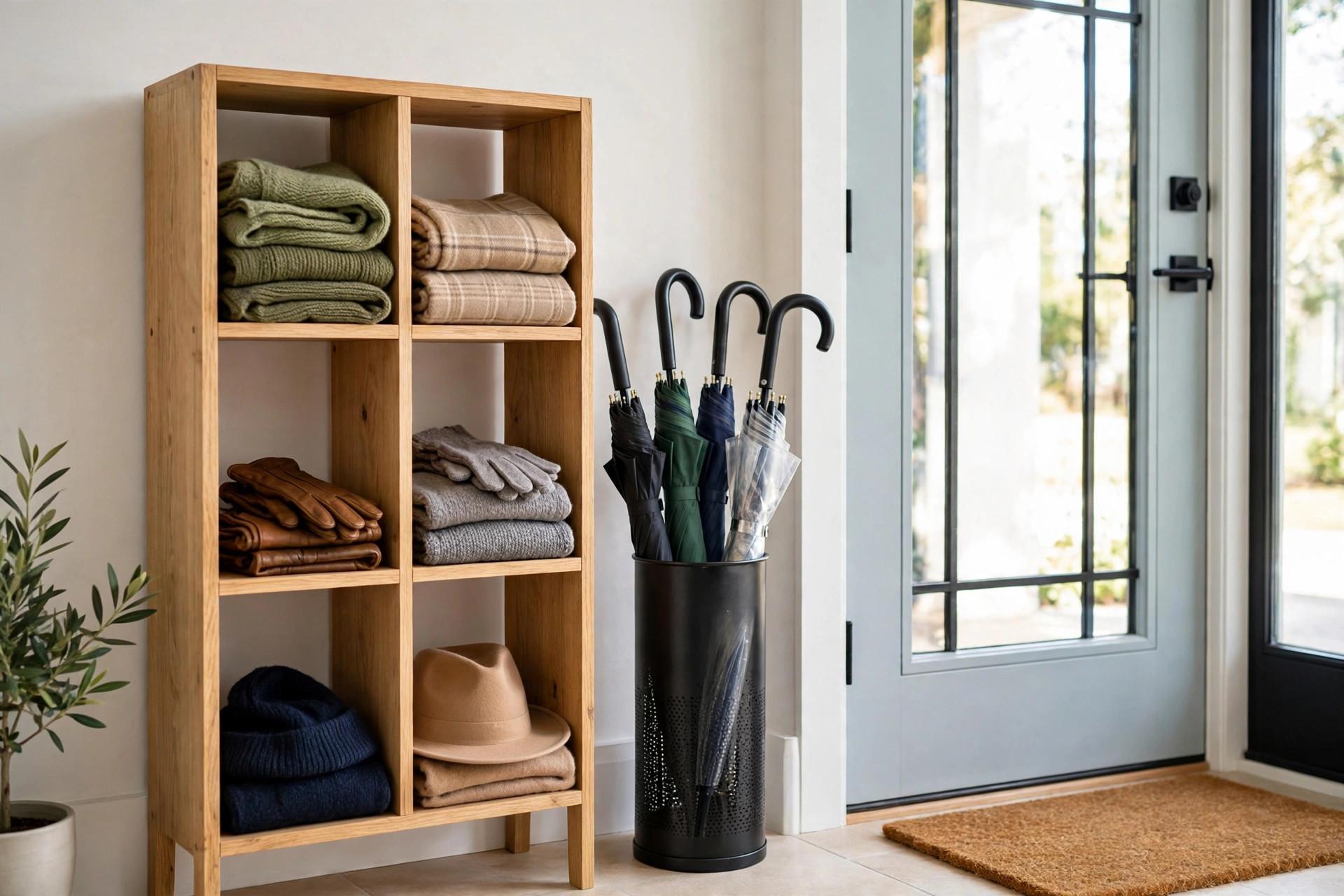
A small umbrella stand doubles as the “drop zone” for the bag, scarf, and gloves you’re carrying — but only if you resist filling it with seventeen umbrellas. Keep two umbrellas max, and the stand becomes the grab-and-go point for everything you need at the door. The rest of your umbrella collection lives elsewhere. Really.
10. Wall-Mounted Fold-Down Hooks
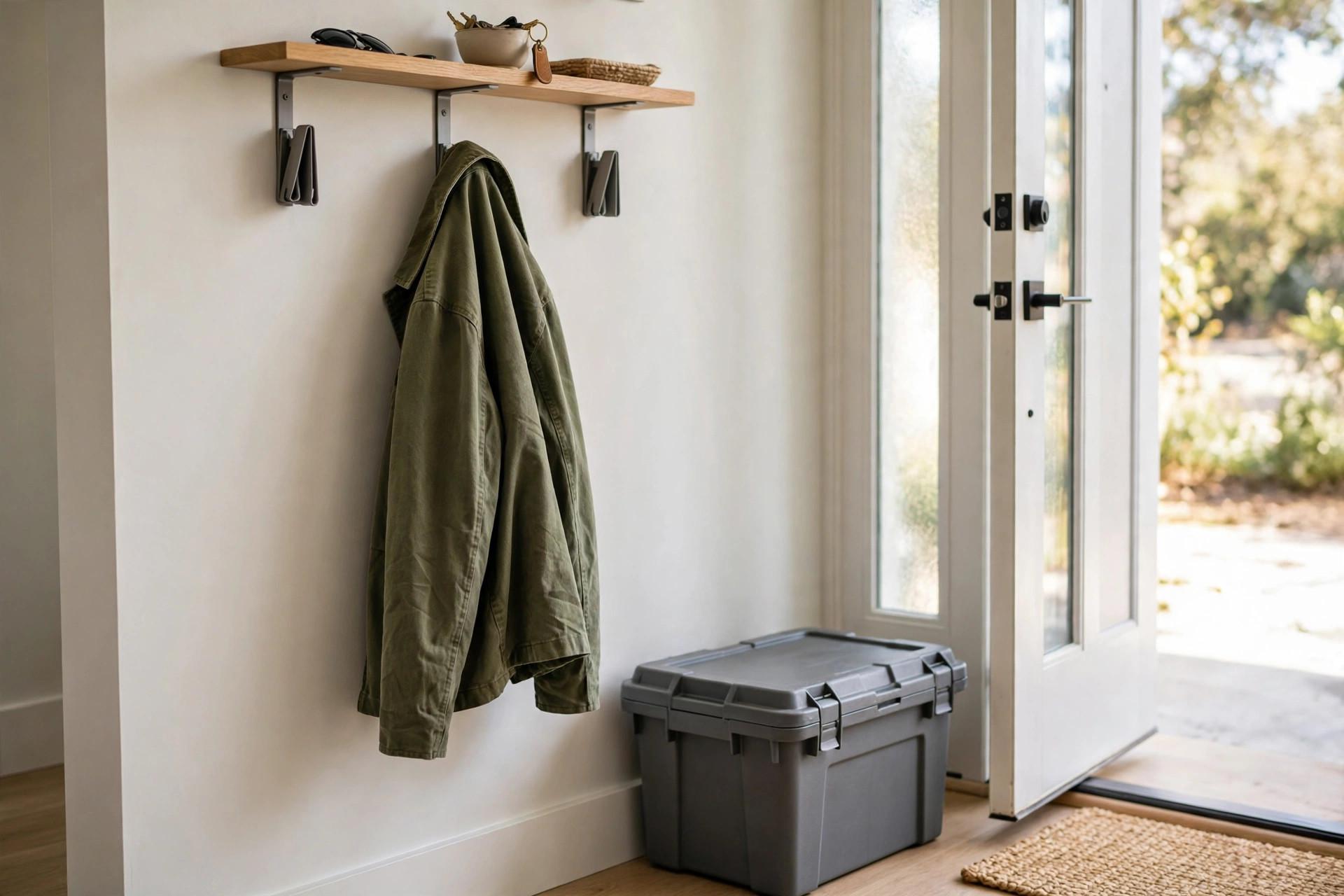
Flip-down wall hooks sit flat against the wall when empty and unfold to hold a coat when needed. In a tight no-foyer home where every inch of wall feels claimed, these keep the entry strip looking clean on the days you’re not using them. They’re also renter-friendlier than rail systems — most install with two small screws each, and some versions are adhesive-backed.
11. Seasonal Rotation Box at the Door
Keep a small lidded bin by your entry zone labeled for the season — winter scarves, hats, gloves — and swap its contents when the weather changes. It stops the glove-scarf scatter that colonizes every surface near a door without a foyer. One bin, one season, no stray mittens under the sofa.
If your entry sits near a staircase, don’t overlook the dead space underneath — an under-stairs closet wardrobe conversion can swallow the overflow coats and shoes entirely.
And if the hallway itself is the dead zone — no linen closet, no spare cupboard — these hallway storage ideas for homes without a linen closet show how to turn that narrow pass-through into genuinely useful storage.
One honest note: if you’re mounting a rail, hall tree, or anything weight-bearing into the wall — especially in plaster or older homes — hit studs with proper anchors, and if you’re unsure what’s behind that wall, a licensed handyman is money well spent. A coat rail full of winter jackets is heavier than it looks, and patching a torn-out mount costs more than the install did.
A home without a foyer doesn’t need a bigger solution. It needs a smaller, sharper one: one wall zone, one hook per person, one tray for the slush. Do that before October and you’ll sail through coat season.
Claim a 24-inch wall zone near the front door with hooks or a slim rail, add a boot tray for wet weather, and enforce one coat per person at the door. The rest of your coats live in bedroom closets — the entry zone only holds what’s in active use.
A slim wall-mounted hook rail (under 3 inches deep) or a narrow freestanding hall tree (18-20 inches deep, under 36 inches wide). Both give coats a home without eating floor space a small living room can’t spare.
Create a dedicated zone by the door for the current week’s coat only, and store the rest in bedroom closets. For a closed-door option, a narrow armoire beside the front door functions as a coat closet visually and practically.
A lipped boot tray at the door catches slush, a seasonal bin holds hats and gloves, and the one-coat-per-person rule prevents the rail from overloading. Empty the boot tray weekly in peak season.
Yes — over-the-door hooks, freestanding hall trees, adhesive-backed flip hooks, and a narrow bookcase all work without a single hole in the wall. Tension-based and freestanding pieces are the renter’s best friends here.