
DIY Dopamine Decor Ideas: 12 Colorful Projects
A beige room doesn’t need a complete makeover. Sometimes, a painted picture frame, a colorful lampshade, or a bright fabric cushion can change how a space feels without changing its layout or draining your budget.
These 12 DIY dopamine decor ideas use paint, thrifted finds, peel-and-stick wallpaper, and playful textiles to help you build a colorful home that still feels comfortable and intentional. Start with one small project, discover which colors you love, and add more when you’re ready.
DIY dopamine decor ideas are affordable decorating projects that use joyful colors, playful patterns, personal objects, and creative details to make a living space feel more expressive. The aim is to create a home that reflects your taste, not to fill every corner with bright objects.
How to Start With Dopamine Decor Without Creating Clutter
The easiest way to begin is with a small color story. Choose two main colors and one accent, then repeat them across different objects. For example, cobalt blue, butter yellow, and cherry red can work together when they appear in artwork, textiles, and smaller accessories.
Color genuinely shapes how a room feels — warm tones tend to energize a space while cool tones calm it — which is the entire premise of dopamine decor: choosing colors for the mood they create, not just how they look in a photo. This suggests that interior color deserves attention, but it doesn’t prove that any particular decorating scheme will make everyone happier.
What makes dopamine decor different from ordinary colorful decorating? Dopamine decor puts personal enjoyment first. Instead of following a strict matching rule, you can combine nostalgic objects, playful shapes, vivid colors, and meaningful artwork. A room feels more cohesive when these elements share a repeated color, pattern, or visual theme.
1. Paint a Small Piece of Thrifted Furniture
A tired bedside table or wooden stool can become the starting point for your color scheme.
What you’ll need: A thrifted piece, suitable primer, furniture paint, sandpaper, and a small brush or roller.
Clean the furniture and lightly sand glossy surfaces. Apply primer if the material and paint system require it. Paint the main surface in coral, turquoise, or sunny yellow. Add a contrasting drawer front or handle for a playful finish.
Check the existing finish before painting, and follow the paint manufacturer’s preparation instructions.
Budget tip: One small piece often makes a stronger statement than several inexpensive accessories scattered around the room.
2. Create Colorful Gallery Frames
Plain artwork can feel surprisingly exciting when the frames become part of the design.
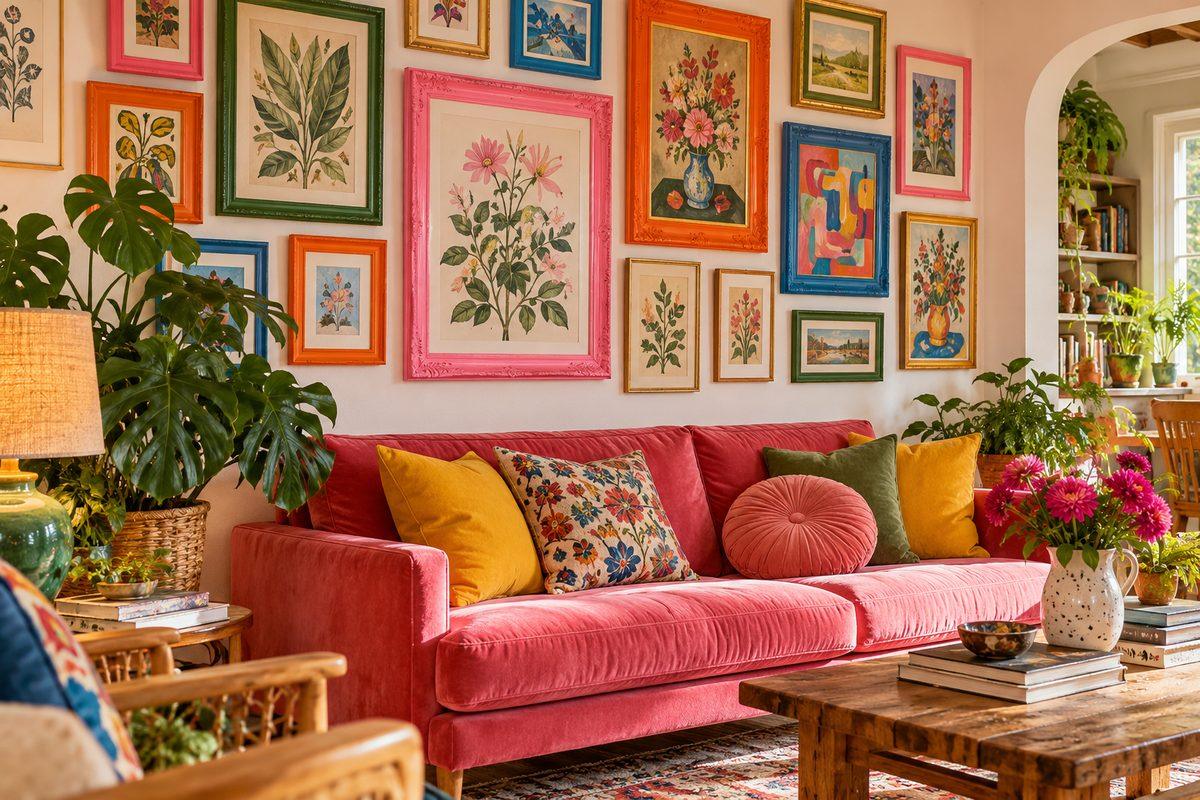
Collect secondhand frames in different sizes, then paint them in two or three colors from your palette. Fill them with printable illustrations, personal photographs, fabric scraps, or original drawings.
Here’s the thing: the pictures don’t need to match. Repeating the frame colors gives unrelated artwork a shared visual thread.
Arrange the frames on the floor first. Once the spacing feels balanced, hang them using suitable fixings for your wall and frame weight.
3. Add Peel-and-Stick Wallpaper to a Small Area
A bold wall can overwhelm a small room. A smaller wallpapered area offers a gentler way to experiment.
Try the back of an open bookcase, a desk alcove, or a removable decorative panel. Florals, checkerboards, wavy stripes, and abstract shapes can all bring energy to a plain corner.
Clean the surface, test a discreet patch, and follow the manufacturer’s application and removal instructions. Rental walls vary, so removable wallpaper is not guaranteed to come off without damage.
Best for: Renters who want a dramatic pattern without committing to painting an entire wall.
4. Make a Color-Blocked Canvas
You don’t need advanced painting skills to make artwork that feels personal.
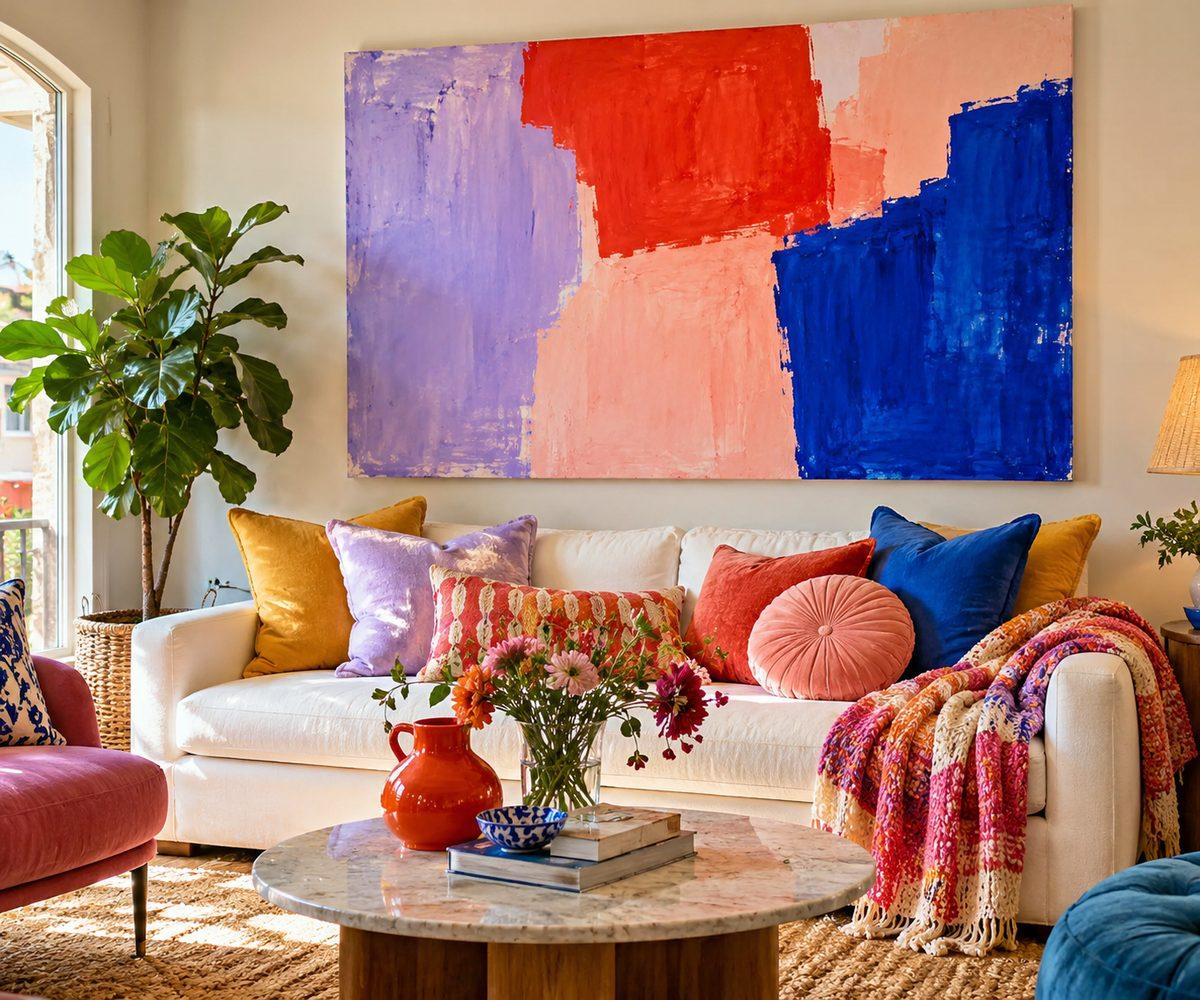
Buy an inexpensive canvas or reuse a sturdy board. Sketch large arches, curved lines, squares, or overlapping shapes, then fill them with leftover acrylic paints or affordable tester pots labelled for suitable use.
Limit the design to three or four colors. A little negative space between shapes helps the finished piece feel deliberate rather than crowded.
Hang it above a sofa, desk, or entryway shelf. Choose one color from the painting for a nearby cushion or vase to connect the artwork with the rest of the room.
Budget-Friendly DIY Dopamine Decor for Everyday Objects
Small objects are ideal for testing bold ideas. They are easier to move, cheaper to replace, and less intimidating than a permanent wall treatment.
Color research has measured physiological responses — such as changes in arousal ratings and pupil dilation — when people view different hues in controlled settings. Those studies use limited experimental setups, so they cannot tell us which DIY colors will suit every person or home. Use research as context, then let your own preferences guide the design.
5. Transform Plain Lampshades With Colorful Fabric
A lampshade can introduce pattern at eye level without taking up extra space.
Choose a suitable lampshade and a lightweight fabric with a print you love. Measure the shade, cut the fabric with enough allowance for neat edges, and use an adhesive designed for the shade’s material.
Check heat and electrical safety before modifying any lamp. Keep fabric away from bulbs and follow the manufacturer’s clearances; do not cover ventilation openings or use flammable materials near heat sources.
If a full fabric makeover feels complicated, add a removable decorative ribbon to a cool-running, compatible shade instead.
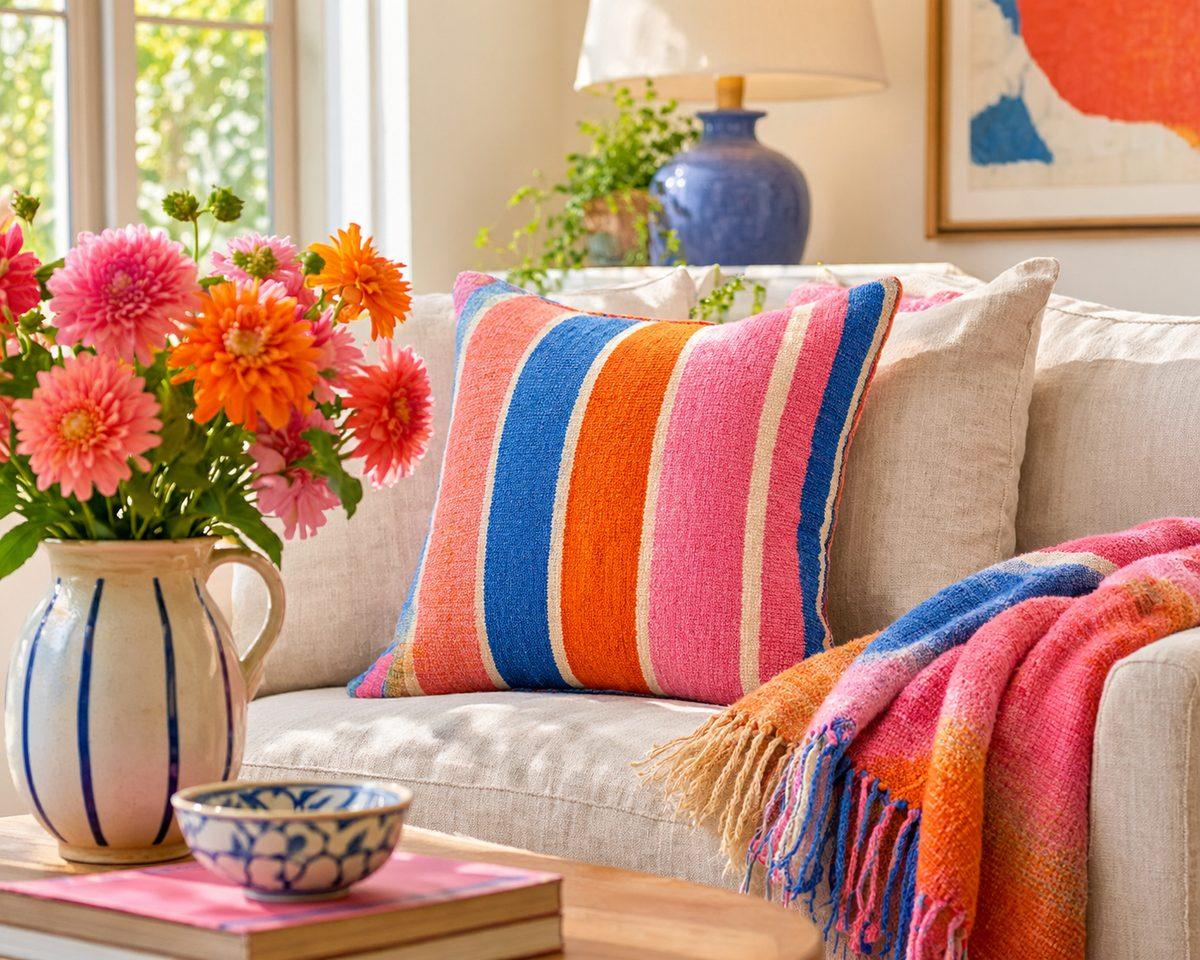
6. Make a Colorful Cushion Cover
That one bright cushion that looks random in a beige room usually needs company, not replacement.
Create a connection by repeating its color elsewhere. Make a simple cushion cover from a remnant fabric, sew two contrasting fabric panels together, or use a suitable no-sew method with a closure that keeps the insert secure.
Try stripes, checks, florals, or abstract prints. If you already own a patterned cushion, choose one of its less prominent colors for the new cover.
The result feels coordinated without requiring an expensive matching set.
7. Decorate Ordinary Vases and Plant Pots
Gather old vases, clean jars, or plain plant pots and turn them into a small collection of colorful accents.
Use paint suited to the object’s material. Try contrasting rims, wavy painted lines, simple dots, or two-tone color blocking.
For a quick project, paint the outside of a suitable planter and place a removable plastic nursery pot inside it. That keeps excess water away from decorative finishes.
Group objects in odd numbers if that arrangement suits the shelf, varying their heights to create a relaxed display.
8. Give Secondhand Mirrors and Frames a Bold Makeover
Secondhand frames often have interesting shapes that are difficult to find in inexpensive new decor.
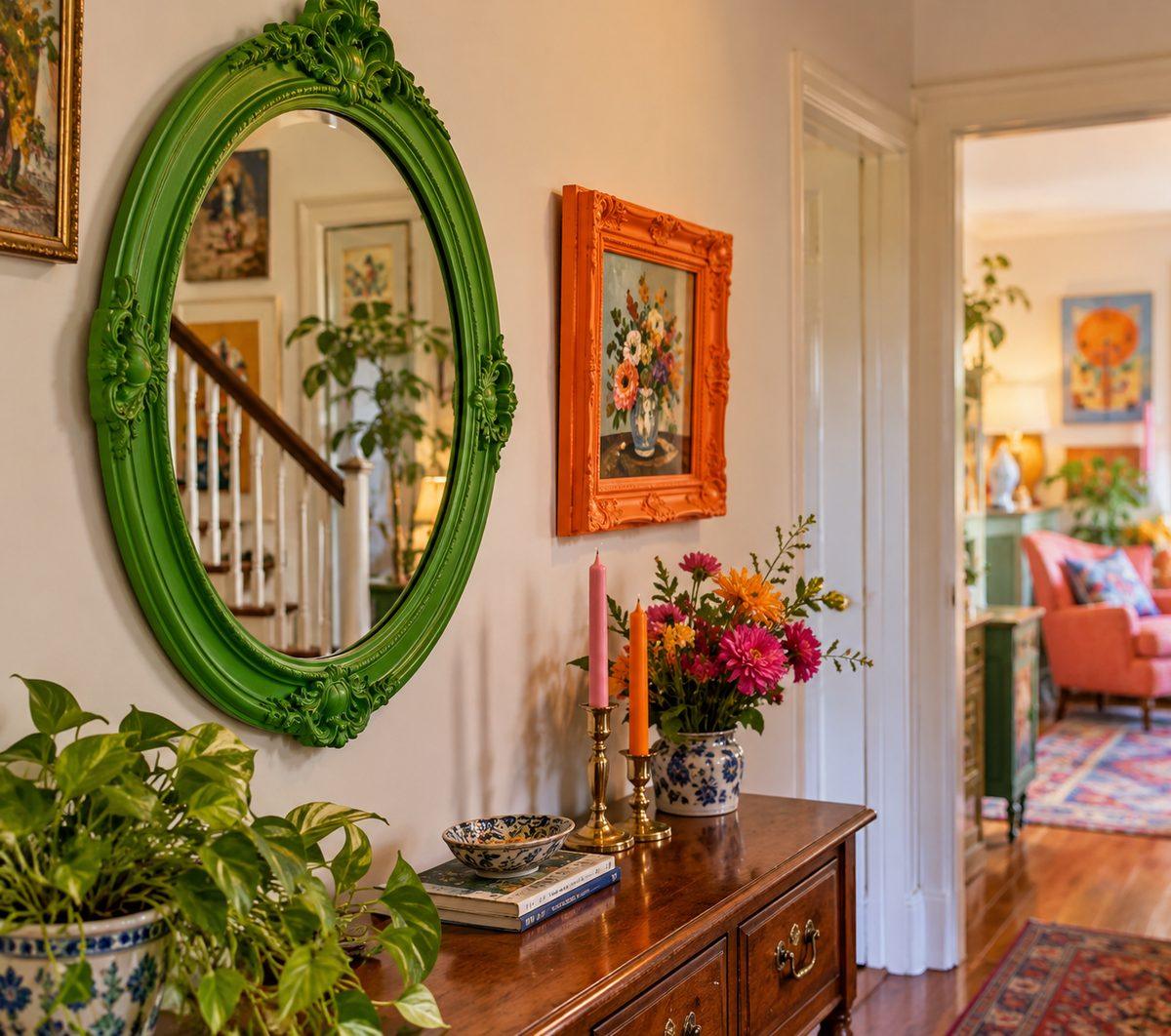
Look for curved, scalloped, oval, or chunky wooden frames. Clean them, prepare the surface as needed, and apply a compatible paint in a color that complements your palette.
A green mirror beside pink artwork or a yellow frame above a blue console creates contrast without needing more furniture.
Protect mirror glass and decorative surfaces while painting. If the frame is plastic, metal, or a fragile antique finish, check product compatibility before starting.
Playful Maximalist Decor Ideas That Still Feel Intentional
Maximalism doesn’t mean putting everything on display. A successful room gives the eye a few clear places to rest while allowing the interesting objects to stand out.
9. Build a Mini Colorful Bookshelf
Turn an ordinary shelf into a small visual collection.
Arrange books by color if you enjoy that look, or mix their natural spines with colorful bookends, framed prints, and small objects collected over time. Leave a little empty space between groups.
One useful trick is to repeat the same accent color at different heights. A blue bookend, a blue vase, and a blue artwork create a visual path across the shelf.
Secure tall furniture appropriately, especially in homes with children or pets.
10. Make a Cheerful Entryway Drop Zone
An entryway is an easy place to introduce personality because the decorating area is often small.
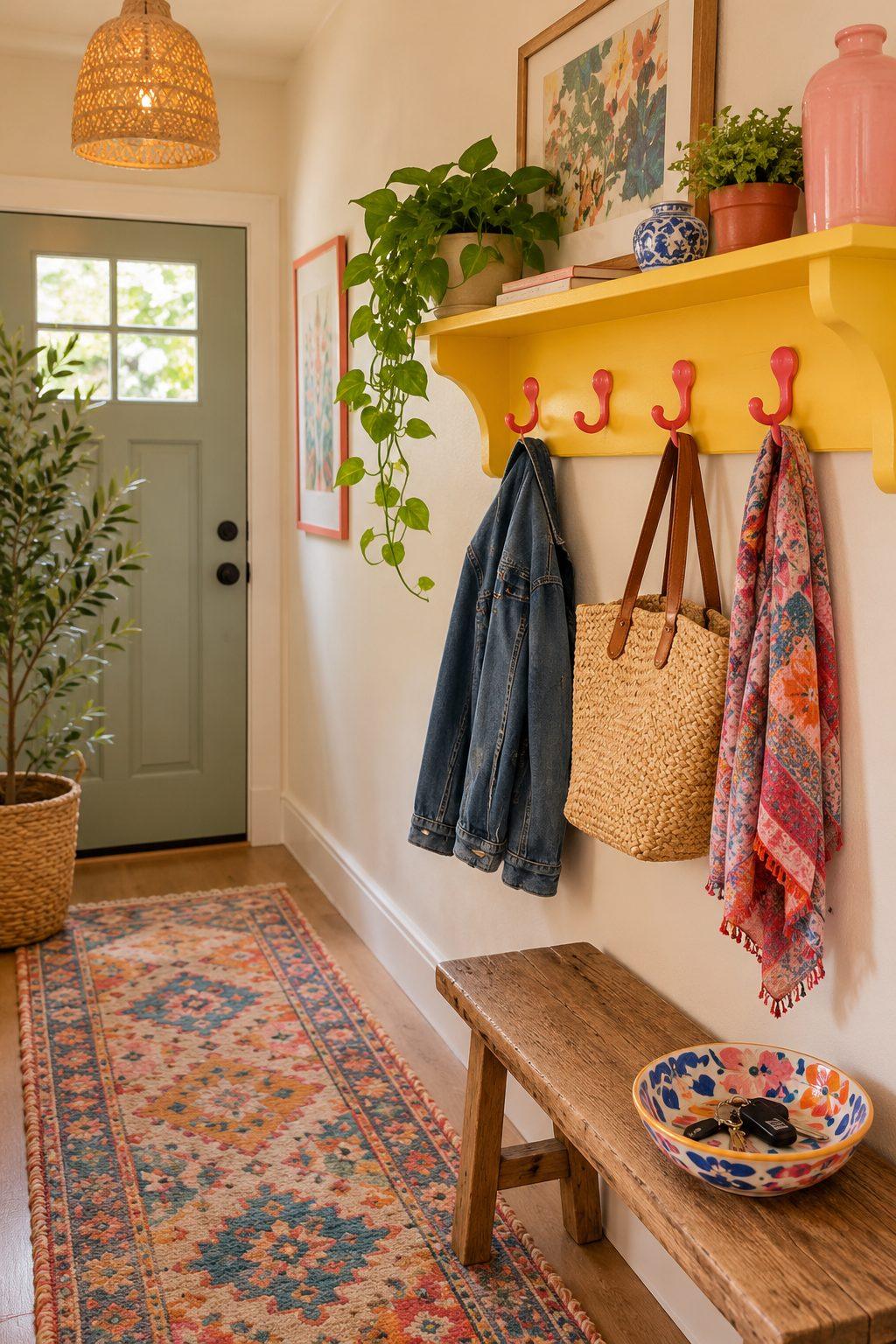
Paint an existing shelf, add removable wall decals where suitable, or decorate a key tray with a durable finish. Choose hooks and storage that can handle their intended weight.
Keep daily essentials together: keys in one bowl, bags on designated hooks, and shoes in a basket or rack. A joyful entryway still needs to work on busy mornings.
This project is particularly useful in rentals where large furniture changes aren’t practical.
11. Create a Colorful Fabric Wall Hanging
Fabric brings softness as well as color.
Use leftover cotton, linen, or other suitable textile scraps. Cut them into strips, knot or stitch them onto a wooden dowel, and trim the bottom into a straight line or gentle curve.
Mix solid colors with one patterned fabric, keeping a few shades consistent with the rest of your room. You can also create a simple textile collage by attaching fabric to a lightweight backing.
Hang it securely and keep textiles away from heaters, candles, and other heat sources.
12. Paint a Small Geometric Floor or Furniture Detail
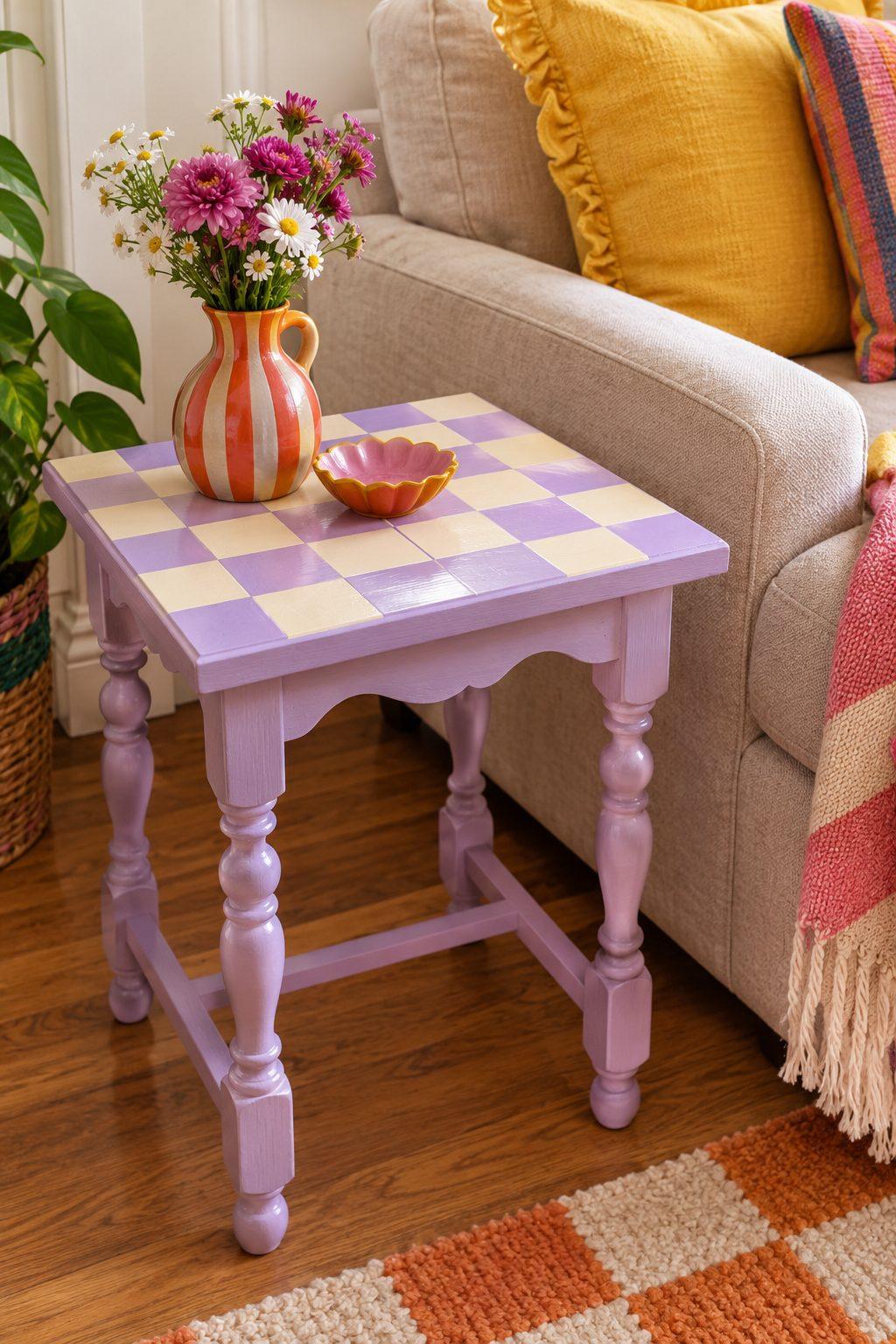
Checkerboards, stripes, and arches can make a plain object feel custom-designed.
Start with a small wooden tabletop, a suitable tray, or another surface that can be painted safely. Measure the pattern, use painter’s tape for crisp edges, and apply compatible primer and paint where needed.
For a floor, use only a coating designed for that flooring material and expected foot traffic. Test adhesion first and follow curing instructions before putting the surface back into use.
A single patterned piece is often enough. Let it stand out instead of repeating the same motif everywhere.
Quick Comparison: Which DIY Project Should You Try First?
Which option should you choose? Start with painted frames or a vase if you want the lowest-commitment experiment. Choose a furniture makeover for a stronger focal point, or try wallpaper when a plain nook needs pattern. Your available time, existing materials, and rental restrictions matter as much as the visual effect.
How to Make Colorful Decor Feel Cohesive
Most people assume a colorful room needs matching furniture. A more flexible approach is to repeat colors and shapes while mixing different objects and finishes.
Interior color research supports caution about universal rules. Laboratory research has measured emotional and physiological responses to color in simulated rooms. These studies use different methods and settings, so their findings shouldn’t be treated as a simple formula for a happy home.
Try this simple method: Choose your anchor color. Pick a shade you already enjoy in artwork, clothing, or a favorite object. Add two supporting colors. One can be softer and the other more vivid. Repeat each color. Use it in at least two places so it feels connected to the room. Mix textures. Combine smooth painted surfaces, woven fabrics, wood, and ceramics. Edit before adding more. Remove objects that compete with your focal point or make everyday tasks harder.
Look — if you’re decorating a rental with beige walls, here’s what actually works: leave the large surfaces alone and introduce color through portable objects first. You can change the room’s character without risking your deposit.
What most guides skip is that visual comfort matters as much as color intensity. A room can be vibrant and still feel restful when storage is functional, walkways stay clear, and decorative objects have room to breathe.
This guide covers affordable DIY color and styling projects. It does not address structural renovations, professional electrical work, or specialist conservation of valuable antiques.
Five Common Questions About DIY Dopamine Decor
How can I try dopamine decor without painting my walls?
Start with colorful cushions, thrifted frames, painted vases, artwork, or removable fabric accents. These projects introduce color without permanently changing the walls.
What colors work well together for dopamine decor?
Choose one anchor color and two supporting shades. Pink with orange and cream, or cobalt blue with yellow and red, can create lively combinations.
How do I make a beige rental feel more colorful?
Use portable decor, colorful textiles, bright artwork, and painted furniture. Repeat a few shades around the room to make the additions feel connected.
Can I create dopamine decor on a tight budget?
Yes. Reuse furniture, repurpose jars and frames, use fabric remnants, and buy only the paint or supplies required for your first project.
How do I keep maximalist decor from looking messy?
Give objects a shared color story, group smaller items together, leave some empty space, and keep frequently used surfaces functional.
Make Your First Colorful DIY Project Count
Color confidence doesn’t come from planning — it comes from one finished object sitting in your room. A painted frame on the wall teaches you more about your taste than a month of saved posts.
Pick the smallest project with the biggest surface: a lampshade, a side table, the inside of a bookshelf. Finish it this weekend. Whatever you feel when you look at it on Monday is the only brief you need for project two.