
Couples Sharing One Small Closet: How to Split It Fairly
Most closet fights aren’t about clothes. They’re about one person feeling like a guest in their own bedroom — shoving shirts into a corner while their partner’s jackets sprawl across two-thirds of the rod.
Couples sharing one small closet don’t need a bigger closet. They need a system both people agreed to, measured in inches rather than vibes. This guide is that system: how to measure, how to divide, and the storage tricks that make a standard reach-in work for two.
Measure Before You Argue
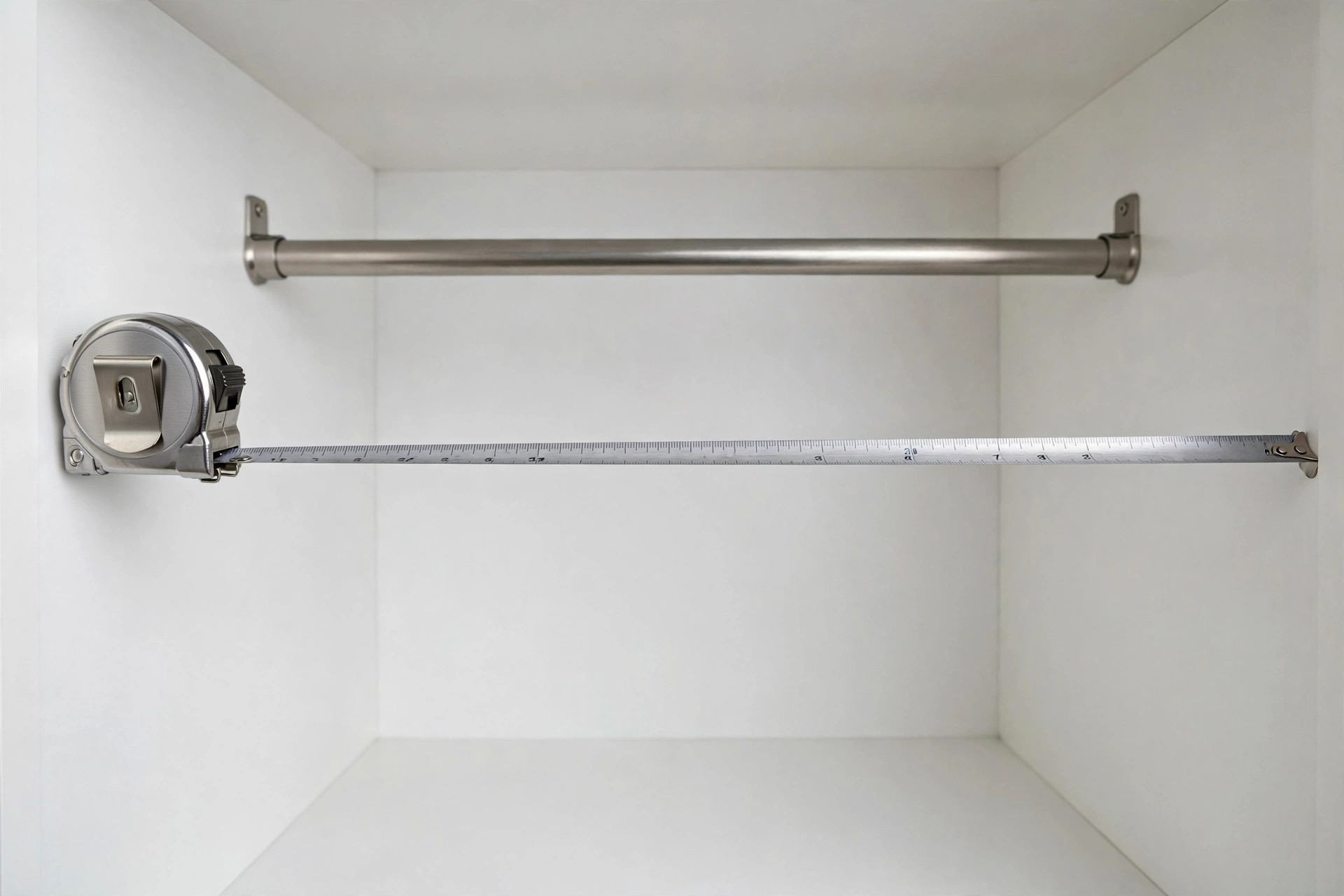
Get a tape measure and write down three numbers: total rod length in inches, shelf depth and width, and floor space (width by depth). A standard reach-in closet is usually 48 to 72 inches wide with a single rod and one shelf — which sounds fine until two wardrobes move in. Numbers end the “you have way more stuff” debate because now you both know exactly how much space exists. It’s finite, it’s shared, and it’s smaller than either of you thinks.
While you’re measuring, do an honest inventory each: count hanging items, folded items, shoes, and accessories. Most couples discover the split isn’t what they assumed — the partner with “hardly anything” often owns forty t-shirts, and the partner with “everything” owns twelve suits. Count first, divide second.
Fair Doesn’t Mean 50/50
Here’s the part that saves relationships: divide by inventory, not by person. If one partner hangs thirty items and the other hangs sixty, a 50/50 split gives one person breathing room and the other a crushed mess. Measure each person’s hanging items at roughly one inch per garment (two for coats), add them up, and split the rod proportionally. It feels less “equal” and works infinitely better.
Revisit the split twice a year. Wardrobes change — new job, new season, the great closet purge — and a division that was fair in September can be absurd by March. Put a calendar reminder on it. Ten minutes with the tape measure beats six months of quiet resentment — a mistake couples make often.
The Zone System
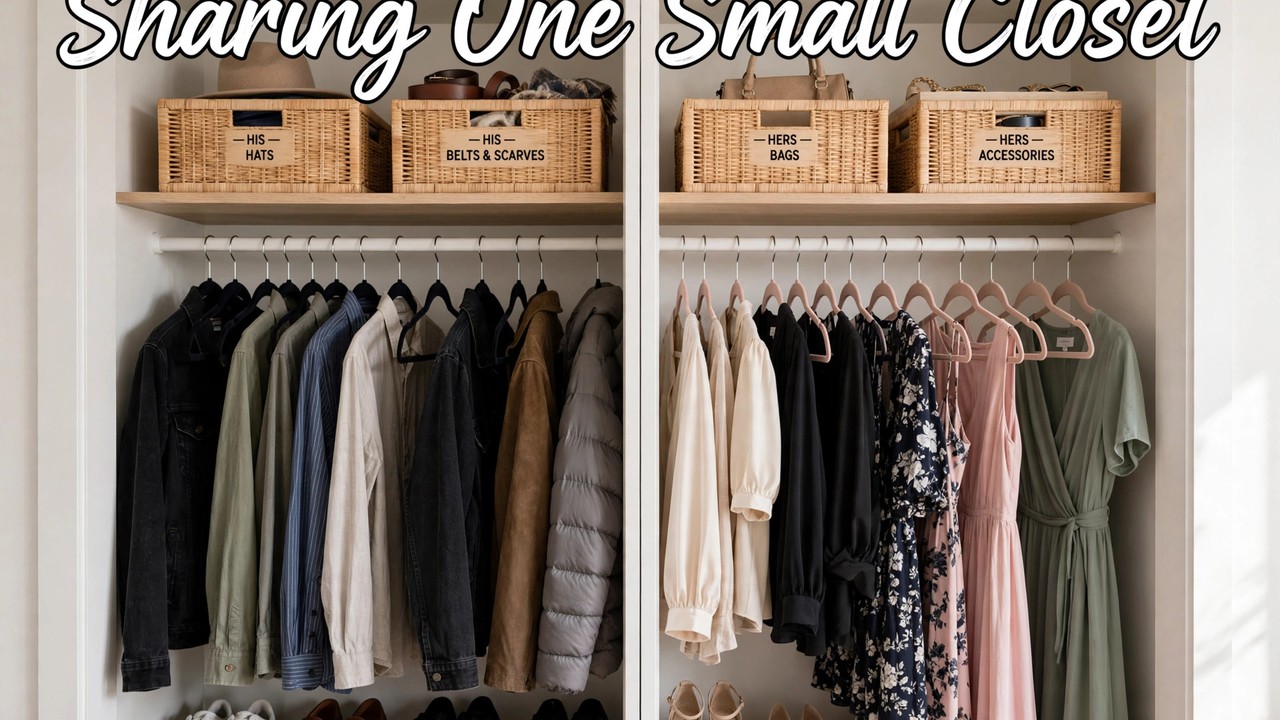
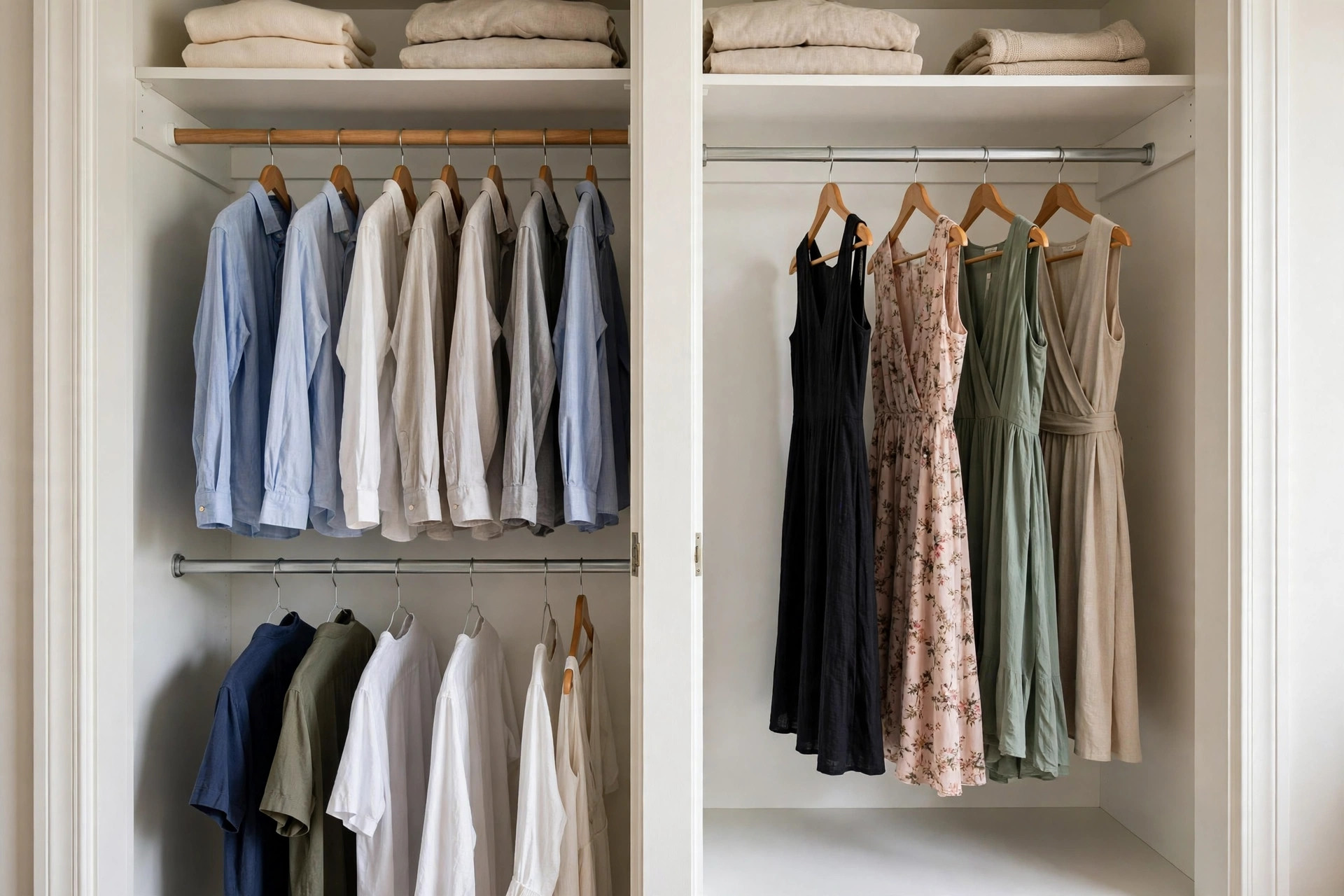
Divide the closet into three zones: yours, mine, and shared. Each partner gets a contiguous block of rod — not interleaved, not “your shirts can go between my jackets.” Contiguous zones mean you can find your things without excavating someone else’s, and they make the boundary visible instead of theoretical. Left and right, or top and bottom if you add a second rod.
The shared zone is the shelf and floor: seasonal storage, the vacuum, luggage, whatever belongs to the household rather than a person. Shared zones need one rule — nothing lives there without both people agreeing it belongs. The moment one partner’s overflow colonizes the shared shelf, the system collapses. Guard it together.
Double Your Hanging Space Without Drilling
A single rod is the bottleneck, and you don’t need power tools to fix it. A tension rod mounted below the main rod creates a second tier for shirts and folded trousers — no holes, no landlord drama, and it holds more weight than you’d expect if you size it correctly. This is the same no-drill approach that works across rental closets generally, and it’s fully reversible on move-out day.
Cascading hangers (the vertical chains that let five hangers share one hook) multiply rod space for lightweight items like shirts and blouses. Slim velvet hangers replace bulky plastic ones and typically free up 30 to 40 percent more rod inches — measure the difference before and after, it’s dramatic. A hanging fabric shelf unit on each side creates folded storage for knits and jeans without touching the shelf. None of this requires a drill, a handyman, or permission.
The Shelf and Floor Treaty
The top shelf is the Bermuda Triangle of shared closets: things go up and never come down. Assign shelf sections the same way you assigned rod inches — proportional, contiguous, labeled if you must. Use bins, not piles.
Piles migrate; bins stay. One bin per person for accessories, one shared bin for household overflow, and everything else earns its spot or leaves.
The floor needs a treaty too, because shoe sprawl is a common closet conflictbout. A two-tier shoe rack — one tier each — settles the debate for good.
Boots go in a boot tray by the door, not in the closet at all; they eat floor space and track in dirt. Off-season shoes get boxed, labeled, and moved to under-bed storage or the top shelf. If a pair hasn’t been worn in a year, it doesn’t get floor space.
The Seasonal Swap: Twice a Year, One Hour
Small closets can’t hold two people’s four-season wardrobes. They can hold two people’s current-season wardrobes plus a little buffer.
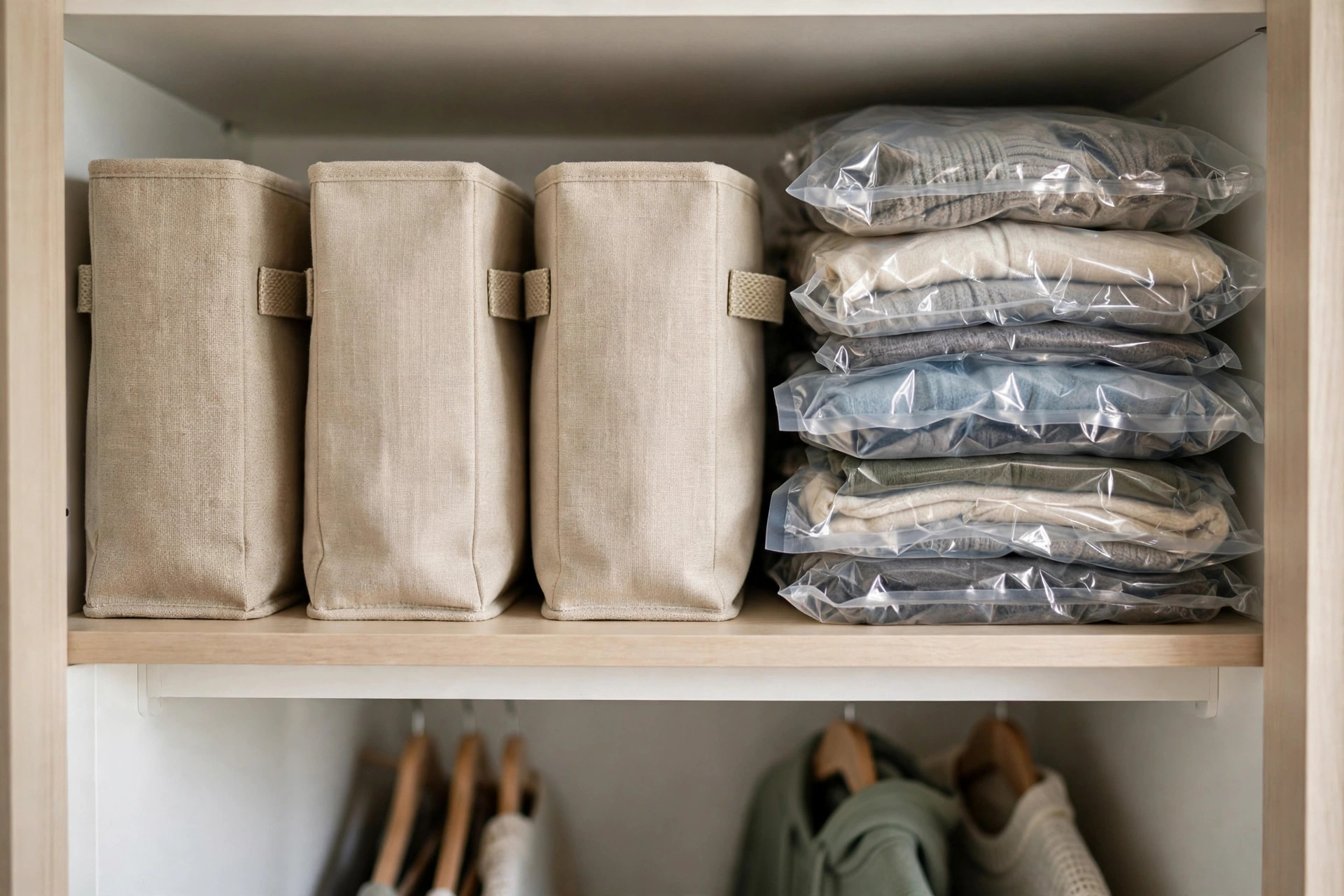
Twice a year — when the weather genuinely turns — do a one-hour swap together. Out-of-season clothes go into labeled bins on the top shelf, under the bed, or in a storage tote in another room. Current-season comes down.
Do it together, not as a favor one person does for the other. The swap is also the natural purge moment: anything you didn’t wear all season gets donated, and the closet gets measurably better twice a year instead of slowly worse every day. Many couples find the fighting about closet space fades within a couple of cycles. The system just starts working.
Ground Rules That Actually Stick
Three rules, written down, taped inside the closet door. One: one in, one out — a new item means an old one leaves, no exceptions, both people. Two: the ten-minute weekly reset — hang what’s draped, re-bin what’s migrated, done. Three: no “temporary” storage creep — the chair, the floor pile, the “I’ll hang it later” stack are how closets die.
The rules work because they’re mutual. The fastest way to kill a shared system is one partner enforcing rules the other never agreed to. Write them together, keep them to three, and revisit them when they stop working rather than letting them rot. A system you both maintain beats a perfect system one person resents.
When the Closet Still Isn’t Enough
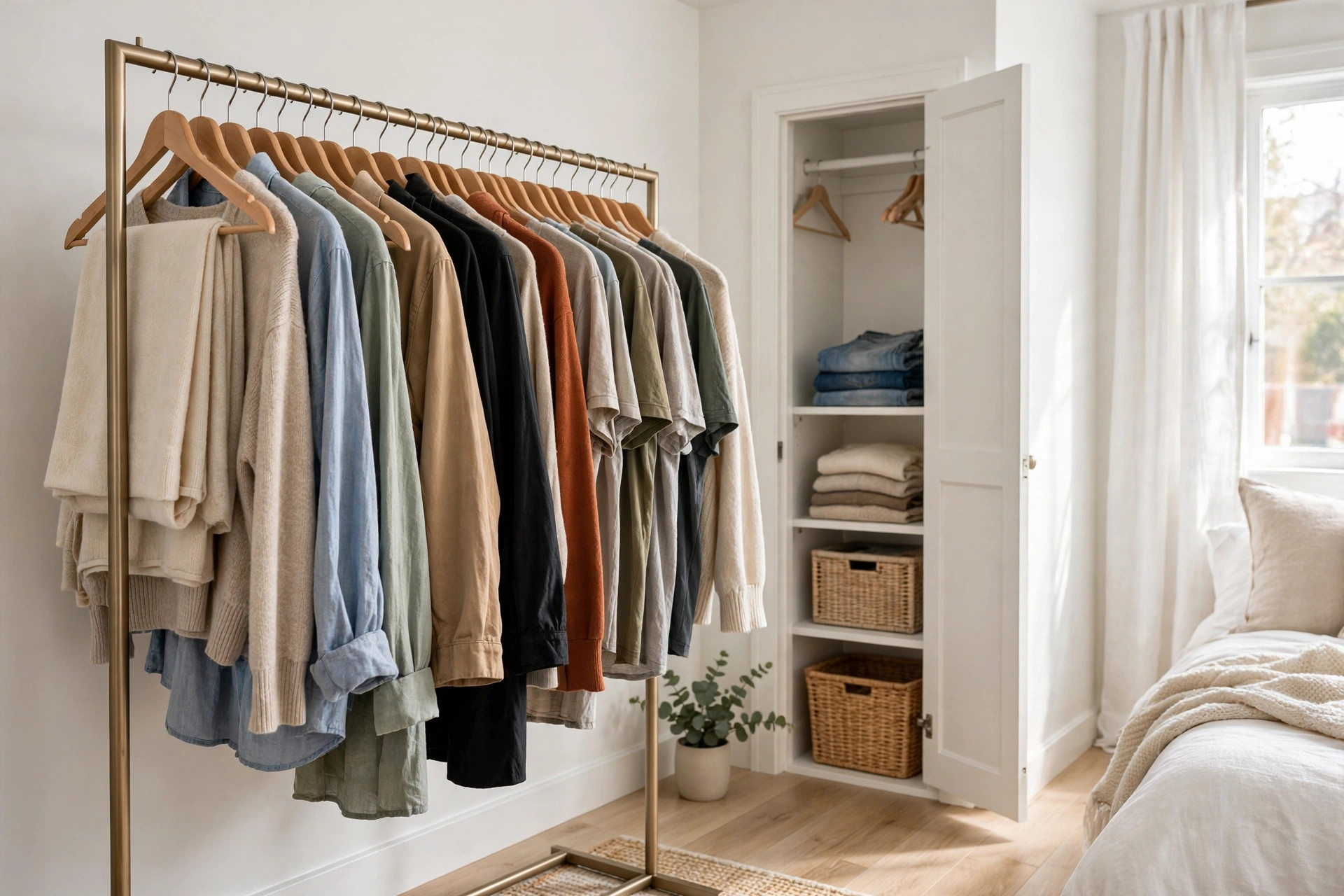
Sometimes the math just doesn’t work — two full wardrobes, one 48-inch reach-in, no way to make the inches stretch. That’s not failure, it’s information. The overflow options: a freestanding garment rack for one partner’s daily rotation (it can look intentional, not sad, with matching hangers), under-bed storage bins for off-season and occasion wear, or a small dresser for folded items that frees rod inches for hanging.
What doesn’t work is pretending the closet is bigger than it is. Cramming everything in “temporarily” becomes permanent within a month, and then you’re back to the floor pile. If you’re working with truly minimal built-in storage, these no-closet bedroom ideas for renters cover freestanding wardrobe setups that look deliberate — and the renter-friendly no-drill closet guide has more reversible tricks for the closet you do have. If one tiny reach-in is your entire closet, start with this small studio apartment closet organization guide
For kids sharing, see these two kids sharing one small closet ideas with a split that survives the school year.
For kids’ spaces, see these kids small closet organization ideas that maximize every inch.
Divide by inventory, not 50/50: count each person’s hanging items, allocate rod inches proportionally, and give each partner a contiguous zone. Revisit the split twice a year as wardrobes change.
Maximize vertical space with a tension-rod second tier, slim velvet hangers, and hanging shelf units — no drilling needed. Keep only current-season clothes in the closet and store off-season items elsewhere.
Create three zones (yours, mine, shared), agree on three written ground rules like one-in-one-out, and do a ten-minute weekly reset together. Systems both partners agree to beat imposed rules every time.
Roughly one inch of rod per hanging garment (two inches for coats). Count each partner’s items, multiply, and compare against the total rod length — most couples need 25–40 inches each for everyday wardrobes.
Divide them proportionally like the rod, using bins instead of piles to keep boundaries visible. Keep one small shared section for household items, with the rule that nothing enters it without both partners agreeing. 6.