
Easy Christmas Dinner for Two: A Complete Small Menu
Here's the direct answer: a great Christmas dinner for two needs four things —” a small main (Cornish hens, a petite tenderloin, or duck breasts), two sides, one bread, and one dessert. Total active cooking time runs about two and a half hours, most of it hands-off roasting. You don't need a turkey, you don't need twelve dishes, and you definitely don't need to eat the same meal until New Year's.
Between the big-family Christmas and the two-person Christmas, here’s the unpopular thing: the small one is often better. Nobody's performing. You cook what you actually like, open the good wine on a Tuesday-night budget, and the dishes fit in one sink load. The trick is treating it like a real menu instead of a sad scaled-down afterthought.
Picking Your Main: Small Cuts That Still Feel Like Christmas
Forget the whole bird. A 12-pound turkey for two people is a punchline, not a plan. What works:
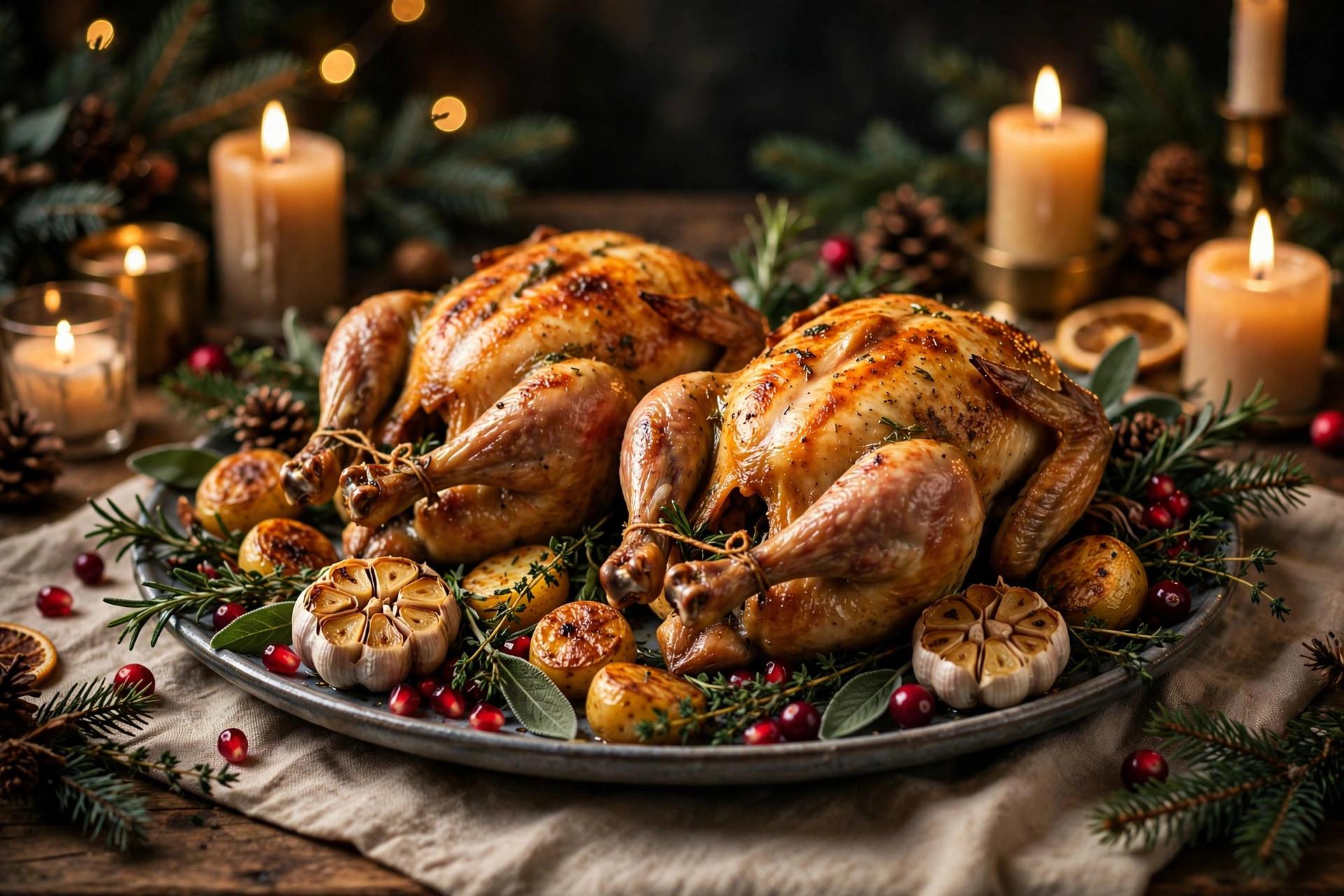
Cornish hens are the classic two-person move —” one bird per person, 50 to 60 minutes at 425°F, and they roast evenly because they're small. Brine them for two hours in salty water if you remember; skip it if you don't, and rub butter under the skin instead.
A small beef tenderloin roast (2 to 2.5 pounds) is the luxury pick. Sear it hard on all sides, roast at 425°F to 130°F internal for medium-rare, rest 15 minutes. It feeds two generously with a little left over for next-day sandwiches, which is the correct amount of leftover.
Duck breasts are the standout choice for a quiet Christmas. Score the skin, start them skin-side down in a cold pan, and render slowly —” about 15 minutes —” then flip for two. The fat renders out, the skin goes shatteringly crisp, and it feels like a restaurant dish with almost no effort. Save the rendered fat for the potatoes.
A small roast chicken (3 to 4 pounds) is the budget-friendly honest option. High heat, 425°F, about an hour. It's not fancy, but a properly roasted chicken with good pan drippings beats a mediocre expensive cut every time.
The genuine trade-off: if you only cook one ambitious thing a year, make it the tenderloin. If you'd rather spend the evening together instead of babysitting a roast, make it the hens —” they're nearly impossible to ruin.
The Two Sides Worth Making
Two sides is the sweet spot. Three and you're back in big-dinner territory with a sink full of pans.
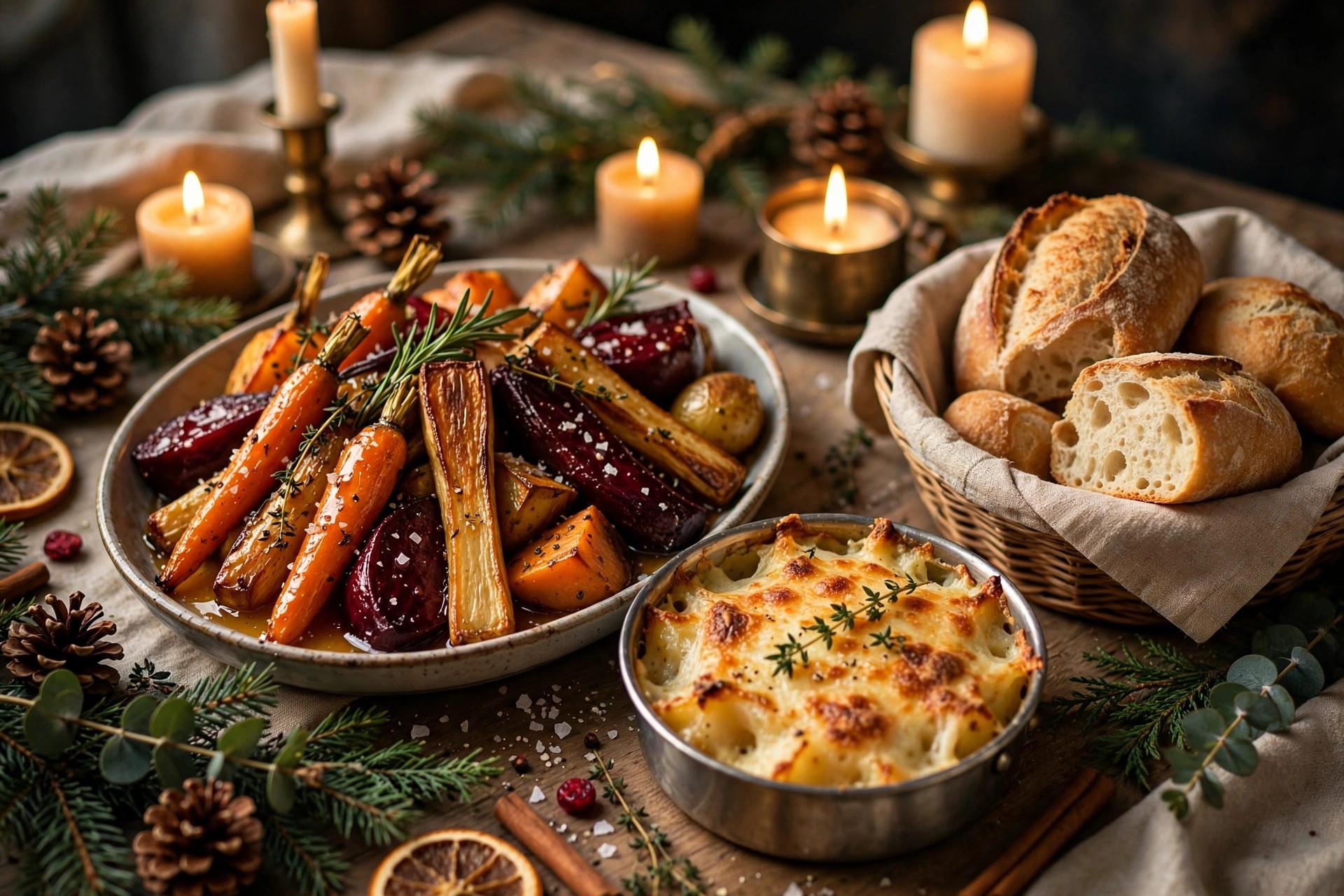
Roasted root vegetables with honey and thyme. Carrots, parsnips, a red onion, cut chunky, tossed in olive oil and salt, roasted at 425°F for 35 minutes, drizzled with honey in the last five. They can share the oven with hens or a chicken, which is the real reason this side wins —” one oven, one temperature, no juggling.
A small-batch creamy gratin or mashed potatoes. For two, use a small baking dish: thinly sliced potatoes layered with cream, garlic, and Gruyère, baked 45 minutes at 375°F. Or mash half a bag of Yukon Golds with too much butter. Either way, make just enough —” a quart of mashed potatoes for two people is a week's commitment.
Here's what to skip: the green bean casserole, the dinner rolls from scratch, the second starch. Every extra dish doubles the dishes and halves the evening. Two excellent sides beat four tired ones.
Bread: Buy It, Warm It, Move On
Buy good bread. A small loaf of something crusty from a bakery, warmed in the oven for 8 minutes while the meat rests. That's it. Homemade rolls for two people is effort disproportionate to joy, and the resting window is the perfect time to warm bread anyway. If you want to feel fancy, whip softened butter with flaky salt and a little honey. It takes ninety seconds and tastes like a steakhouse.
Dessert for Two (That Isn't a Whole Pie)
A full pie for two is a dare, not a dessert. What works at this scale:
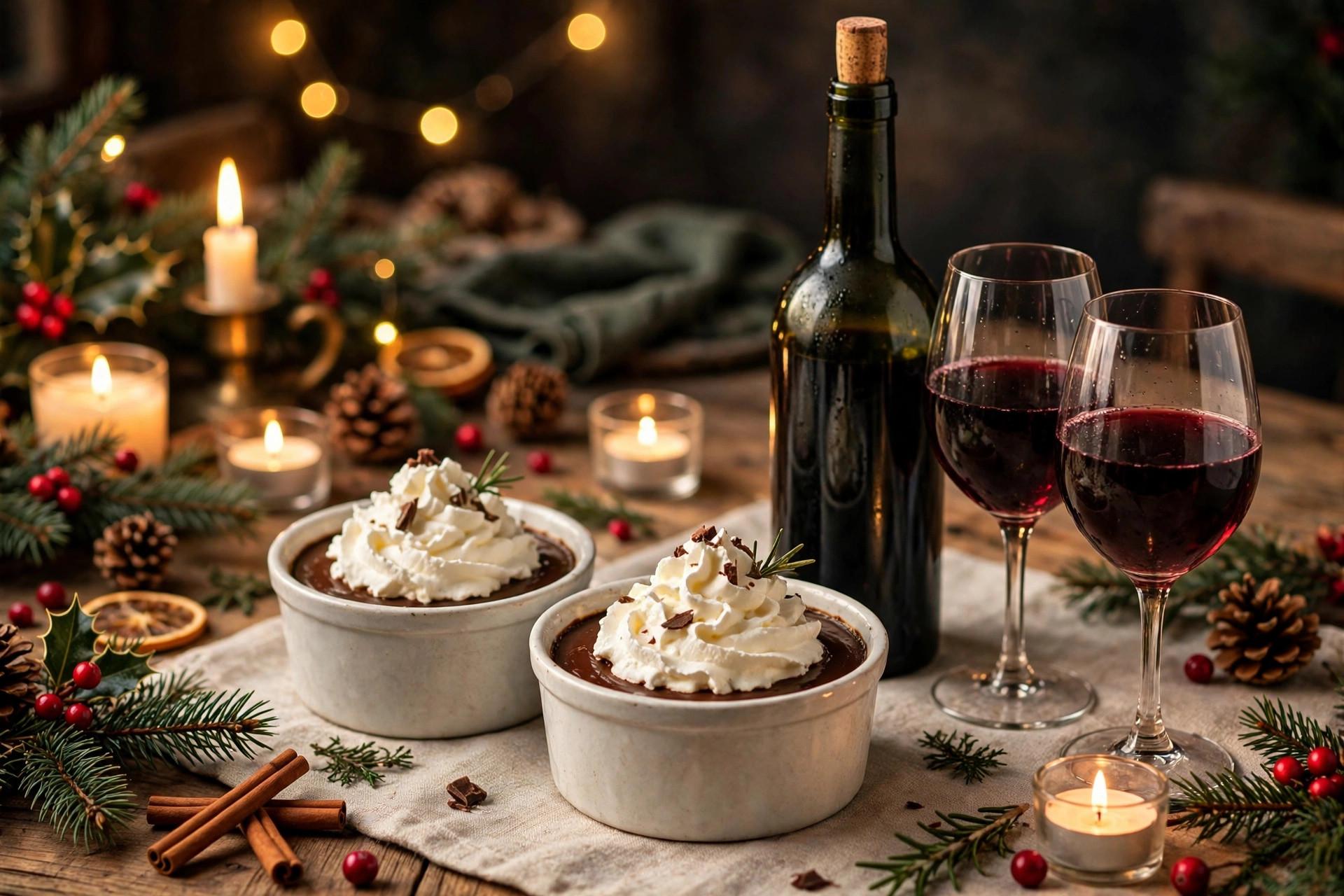
Chocolate pots de crème made Christmas Eve —” cream, chocolate, egg yolks, baked in ramekins in a water bath, chilled overnight. Rich, elegant, zero Christmas Day effort.
A small apple or pear galette using one sheet of store-bought pie dough. Rustic by design, so it can't fail aesthetically. Serve warm with ice cream.
Affogato with a Christmas twist —” vanilla ice cream drowned in hot espresso with a splash of amaretto. Five minutes, feels decadent, and the coffee means you might stay awake for the movie.
The honest pick: the pots de crème. Make-ahead dessert on a day you're already cooking is worth its weight in gold.
The Timing Plan (Work Backwards From Dinner)
Say you want to eat at 6:30. Here's the skeleton that works for any main:
- Morning: make dessert if not done (or confirm the chilled one), set the table properly —” candles, the good plates, the whole thing.
- 3:30: prep vegetables, assemble gratin, take meat out of the fridge to lose its chill.
- 4:30: gratin goes in at 375°F.
- 5:15: gratin comes out, tented. Oven up to 425°F. Meat goes in (hens/chicken) or sear starts (tenderloin/duck).
- 6:00: vegetables join the oven. Bread warms during the rest.
- 6:15: meat rests 15 minutes. This is when you plate sides, pour wine, and sit down for a minute.
- 6:30: eat.
The resting window is sacred —” don't skip it, and don't carve early because people are hovering. Fifteen minutes of rest is the difference between juicy and a puddle on the cutting board.
Drinks: One Bottle, Done Well
You don't need a cocktail program for two. One bottle of something you both like —” a Côtes du Rhône, a dry Riesling, a bottle of bubbly if the year deserves it. Mulled wine works if you want the house to smell like Christmas: a bottle of cheap red, orange slices, cinnamon, cloves, simmered 20 minutes. Make it while the meat roasts. If you don't drink, sparkling apple cider in actual wine glasses does the job —” the glass matters more than the contents.
Setting the Table for Two
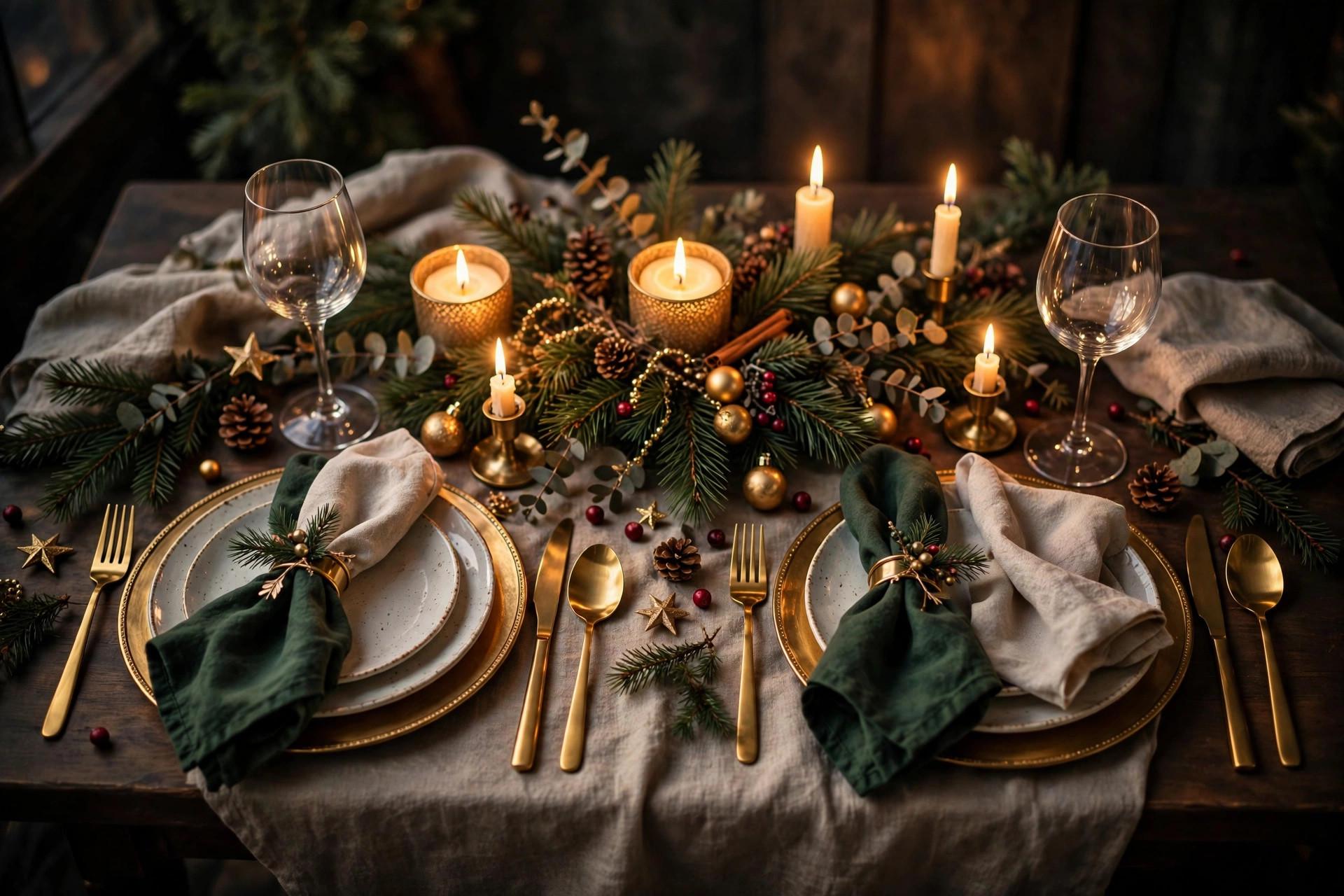
This is the part people skip, and it's the part that makes it feel like Christmas instead of dinner. Use the good dishes. Light real candles. Put on music before you start cooking, not after. A small sprig of greenery —” rosemary from the grocery store works —” laid on each napkin costs a dollar and looks intentional. Eating a beautiful meal at a bare table under overhead lighting is how a holiday dinner becomes just dinner. Ten minutes of effort here pays off more than an extra side dish.
What to Do Differently (Lessons From Small Christmases Past)
Trying to replicate a full family spread for two is how dinner ends up at 9 p.m. with a stressed-out cook. Ordering a fancy meal kit can feel like an expensive Tuesday. The sweet spot, learned the hard way: one impressive main, two sides you could make blindfolded, bought bread, make-ahead dessert. Cook together if you like that; divide and conquer if you don't. And decide in advance who's doing dishes —” nothing sours a lovely evening like a silent standoff at the sink.
Leftovers, by the way, should be a feature, not a burden. Plan for exactly one reprise: tenderloin sandwiches, chicken soup, hen meat folded into pasta. Then it's done. The goal is a Christmas dinner you remember fondly, not a refrigerator you fear opening.
The Full Menu, At a Glance
- Main: Cornish hens, petite tenderloin, duck breasts, or small roast chicken
- Sides: honey-roasted root vegetables + small potato gratin (or mash)
- Bread: bakery loaf, warmed, with honey-salt butter
- Dessert: chocolate pots de crème (make-ahead) or small galette
- Drink: one good bottle, or mulled wine
That's a complete Christmas dinner for two. It fits in one oven, one sink of dishes, and one lovely evening.
The same small-batch thinking applies at Thanksgiving — these small-batch Thanksgiving sides for two are built on tested scaling math, from which pans to use to the two dishes you should never halve.
And plan the next morning now with these make-ahead Christmas morning breakfasts you can prep tonight.
A small main like Cornish hens, a petite beef tenderloin, duck breasts, or a small roast chicken, plus two sides, bought bread, and a make-ahead dessert. Four components total keeps it festive without a week of leftovers.
Choose small cuts (hens or a 2-pound roast instead of a turkey), make sides in small baking dishes, and plan for exactly one leftover meal. Shop with a list and buy the smallest quantities —” a quart of cream, not a half gallon.
For a 6:30 dinner, start prep around 3:30 —” vegetables and gratin first, meat in the oven by 5:15, sides and bread during the resting window. Total active time is about two and a half hours, mostly hands-off.
Mostly, yes. Dessert should be fully make-ahead (pots de crème or chilled desserts), vegetables can be chopped the day before, and gratins can be assembled a day ahead and baked day-of. The main itself is best cooked fresh, but everything around it can be staged.