10 Scarf Hairstyles to Try This Fall
10 Scarf Hairstyles to Try This Fall
There is a kind of morning when your hair refuses to cooperate. Flat at the crown, fuzzy at the ends, and you have maybe ten minutes before you need to leave. A scarf fixes all three problems at once. It covers the part you don’t like, holds the part you do, and makes the whole thing look deliberate.
Scarves work as a hair accessory for a practical reason: fabric grips better than most hair ties and spreads tension instead of pinching it into one spot. A square between 26 and 36 inches handles nearly every style below. Silk and satin look polished but slip, so they need pins. Cotton and jersey grip on their own, which makes them the easier starting point if you’ve never styled hair with a scarf before.
Below are ten ideas that actually work in real life — each one takes under ten minutes, needs nothing fancier than a scarf and a few bobby pins, and suits the cooler months when you want your hair up, contained, and looking like you meant it.
1. The Silk-Wrapped Low Ponytail
Start with the simplest upgrade there is. Pull your hair into a low ponytail at the nape and secure it with a regular elastic. Take a square silk scarf, fold it corner to corner into a triangle, then roll it from the point toward the long edge until you have a band about two inches wide. Wrap that band around the base of the ponytail twice, tie a knot underneath, and let the ends hang down alongside your hair.
The reason this one photographs so well is proportion. The wrapped base hides the elastic completely, and the hanging ends extend the line of the ponytail, which reads as longer, fuller hair. Pick a print with at least one color from your outfit — it doesn’t need to match, just relate. One practical note: silk slides. Anchor the wrap with two bobby pins pushed up into the elastic before you tie the knot, and it will hold through a full workday.
2. The Folded Headband
Fold a square scarf into a two-inch band the same way, then place the center of the band at the nape of your neck, bring both ends up over your ears, and tie a knot at the crown of your head. Tuck the ends under the band or let them stick up in a small bow. Hair can stay down, go into a low bun, or sit in a ponytail underneath — the headband does the talking either way.
This is the most forgiving scarf style for beginners because placement does all the work and there’s no braiding or wrapping involved. Cotton bandanas are the easiest fabric here since they grip the hair instead of sliding toward your forehead by noon. If your hair is very fine or freshly washed, a light mist of dry shampoo at the roots before you tie the band gives it something to hold onto. Position the knot slightly off-center and the whole thing looks less uniform, more styled.
3. The Braid Woven with a Skinny Scarf
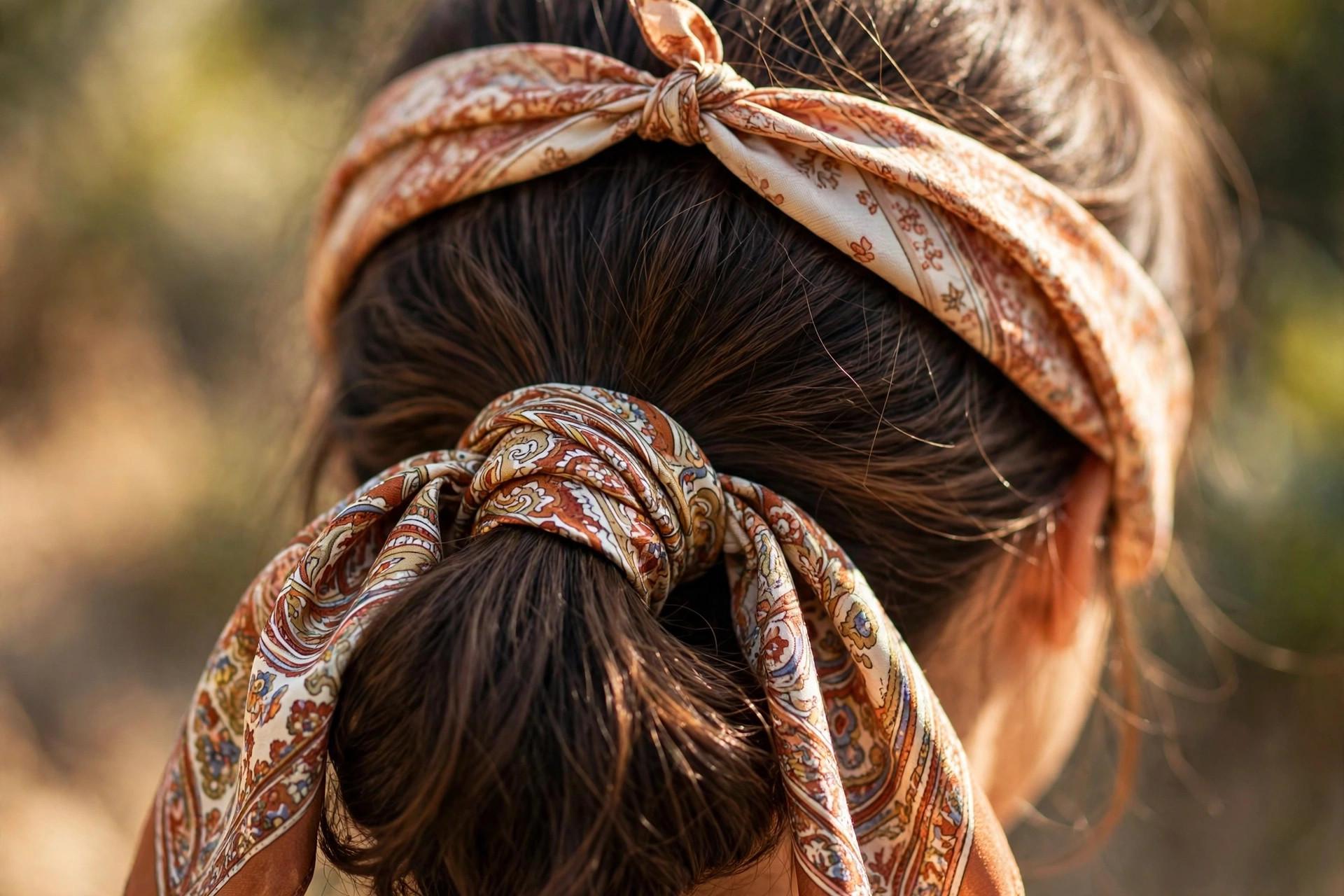
This one takes a basic three-strand braid and gives it a spine of color. Tie a long, narrow scarf — a twilly or a skinny scarf at least 30 inches long and two to three inches wide works best — around a small section of hair at the crown with a simple knot. Divide your hair into three sections, treating the two hanging ends of the scarf as part of one section, and braid normally all the way down. Secure with a clear elastic, then tie the scarf ends into a small bow over it.
The trick is tension. Keep the scarf taut while you braid and it will sit on the outside of the braid like piping on a cushion; let it go slack and it disappears inside. Once the braid is done, gently pull the edges outward — pancaking — to widen it, which also exposes more of the scarf. This style holds up remarkably well in wind because the scarf is locked into every crossover, not just tied at the ends. It reads dressy enough for dinner and casual enough for a weekend market run.
4. The Babushka Headscarf
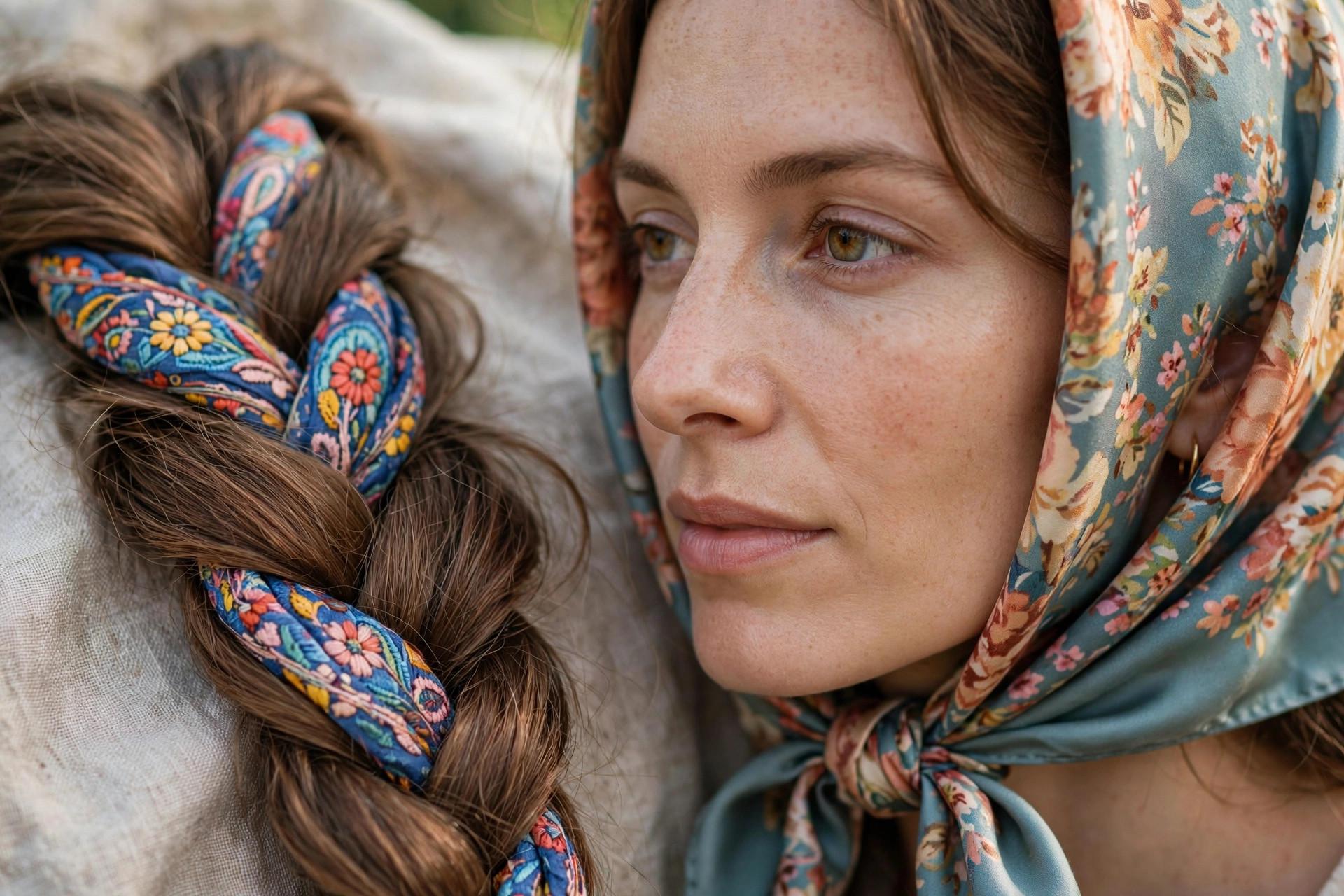
Fold a large square scarf — 36 inches or more — into a triangle and drape it over your head with the point facing back. Cross the two front corners under your chin and tie them at the nape of your neck. Smooth the fabric over your crown and tuck any stray hair up underneath. The result covers your hairline completely and frames your face in fabric.
This is the most protective style on the list. On a windy October day it keeps every strand contained, and on a bad hair day it removes hair from the equation entirely — the scarf becomes the hairstyle. It suits bolder prints because there’s so much visible fabric; a large-scale floral or geometric reads intentional rather than busy. If the triangle keeps slipping back, tie it over a low ponytail or bun so the bulk at the nape gives the knot something to grip. Sunglasses on top of the scarf, and you’re done.
5. The Scarf-Tied Top Knot
Gather your hair into a high bun — it doesn’t need to be neat; a slightly messy bun gives the scarf more texture to sit against. Secure it with an elastic and pins. Take a medium square scarf folded into a band and wrap it around the base of the bun twice, then tie it in a bow positioned at the front or slightly to the side. Fan the bow loops out so they stand up instead of flopping flat.
Second-day hair is actually ideal for this one because it has more grip and the bun holds its shape without twenty pins. The scarf does two jobs here: it hides the elastic and any pins, and the bow adds height and a focal point that draws the eye up. Keep the rest of your accessories minimal when you wear this — the bow is already the statement. A solid-color scarf in a rich fall tone like rust, olive, or burgundy keeps it wearable with everything in a cool-weather wardrobe.
6. Half-Up Hair with a Bow-Tied Scarf
Section off the top half of your hair from temple to temple and secure it at the back of your crown with a small elastic. Fold a scarf into a narrow band, wrap it around the elastic, and tie it into a bow. Let the bottom half of your hair fall naturally — a little wave or bend in it keeps the contrast between the structured top and the loose bottom from looking severe.
This is the compromise style for days when you want your hair down but out of your face. The bow sits exactly where a hair clip would, but the fabric is softer and the tails move when you do, which keeps the whole look from feeling stiff. It works on nearly every hair length past the shoulders. One adjustment that makes a real difference: tie the bow first, then slide it onto the elastic, rather than trying to knot it in place behind your head where you can’t see what you’re doing.
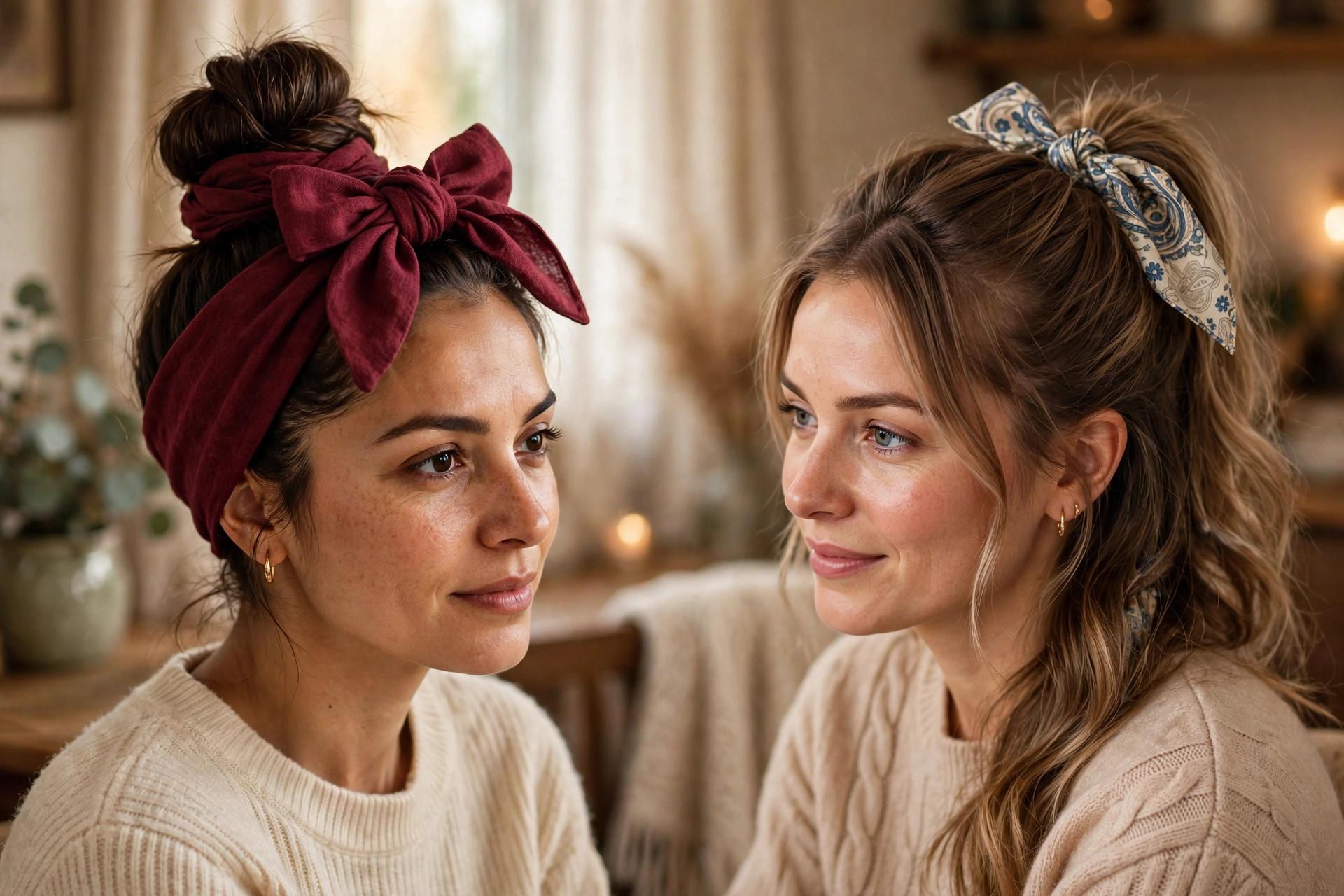
7. The Bandana Ponytail
Pull your hair into a ponytail wherever you like it — high, mid, or low all work. Fold a cotton bandana into a triangle, roll it into a band, and wrap it around the base of the ponytail. Instead of knotting it underneath, tie the knot at the front or side and leave the triangle’s point or the band ends sticking up or out. It should look a little jaunty on purpose.
Cotton bandanas are the right call here specifically because they don’t slip the way silk does, and the slightly stiff cotton holds the knot’s shape all day. This is the most casual style on the list — it belongs with denim, sneakers, and oversized sweaters. The classic red or navy paisley bandana is popular for a reason: the print is busy enough to be interesting and familiar enough to go with everything. If the knot loosens by afternoon, that’s normal with cotton; just re-tie it once and it will hold.
8. The Wrapped Low Bun
Twist your hair into a low chignon at the nape and pin it securely. Take a long rectangular scarf — an oblong style at least 60 inches long works best — and wrap it around the base of the bun twice, crossing the ends over each other between wraps so the fabric lies flat. Tuck the ends firmly under the wrap or secure them with two crossed bobby pins hidden underneath.
This is the evening version of the scarf hairstyle. The double wrap builds a thick band of fabric around the bun that reads almost like a headpiece, and because everything sits at the nape, it pairs well with earrings and an open neckline. Silk or satin is worth the extra pinning effort here because the sheen elevates the whole thing. The most common mistake is wrapping too loosely on the first pass — pull it snug against the bun, and the second wrap will sit neatly on top instead of sliding.
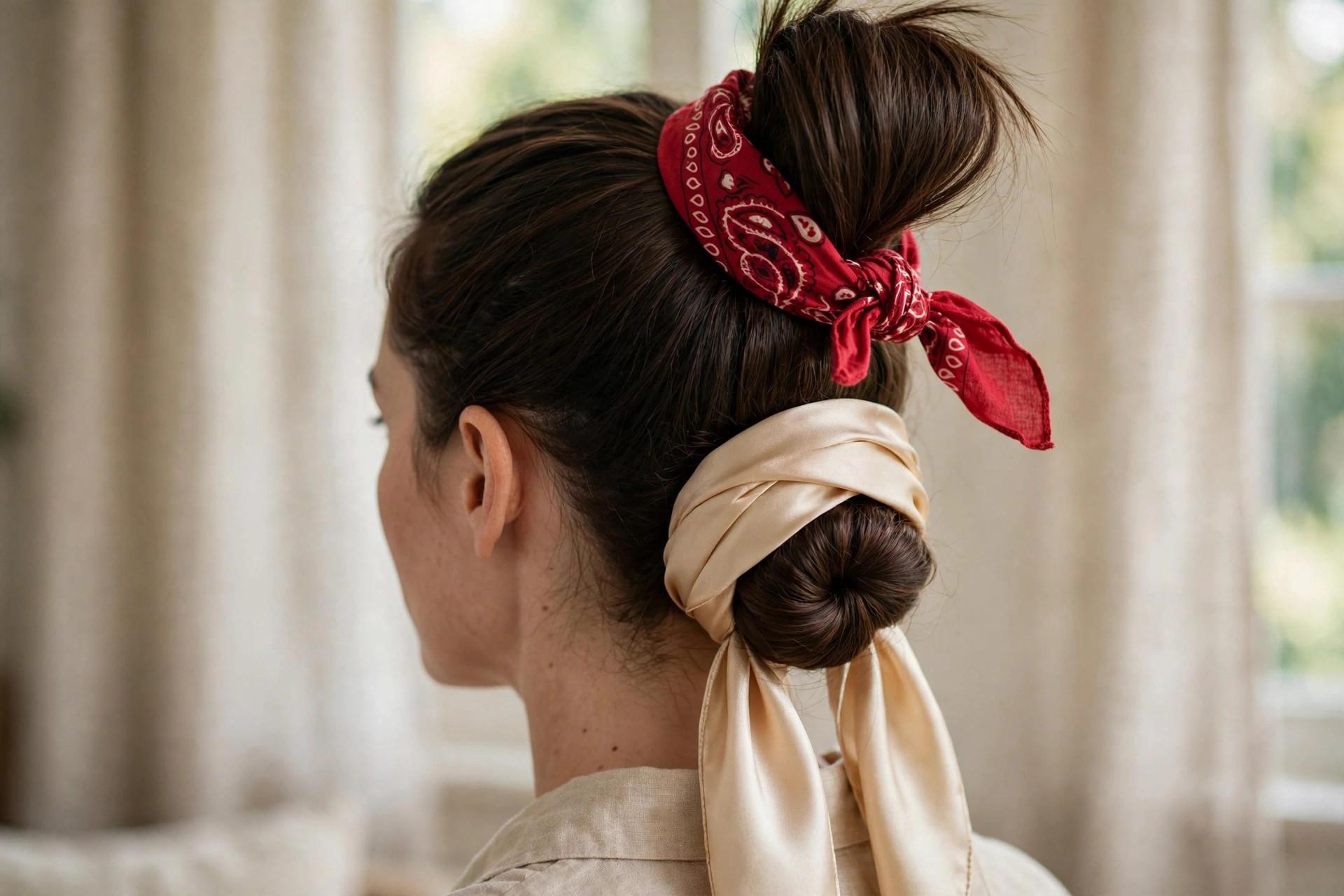
9. The Triangle Kerchief for Short Hair
Short hair gets left out of most accessory tutorials, but a kerchief might be the best scarf style for a bob or pixie. Fold a medium square scarf into a triangle, place the long edge along your hairline, and tie the two ends at the nape of your neck under your hair. Let the triangle’s point fall down your back or tuck it under the knot. The fabric frames your face and gives short hair a focal point it sometimes lacks.
Fit matters more here than with long hair because there’s less hair to anchor the scarf. Choose a scarf around 26 to 28 inches square — large enough to cover the crown, small enough that you’re not fighting excess fabric. Tying the knot under the hair at the nape rather than on top keeps the silhouette clean and stops the whole thing from sliding forward. This works beautifully with sunglasses or statement earrings, since the face is completely open.
10. The Skinny-Scarf High Ponytail
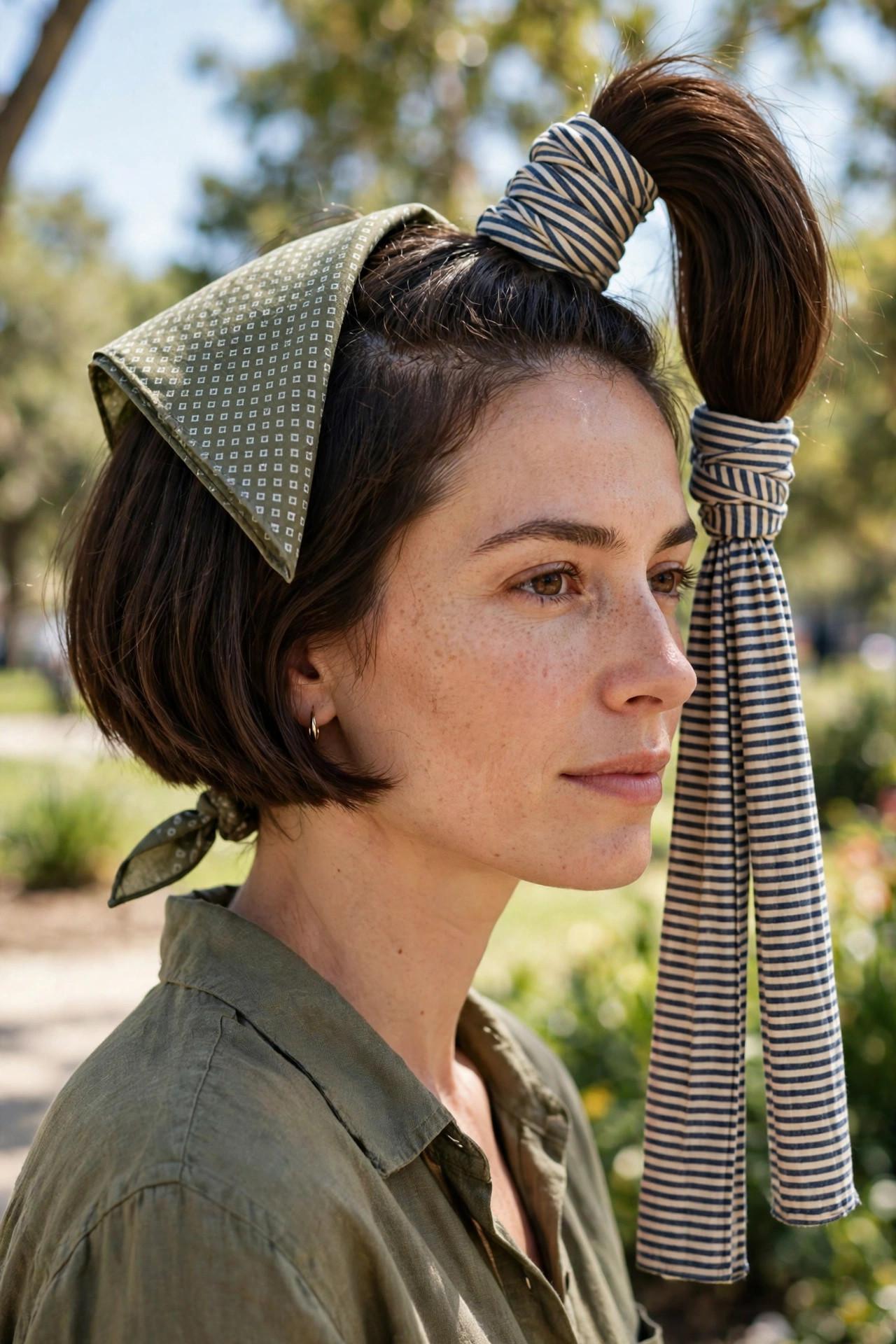
Secure a high ponytail with a strong elastic — this style needs a solid base. Take a long, narrow scarf and wrap it tightly around the base of the ponytail three or four times, working downward about an inch. Tie it off with a small knot and leave the remaining length hanging down alongside the ponytail. The wrapped section should look like a cuff.
The cuff effect is what makes this different from just tying a scarf on. Multiple tight wraps build structure around the base, which visually lifts the ponytail and keeps it from drooping as the day goes on — the scarf is doing structural work, not just decoration. A striped or color-blocked skinny scarf shows off the wrapping best because the pattern makes each turn visible. Leave at least six inches of scarf hanging; anything shorter looks like an afterthought.
The Short Version
You don’t need ten scarves to try ten hairstyles. A medium silk square, a cotton bandana, and one long skinny scarf cover the whole list. Start with the folded headband or the wrapped ponytail — both take under five minutes and teach you how fabric behaves in hair. Once you know which fabrics grip and which ones slip, the braids and wraps stop feeling fiddly. That’s the whole learning curve.
Frequently Asked Questions
What type of scarf works best for hairstyles?
It depends on the style. Cotton and jersey scarves grip hair naturally, so they’re the easiest for headbands, bandana ponytails, and anything you tie once and leave alone. Silk and satin look more polished but slip, so they need bobby pins or a base of textured hair to stay put — they’re worth it for wrapped buns and low ponytails where the sheen shows. For size, a square between 26 and 36 inches covers most hairstyles, and a long narrow scarf of at least 30 inches is what you want for braids and ponytail wraps.
How do you keep a scarf from slipping out of your hair?
Three things help. First, don’t style freshly washed, silky hair — second-day hair or a little dry shampoo at the roots gives fabric something to grip. Second, anchor the scarf with bobby pins pushed through the fabric into the hair underneath, especially with silk. Third, tie knots against something solid: around an elastic, over a bun, or at the nape where hair is densest. A knot tied around loose, fine hair with nothing behind it will migrate within the hour no matter what you do.
Can you wear scarf hairstyles with short hair?
Yes — the triangle kerchief and the folded headband both work well on bobs and pixie cuts. The key adjustment is scarf size: go smaller, around 26 to 28 inches square, so you’re not wrestling excess fabric. Tie knots at the nape under the hair rather than on top of the head to keep the silhouette clean. Short hair holds a headband-style scarf well because there’s less weight pulling it forward.
Do silk or cotton scarves look better in hair?
They look different, not better or worse. Silk reads dressy — it catches light and suits wrapped buns, low ponytails, and evening looks. Cotton reads casual — it holds structured knots and suits bandana ponytails, headbands, and daytime looks. If you can only buy one, cotton is the more forgiving learner fabric. If you already own silk scarves you never wear around your neck, they’re excellent candidates for the wrapped styles.
How do you tie a scarf around a ponytail without it looking messy?
Fold or roll the scarf into a neat band first — most messy results come from wrapping with a scrunched, unfolded scarf. Wrap it around the elastic base at least twice so the fabric lies flat and even, then tie the knot underneath the ponytail rather than on top. Tuck the ends or let them hang alongside the hair instead of sticking out sideways. Two bobby pins through the wrap into the elastic keep everything aligned through the day.
It depends on the style. Cotton and jersey scarves grip hair naturally, so they’re the easiest for headbands, bandana ponytails, and anything you tie once and leave alone. Silk and satin look more polished but slip, so they need bobby pins or a base of textured hair to stay put — they’re worth it for wrapped buns and low ponytails where the sheen shows. For size, a square between 26 and 36 inches covers most hairstyles, and a long narrow scarf of at least 30 inches is what you want for braids and ponytail wraps.
Three things help. First, don’t style freshly washed, silky hair — second-day hair or a little dry shampoo at the roots gives fabric something to grip. Second, anchor the scarf with bobby pins pushed through the fabric into the hair underneath, especially with silk. Third, tie knots against something solid: around an elastic, over a bun, or at the nape where hair is densest. A knot tied around loose, fine hair with nothing behind it will migrate within the hour no matter what you do.
Yes — the triangle kerchief and the folded headband both work well on bobs and pixie cuts. The key adjustment is scarf size: go smaller, around 26 to 28 inches square, so you’re not wrestling excess fabric. Tie knots at the nape under the hair rather than on top of the head to keep the silhouette clean. Short hair holds a headband-style scarf well because there’s less weight pulling it forward.
They look different, not better or worse. Silk reads dressy — it catches light and suits wrapped buns, low ponytails, and evening looks. Cotton reads casual — it holds structured knots and suits bandana ponytails, headbands, and daytime looks. If you can only buy one, cotton is the more forgiving learner fabric. If you already own silk scarves you never wear around your neck, they’re excellent candidates for the wrapped styles.
Fold or roll the scarf into a neat band first — most messy results come from wrapping with a scrunched, unfolded scarf. Wrap it around the elastic base at least twice so the fabric lies flat and even, then tie the knot underneath the ponytail rather than on top. Tuck the ends or let them hang alongside the hair instead of sticking out sideways. Two bobby pins through the wrap into the elastic keep everything aligned through the day.