

Fabric Ceiling Ideas: 12 Dreamy Looks for Any Room
A plain ceiling can make a beautifully decorated room feel unfinished. The right fabric changes that. It adds softness, creates a focal point, and makes an ordinary bedroom or living room feel more intimate without a major renovation.
Fabric ceiling ideas range from sheer panels gathered above a bed to relaxed linen drapes spanning a cozy reading nook. The secret is choosing the right fabric, limiting the amount of draping, and making the installation look intentional rather than like a wedding backdrop.
This works best for bedrooms, reading corners, and low-traffic sitting areas. It won’t help if you need a completely unobstructed ceiling for ventilation, ceiling fans, or required safety equipment.
What Are Fabric Ceiling Ideas, and How Do You Make Them Look Modern?
Fabric ceiling ideas are decorating approaches that use textiles suspended, stretched, or gathered overhead to soften a room and add visual interest. Depending on the arrangement, fabric can create a canopy, a tent-like ceiling, or a subtle fabric accent above a specific area.
The most wearable version of this trend uses a limited palette, controlled folds, and a clear focal point. You don’t need to cover the entire ceiling. One thoughtfully draped section can have more impact than layers of fabric running in every direction.
Which fabric works best for a draped ceiling?
Lightweight voile creates a translucent, airy effect, while muslin offers a soft, matte finish. Cotton and linen-look fabrics provide more texture and a grounded appearance. The best choice depends on the room’s light, ceiling height, and the amount of fullness you want.
For ceiling fabric near lights or heat, choose flame-resistant or flame-retardant materials where available, and keep fabric clear of hot bulbs, heaters, and open flames. Treat ceiling fabric with the same care: check the fabric’s fire-safety information and keep it clear of hot bulbs, heaters, and open flames.
Can fabric ceiling decor work in a small room?
Yes. A small room can benefit from fabric when the arrangement stays simple and leaves enough visible ceiling. Choose a pale, lightweight material and drape it over one zone instead of creating a heavy tent effect. A restrained installation also makes furniture and wall decor easier to appreciate.
Here’s the thing: more fabric doesn’t automatically mean more drama. A single sweep of translucent material can look more sophisticated than a ceiling crowded with overlapping panels.
12 Fabric Ceiling Ideas to Try at Home
These twelve looks cover romantic bedrooms, relaxed living spaces, and renter-conscious decorating. Start with the idea that suits your room’s proportions, then adjust the fabric and attachment method to fit the space.
1. Sheer White Drapes Across the Bedroom Ceiling
White voile is a natural starting point for a dreamy bedroom. Run fabric from a central gathering point toward the upper corners, allowing gentle folds to fall between the attachment points. The result feels soft without becoming visually heavy. Pair it with cream bedding, light wood, and simple bedside lamps.
Best for: Bright bedrooms and neutral interiors.
Styling tip: Use fewer, wider fabric sections rather than lots of narrow strips. This creates smoother lines and makes the arrangement easier to manage.
2. A Romantic Fabric Canopy Above the Bed
A ceiling canopy fabric arrangement brings the look of a canopy bed without requiring a four-poster frame. Gather fabric above the head of the bed and let it fall along the sides, keeping the center of the room open. This creates a defined sleeping zone, especially in a studio apartment or a bedroom with minimal architectural detail.
Choose translucent ivory for a delicate finish or soft blush for a warmer, romantic look. Keep fabric clear of ceiling fans and lighting fixtures.
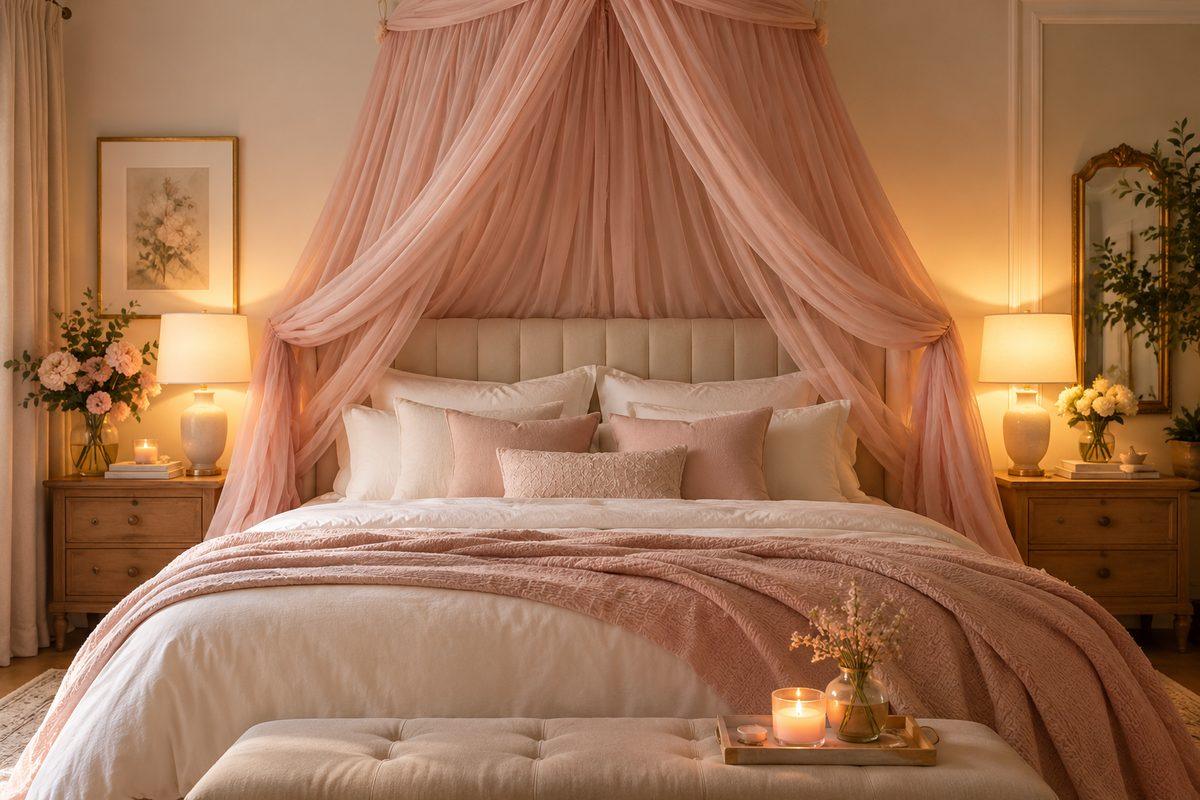
3. Soft Beige Drapes for a Minimalist Bedroom
Not every dreamy ceiling needs to look ethereal. Beige muslin or linen-look fabric creates a calmer, more natural effect that suits minimalist and Scandinavian-inspired rooms. Use shallow folds across a section of the ceiling above the bed. Combine them with warm wood, textured bedding, and a few ceramic accessories.
Best for: Rooms that already use earthy neutrals.
Avoid mixing too many beige shades. Two or three closely related tones usually give the space a cleaner, more considered appearance.
4. A Starry Ceiling With Warm Fairy Lights
Fairy lights can add atmosphere, but they often look sparse when strung alone. Placing a restrained fabric canopy behind them gives the lights a softer visual background. Choose warm-white lights designed for the intended indoor use. Follow the manufacturer’s mounting instructions, keep bulbs and electrical components away from fabric, and switch the lights off before sleeping.
Look for lighting that creates a gentle glow rather than a bright, glittery display.
Best for: Evening reading corners and cozy bedrooms.
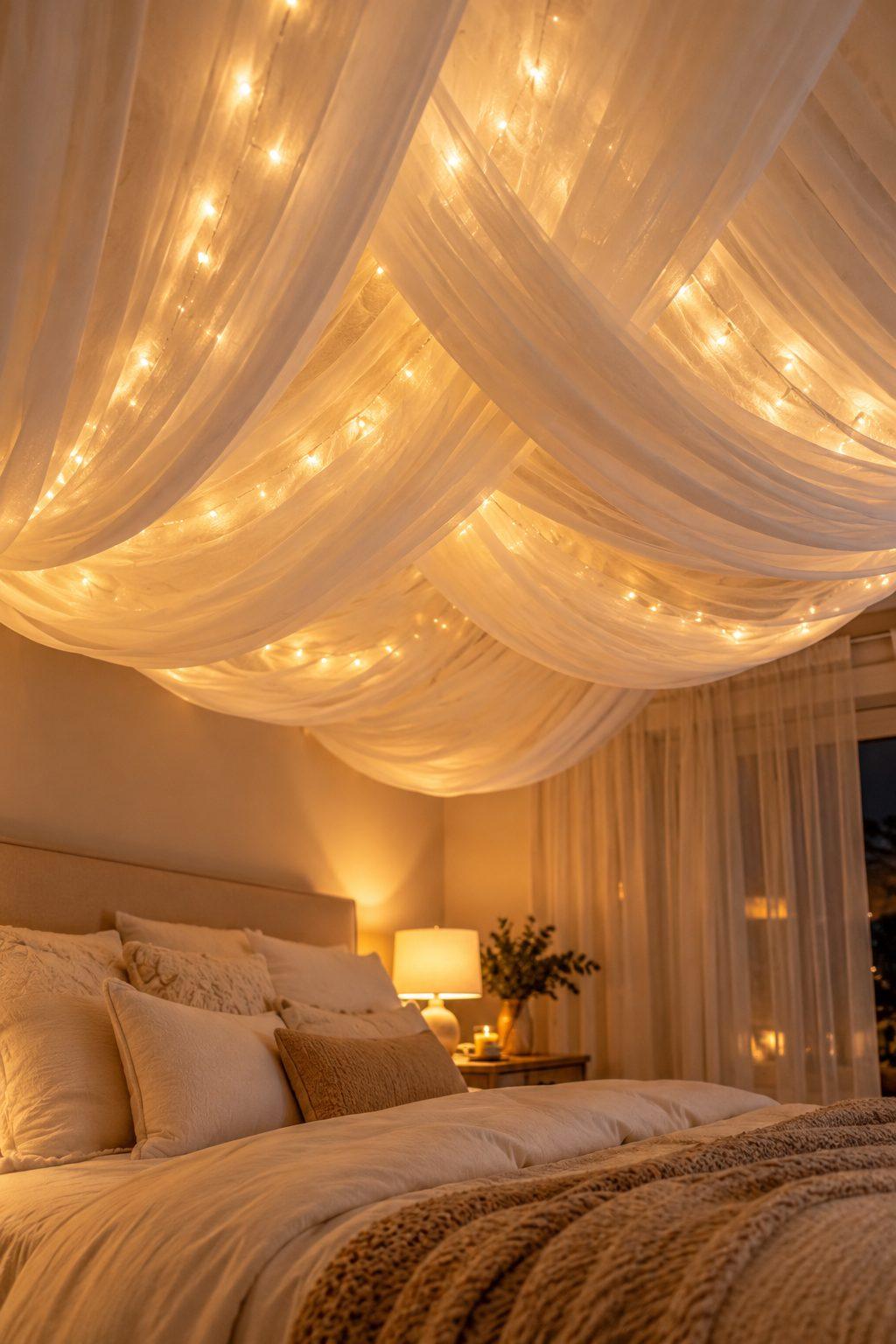
5. A Tented Ceiling for a Cozy Reading Corner
A tented ceiling doesn’t need to cover an entire room. Use fabric above a reading chair, floor cushions, or a small lounge corner to create a distinct retreat. Attach the fabric along a defined perimeter using a suitable, secure mounting method, then allow a gentle slope toward the center or one side. Keep the arrangement high enough that people can move comfortably underneath.
The trick is to frame a small area rather than imitate a luxury hotel suite.
6. Dusty-Rose Drapes for a Soft Romantic Look
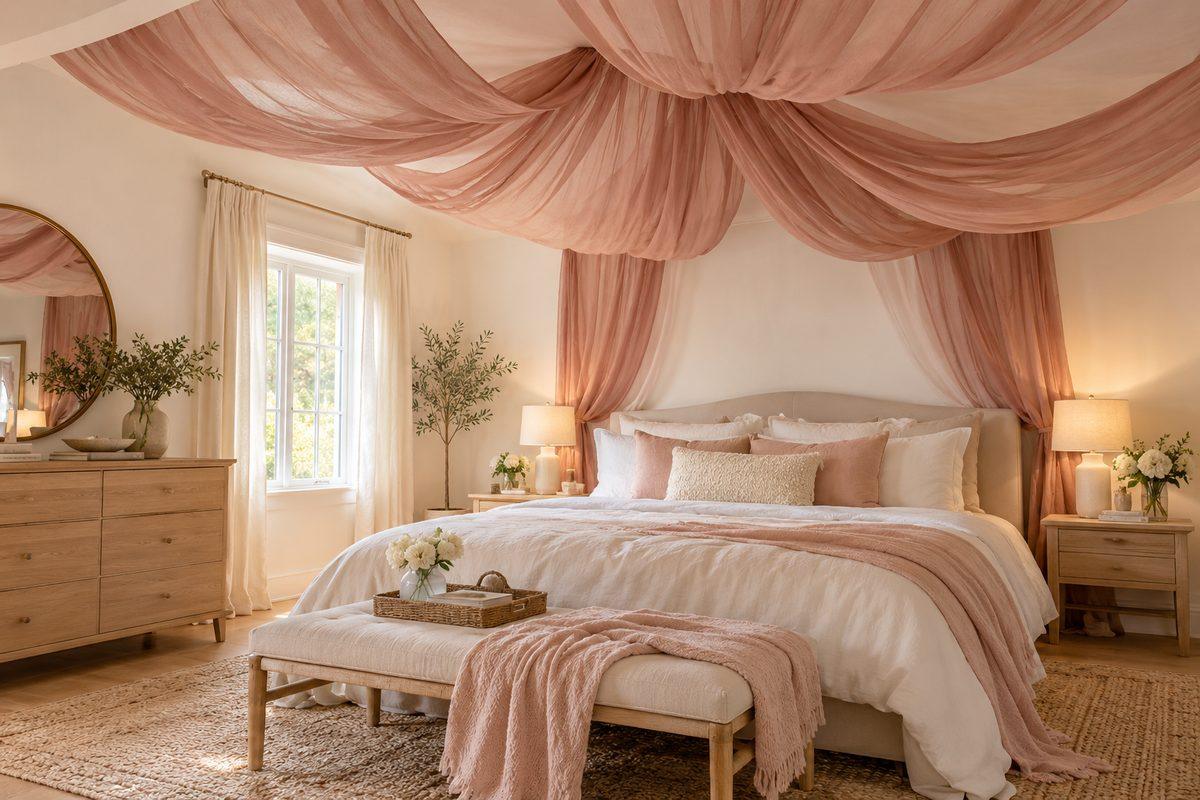
Dusty rose introduces color without making the ceiling feel overpowering. It works particularly well with warm white walls, muted green accents, pale oak, and antique-inspired brass details. For a balanced look, keep the fabric concentrated over the bed and repeat the color once or twice elsewhere in the room. A matching cushion or small artwork is enough.
Skip highly saturated pink if the room already contains several strong colors. Muted shades are easier to live with over time.
7. Navy Fabric Drapes for a Moody Bedroom
Dark fabric creates a more intimate atmosphere. Navy, deep olive, and charcoal can make a large bedroom feel less exposed and give pale bedding a stronger contrast. Use opaque or heavier-looking fabric sparingly. A narrow draped section or a canopy over the bed can establish the mood without making the ceiling appear too low.
Pair dark fabric with warm lighting and lighter textiles to keep the room from feeling closed in.
8. A Color-Blocked Ceiling With Two Fabrics
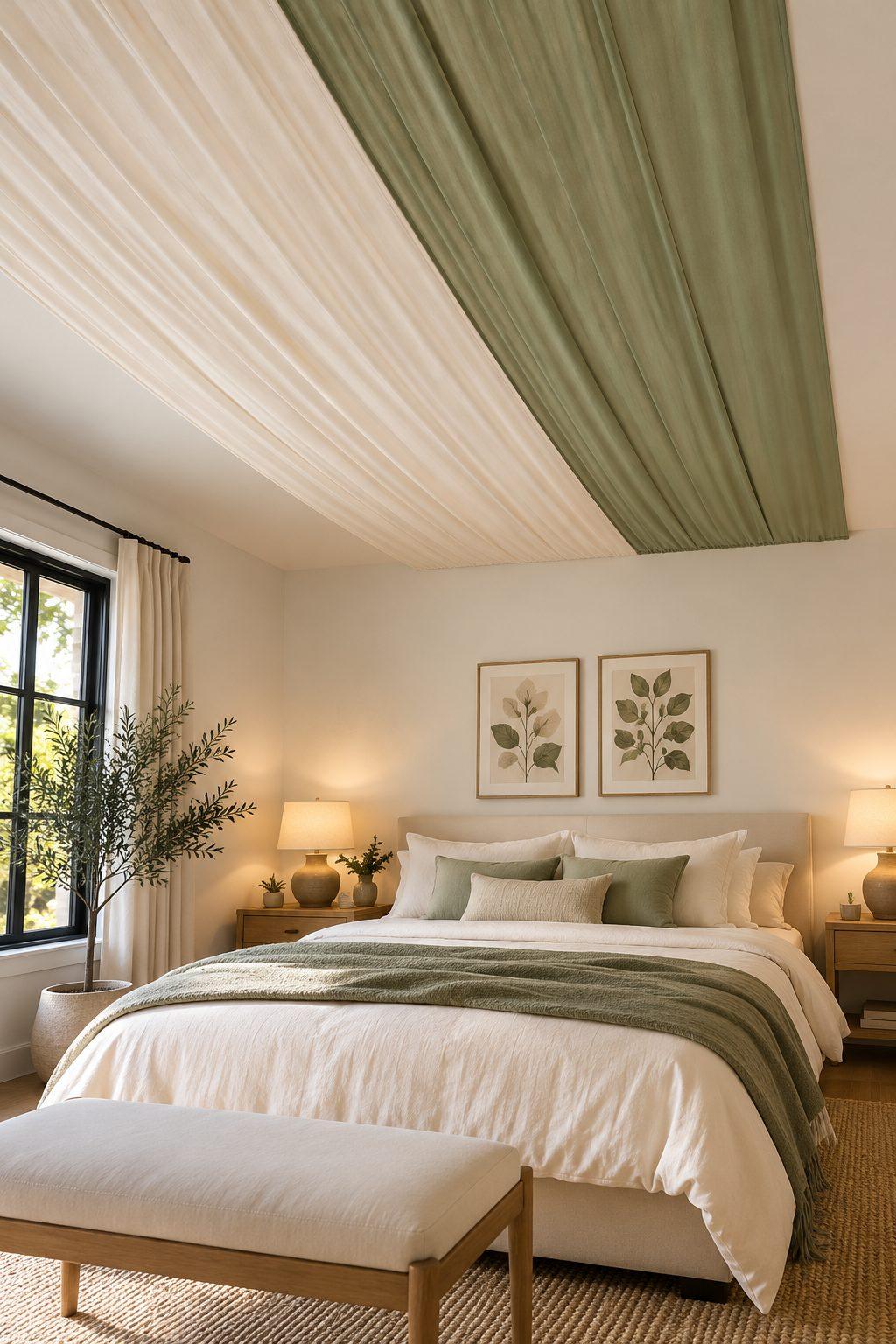
For a contemporary interpretation, combine two complementary fabrics instead of layering several patterns. Ivory and sage, cream and terracotta, or sand and dusty blue can create a clear visual rhythm. Run the fabrics in parallel bands or use one as the main drape and the second as a narrow accent. Keep the edges aligned so the design reads as intentional.
This is a good choice for people who enjoy color but don’t want to wallpaper or repaint an entire room.
9. A Soft Canopy Over a Living-Room Seating Area
Ceiling drapes aren’t limited to bedrooms. A modest fabric canopy above a sofa or a pair of lounge chairs can define a seating area in an open-plan home. Choose a material that complements the upholstery and keep the fabric away from floor lamps, fireplaces, and other heat sources. Don’t position drapes where they interfere with circulation or windows.
For a modern finish, leave the rest of the ceiling visible.
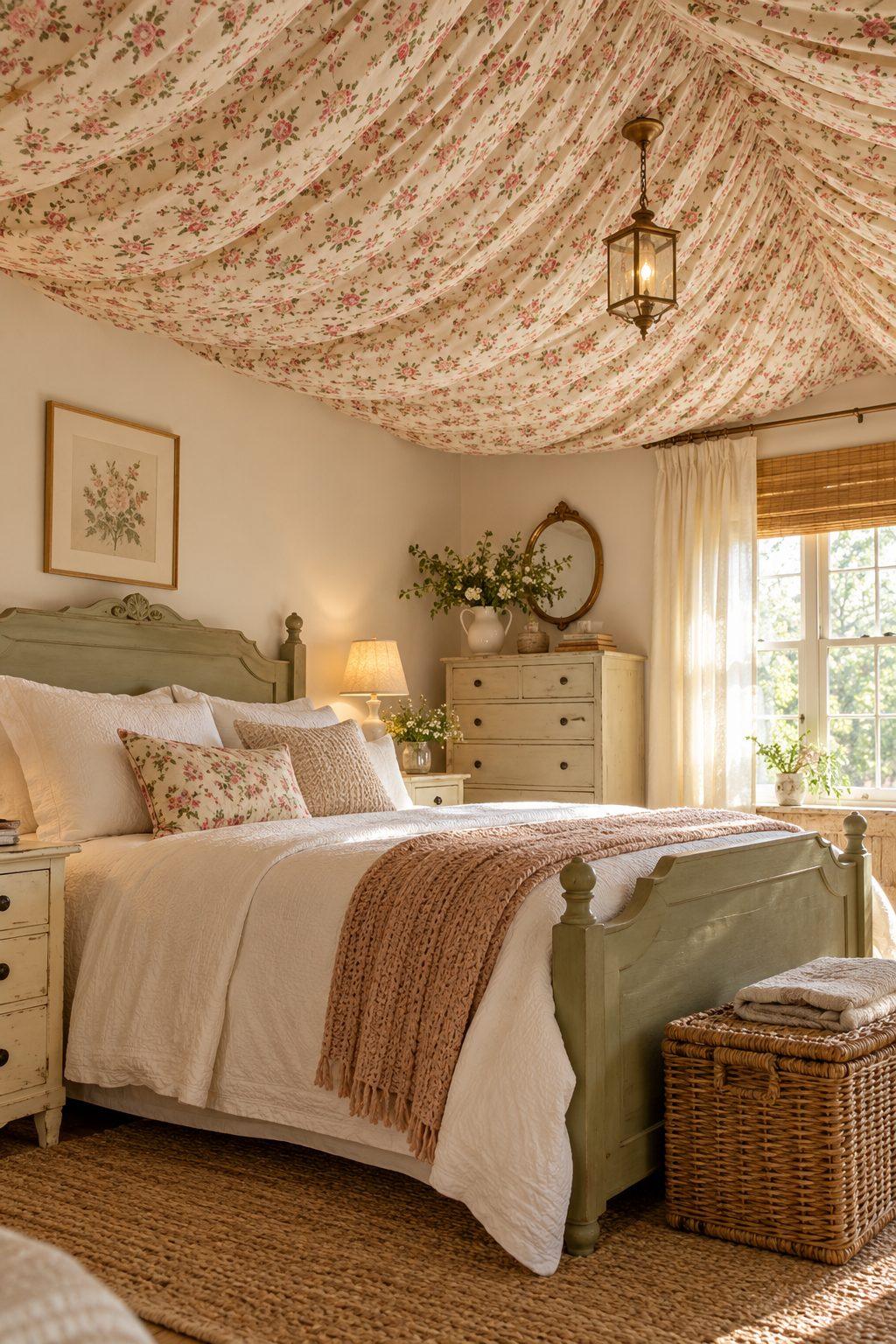
10. Cottage-Style Ceiling Drapes With Floral Fabric
Small-scale floral cotton gives ceiling drapes a relaxed, cottage-inspired character. Look for fine botanical prints rather than oversized patterns if your room is small. Pair the fabric with vintage books, painted furniture, woven baskets, and simple white bedding. Let one pattern lead; adding several competing prints can make the ceiling look busy.
This style works especially well in guest bedrooms where a little extra charm makes the space feel welcoming.
11. A Ceiling Border Using Curtain Rods
If a central canopy feels too dramatic, use curtain rods to create a fabric border along one or two sides of the ceiling. The fabric can curve gently inward or fall in a straight, tailored line. This method gives the ceiling definition while leaving most of its surface visible. It can also be easier to remove and store than a complicated network of individual drapes.
Check the mounting requirements first. Tension rods only work where opposing surfaces can safely support them, and adhesive clips are not suitable for every ceiling finish or fabric load.
12. A Single Statement Sweep Across the Ceiling
For a look that feels more like modern interior styling than event decor, use one broad sweep of fabric. Run it diagonally or from one side of the room toward a central point, leaving the remaining ceiling exposed. This approach suits renters and homeowners who want a strong visual change without committing to a full tented ceiling.
Choose a fabric with a soft drape, secure every support point appropriately, and arrange the folds before final installation.
The negative space is part of the design.

How to Choose Fabric, Attachments, and a Draping Style
The right installation method matters as much as the design. Fabric that looks light can still become heavy when gathered into deep folds, and a mounting method that works on painted wood may fail on textured plaster.
Quick Comparison
| Option | Best For | Key Benefit | Limitation |
|---|---|---|---|
| Sheer voile | Romantic bedrooms | Airy and translucent | Can snag easily |
| Muslin | Minimalist spaces | Soft, matte texture | Can wrinkle |
| Curtain rods | Defined ceiling borders | Neat, controlled lines | Requires suitable support |
| Ceiling hooks | Central canopies | Flexible draping shapes | Must be securely installed |
| Adhesive clips | Lightweight accents | Potentially removable | Surface and load dependent |
Fabric Ceiling Ideas: Frequently Asked Questions
How do you drape fabric across a ceiling without making it look messy?
Choose one focal point, use consistent folds, and limit the number of fabric panels. Measure the span first and plan the attachment points before hanging anything.
What is the cheapest fabric for a ceiling canopy?
Lightweight voile and basic muslin are useful budget options. Compare fabric width, opacity, and the amount needed for folds before choosing the least expensive material.
Can you hang fabric from a ceiling in a rental?
Sometimes. Removable adhesive clips may suit lightweight accents on compatible surfaces, but they aren’t reliable for every ceiling or load. Check your lease and the manufacturer’s instructions.
Are fabric draped ceilings safe in bedrooms?
They can be used with suitable materials and secure mounting, provided they remain clear of hot lights, fans, sprinklers, and other equipment. Never leave decorative lights on while sleeping.
How do you make a fabric ceiling look modern instead of like wedding decor?
Use one or two coordinated colors, wide fabric panels, restrained folds, and a partial canopy. Leave some ceiling exposed and avoid excessive bows, shiny materials, and crowded lighting.
Final Thoughts
One non-negotiable: fabric and heat don’t mix. Keep every drape well clear of recessed lights, pendants, and ceiling fans — sagging fabric migrates toward heat sources over time, and “it looked fine on day one” is how problems start.
Get the mounting right and the fabric almost styles itself. Wide panels, simple folds, and one color will always outperform an elaborate canopy that’s fighting gravity.