

15 Interior Ideas for a Living Room That Feels Finished
Most living rooms don’t look unfinished because they’re missing furniture. They look unfinished because of ten small decisions nobody tells you to make on purpose — rug size, lamp height, how many textures are in the room. These are the ideas that actually close the gap between “furnished” and “finished” — the small, deliberate decisions that make a room feel complete.
What “Finished” Actually Means
A finished living room isn’t a full one — it’s a resolved one. Every element has a relationship to something else: the rug relates to the sofa, the lighting relates to the mood, the art relates to the wall. Unfinished rooms aren’t missing furniture; they’re missing those relationships. The fifteen ideas below are really fifteen ways to create them.
1. Size Your Rug to the Furniture, Not the Floor
The single most common mistake is a rug too small for the seating area, which makes everything float. At minimum, the front legs of your sofa and chairs should sit on the rug — all four legs is even better if your budget allows it.
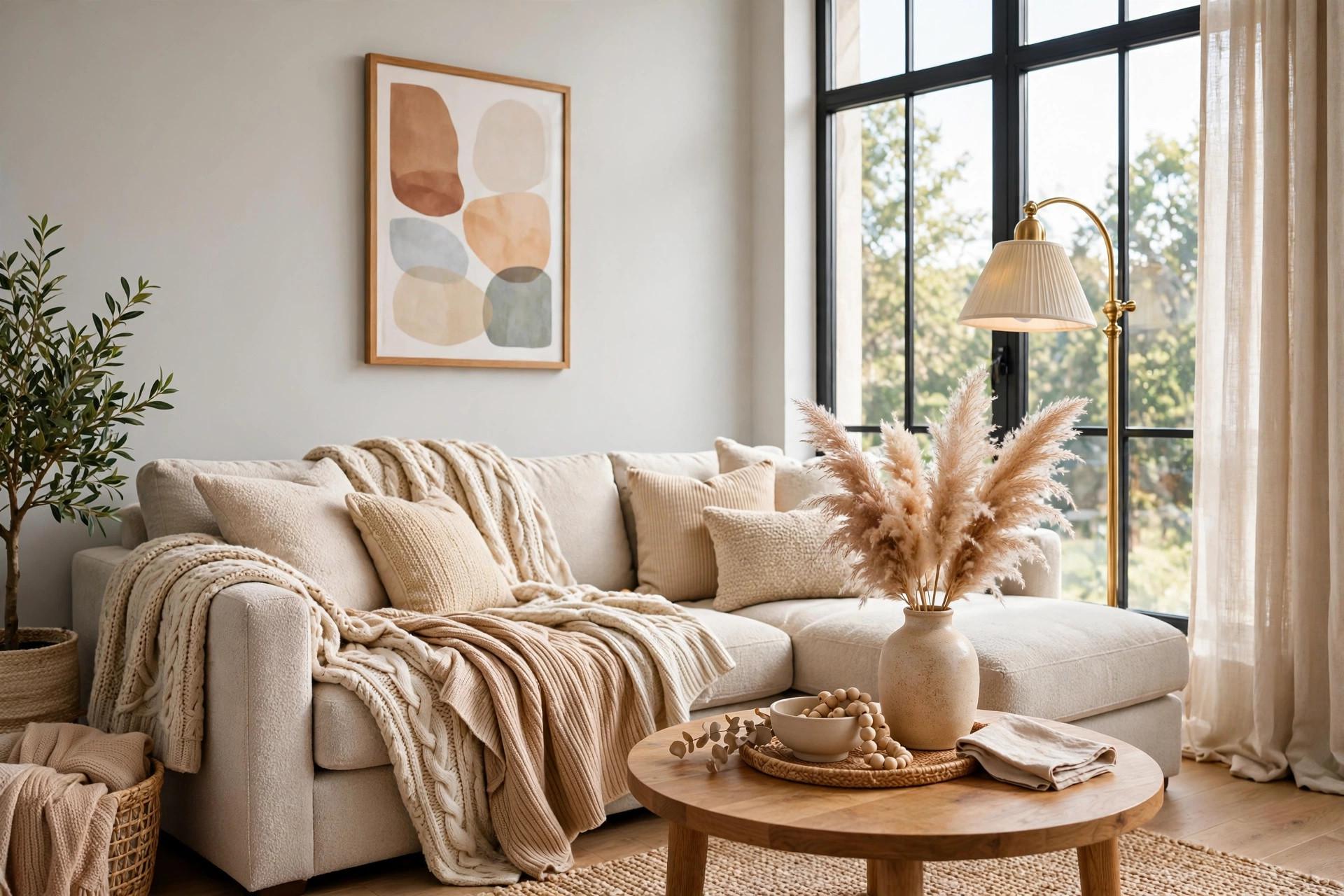
2. Layer Three Light Sources Minimum
One overhead fixture flattens a room. Add a floor lamp, a table lamp, and either sconces or accent lighting so you can shift the mood without flipping on a harsh ceiling light every evening.
3. Anchor the Room With One Statement Piece
A bold piece of art, an oversized mirror, or a striking coffee table gives the eye somewhere to land first. Without it, a room full of “nice” pieces can still feel visually flat.
4. Mix at Least Two Textures Beyond Fabric
Pair a wood coffee table with a woven jute rug and a glass or metal side table. Rooms that are all-soft or all-hard surfaces tend to feel either sterile or heavy.
5. Float Furniture Away From the Walls
Pushing every piece against the wall is a habit from smaller apartments, but in a room with real square footage, floating the seating area 4 to 8 inches off the wall creates a more intentional, lived-in layout.
6. Add a Console or Bench Behind the Sofa
If your sofa isn’t against a wall, a slim console table behind it fills the visual gap and gives you a spot for a lamp, plant, or stack of books.
7. Bring in One Unexpected Color
A neutral room reads as safe rather than curated. One saturated pillow, a colored lampshade, or a painted door frame gives the space personality without committing to a full repaint.
8. Use Curtains That Actually Reach the Ceiling
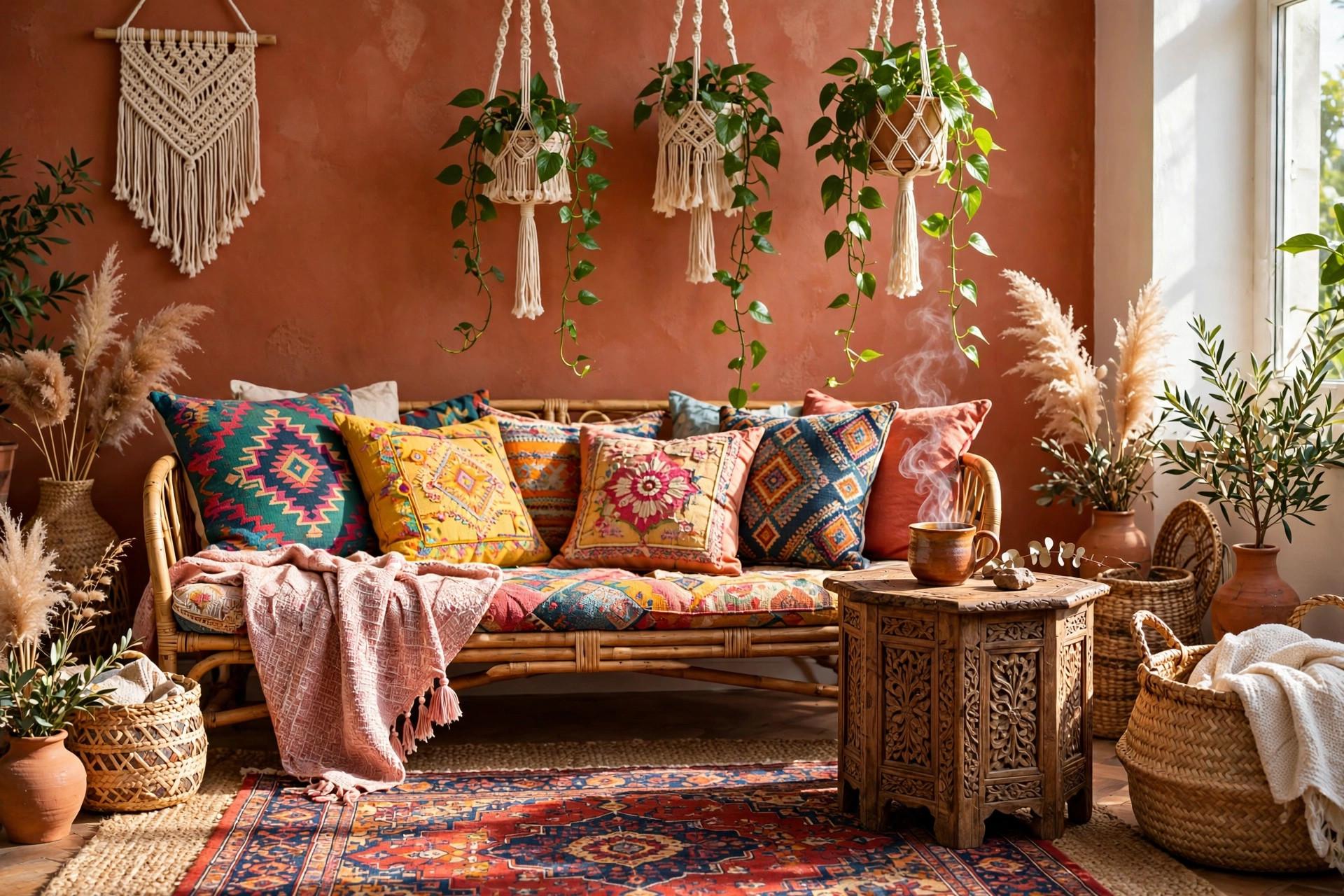
Mounting curtain rods just above the window frame is one of the most common sizing mistakes in living rooms. Hang them close to the ceiling instead — it visually stretches the walls and makes ceilings feel taller.
9. Group Art in Odd Numbers
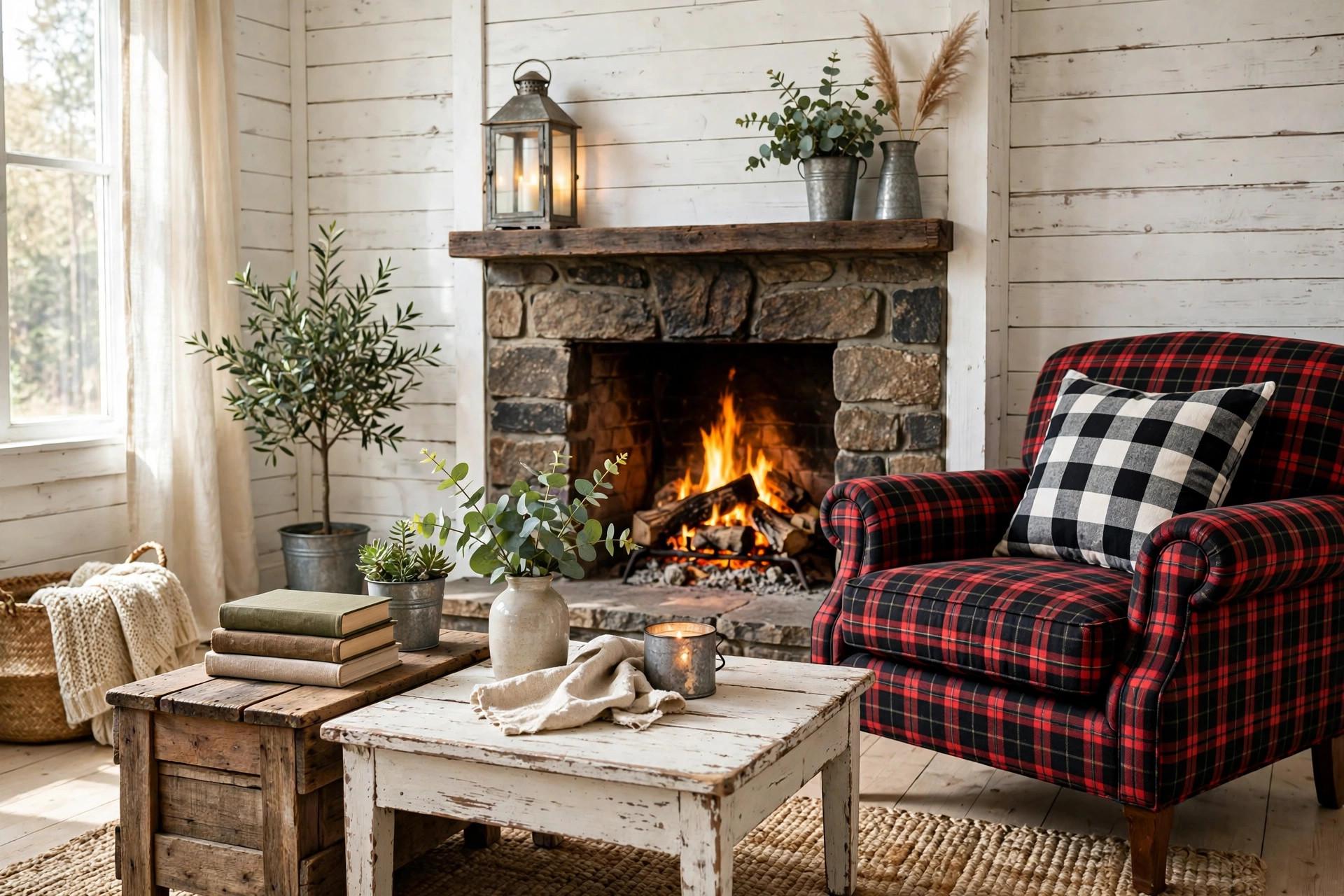
A gallery wall of three or five pieces reads more intentional than an even, symmetrical grid, which can feel a little corporate in a casual living space.
10. Add Greenery at Two Different Heights
One tall floor plant and one smaller tabletop plant create depth. A single plant on the floor alone tends to read as an afterthought.
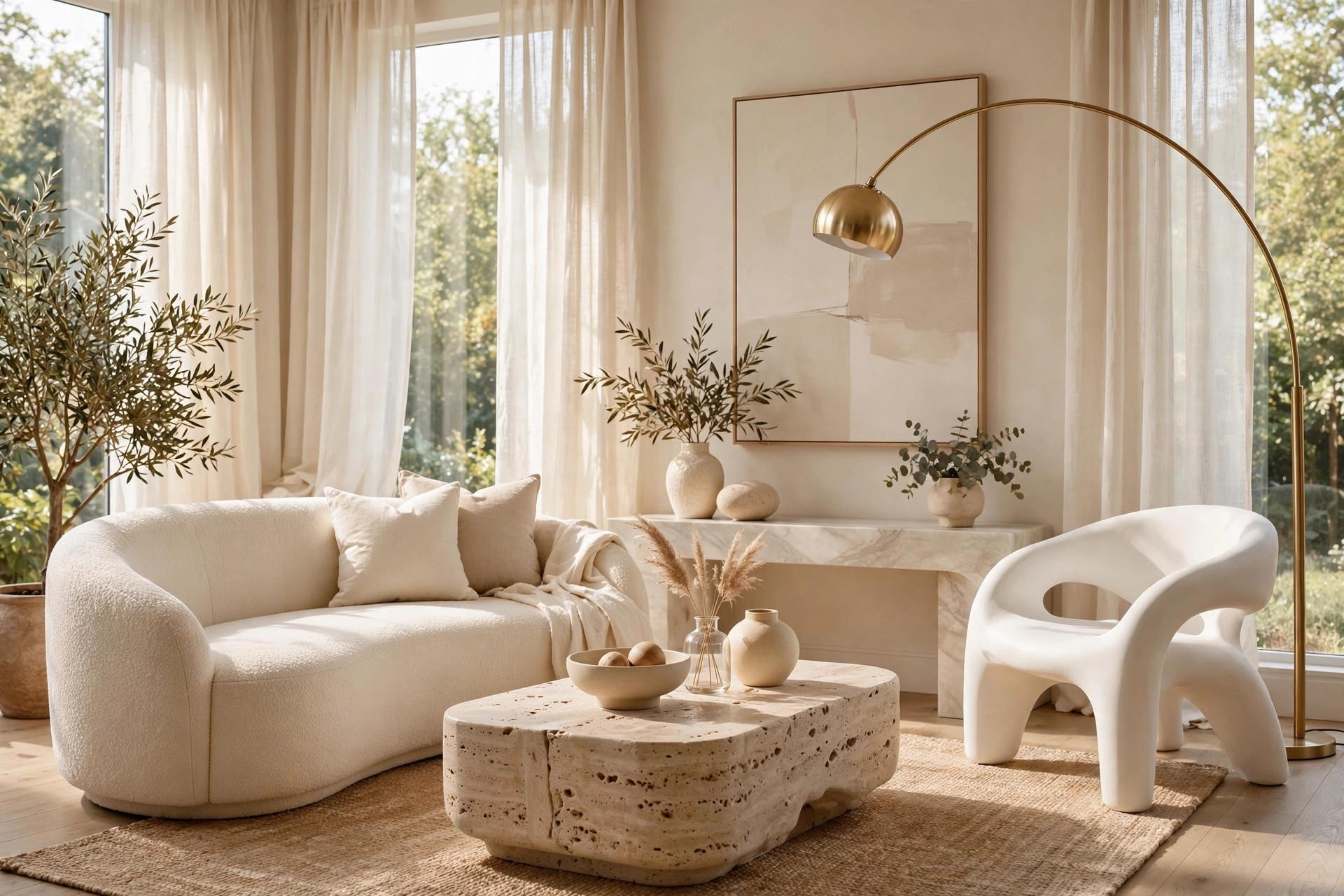
11. Choose a Coffee Table Proportional to the Sofa
As a rough guide, your coffee table should be about two-thirds the length of your sofa, with roughly 14 to 18 inches of clearance for walking and sitting comfortably.
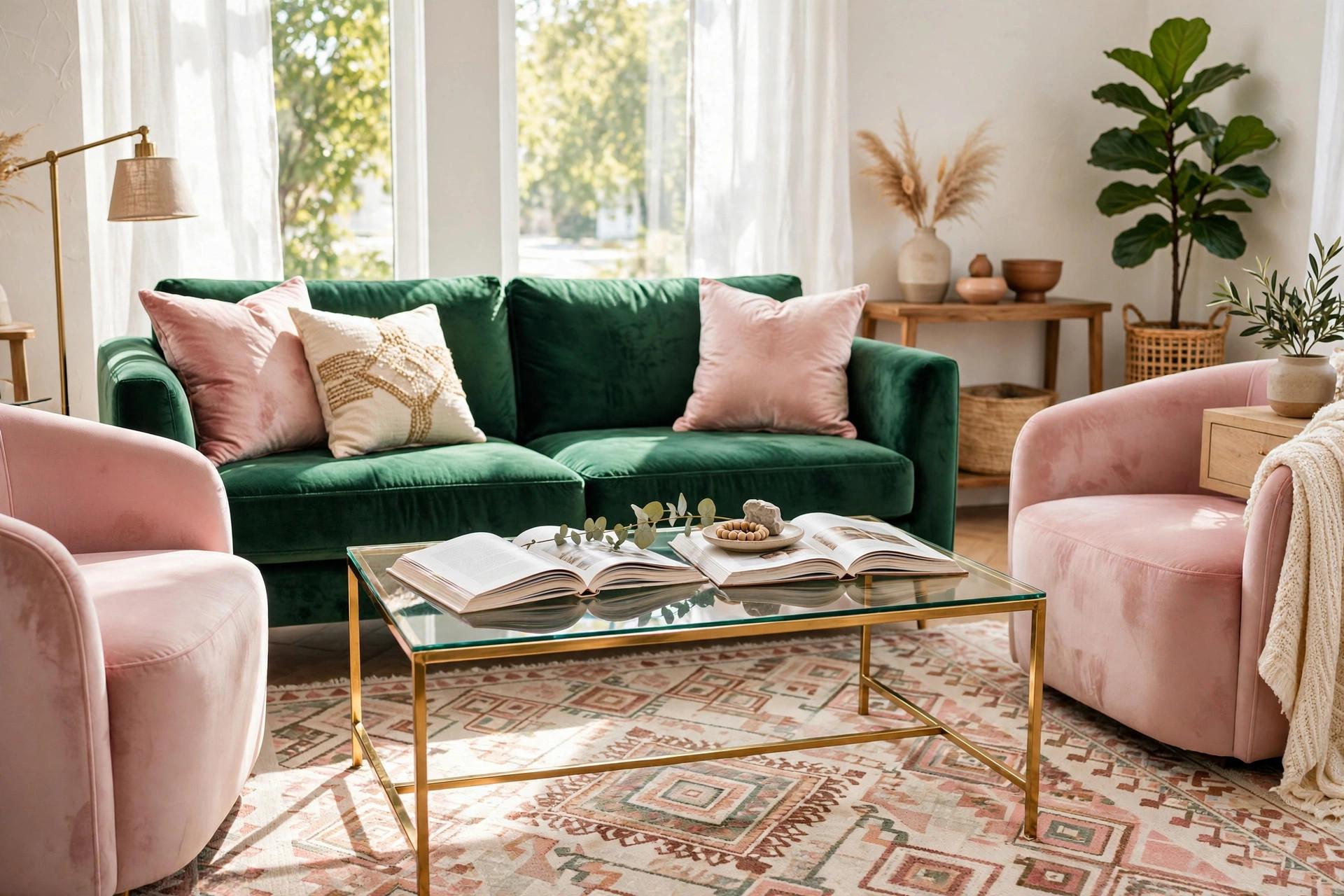
12. Swap One Hard Chair for a Soft One
If your seating is all sofa and matching armchairs, add one differently upholstered accent chair. The slight mismatch keeps the room from feeling like a showroom set.

13. Use a Tray to Contain Coffee Table Clutter
Remotes, coasters, and coffee mugs scattered across a coffee table undo a lot of styling work. A simple tray corrals them into one deliberate-looking zone.
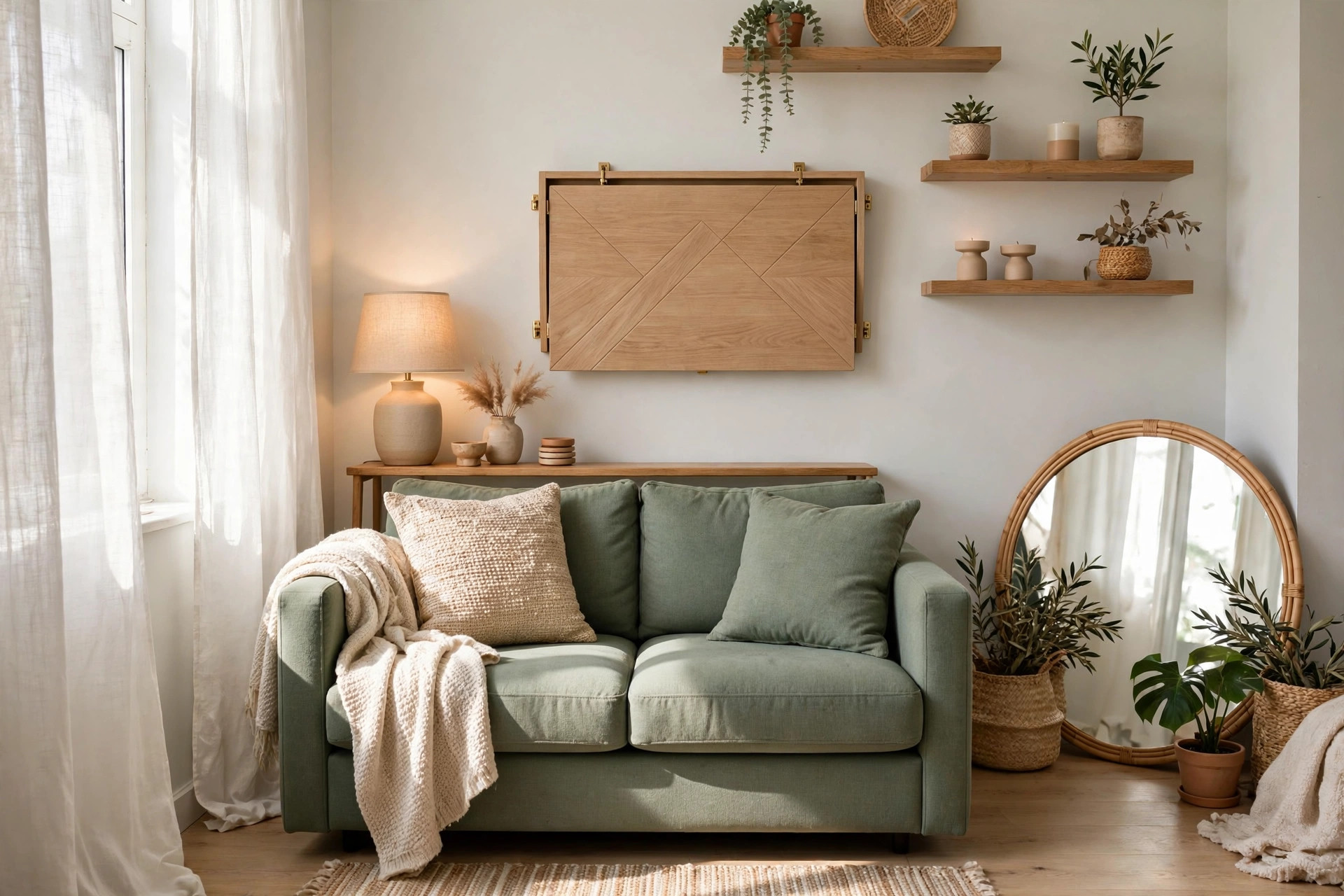
14. Add Window Treatments With Some Texture
Linen or a subtle woven curtain adds warmth that flat cotton panels don’t. It’s a small material upgrade that reads as more expensive than it usually is.
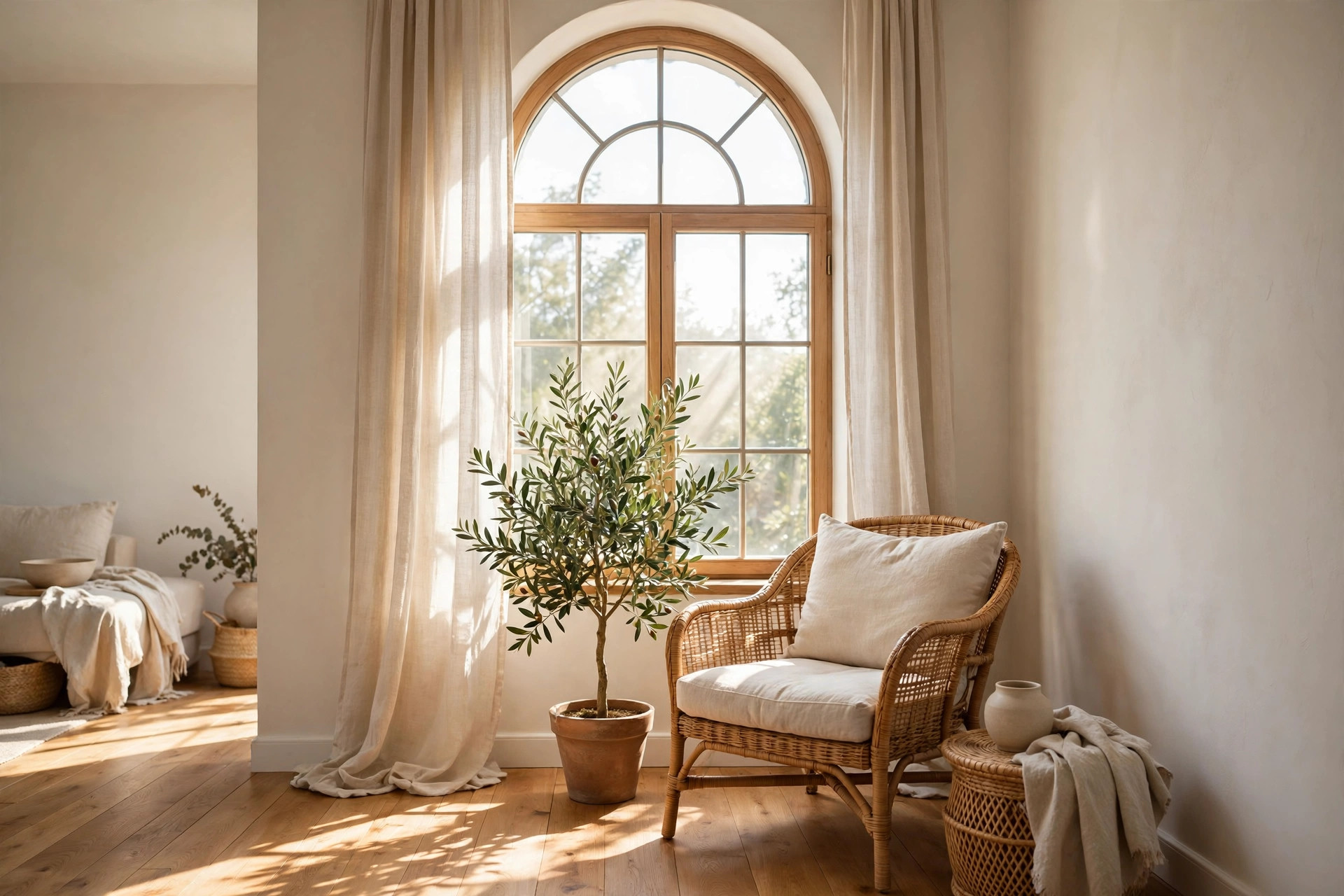
15. Repeat One Material Twice in the Room
If you use black metal on your lighting, echo it somewhere else — picture frames, a side table base, or curtain rods. That small repetition is what makes an eclectic room still feel cohesive.
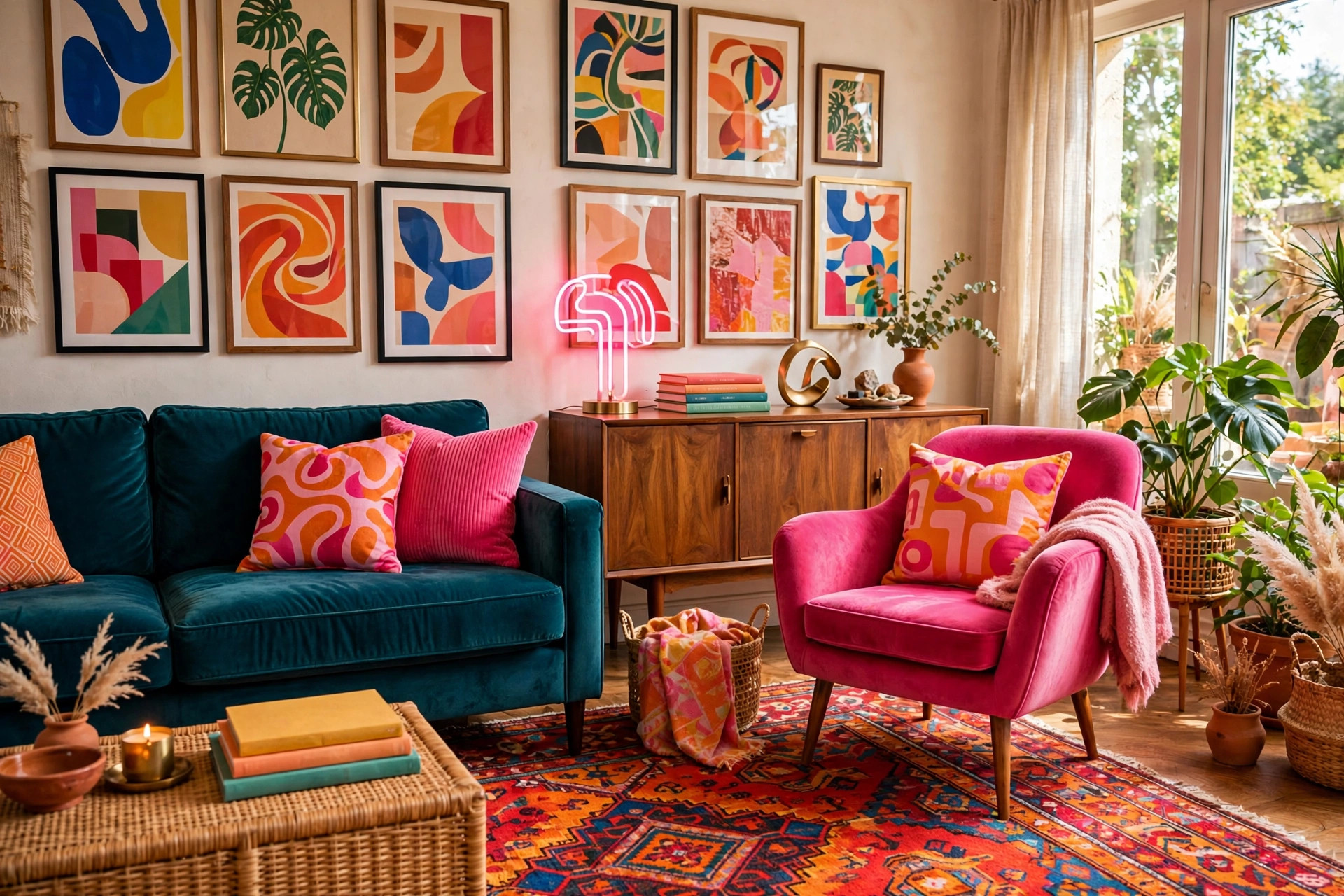
The Order to Do Them In
If fifteen ideas feel like a lot, do them in this sequence: 1. Rug size and lighting layers first — they fix the “something feels off” problem alone. 2. Then the big moves: floating furniture, curtains to the ceiling, the statement piece. 3. Then texture and color: mixed materials, the unexpected color, the second plant. 4. Last, the styling layer: the tray, the grouped art, the repeated material. Each layer builds on the one before, so nothing you do early gets undone later.
You don’t need all fifteen at once. Start with the rug size and lighting layers — those two changes alone fix the “something feels off” problem in most living rooms. From there, check out our interior color scheme guide if you’re ready to build out a full palette.
Mistakes That Undo Good Styling
Three common ones: buying the rug before the sofa (the rug should respond to the furniture, not the other way around), adding plants and art before fixing lighting (good light makes average decor look better; bad light makes good decor look flat), and styling every surface at once — a room with no empty surfaces feels like a shop, not a home. Leave some breathing room on purpose.
Frequently Asked Questions
What size rug is right for a living room?
As a general rule, aim for a rug large enough that at least the front legs of your sofa and chairs sit on it; for larger rooms, all four legs of each piece resting on the rug looks more grounded.
How many light sources should a living room have?
Most designers recommend at least three: one ambient source like an overhead fixture, one task source like a floor or table lamp, and one accent source like a sconce or picture light.
How do I make a living room feel less generic?
Add one unexpected color, mix at least two contrasting textures, and include one statement piece like art or a bold mirror rather than filling the room with uniformly “safe” choices.
Should furniture be pushed against the walls?
Not always. In larger rooms, floating furniture slightly off the walls to create a defined seating area usually looks more intentional than lining everything up around the perimeter.
What is the 2/3 rule for coffee tables?
Your coffee table should be about two-thirds the length of your sofa, with 14 to 18 inches of clearance around it for comfortable movement.
How high should living room curtains hang?
As close to the ceiling as practical — not just above the window frame. High-mounted curtains make walls look taller and windows look larger.