Renter-Friendly Closet Organization Without Drilling a Single Hole
Here’s the deal every renter learns the hard way: most closet organization advice assumes you own a drill and permission to use it. You’re working with one existing rod, one shelf, a deposit you want back, and a landlord who counts holes like they’re money. The good news? The no-drill approach isn’t a compromise — it’s a better design constraint. Everything you install has to earn its place without permanent mounting, which means it also comes apart fast when you move. And if your rental bedroom has no closet at all, start with these no-closet wardrobe ideas for renters.
First, know what you’re working with
Walk your closet with a tape measure before buying anything. Most rental closets are reach-ins: a single rod at roughly 66 inches, one fixed shelf above it, and floor space below. Note the width (usually 48 to 72 inches), the clearance from rod to shelf, and the floor depth. These three numbers decide everything — which tension rod lengths fit, whether a freestanding unit will slide in, and how tall your door organizer can be.
Also note what your lease actually restricts. Some landlords allow small nail holes with spackle on move-out; others prohibit everything. Know your rules now so you buy accordingly. “Easier to ask forgiveness” is a terrible strategy with deposits.
Tension rods: your new best friend
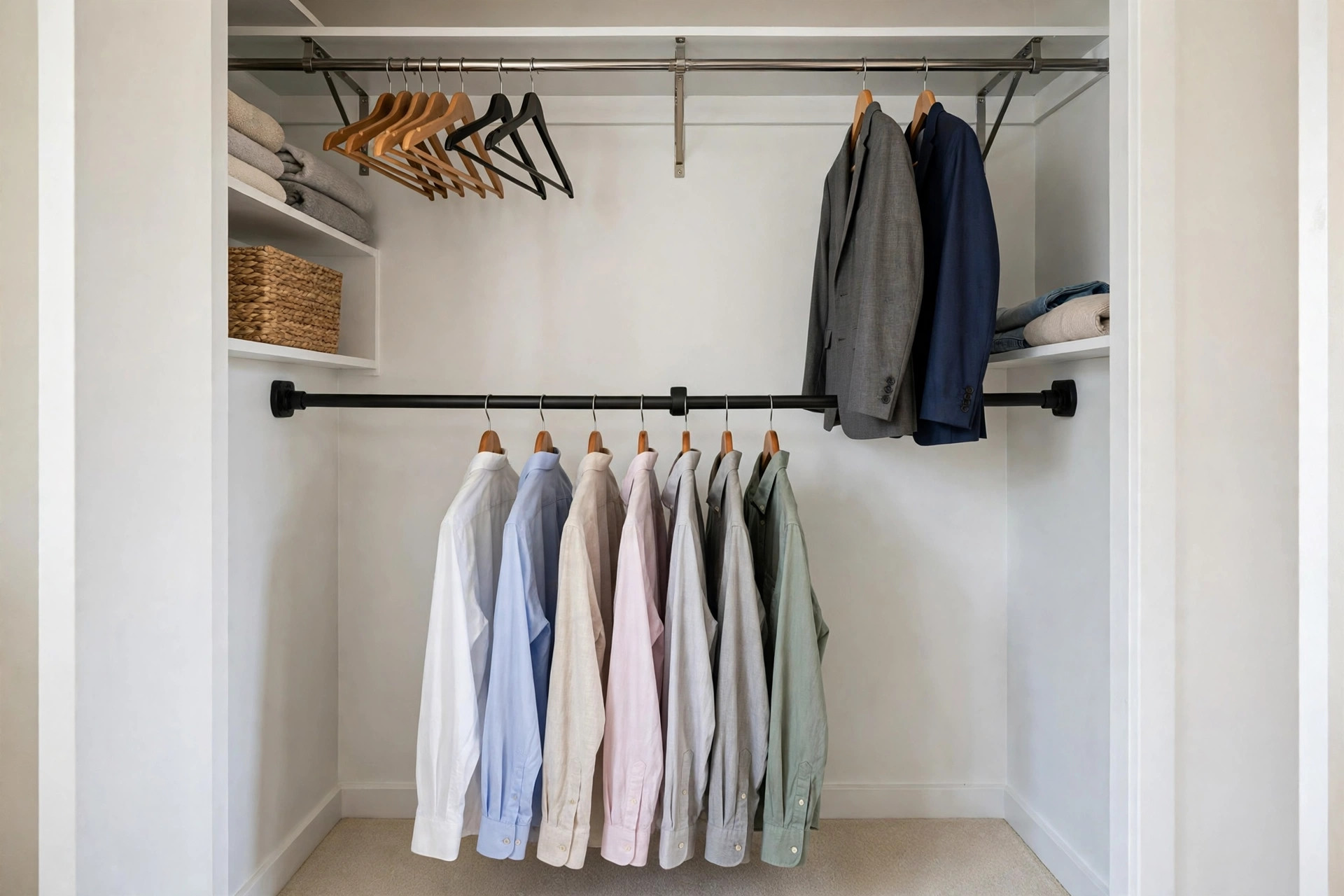
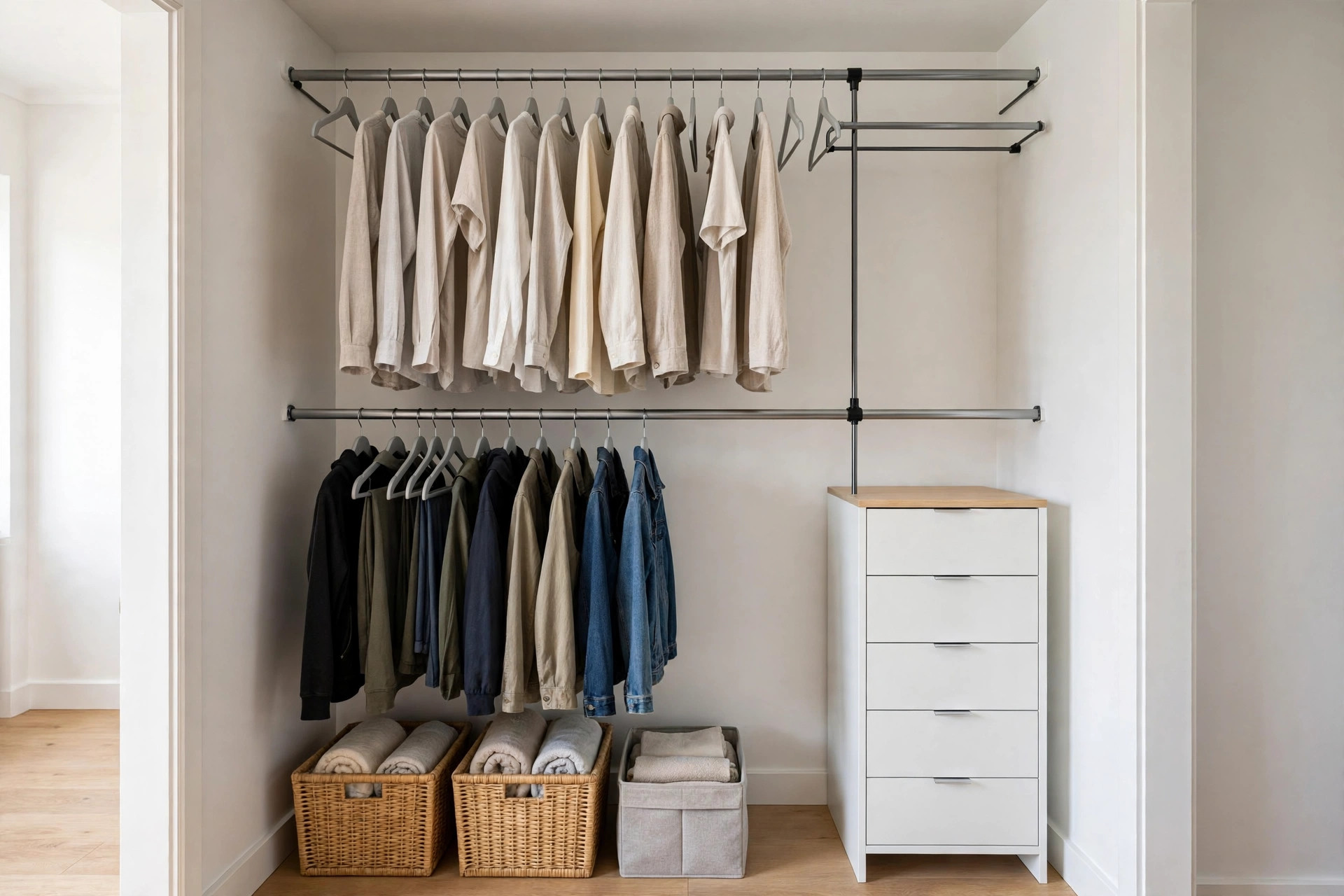
A quality tension rod — not the flimsy shower-curtain kind, the heavy-duty closet kind with rubber ends — creates a second hanging tier with zero holes. Set it 38 to 42 inches below the existing rod for shirts and pants, and tighten it until the rubber feet grip properly. The secret most people miss: tension rods fail when the wall surfaces are slick or the rod is overextended. Wipe the contact points clean first, and buy the size that fits your span without maxing out its extension range.
For heavier loads, double up: two parallel tension rods spaced 6 inches apart share the weight better than one maxed-out rod. It’s the same trick stagehands use for curtain tracks, and it works in closets too.
Freestanding units that slide right in
When the closet shell can’t be touched, bring your own structure. A narrow freestanding drawer unit — 18 inches wide, five or six drawers — slides under the existing rod and turns dead floor space into folded-clothes storage. Stackable cube shelves do the same job on the upper shelf or the floor. A slim rolling cart parks in the gap beside the rod for accessories and shoes.
The rule for freestanding pieces: they must fit through the closet doorway and leave the doors able to close. Measure the doorway too. A beautiful organizer that blocks the door swing is a very expensive mistake, and renters make it more than once.
The door back is free storage
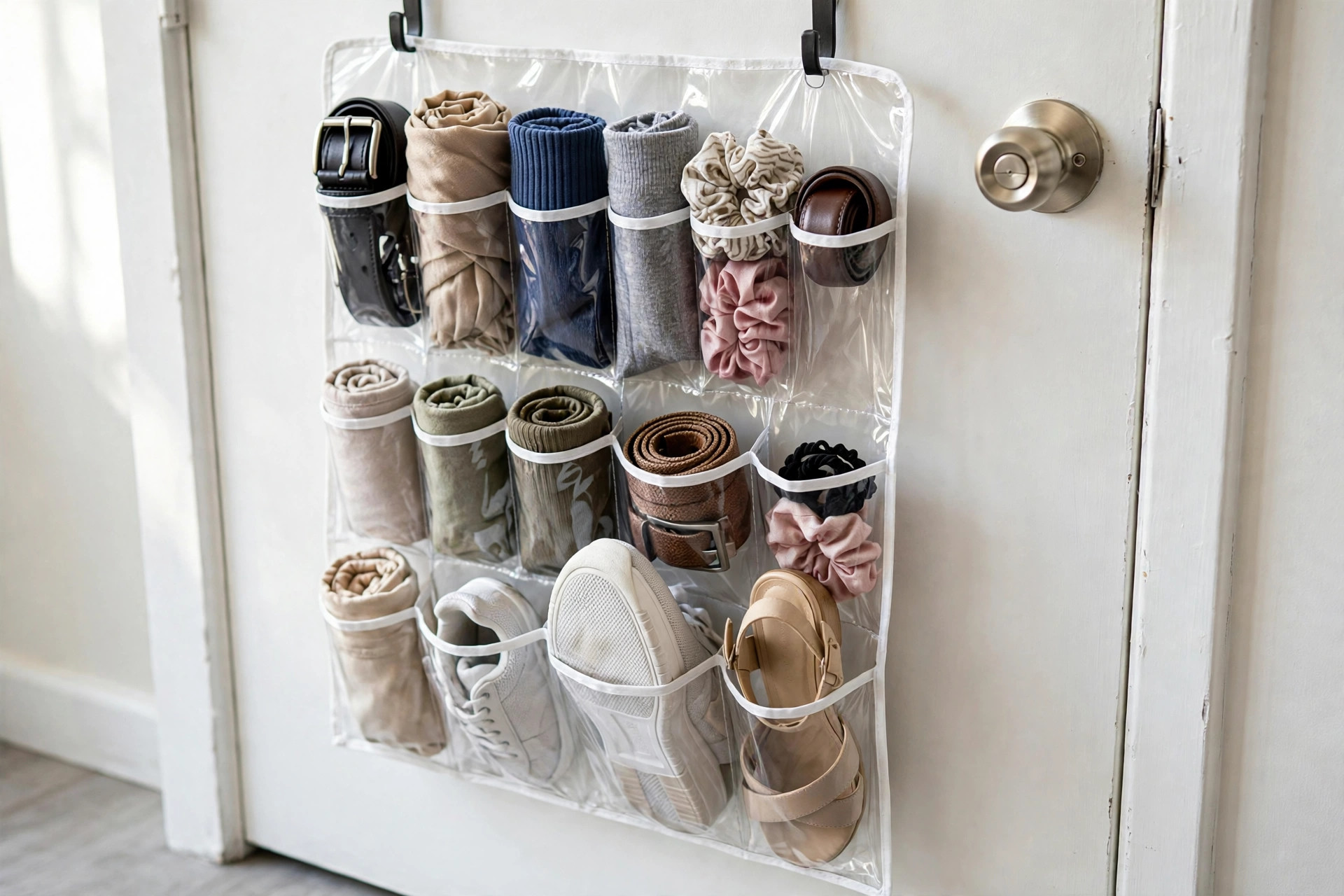
Over-the-door hooks and organizers are the highest-value no-drill upgrade in any rental closet. The padded-hook style hangs over the door without hardware and holds robes, tomorrow’s outfit, or bags. A clear-pocket organizer on the door interior takes shoes, scarves, belts, and every small item that normally buries shelves.
One check: close the door fully with the organizer loaded. If it rubs the frame or won’t latch, swap to a slimmer model. A door that doesn’t close defeats the purpose.
Hanging shelf organizers for the vertical gap
The space between the rod and the top shelf — usually 18 to 24 inches of nothing — is where hanging fabric shelves shine. They hook over the rod (no tools) and create five or six instant cubbies for sweaters, jeans, and folded tees. They’re also the cheapest organizer on this list, and they move with you for free.
Reinforce them if they’re flimsy: a piece of cardboard or a thin board in each shelf base stops the sagging that makes cheap hanging shelves look sad within a month.
Stick to the floor: bins, baskets, and trays
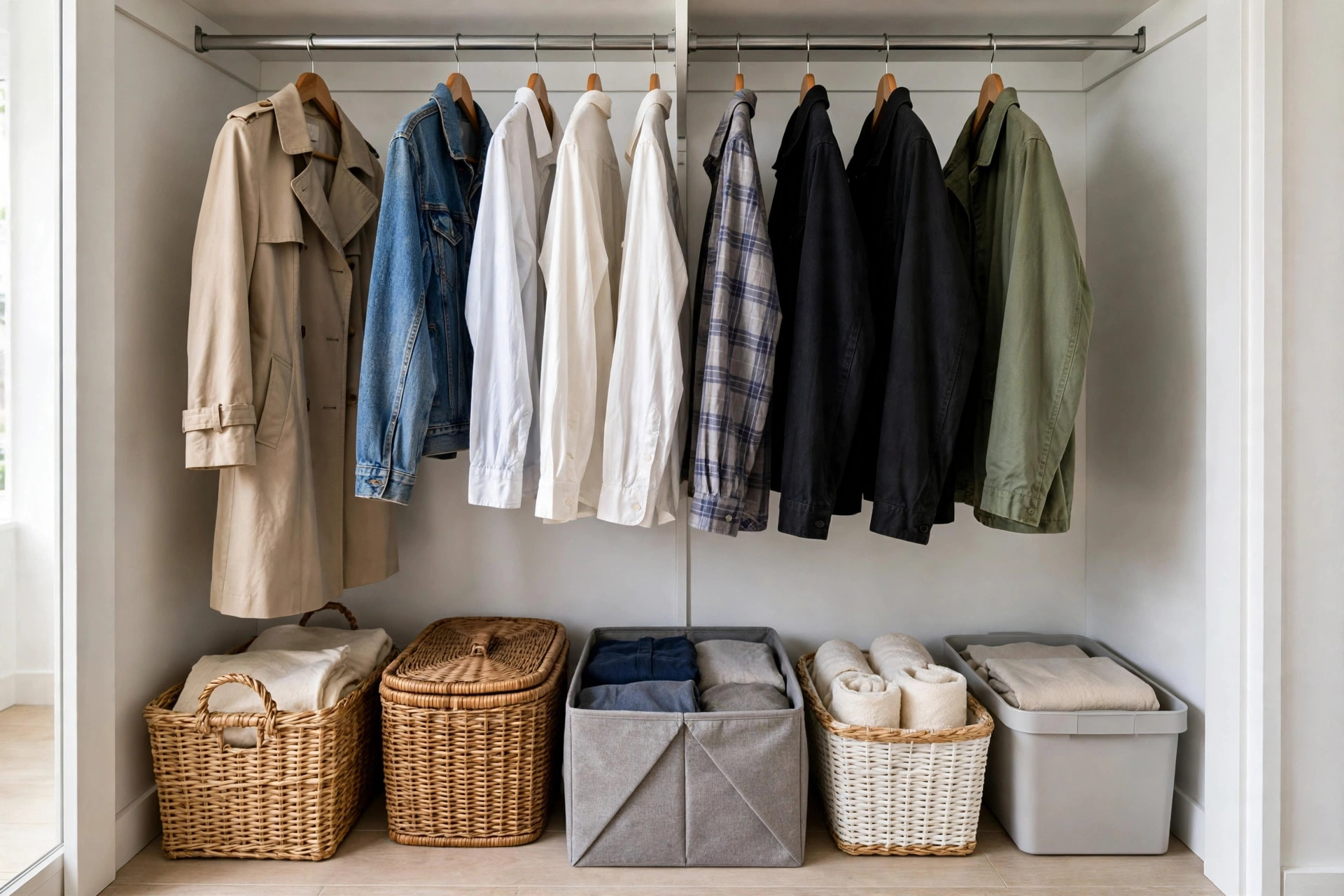
The closet floor is your friend when the walls are off-limits. Stackable bins for off-season, open baskets for daily items, a boot tray for wet shoes. Because nothing is mounted, you can rearrange the floor layout in minutes whenever the season changes — something drilled-in systems can’t do without a putty knife and a prayer.
Slim hangers multiply everything
Switching to slim velvet hangers is the single cheapest space multiplier in a rental closet. They’re roughly half the thickness of standard plastic hangers, so a full rod gains room for 8 to 12 more hangers without touching anything else. Clothes also stay put — no more shirts sliding off onto the floor, which matters when your closet is small enough that one fallen shirt blocks the door.
Protect the deposit: what actually causes damage
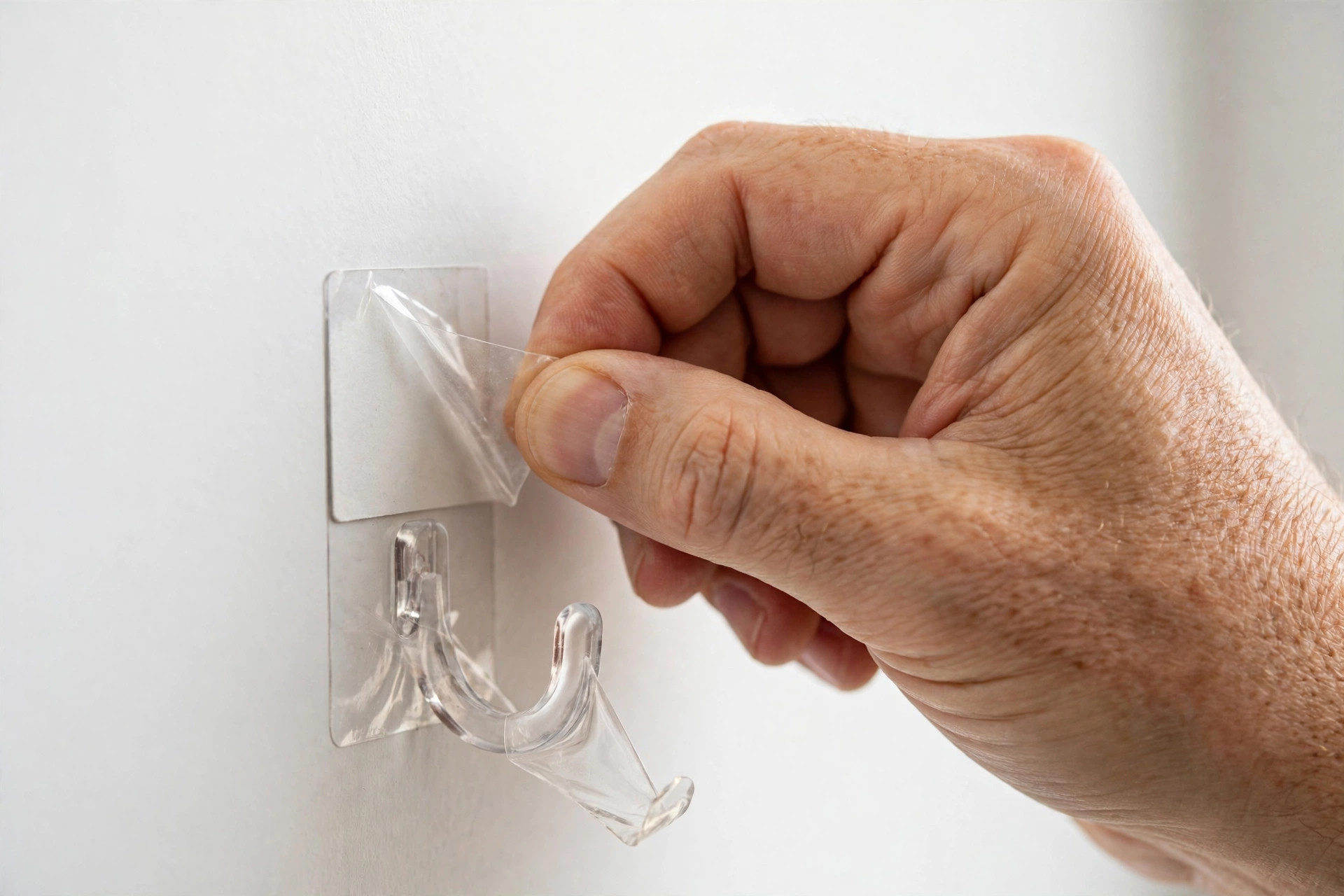
No-drill doesn’t automatically mean no-damage. Overloaded tension rods can dent paint if the rubber feet press too hard for too long — use felt pads behind the feet if you’re nervous. Over-door hooks with metal edges scratch door tops; choose padded or rubber-coated hooks. Adhesive hooks are great until they’re not: on flat latex paint they usually remove cleanly, on textured or older paint they can pull the finish. Test one in an inconspicuous spot first.
Move-out day is part of the design. Every piece here disassembles in minutes and leaves nothing behind — which is exactly the point.
The trade-off nobody mentions
Here’s the honest version: no-drill systems top out. A tension rod holds a full load of shirts but not a collection of heavy winter coats, and freestanding units can’t match a properly anchored wall system for sheer capacity. If you’re the person with forty coats, a rental closet will always feel like a compromise, drilled or not.
But for most renters — a normal wardrobe, one closet, a deposit to protect — the no-drill kit (second rod, freestanding drawers, door organizer, slim hangers, floor bins) performs as well as any mounted system. And it all goes with you to the next apartment, which mounted systems never do.
If you ever do want something permanent — a wall-mounted closet system, shelving anchored into studs — that’s the line to call a licensed professional. Mounted closet systems carry real weight, and a bad anchor job in rental drywall is a repair bill you don’t want. Until then, the tension-and-freestanding approach is genuinely enough.
Your no-drill shopping shortlist
Start with these five, in this order: slim velvet hangers, one heavy-duty tension rod, a hanging fabric shelf, an over-door organizer, and two stackable floor bins. That kit costs well under what most people spend on their first closet-organizer impulse buy, and it covers hanging, folding, accessories, and floor storage in one pass. Add the freestanding drawer unit only if you still have folded clothes homeless after the first pass — buy for the inventory you counted, not the inventory you imagine.
Your lease didn’t take away your right to an organized closet. It just took away the drill. And honestly? You never needed it.
Use heavy-duty tension rods for a second hanging tier, freestanding drawer units and cube shelves that slide in, over-door organizers for accessories, and hanging fabric shelves that hook over the rod. Everything installs and removes with zero wall damage.
Yes for shirts, pants, and normal loads — choose heavy-duty closet tension rods (not shower rods), clean the contact points, and don’t max out the extension range. For heavy winter coats, distribute the load across two parallel rods or keep coats on the main rod.
The five-piece kit: slim velvet hangers, a tension rod, hanging fabric shelves, an over-door organizer, and stackable floor bins. Add a freestanding drawer unit only if folded clothes are still homeless after that.
Choose padded or rubber-coated hooks and they shouldn’t. Metal-edged hooks can scratch the door top, so check the contact points. The bigger risk is overloading — doors aren’t built to carry a full wardrobe.
Avoid adhesives on textured or old paint (test first), use felt pads behind tension-rod feet, and choose freestanding over wall-mounted wherever possible. Every organizer on this list disassembles in minutes with nothing left behind.