

10 Butternut Squash Soup Recipes That Actually Taste Like Fall
10 Butternut Squash Soup Recipes That Actually Taste Like Fall
Butternut squash might be the most forgiving vegetable in the fall kitchen. It is sweet without being cloying, dense enough to blend into silk, and it takes to spice the way a blank wall takes to paint. Nearly every version of this soup follows the same skeleton — cook the squash until soft, add aromatics and broth, blend until smooth — so the difference between a forgettable bowl and a great one comes down to a handful of decisions: whether you roast first, which fat you cook in, and what acid goes in at the end.
That last one matters more than most recipes admit. Squash is naturally sweet, and without something bright to cut through it — a splash of vinegar, a squeeze of citrus, a tart apple — the soup tastes flat no matter how much salt you add.
The ten recipes below start from that same skeleton but head in different directions: classic and creamy, warmed with curry, sharpened with miso and ginger, smoked with chipotle. Each covers what makes it distinct, the ingredients that matter most, and the method notes that change the outcome.
1. Classic Roasted Butternut Squash Soup
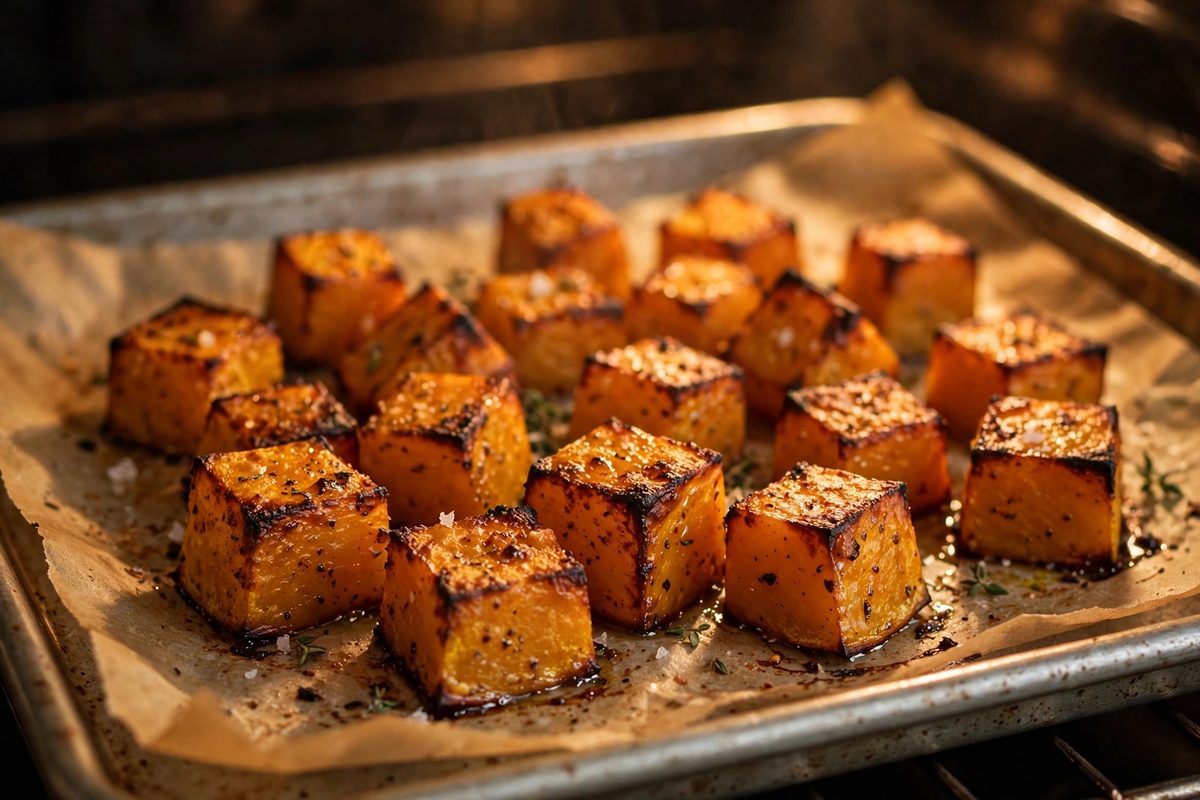
This is the baseline everything else gets measured against. Halving the squash and roasting it cut-side down does two things: the flesh steams in its own moisture until spoon-tender, and the cut surface caramelizes against the hot pan, deepening the sweetness in a way boiling never will.
The ingredient list is short on purpose: one medium butternut squash (2½ to 3 pounds), a yellow onion, three or four garlic cloves, olive oil or butter, four cups of vegetable or chicken broth, and a splash of heavy cream. A small pinch of nutmeg — grated fresh if you have a whole one — is the traditional finishing spice.
Roast at 400°F (200°C) for 40 to 50 minutes, until a knife slides through the thickest part of the neck with no resistance. Soften the onion in butter until translucent with golden edges, add the garlic for the final minute, then scoop in the roasted flesh and the broth. Simmer 10 to 15 minutes, blend until completely smooth, and stir the cream in off the heat. Taste before salting — broth brands vary wildly in sodium.
2. Apple and Sage Butternut Squash Soup
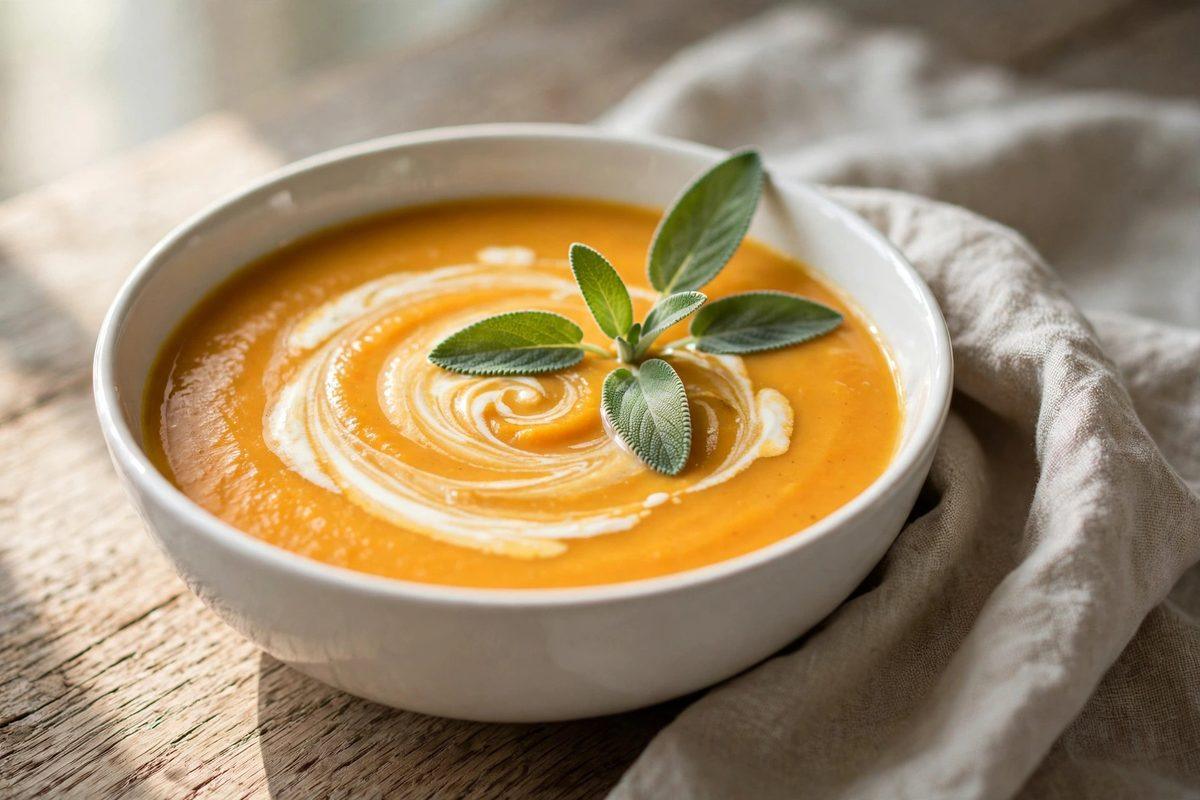
If the classic version ever tastes one-note, this is the fix. A tart apple — Granny Smith is the reliable choice — adds a second kind of sweetness plus the acidity the soup needs, and fresh sage brings a resinous, almost peppery note that keeps the bowl from drifting into dessert territory.
Beyond the standard base: one large tart apple, peeled and diced; a tablespoon of finely chopped fresh sage; and a teaspoon or two of apple cider vinegar stirred in at the very end. Dried rubbed sage works in a pinch, but use about a third as much — its flavor is concentrated and turns harsh fast.
Cook the sage with the onion and apple for only a minute before adding the broth; fried too long, sage goes bitter. Roast the squash as in the classic recipe, simmer everything 15 minutes, then blend. The vinegar goes in last, off the heat — added early, acid dulls during simmering.
3. Curried Coconut Butternut Squash Soup
Swap the dairy for coconut milk and the nutmeg for curry powder and the soup changes passports entirely. The coconut’s richness stands in for cream well, and curry powder gives the squash a savory frame that sweet spices can’t.
Use full-fat canned coconut milk — the light kind thins out and the soup loses its body. One to two teaspoons of curry powder, bloomed in the hot fat before any liquid goes in; dry spices taste raw and dusty unless they hit oil first. A squeeze of lime juice at the end does the same job the vinegar did in the apple version.
Sauté the onion in coconut oil, stir in the curry powder until fragrant (about 30 seconds), then add cubed raw squash — the coconut milk and spices carry the flavor here, so simmer directly in broth for 20 to 25 minutes until tender, then blend with the coconut milk. Cilantro and toasted coconut flakes on top add needed texture.
4. Roasted Garlic and Thyme Butternut Squash Soup
An entire head of garlic, roasted until it squeezes out like paste, is the whole personality of this soup. Raw garlic would bully the squash; roasted garlic melts into it, adding a mellow, almost sweet depth that reads as richness without extra cream.
Cut the top quarter off a whole head of garlic, drizzle with olive oil, wrap in foil, and roast it on the same pan as the squash — 40 minutes at 400°F suits both. Strip the leaves from four or five sprigs of fresh thyme; woody stems have no place in a blended soup.
Squeeze the soft cloves into the pot with the sautéed onion and thyme, add the roasted squash and broth, simmer briefly, and blend. This version needs less salt than you’d expect — taste first. A drizzle of good olive oil over each bowl, rather than cream, keeps the garlic front and center.
5. Miso and Ginger Butternut Squash Soup
White miso and fresh ginger pull the soup in a distinctly savory direction — less autumn-candle, more weeknight dinner. The miso adds salt and a fermented depth that makes the squash taste more complex than it is, while ginger keeps it lively.
Use white (shiro) miso, not red — red miso’s stronger flavor overpowers the squash. Two to three tablespoons is the usual range for a pot this size. A two-inch piece of fresh ginger, peeled and grated, cooked with the aromatics; powder is a poor substitute when you want that fresh heat.
Never boil miso. Whisk it with a ladleful of hot broth in a separate bowl until smooth, then stir it into the soup after blending, off the heat — boiling kills its delicate flavor and can turn it grainy. Finish with a splash of soy sauce and sliced scallions, and skip the cream entirely. This one is better lean.
6. Smoky Chipotle Butternut Squash Soup
Chipotle peppers in adobo bring smoke and a slow-building heat that plays well against the squash’s sweetness. This is the soup for people who find the classic version too gentle — it has an edge, but the squash still leads.
Start with one or two minced chipotles plus a teaspoon of adobo sauce; heat varies by can, and you can always add more. Half a teaspoon of smoked paprika reinforces the smoke without extra spice. A lime crema — sour cream thinned with lime juice — cools each spoonful and looks striking against the orange soup.
Add the minced chipotle and smoked paprika with the garlic so the spices bloom in the fat. Roast the squash as usual, simmer, blend, then adjust: more adobo for heat, a pinch of brown sugar if the smoke tastes harsh, lime juice to brighten. This soup improves after a night in the fridge — the smoke settles in and stops shouting.

7. Thai Red Curry Butternut Squash Soup
Different from the curried coconut version above — this one leans on red curry paste, lemongrass, and Thai basil for a brighter, more aromatic bowl. Where curry powder is earthy, red curry paste is fragrant and sharp.
Fry two tablespoons of red curry paste in a spoonful of the thick cream from the top of the coconut milk can until it darkens and smells intensely fragrant, about two minutes. Bruise one lemongrass stalk with the back of a knife and fish it out before blending. A teaspoon or two of fish sauce instead of some of the salt adds a savoriness salt alone can’t.
Simmer cubed squash directly in the broth with the lemongrass for 20 to 25 minutes — no need to roast when the aromatics are this assertive. Remove the lemongrass, blend with the coconut milk, and finish with lime juice and torn Thai basil. Italian basil works too; add it at the very end so it stays green.
8. Brown Butter and Crispy Sage Butternut Squash Soup
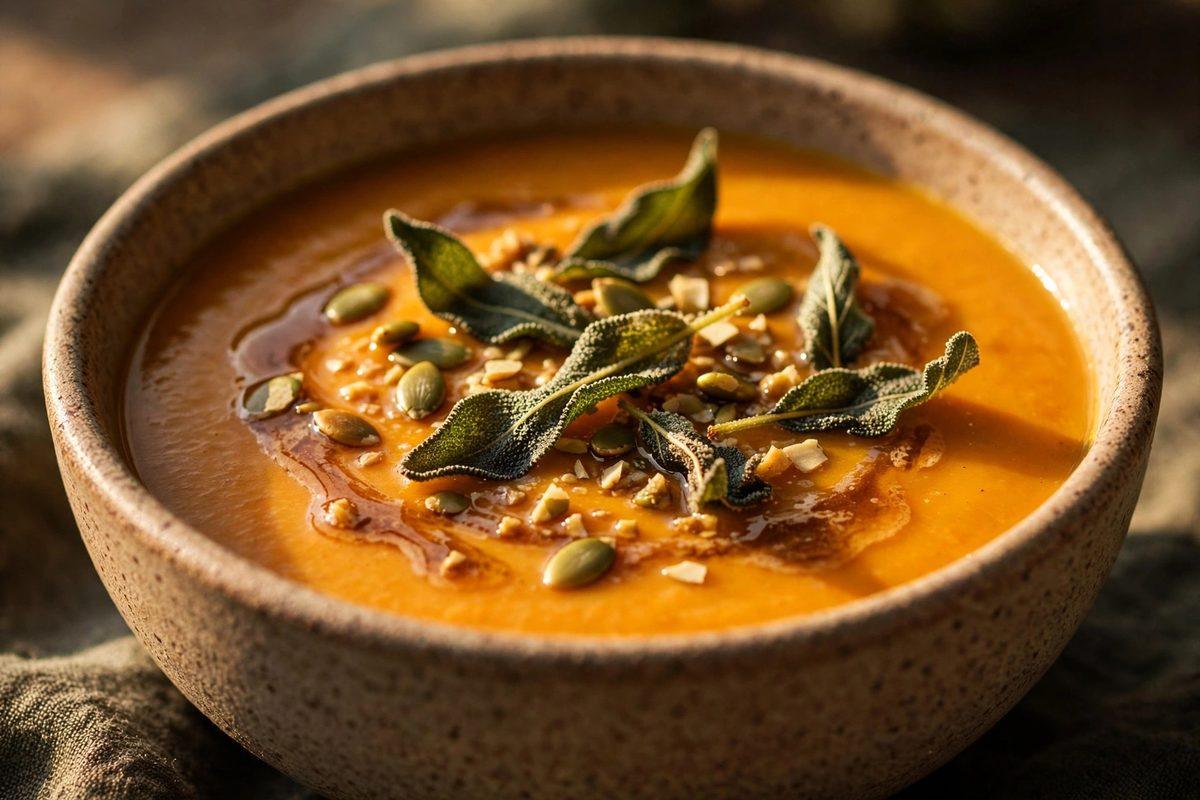
Brown butter is the upgrade that costs nothing but attention. Cooking butter until the milk solids toast to a nutty amber gives the soup a toffee-like depth, and sage leaves fried crisp in that same butter become a garnish that crackles against the silk of the blended soup.
The base stays deliberately plain — roasted squash, onion, broth, salt — because the brown butter is the flavoring. Use unsalted butter, about four tablespoons for a full pot. For the sage, pick the largest unblemished leaves; twelve to sixteen is plenty.
Melt the butter over medium heat and watch it: it foams, the foam subsides, and the solids turn golden brown and smell like hazelnuts. Three to five minutes, and it goes from perfect to burnt in seconds — don’t walk away. Crisp the sage leaves for 30 seconds, lift out with a slotted spoon, and drain. Stir half the brown butter into the soup, drizzle the rest over each bowl, and top with sage and toasted pepitas.
9. Pear and Butternut Squash Soup
Pears do something apples don’t: they dissolve almost completely, adding body along with gentle sweetness. A ripe Bartlett or Anjou, simmered with the squash, thickens the blend slightly and gives it a rounder, softer flavor than the apple version.
Use pears that yield slightly to pressure — underripe ones stay firm and add little. Two medium pears, peeled and chopped, is right for one squash; more than that and the soup starts tasting like pear with squash in it. A pinch of nutmeg and a bay leaf in the broth round things out.
Add the pears with the broth after the onions are done — they need only 15 to 20 minutes alongside the squash. Remove the bay leaf before blending. This version takes beautifully to a swirl of crème fraîche, whose tang contrasts the pear’s mellow sweetness.
10. Maple and Bacon Butternut Squash Soup
The most indulgent soup on this list, and unapologetic about it. Real maple syrup amplifies the squash’s own caramel notes from roasting, and crisp bacon crumbled over the top adds the salt and crunch the sweet base needs.
Use pure maple syrup, not pancake syrup — two tablespoons stirred in at the end is enough. Four slices of bacon, cooked crisp and crumbled; turkey bacon won’t crisp the same way. An eighth of a teaspoon of cayenne keeps the sweetness from going flat.
Roast the squash, build the soup on sautéed onion and garlic, simmer and blend, then stir in the maple and cayenne off the heat. Taste before salting — the bacon brings plenty. Crumble the bacon over each bowl, with a few drops of rendered bacon fat drizzled on top if you’re feeling thorough.

Ten soups, one vegetable, and no two taste alike. The through-line is technique: roast when you want depth, bloom spices in fat, blend until truly smooth, finish with acid. Get those four habits right and the rest is improvisation — swap apple for pear, curry powder for harissa, cream for coconut milk. That is the real value of a list like this: ten proofs that one good method stretches further than it looks.
Frequently Asked Questions
Do you have to peel butternut squash for soup?
For a blended soup, yes — the skin never fully breaks down, and it leaves the texture gritty no matter how powerful the blender. Peeling a raw butternut is the annoying part: slice off both ends so it stands flat, separate the neck from the bulb, then run a sharp vegetable peeler down the sides. If the skin fights you, microwave the whole squash for two to three minutes first; the heat loosens the skin without cooking the flesh. Or roast it halved and unpeeled, then scoop the flesh out — the skin stays behind in the oven.
How do you thicken butternut squash soup?
Simmer uncovered for 10 to 15 minutes and let water evaporate — simplest fix first. If it’s still thin, the culprit is usually too much broth, so ladle some out before blending rather than after. A peeled, diced potato simmered with the squash adds body without changing the flavor and blends completely smooth. Skip flour or cornstarch; they mute the squash flavor and turn the texture gluey.
Can you freeze butternut squash soup?
Yes, and it freezes better than most soups — with one rule. Freeze it before adding any dairy. Cream and crème fraîche can separate and turn grainy when frozen and reheated. Blend the soup, cool it, freeze in portions for up to three months, and stir the cream in when reheating. Leave an inch of headspace for expansion, thaw overnight in the fridge, and reheat gently over medium-low heat; a hard boil after thawing is what breaks the texture.
What goes well with butternut squash soup?
Something with crunch and something with salt — the soup is soft and sweet, so contrast is the whole game. A grilled cheese is the classic pairing for a reason: crisped bread and melted cheese hit both notes at once. For a lighter side, a bitter greens salad with sharp vinaigrette cuts the richness. As a starter, the soup sits naturally next to roasted chicken or pork, where its sweetness plays the role applesauce usually would.
How long does butternut squash soup last in the fridge?
Three to four days sealed, and the flavor often improves by day two as the seasonings settle. Cool it within two hours — divide deep pots into shallow containers so the center doesn’t stay warm too long. It will thicken as it sits (starches keep absorbing liquid), so thin with a splash of broth when reheating. When in doubt, trust your nose: sour or off smells mean it’s done, regardless of the calendar.
For a blended soup, yes — the skin never fully breaks down, and it leaves the texture gritty no matter how powerful the blender. Peeling a raw butternut is the annoying part: slice off both ends so it stands flat, separate the neck from the bulb, then run a sharp vegetable peeler down the sides. If the skin fights you, microwave the whole squash for two to three minutes first; the heat loosens the skin without cooking the flesh. Or roast it halved and unpeeled, then scoop the flesh out — the skin stays behind in the oven.
Simmer uncovered for 10 to 15 minutes and let water evaporate — simplest fix first. If it’s still thin, the culprit is usually too much broth, so ladle some out before blending rather than after. A peeled, diced potato simmered with the squash adds body without changing the flavor and blends completely smooth. Skip flour or cornstarch; they mute the squash flavor and turn the texture gluey.
Yes, and it freezes better than most soups — with one rule. Freeze it before adding any dairy. Cream and crème fraîche can separate and turn grainy when frozen and reheated. Blend the soup, cool it, freeze in portions for up to three months, and stir the cream in when reheating. Leave an inch of headspace for expansion, thaw overnight in the fridge, and reheat gently over medium-low heat; a hard boil after thawing is what breaks the texture.
Something with crunch and something with salt — the soup is soft and sweet, so contrast is the whole game. A grilled cheese is the classic pairing for a reason: crisped bread and melted cheese hit both notes at once. For a lighter side, a bitter greens salad with sharp vinaigrette cuts the richness. As a starter, the soup sits naturally next to roasted chicken or pork, where its sweetness plays the role applesauce usually would.
Three to four days sealed, and the flavor often improves by day two as the seasonings settle. Cool it within two hours — divide deep pots into shallow containers so the center doesn’t stay warm too long. It will thicken as it sits (starches keep absorbing liquid), so thin with a splash of broth when reheating. When in doubt, trust your nose: sour or off smells mean it’s done, regardless of the calendar.