
Closet Inspo Ideas: 12 Beautiful Wardrobe Tips
A beautiful closet doesn’t need to be large, expensive, or filled with designer accessories. With the right layout, smart storage, and a few thoughtful details, even a narrow wardrobe can feel calmer, more stylish, and easier to use every day.
The secret is to make your closet work for your real routine. Keep the clothes you wear most within reach, give smaller items a proper home, and use lighting and color to make the space feel inviting.
Closet inspo ideas are practical and decorative ways to arrange clothing, shoes, accessories, and storage so a wardrobe looks attractive while remaining easy to use. They can work in a tiny rental closet, a freestanding wardrobe, or a spacious walk-in.
Why Do Some Closets Look Better Than Others?
An organized closet isn’t simply a collection of matching hangers. Its layout determines how easily you can see your clothes, reach everyday essentials, and return items to their proper places.
According to the U.S. Environmental Protection Agency’s data on textiles in municipal solid waste, discarded clothing makes up a meaningful share of the waste stream. The data highlights the importance of managing discarded materials, although it does not establish a specific benefit from any one closet organization method. Keeping clothing usable and accessible can support more thoughtful decisions about what to retain and wear.
The best starting point is to assess what you own before purchasing storage products. A small wardrobe with a clear hanging zone and a few useful drawers can outperform a larger closet where everything is hidden.
What makes a closet look organized?
A closet looks organized when similar items have designated places, hanging clothes have enough room to move, and frequently used belongings remain visible. A consistent hanger style and coordinated storage containers create visual order, while clear zones prevent everyday clutter from returning.
How can you make a small closet look expensive?
Small closets often look more polished when they use consistent hangers, warm lighting, a limited color palette, and storage that fits the available dimensions. You don’t need custom cabinetry. A tidy shelf, a compact drawer unit, and a well-placed mirror can create a refined appearance without a full renovation.
Here’s the thing: buying organizers before measuring the closet can waste both money and valuable space. Measure the depth, shelf height, hanging width, and door clearance first.
12 Closet Inspo Ideas That Work in Real Homes
1. Create a Boutique-Style Closet With Matching Hangers
Matching hangers are a simple visual upgrade. Slim velvet, wooden, or uniform plastic hangers make a mixed collection of clothes look more cohesive and help reduce the visual clutter created by mismatched shapes.
Choose one hanger style for most garments. Use sturdy hangers for coats and structured jackets, and reserve specialty hangers for trousers, skirts, or delicate pieces that need them.
Styling tip: Arrange clothing by category, then by color if that makes your wardrobe easier to navigate.
2. Use Stackable Bins to Turn Shelves Into Storage Zones
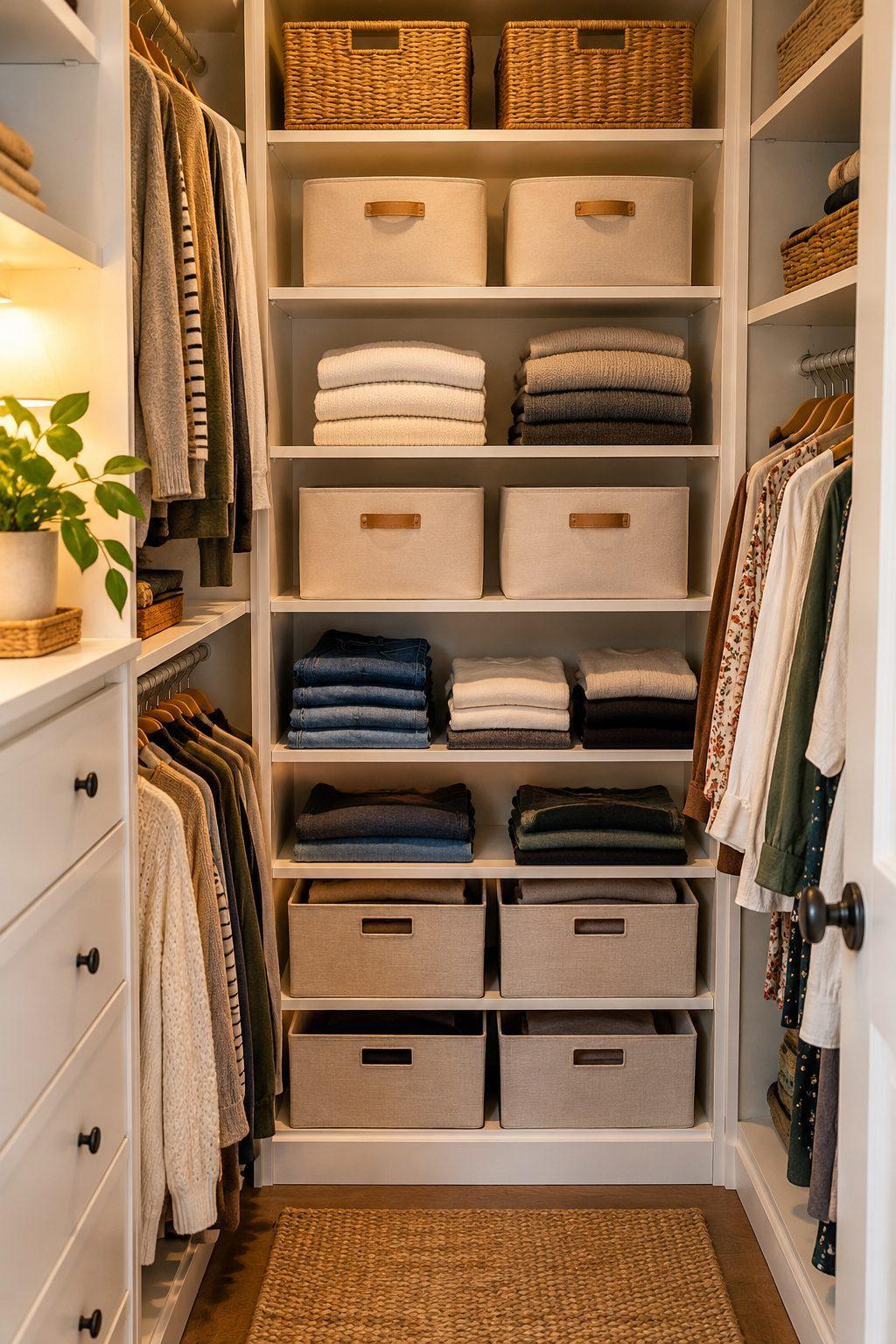
Deep shelves can become messy when small items disappear behind larger piles. Stackable storage bins create separate homes for scarves, seasonal accessories, workout clothes, and other items that don’t need to hang.
Choose containers that fit the shelf depth. Clear bins make contents easy to identify, while fabric or woven bins provide a softer, more decorative look.
Avoid stacking so high that accessing the bottom container becomes a daily chore. A storage system should reduce effort, not add another step.
3. Install Warm LED Closet Lighting
Poor lighting can make even a tidy wardrobe feel cramped. Warm or neutral-white LED lighting improves visibility and helps you distinguish clothing colors without requiring a major electrical project.
Consider battery-powered motion-sensor lights for rental properties, or use suitable plug-in fixtures where outlets are available. Follow the manufacturer’s mounting and safety instructions, particularly around fabric and enclosed spaces.
Small change, big difference.
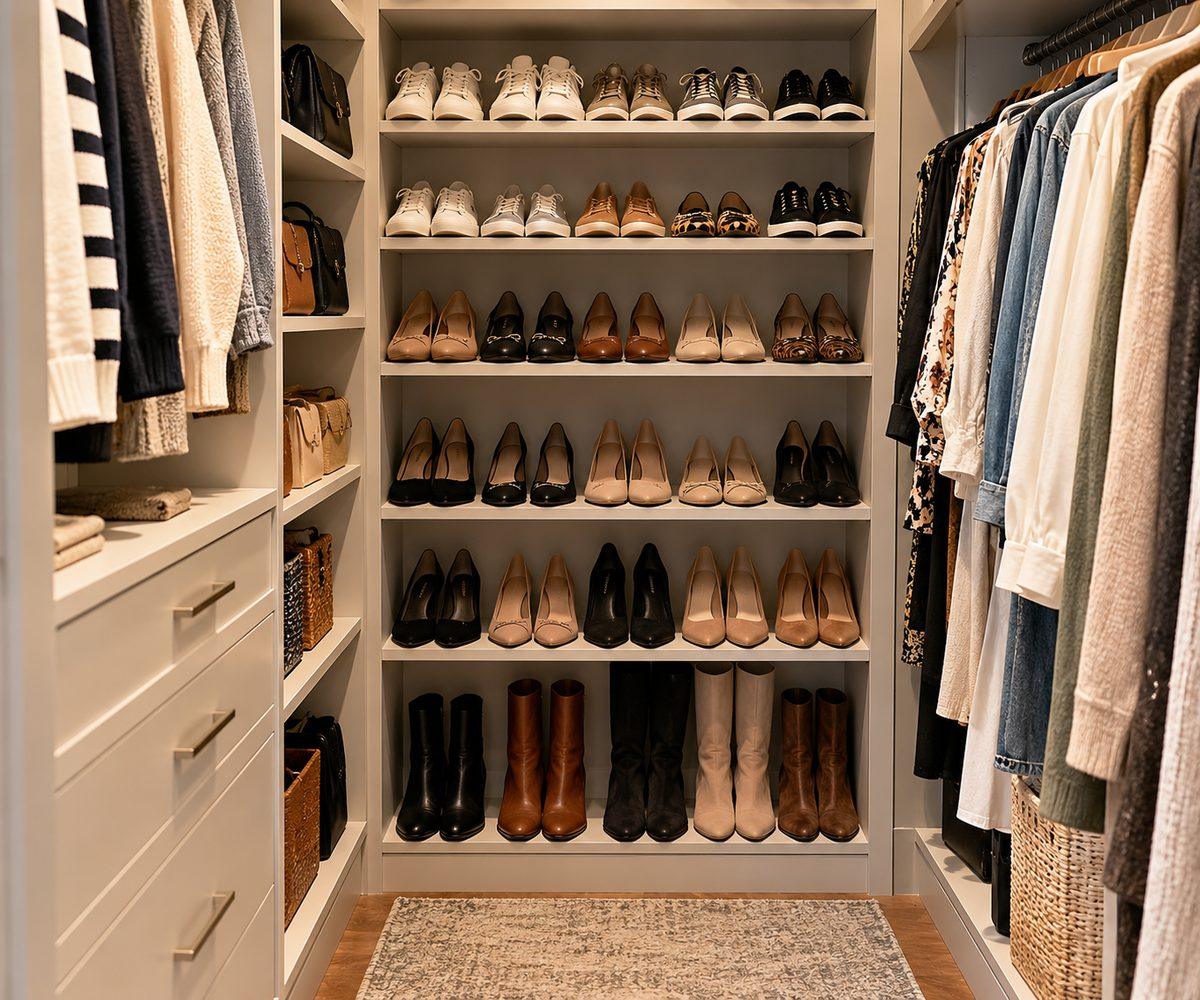
4. Give Shoes Their Own Display Area
Shoes scattered across the closet floor can make the entire wardrobe feel chaotic. A dedicated shoe rack or a few adjustable shelves keep pairs together and leave more room for clothing.
Arrange everyday shoes at eye level or near the entrance to the closet. Store occasional and seasonal footwear higher up, and use suitable boxes for pairs that need extra protection.
For narrow closets, a vertical shoe organizer may work better than a wide rack. Check the door clearance before choosing an over-door model.
5. Add a Small Drawer Unit for Everyday Essentials
Not every closet has built-in drawers. A slim dresser or small drawer unit can hold socks, underwear, belts, sleepwear, and other small pieces that are difficult to organize on shelves.
Measure the space beneath your hanging clothes before buying one. The unit should leave enough room for garments to hang naturally and for drawers to open fully.
Use simple dividers inside the drawers to separate categories. This keeps small items from becoming one large, frustrating pile.
6. Make the Most of the Closet Door
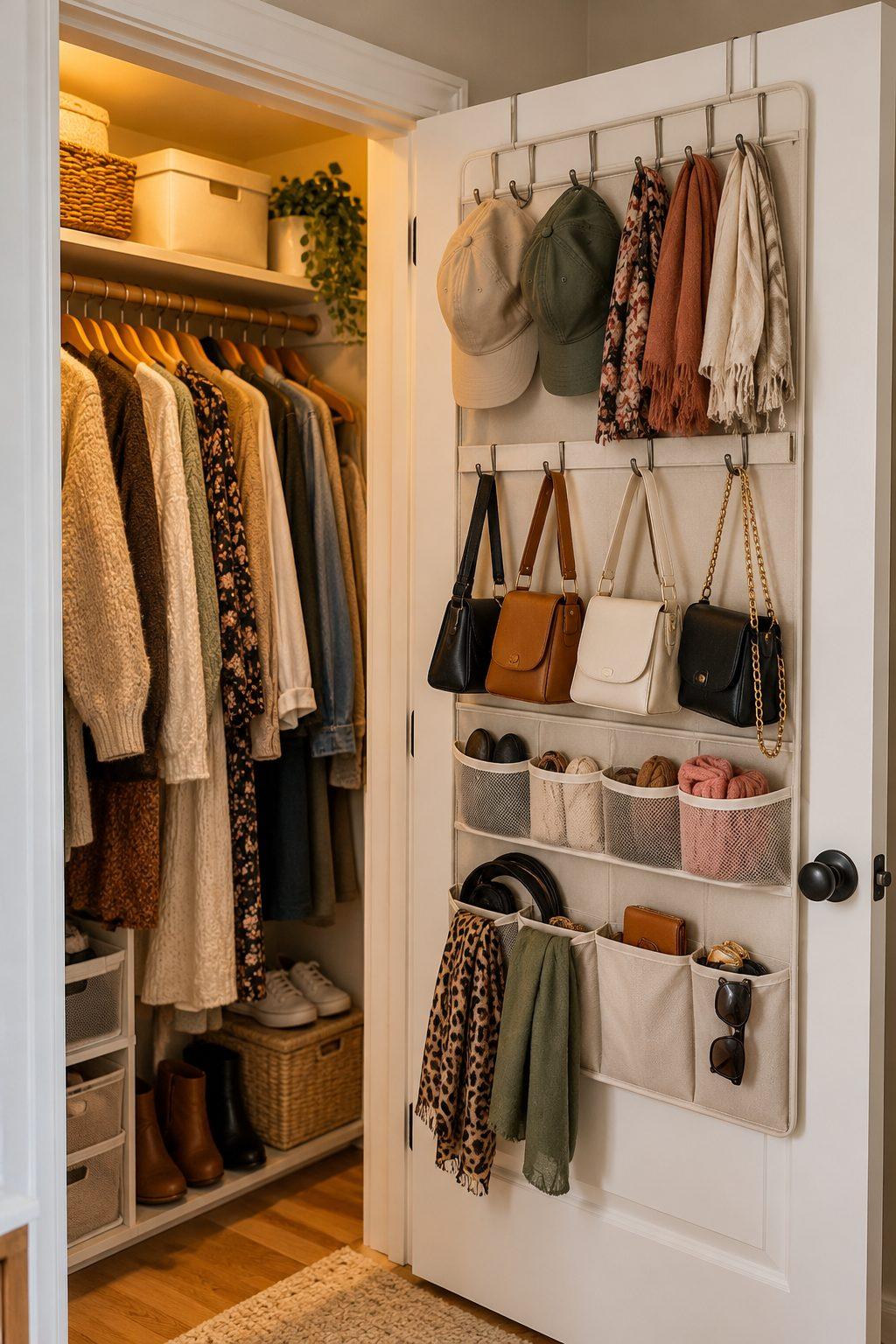
The back of a closet door is useful storage space that often goes unnoticed. An over-door organizer can hold accessories, lightweight bags, scarves, belts, or other small items that otherwise occupy shelves.
Choose pockets or hooks that suit the items you actually use. Check the door’s thickness, hinge clearance, and weight limits before installation.
This idea is especially useful for renters who cannot add permanent shelving. Keep bulky objects elsewhere so the door closes smoothly.
7. Style Your Shelves With Folded Clothing
Open shelves can look attractive without turning every garment into a display piece. Fold sweaters, jeans, and casual tops into manageable stacks, grouping similar items together.
Keep stacks low enough that you can remove a piece without pulling apart everything underneath. For narrow shelves, small vertical file-folding arrangements may make individual items easier to see.
The goal isn’t perfect symmetry. It’s easy access and less daily rearranging.
8. Build a Capsule Wardrobe Zone
A capsule-style section brings together the clothes that work hardest for your routine. Think versatile trousers, favorite shirts, layering pieces, and reliable outfits that suit your daily activities.
You don’t need to reduce your entire wardrobe to a fixed number of garments. Instead, separate frequently worn pieces from occasional clothing so the most useful items remain visible.
This approach can be especially helpful for people who own plenty of clothes but still struggle to choose an outfit each morning.
9. Create a Dedicated Accessory Station
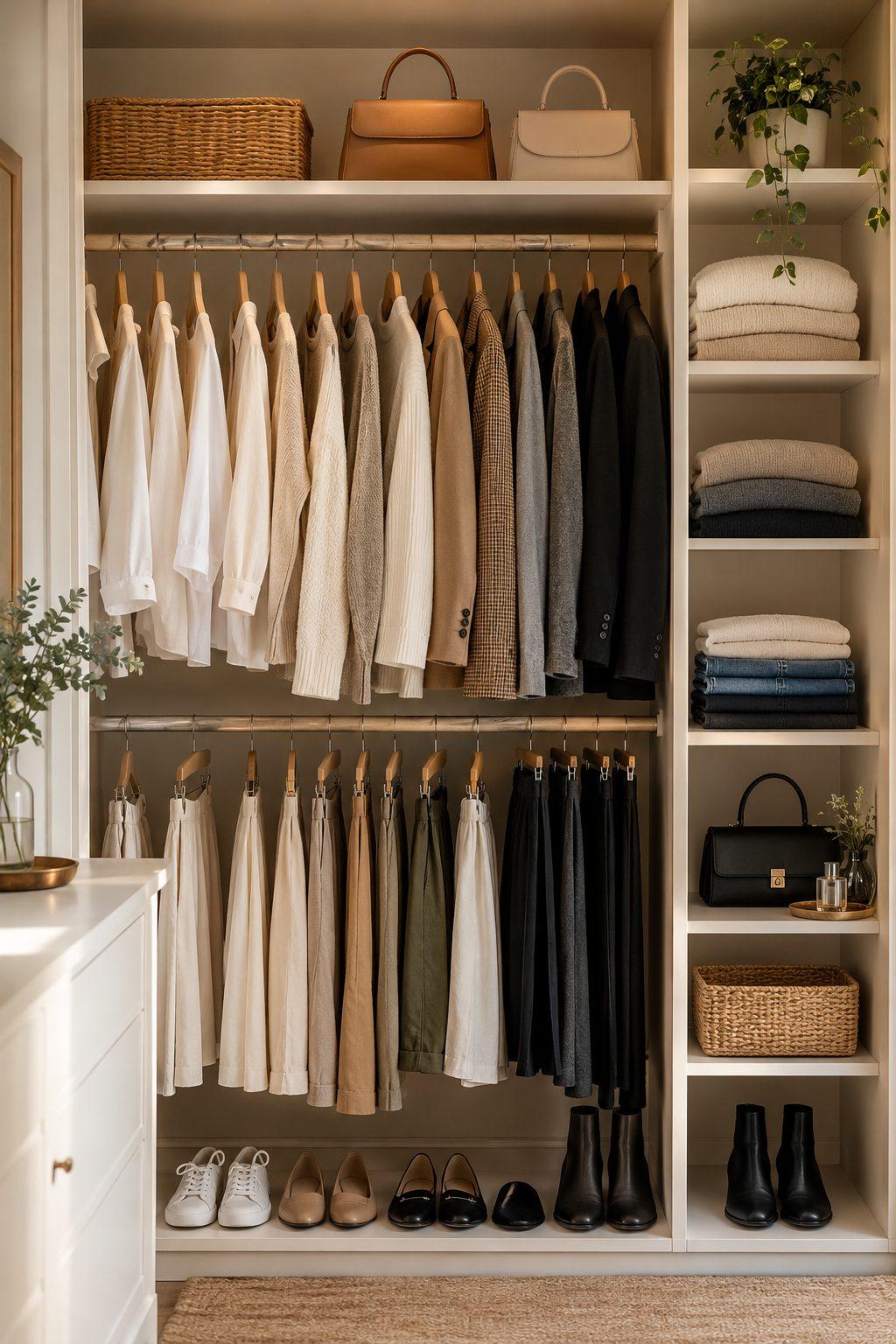
Accessories are easier to use when they have a predictable place. Add hooks for handbags, a shallow tray for jewelry, and a small organizer for belts or sunglasses.
Keep frequently worn pieces near the clothing you usually pair them with. Use a separate container for delicate jewelry to prevent tangling and scratching.
If shelf space is limited, wall-mounted hooks or a hanging accessory organizer can free up valuable surfaces.
10. Coordinate Colors for a Calm, Aesthetic Closet
A coordinated color arrangement can make a closet feel calmer without requiring new furniture. Group similar colors together, or organize clothing by category first and shade second.
There is one counterintuitive point here: a perfectly color-coded closet isn’t necessarily the most functional choice. If you dress by activity, organizing workwear, gym clothes, and casual outfits into separate zones may save more time than sorting every item by color.
Choose the arrangement that matches how you get dressed.
11. Use Vertical Space for Seasonal Storage
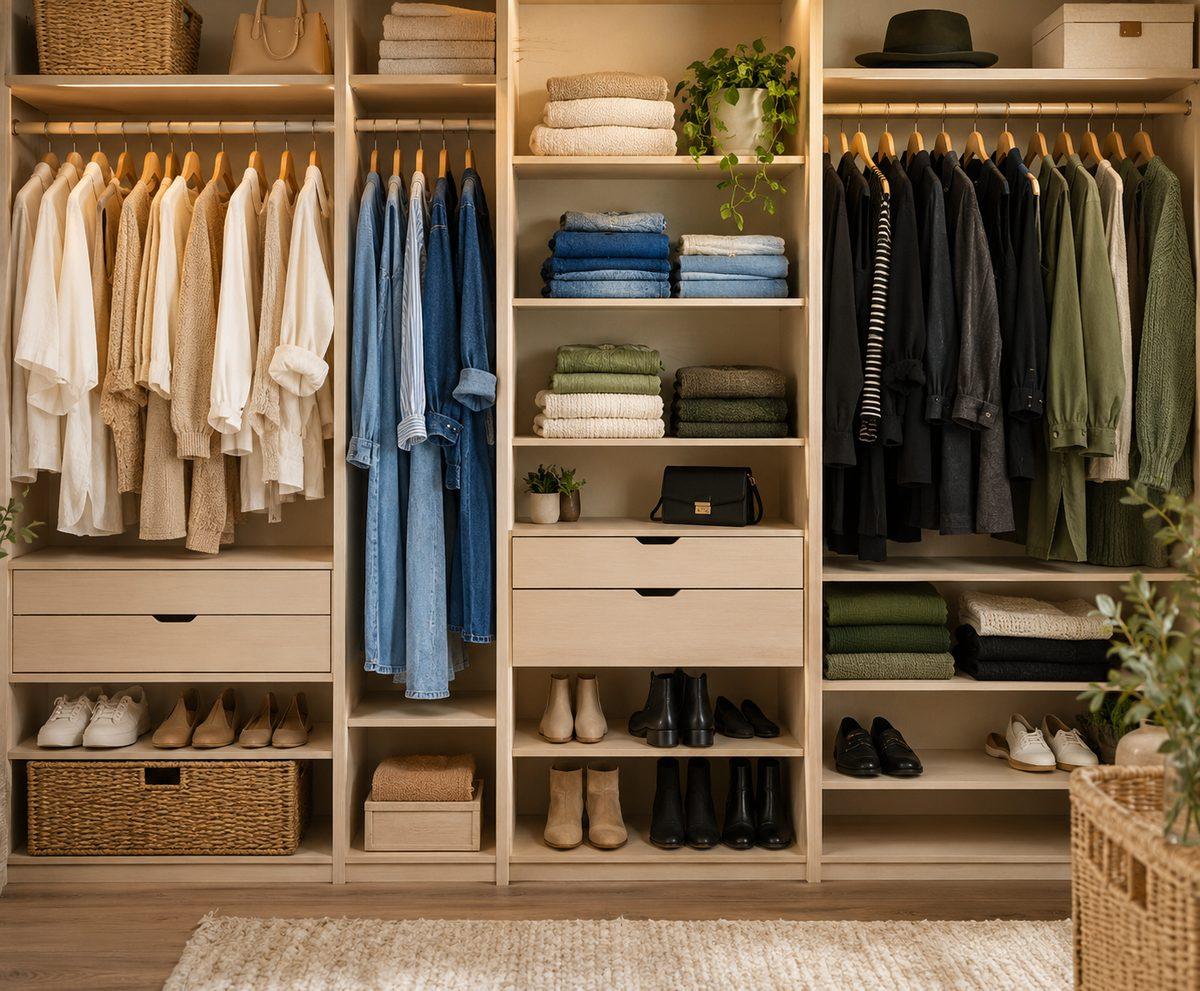
The highest shelves are useful for items you don’t need every day. Store seasonal accessories, spare bedding, occasional clothing, or travel items in clearly labeled containers.
Keep daily essentials at a comfortable height and avoid placing heavy objects overhead. Use sturdy bins that fit the shelf and can be removed safely.
For a small wardrobe, seasonal rotation can make a noticeable difference because it reduces the amount of clothing competing for immediate access.
12. Add a Finishing Touch With a Mirror and a Small Tray
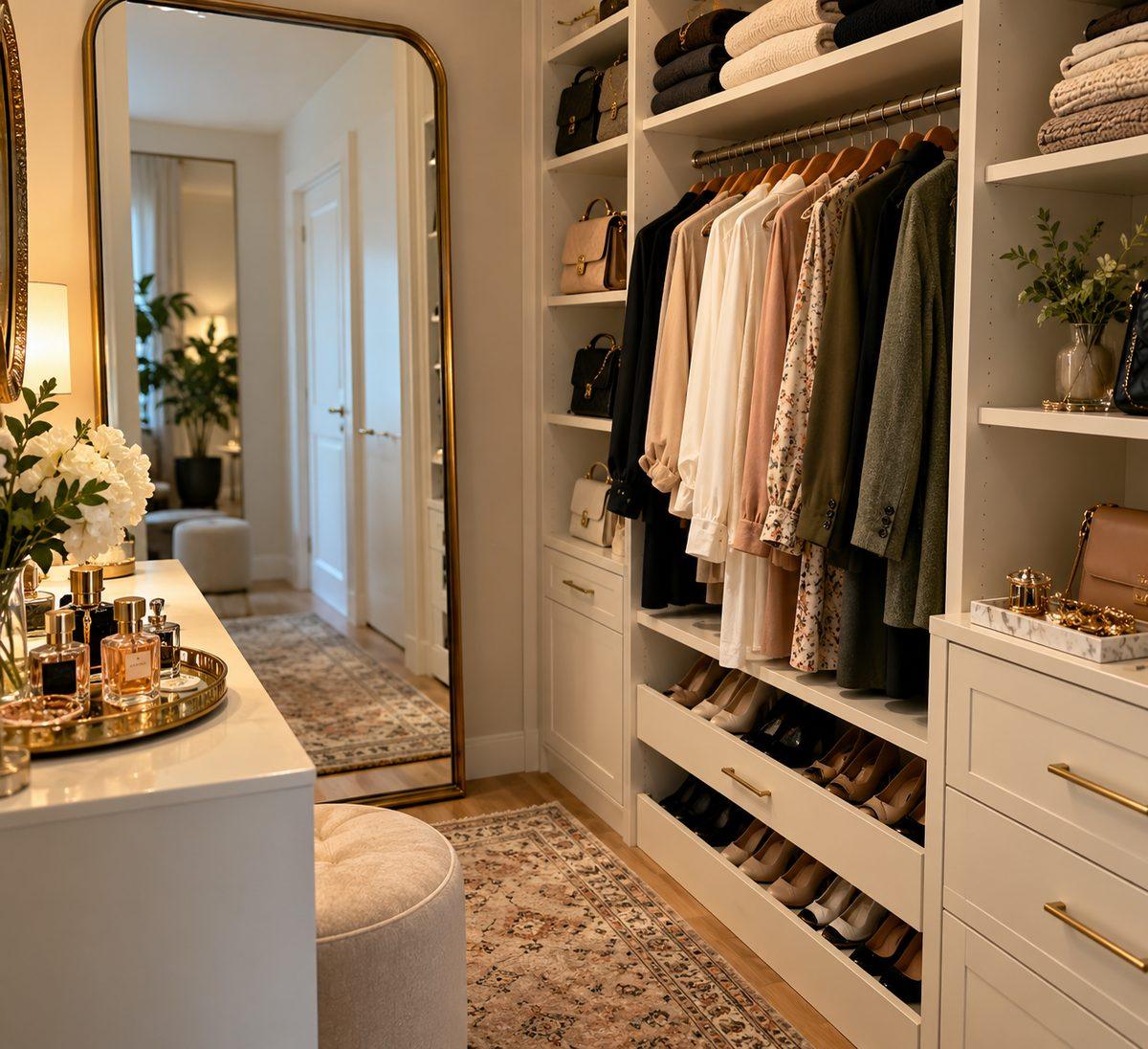
A mirror and a simple tray can make a practical closet feel more intentional. A full-length mirror nearby helps with outfit checks, while a small tray keeps frequently used accessories together.
Choose details that fit the available space. A slim mirror mounted securely on a suitable wall or door can work better than a freestanding piece in a narrow room.
Keep decorative objects limited. The wardrobe should still have enough room for the items you use every day.
Quick Comparison: Which Closet Ideas Should You Choose?
| Option | Best For | Key Benefit | Limitation |
|---|---|---|---|
| Matching hangers | Crowded hanging rails | Creates a consistent look | Doesn’t add storage capacity |
| Stackable bins | Deep or cluttered shelves | Separates small items | Can hide contents when opaque |
| Over-door organizer | Small rental closets | Uses overlooked space | May affect door clearance |
| LED closet lights | Dark wardrobes | Improves visibility | Requires suitable installation |
| Small drawer unit | Closets without drawers | Organizes small garments | Takes up floor space |
Which closet organization method is best?
For a small closet, start with matching hangers, a compact drawer unit, and shelf bins sized to your available space. For a dark wardrobe, lighting may provide the biggest improvement. For a closet with limited floor space, vertical storage and an over-door organizer can be more useful than adding furniture.
How to Make Your Closet Inspo Ideas Last
A closet can look perfect on organizing day and return to chaos a week later. The solution is a layout that matches your habits, not a system that requires constant maintenance.
Look — if you’re working with a tiny rental closet, here’s what actually works: give everyday clothes the easiest-to-reach space, store occasional items higher up, and keep the floor clear wherever possible.
Before buying anything, follow this simple order: Remove clothes and accessories you no longer use. Measure the available hanging, shelf, and floor space. Group belongings by category and frequency of use. Choose storage that fits the measurements. Arrange everyday items first, then seasonal and occasional pieces. Leave some breathing room so new items don’t immediately create clutter.
What most guides skip is the importance of access. A beautiful arrangement fails when you must move three containers to reach a shirt or remove half a stack to find your jeans.
According to the EPA’s textile waste data, discarded textiles are part of the wider waste challenge. That data doesn’t prescribe a particular closet layout, but keeping usable garments accessible can support a more considered approach to clothing ownership.
There are limits to these suggestions. This guide covers everyday wardrobes, freestanding closets, and small-space organization; it does not address custom walk-in construction, major remodeling, or specialist conservation storage for valuable garments.
Frequently Asked Questions
Q: How do I make my closet look aesthetic on a budget?
A: Start with a clear-out, arrange clothes by category, use matching hangers where practical, and fold shelf items neatly. Reuse boxes and containers you already own before purchasing new organizers.
Q: What is the best way to organize a small closet?
A: Keep everyday clothing within easy reach, use vertical space for seasonal items, and add compact bins or drawers where measurements allow. Avoid filling every available inch.
Q: How can I organize a closet without built-in drawers?
A: Use a small freestanding drawer unit, fabric storage boxes, shelf dividers, or suitable hanging organizers. Choose the option that fits the closet’s depth and leaves enough room for hanging clothes.
Q: Are matching hangers worth buying?
A: Matching hangers improve visual consistency and can reduce wasted space when replacing bulky styles with suitable slim hangers. They won’t solve problems caused by too many clothes or poorly planned shelves.
Q: How can I make a dark closet easier to use?
A: Add suitable LED closet lighting, keep dark clothing grouped clearly, and avoid placing opaque containers where they block access to everyday items. Follow the light manufacturer’s installation and safety instructions.
Create a Closet That Works for You
Before buying a single organizer, try this: get dressed tomorrow and notice every moment of friction — the shelf you can’t reach, the pile you dig through, the shoes you never wear because they’re buried. That list is your actual plan.
Closet advice usually starts with products. It should start with mornings. Fix the three annoyances you hit most often and the rest of the “inspo” becomes decoration, not necessity.