
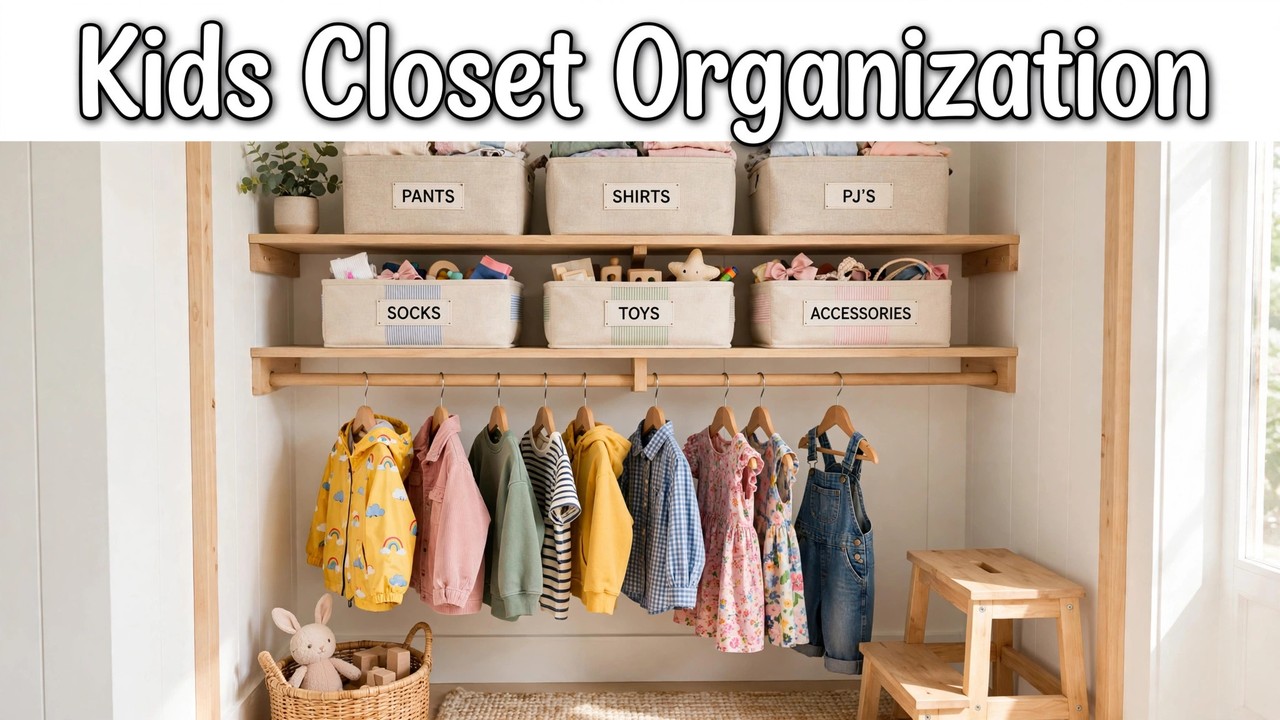
13 Kids Small Closet Organization Ideas That Maximize Every Inch
Small kids closets fail for one reason: they're organized for the adult, not the child. Every section below puts the daily routine within a kid's reach — literally. Low rods, labeled bins, and systems a six-year-old can run without asking for help.
What a Kid-Usable Closet Actually Means
A kid-usable closet is one a child can operate alone: rods they can reach, bins they can open, labels they can read (or picture-labels they can decode). If the system requires an adult to fetch, fold, or find anything, it’s adult organization wearing a kid costume — and it will collapse within a week.
Lower the Rods to Kid Height
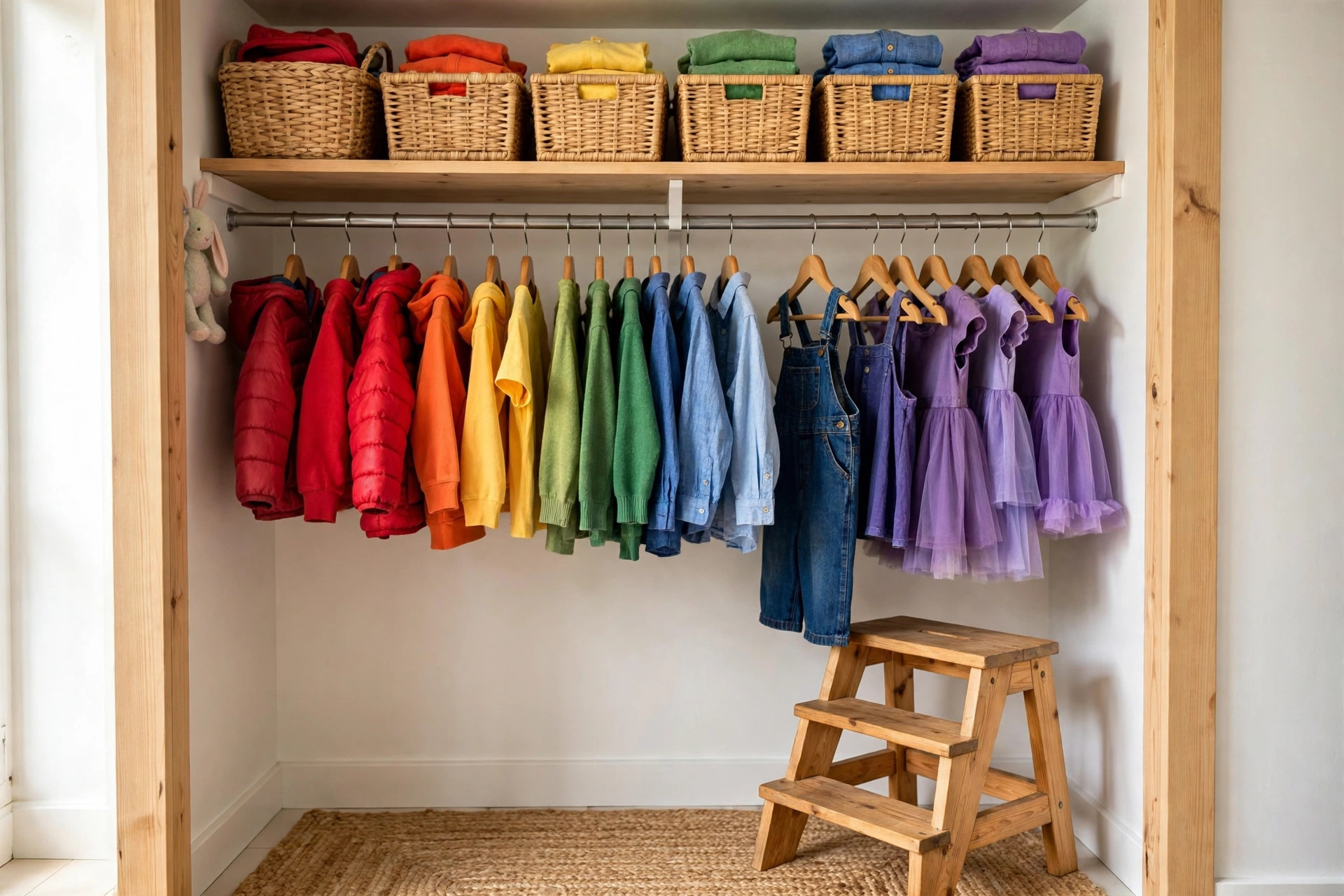
Kids' clothes are small enough that a single rod wastes the entire bottom half of the closet. A double-hang setup — one rod at adult height, one at kid height (about 30-36 inches) — doubles hanging capacity and puts daily clothes where kids can reach them.
Bin Everything — Skip the Folding
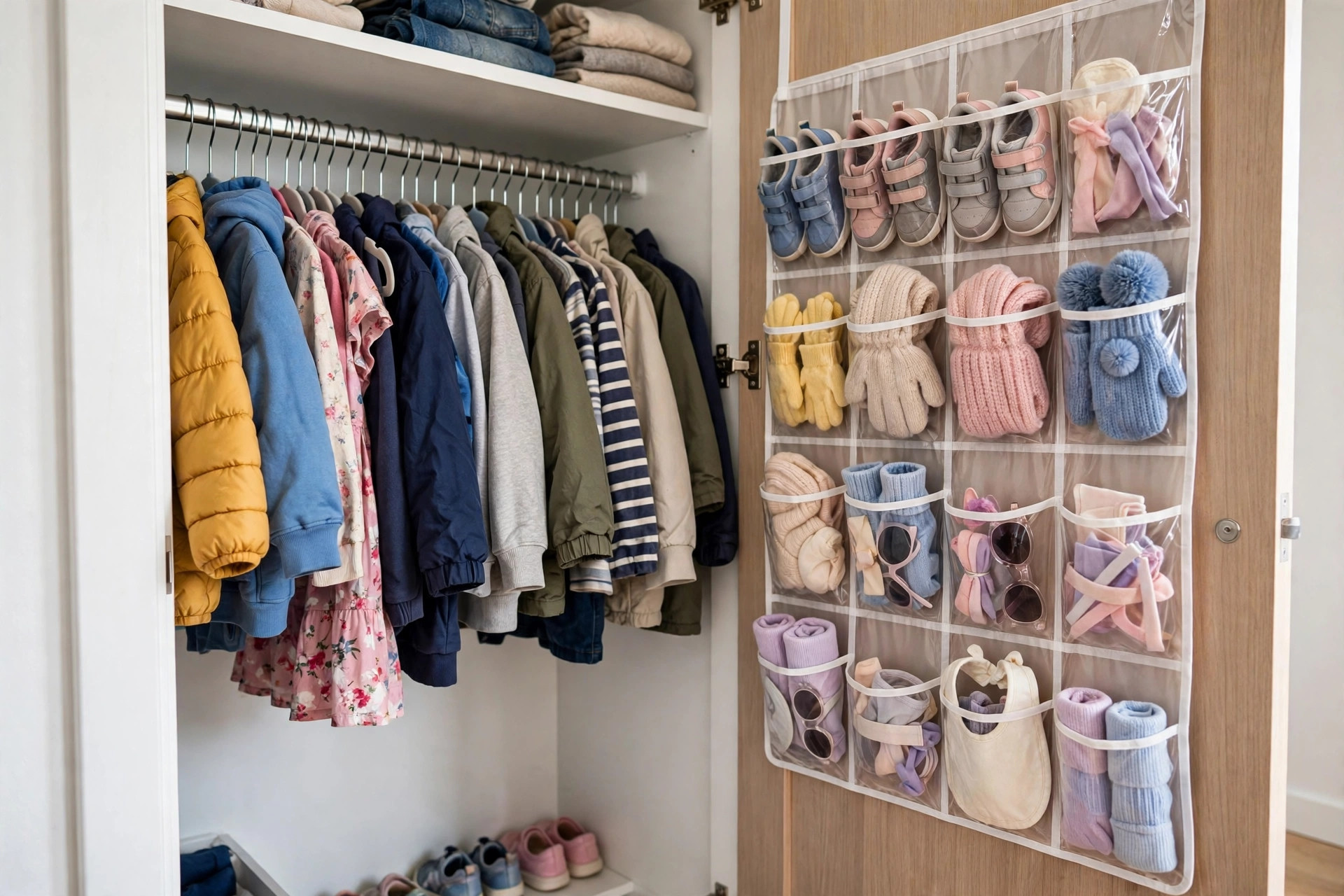
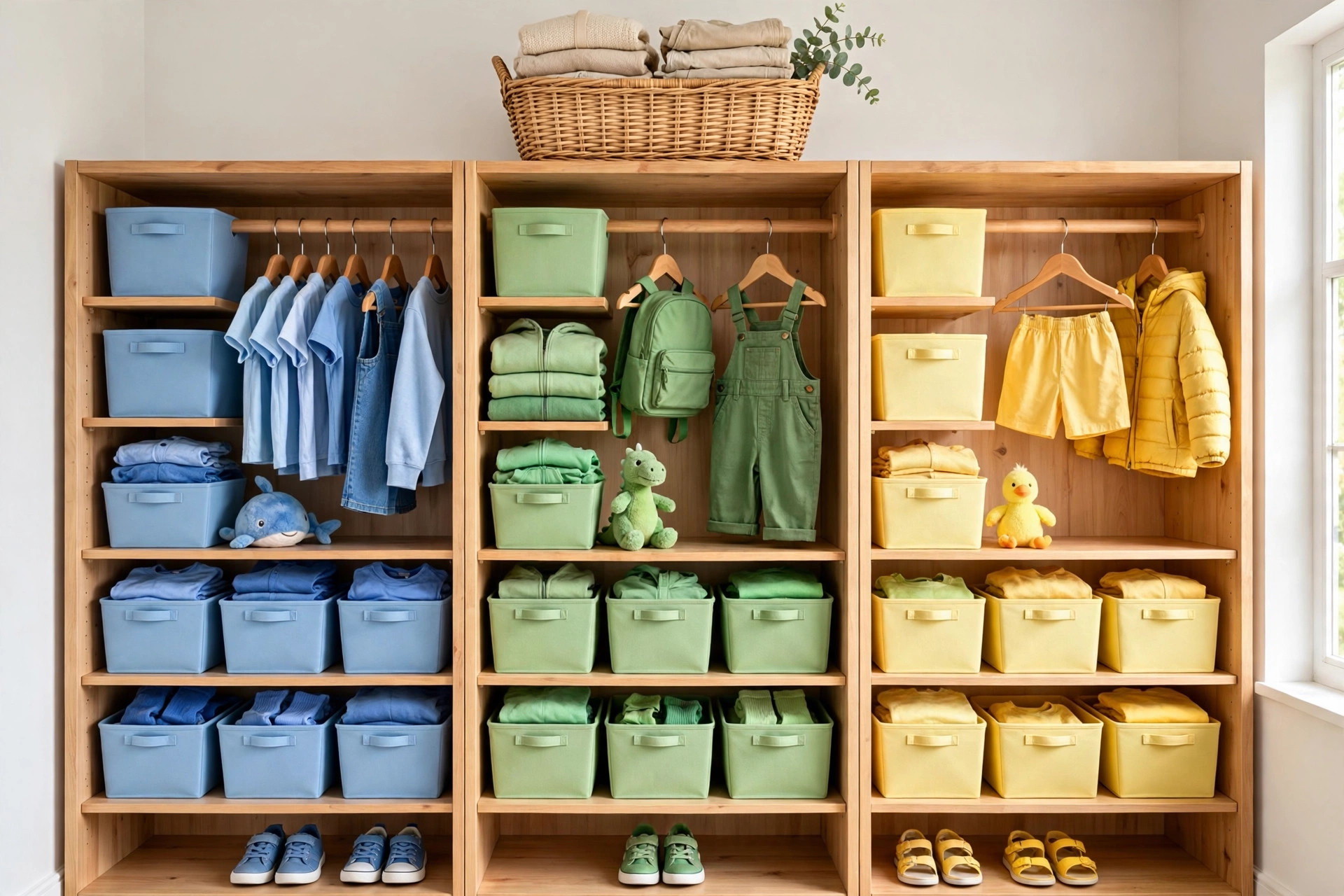
Kids destroy folded piles in seconds. Bins survive them. Use clear, labeled bins for each category: pajamas, play clothes, school clothes, accessories. One bin per category, and when it's full, something has to leave before something new goes in.
Use the Door and the Floor Wisely
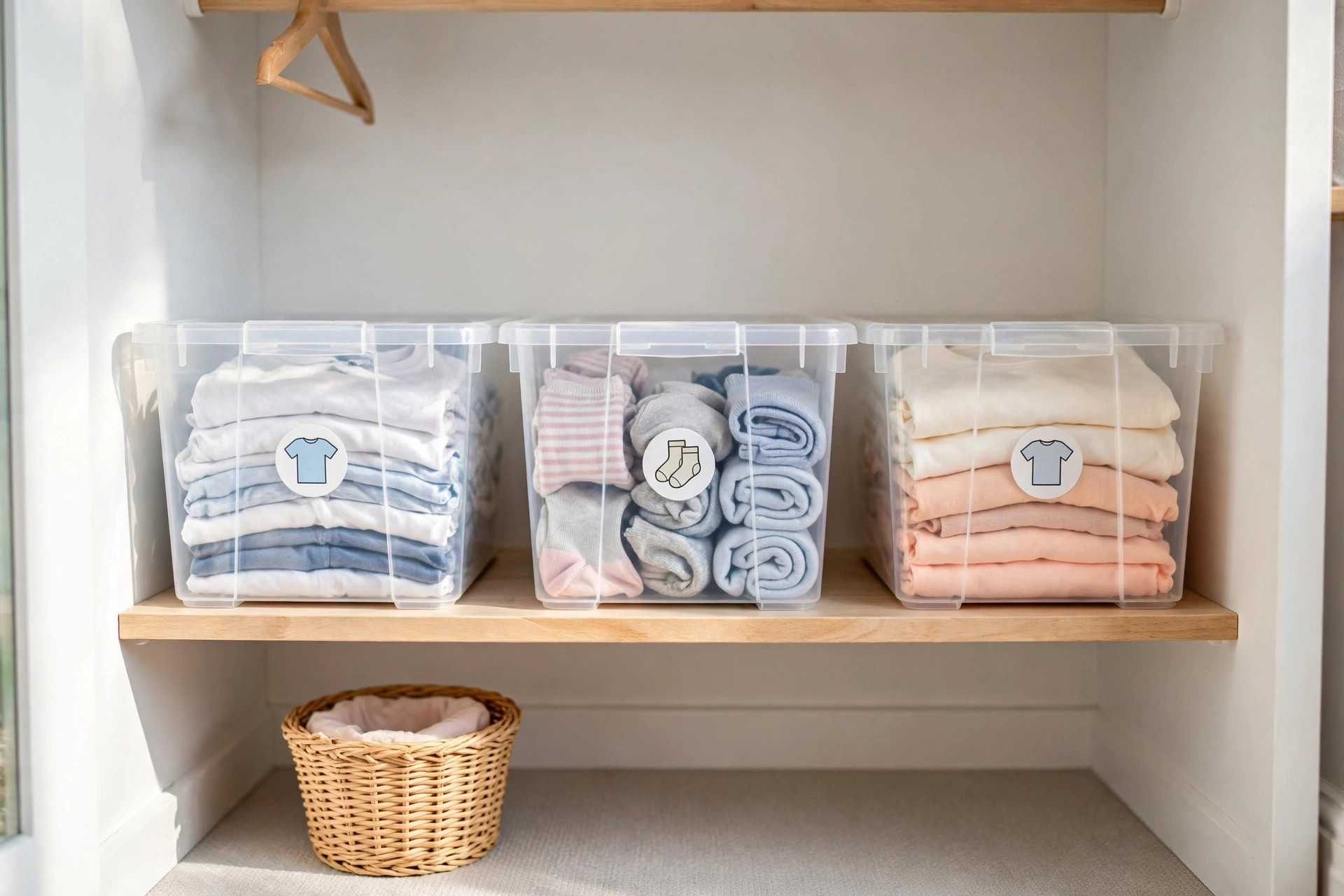
Use the back of the closet door: an over-the-door clear shoe organizer holds shoes, accessories, and small toys without touching floor or shelf space. The floor itself stays clear for a step stool or the laundry hamper. And that dead space above the top shelf? Flat bins for out-of-season clothes, labeled by size — because you’ll forget what's up there otherwise.
The Weekly Outfit Station
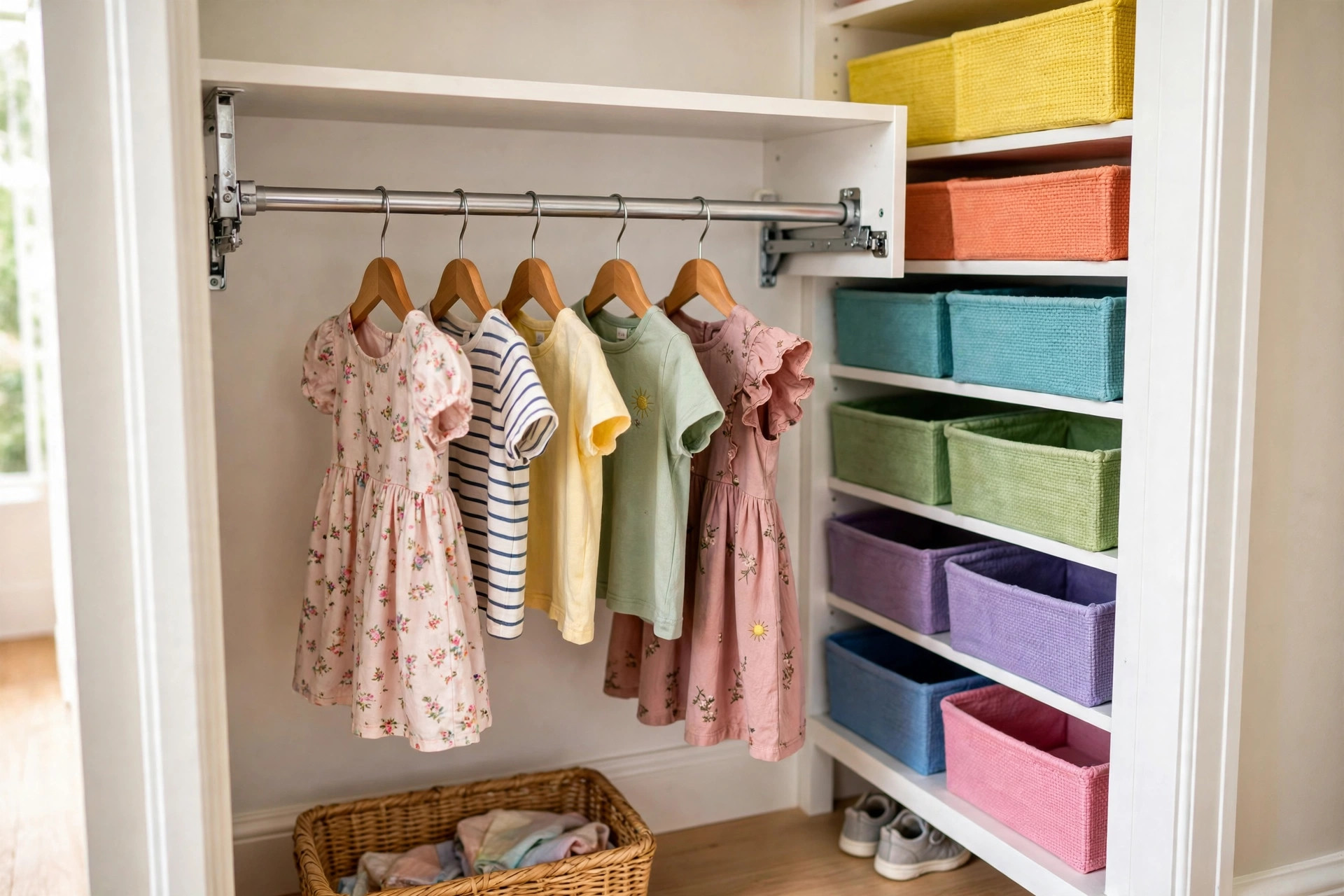
The system that changes mornings: a five-slot cubby (or five hanging shelf sections) labeled Monday through Friday. Sunday evening, you and your kid pick five outfits together and load the cubby. Mornings become grab-and-go instead of a negotiation. Include the weather check on Sunday — nothing derails the system like a surprise cold snap.
Seasonal Purge System
Kids outgrow clothes faster than they wear them out. Keep a "too small" bin in the closet and toss outgrown items in as you spot them — when it's full, donate or hand down the whole bin. Twice a year, do the full purge: pull everything out, sort into keep / donate / store-for-younger-sibling, and only put back what fits now and suits the coming season. The purge is also when you check: are the rods still at the right height? Has the kid's routine changed?
Label Everything (Pictures for Pre-Readers)
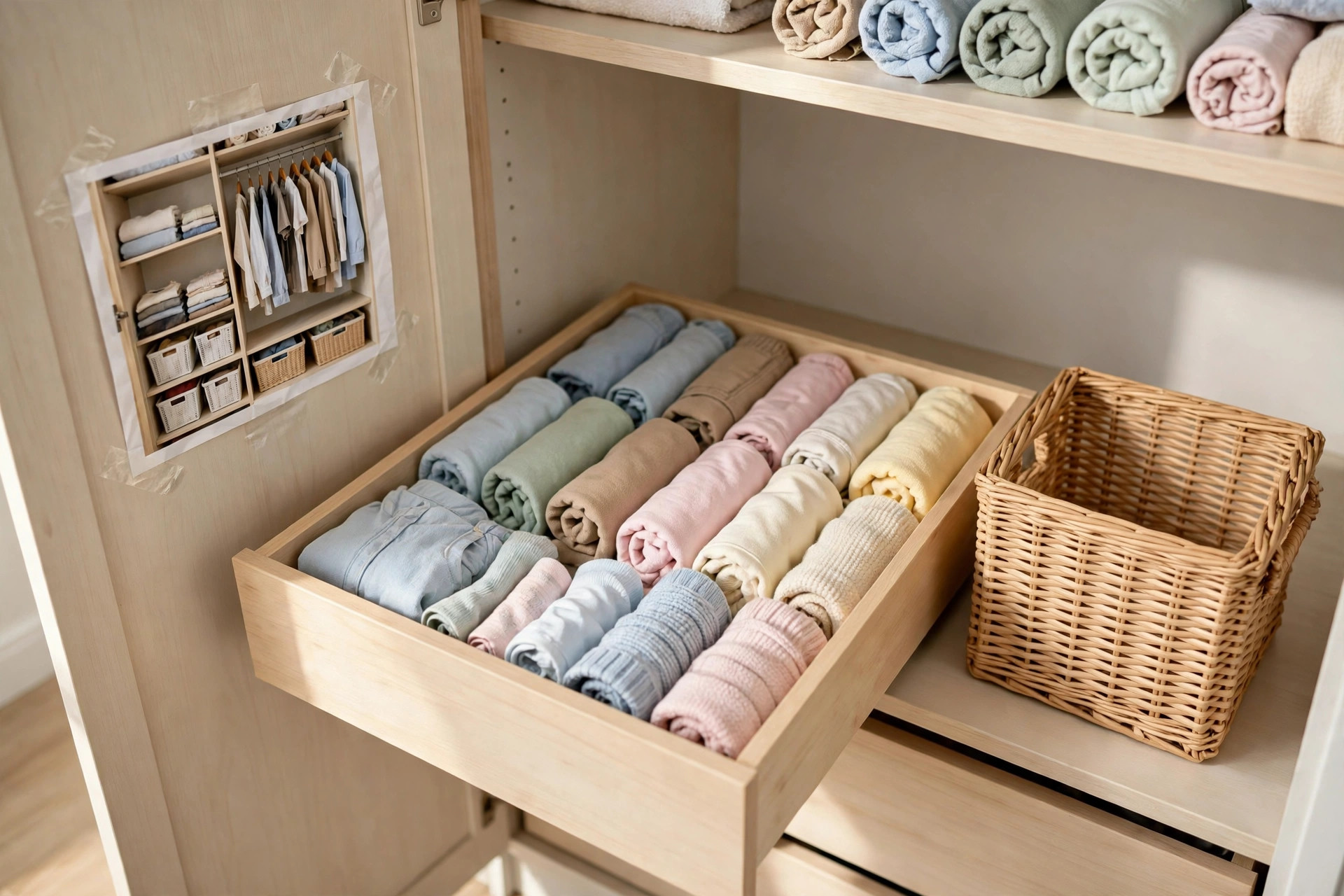
For pre-readers, use picture labels: a photo of socks on the sock bin, a t-shirt on the shirt bin. Kids as young as three can put laundry away correctly with picture labels. Add one rule they can remember: "one out, one in" for toys and special clothes. And the weekly five-minute reset — set a timer, race the clock, make it a game.
The One-Hour Setup Order
Do it in this sequence and you’ll finish in about an hour: 1. Empty the closet completely — every system starts with seeing the real space. 2. Install or lower the rods first, since everything hangs off that decision. 3. Place the bins and label them before any clothes go back. 4. Sort clothes into the labeled bins as they return. 5. Do the Sunday outfit-cubby load immediately, so the system is running from day one — not “starting Monday.”
Maintenance Without the Meltdowns
Don't organize for the closet you wish you had. A tiny closet that a kid can actually use beats a Pinterest-perfect one they can't reach. Keep it low, keep it labeled, and keep the inventory small — kids need fewer clothes than you think, and fewer clothes means less mess, less laundry, and less morning drama.
When to Redo It All
Plan a full reset twice a year — when seasons change and at the start of the school year. Kids grow in spurts, and a system built for a 4-year-old won’t fit a 6-year-old’s clothes or habits. The reset is also the moment to raise the rods, swap picture labels for word labels, and hand the kid more ownership. A closet that grows with the child lasts years; a static one lasts months.
Mistakes That Break the System
Three killers: buying organizers before measuring (the number-one waste of money in closet projects), organizing for the child’s aspirational self instead of their actual habits, and skipping the purge — adding bins to an overstuffed closet just organizes the chaos instead of reducing it. Look — if the closet is still hard to use after organizing, the inventory is too big, not the system too small.
For two kids sharing one small closet, try this kids closet split
Use low double rods, vertical shoe storage on the door, and labeled bins on every shelf. Keep only the current season’s clothes accessible and rotate the rest out.
At least twice a year — when seasons change. Kids grow fast, so checking for outgrown clothes at the start of each school term keeps the closet manageable.
Over-the-door clear shoe organizers work best for visibility and space. Floor space is too valuable in a kids closet to waste on shoes.
Yes — a simplified capsule wardrobe of 10-15 pieces per season reduces decision fatigue for both kids and parents. Focus on mix-and-match basics.
Use picture labels for pre-readers, keep everything at kid height, and do a weekly 5-minute reset together. The day-of-week outfit cubby system makes mornings effortless.
Around age 4-5 with picture labels and everything at kid height. Younger toddlers can do the “one out, one in” rule for toys with supervision.
Split it vertically — one side per child with their own rods, bins, and labels. Shared systems between siblings rarely survive; ownership keeps each side maintained.