

Starry Ceiling Decor: 12 Magical Ideas for Home
A ceiling can become the most enchanting part of a room. With the right lighting, colors, and placement, you can create a peaceful night sky without hiring a contractor or covering every surface in plastic stars.
The secret is choosing a look that suits the room. Soft pinpoints of light can feel elegant and grown-up, while a deep navy ceiling with glowing constellations creates a more dramatic galaxy effect. You don’t need an expensive installation to achieve either style.
Starry ceiling decor refers to ceiling designs that recreate the appearance of a night sky using lighting, decals, paint, or fiber-optic points. The effect can range from a subtle scattering of stars to a detailed galaxy-inspired feature.
This works best for bedrooms, reading corners, nurseries, and gaming rooms where ambient lighting matters. It won’t help much if you need a bright, evenly lit ceiling for detailed work.
Why Starry Ceiling Decor Works in Different Rooms
The best starry ceilings balance atmosphere with restraint. A few carefully placed lights can look more convincing than hundreds of stars packed into one area.
What makes a starry ceiling look realistic?
A realistic starry ceiling has variation. Some points should be brighter than others, and the gaps between them should feel natural rather than perfectly uniform. Darker backgrounds also help individual lights stand out.
According to NASA’s educational materials on visible stars and the night sky, stars appear as points of light against a much darker background. That basic visual contrast offers a useful design principle: keep the background dark enough for your chosen lights to remain distinct. Realistic decor does not require a scientifically accurate star map.
Which starry ceiling style should you choose?
The right method depends on your budget, ceiling color, and willingness to make permanent changes. Projectors are easy to move, decals are simple to apply, and painted or fiber-optic designs offer a more integrated finish. Choose the approach that fits your room instead of copying a setup designed for a completely different space.
Here’s the thing: a starry ceiling doesn’t have to fill the whole room. A smaller feature above the bed or a reading chair can feel more intentional than a ceiling covered from wall to wall.
12 Starry Ceiling Decor Ideas to Try
1. Create a Soft Glow With a Star Projector
A star projector is one of the simplest ways to transform a plain ceiling. Place it on a bedside table, dresser, or stable shelf and aim it toward an open section of ceiling.
Look for adjustable brightness, focus, and projection speed. Some models produce crisp star points, while others create swirling nebula clouds. If a previous projector looked blurry, check its focus range and distance before assuming every model will produce the same result.
Keep the brightness low enough that the room still feels restful. A projector should create atmosphere, not compete with the television or make the entire ceiling glow like a screen.
2. Scatter Glow-in-the-Dark Stars With Intention
Glow-in-the-dark decals are inexpensive and easy to remove or rearrange, making them useful for renters and temporary bedroom updates.
The trick is spacing. Place small clusters near the center, leave irregular gaps, and use a few larger stars as visual anchors. Avoid making a perfect grid.
What most guides skip is the importance of daylight appearance. Pale decals can remain visible when the room is bright, so choose low-profile designs that blend with your ceiling color. Their glow also depends on how much light they absorb before the room goes dark.
3. Add Tiny LED String Lights Above the Bed
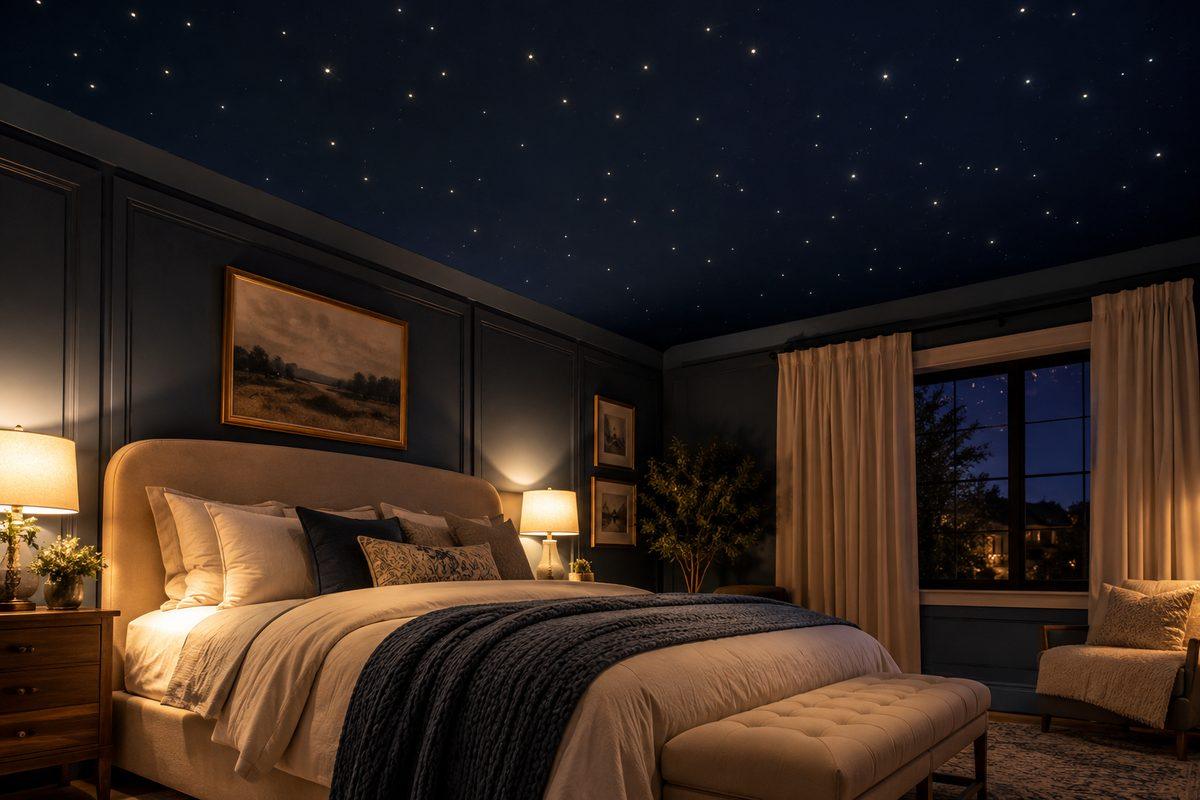
Small LED string lights create a gentle, decorative version of a starry night. Use thin, lightweight strands to form loose constellations or a sparse scattering of points above the bed.
Choose lights with a suitable indoor rating and a safe, stable mounting method. Keep cables away from moving ceiling fans, hot surfaces, and walkways. Don’t use ordinary indoor fairy lights as a substitute for a properly rated permanent ceiling installation.
For a polished finish, keep the power source accessible and hide excess cable along a suitable edge or existing cable route.
4. Paint a Midnight-Sky Ceiling
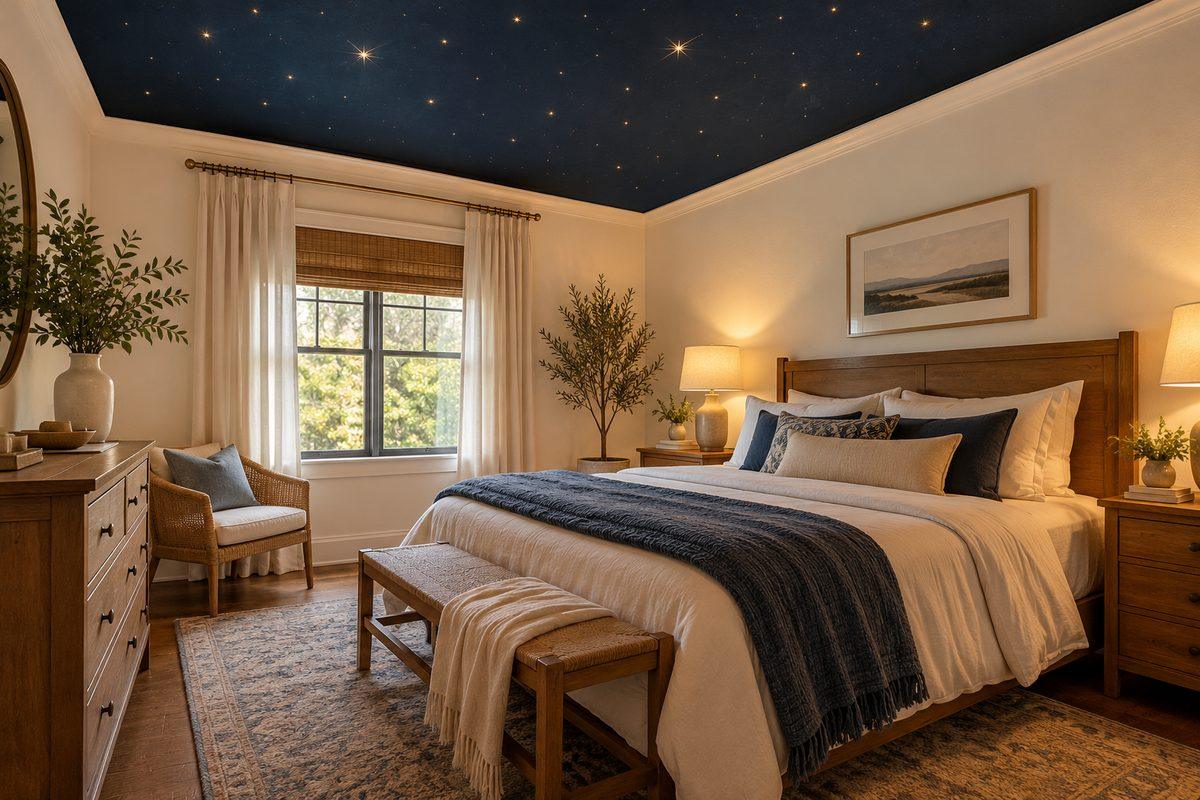
Dark ceiling paint can make the night-sky effect feel like part of the room’s architecture. Midnight blue, deep indigo, and charcoal navy are strong choices, especially when paired with warm white walls.
A matte finish usually works well because it reduces distracting reflections. You can leave the ceiling plain for a moody, sophisticated look or add tiny painted stars afterward.
Test a sample first. Dark colors can make a low ceiling feel more enclosed, so balance them with layered lighting, lighter bedding, and uncluttered furniture.
5. Paint a Hand-Placed Constellation Map
For a more personal design, paint a few recognizable constellations across a dark ceiling. Orion, Cassiopeia, and the Big Dipper are familiar starting points.
Use a stencil or a small brush to keep the points neat. Thin connecting lines can help suggest a star map, but they should remain subtle.
Most people assume more stars create a better effect. Often, a smaller number of well-spaced constellations looks more deliberate because the eye can follow each pattern without getting lost in visual clutter.
6. Install a Fiber-Optic Star Ceiling Kit
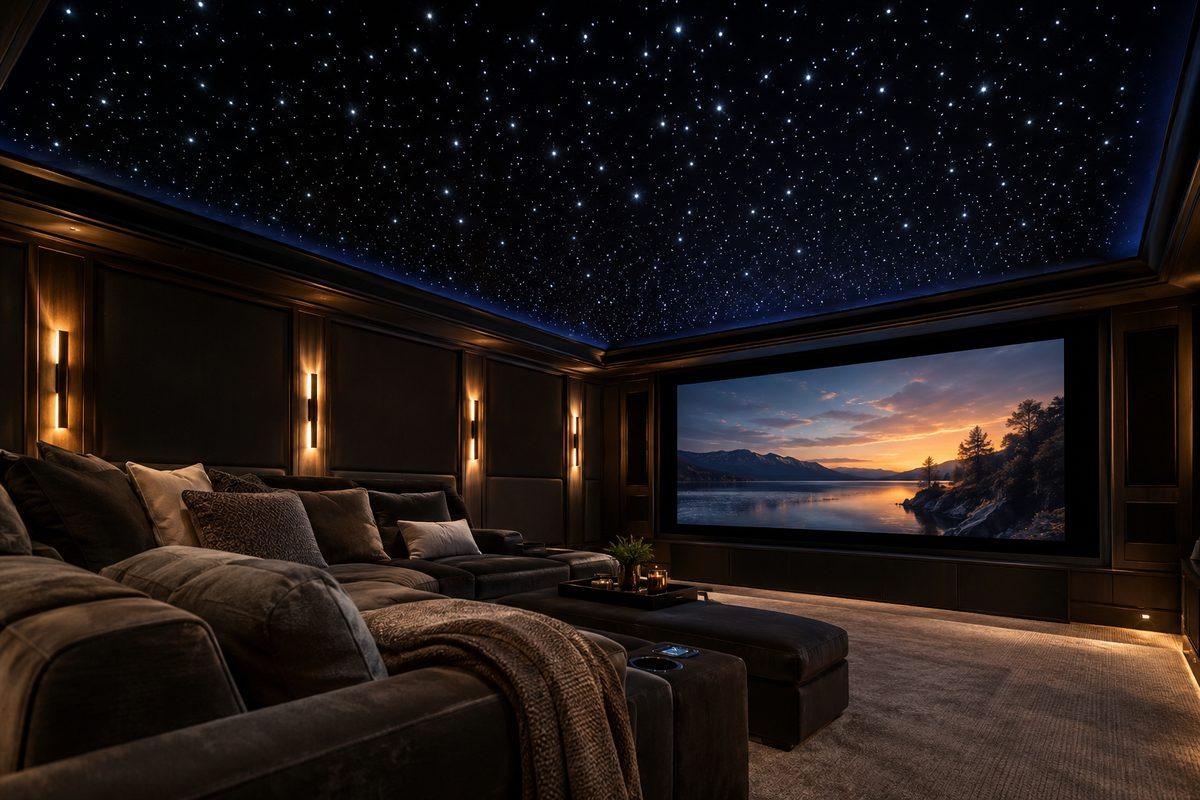
Fiber-optic kits create tiny points of light that sit close to the appearance of a real star field. They can be ideal for a dedicated home theater, a luxury bedroom, or a gaming room designed around immersive lighting.
The trade-off is installation. Many kits require holes in a ceiling panel, access above the ceiling, a light source, and careful routing of fiber strands. Some projects are manageable for experienced DIY users, while others call for a professional installer.
Read the kit instructions before buying. This approach is less suitable for renters or ceilings where cutting, drilling, or access above the surface is not permitted.
7. Combine Stars With a Nebula Projector
Galaxy ceiling ideas often combine small star points with diffuse clouds of color. A nebula projector can create this effect without painting the entire ceiling.
Blue, violet, and muted magenta work well together, especially when the colored cloud stays in one part of the room. Choose adjustable effects rather than a constantly changing light show if you want a calm bedroom.
Users who have found basic projectors too blurry should check whether a device creates distinct star points or only broad colored patterns. Those are different visual effects, even when the product photographs look similar.
8. Frame the Ceiling With Hidden LED Cove Lighting
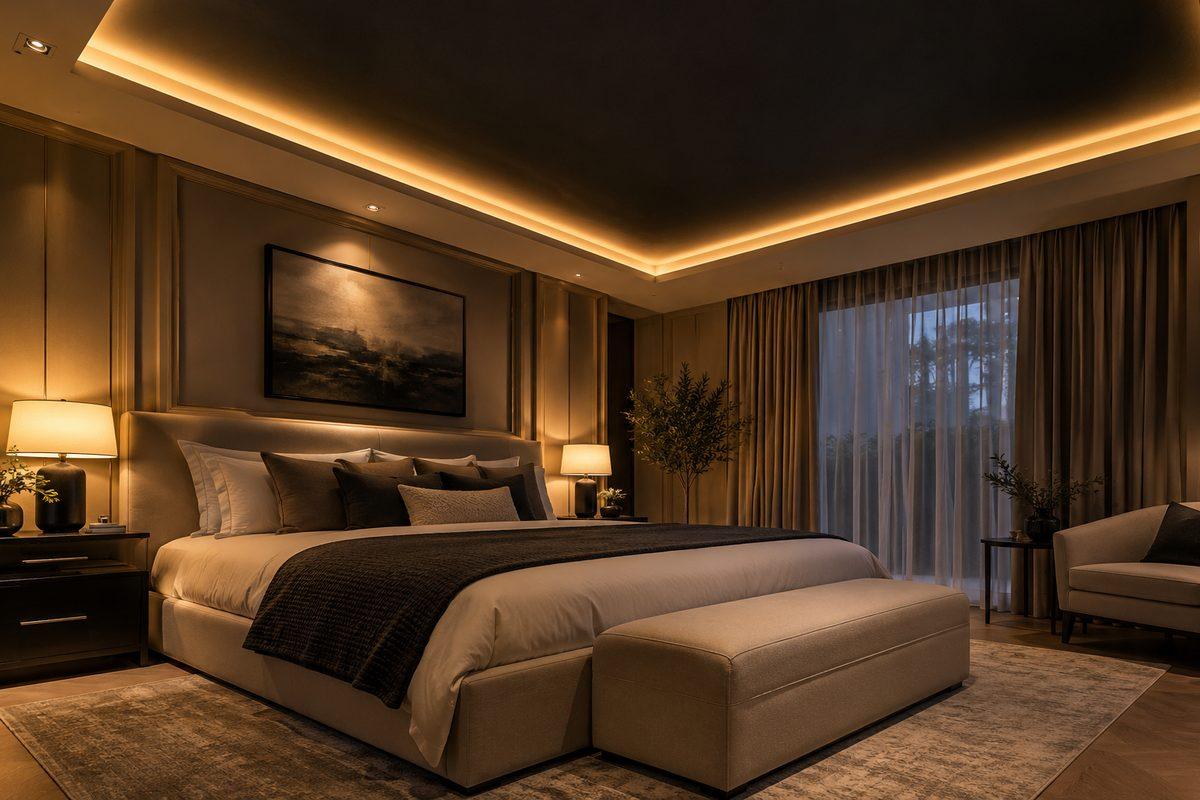
Concealed LED lighting around the ceiling edge can make a dark central area feel suspended in soft light. This creates a refined starry ceiling backdrop, even before you add individual stars.
Use a suitable LED strip and an appropriate mounting channel or cove. Dimmable lighting lets you shift from practical illumination to a softer evening mood.
Quick note: perimeter lighting alone does not create stars. Pair it with subtle decals, a focused projector, or painted constellations if you want a genuine night-sky effect.
9. Build a Small Starry Nursery Ceiling
A nursery can benefit from a simple, uncluttered star pattern. Try small matte decals on a pale ceiling, or choose a soft blue-gray background with a few painted stars.
Keep every decorative item securely attached and outside the reach of children. Avoid loose strings, dangling lights, accessible cables, and small detachable pieces near a crib.
For sleep, follow current safe-sleep guidance (such as the American Academy of Pediatrics’ safe-sleep recommendations) and keep lighting arrangements from interfering with a baby’s sleep environment. The decorative feature should remain separate from the crib and its bedding.
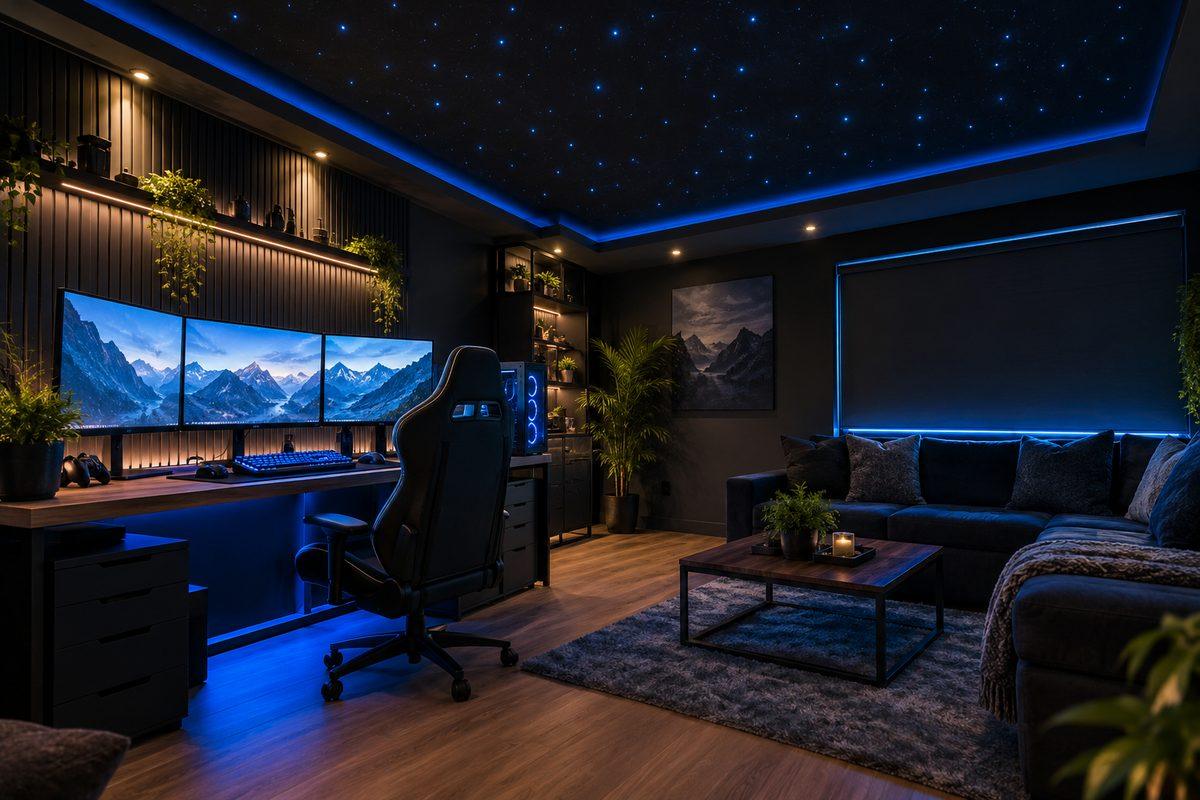
10. Design a Starry Gaming Room Ceiling
A starry ceiling can complement a gaming setup without overwhelming the monitors. Combine a charcoal or navy ceiling with small cool-white star points and a controlled amount of blue accent lighting.
Keep the stars dimmer than the main screen and avoid fast flashing patterns. This makes the ceiling part of the room’s atmosphere rather than a distraction.
For a cleaner result, coordinate the ceiling with one or two colors already used around the desk. A restrained palette usually looks more cohesive than mixing every available RGB effect.
11. Add a Removable Starry Ceiling Panel
A lightweight removable panel is a useful middle ground between stickers and a permanent fiber-optic installation. Depending on the room, it could be a decorative board or a purpose-built panel fitted with small lights.
Plan the mounting system before choosing the panel. Its weight, ceiling structure, access requirements, and electrical components all matter. Use secure, appropriate supports rather than relying on adhesive strips to hold a heavy overhead feature.
This approach is especially useful when you want a defined starry area above a bed, reading nook, or home theater rather than a full-room installation.
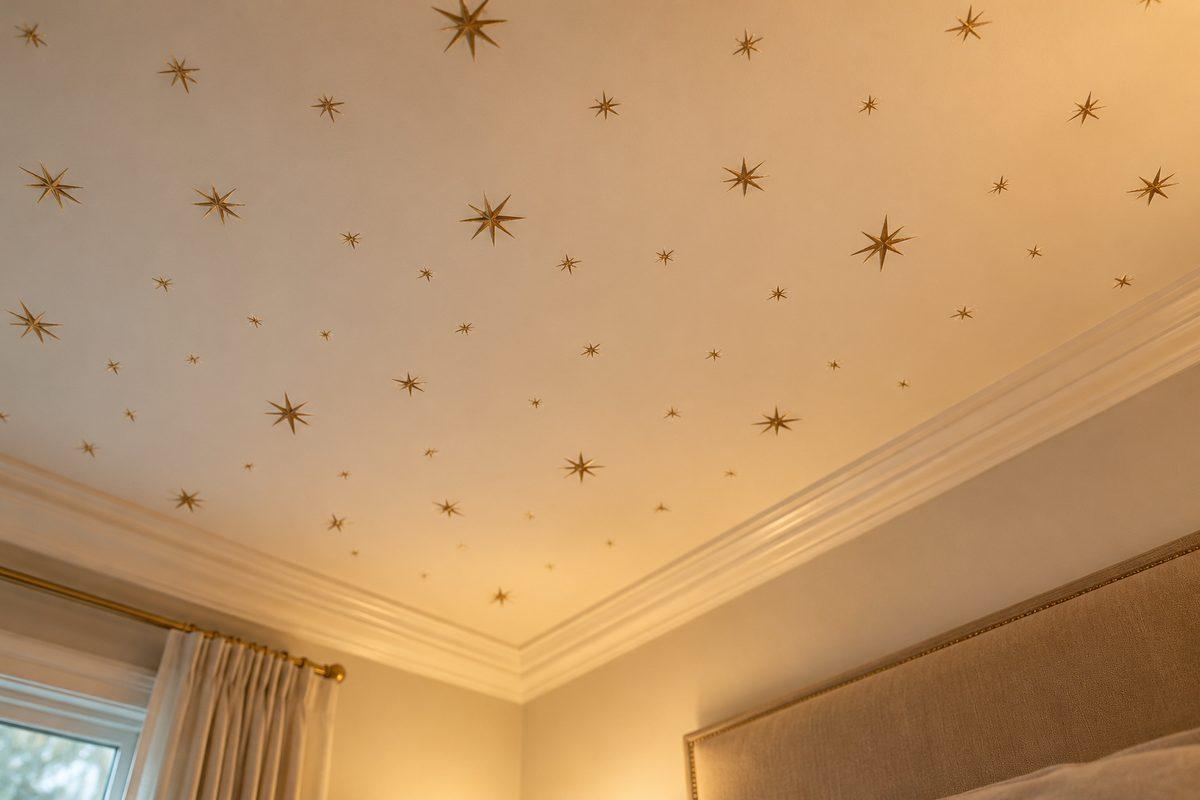
12. Create a Minimal Starry Ceiling With Metallic Accents
Not every starry ceiling needs to glow in the dark. Small metallic star decals or hand-painted champagne-gold points can create a celestial look that remains attractive in daylight.
This is a strong option for neutral bedrooms, guest rooms, and spaces where a dark ceiling would feel too heavy. Keep the stars sparse and vary their sizes slightly.
Or maybe the better choice is no lighting at all. If the goal is an elegant celestial theme rather than a realistic night sky, reflective accents can deliver the look without extra wiring or electronic equipment.
Quick Comparison: Which Starry Ceiling Method Is Best?
| Option | Best For | Key Benefit | Limitation |
|---|---|---|---|
| Star projector | Renters and beginners | Easy to move and adjust | Focus and brightness vary |
| Glow-in-the-dark decals | Budget decorating | Simple, inexpensive application | Need light exposure to glow |
| LED string lights | Cozy bedroom features | Flexible decorative layouts | Cables and mounting need care |
| Dark paint and constellations | Permanent room makeovers | Integrated, customized look | Requires surface preparation |
| Fiber-optic kit | Dedicated theaters and luxury rooms | Fine, realistic star points | More involved installation |
Comparison snippet: Projectors are the easiest option to change, decals are simple to apply, and painted constellations offer a custom look. Fiber-optic kits create a more integrated star field but require more planning and installation work.
How to Make Starry Ceiling Decor Look Expensive
The difference between a polished ceiling and a cluttered one often comes down to restraint.
Choose one main effect. Let a projector, painted sky, or constellation pattern lead the design. Vary the spacing. Avoid identical distances between every star. Control the brightness. Dimmer points of light generally create a softer nighttime mood. Match the room’s palette. Navy and warm white feel classic; charcoal and cool blue suit gaming spaces. Check the daytime view. Pale decals, visible cables, and mounting hardware can change how the ceiling looks when the lights are on.
One opinion worth challenging: covering the entire ceiling with stars is not always the most magical choice. A concentrated star field above the bed can create a clearer focal point, leave the room feeling less busy, and cost less to install.
This guide covers decorative approaches for bedrooms, nurseries, reading areas, and gaming rooms. It does not cover structural ceiling modifications, detailed electrical installation instructions, or specialist theater construction.
Starry Ceiling Decor: Common Questions
Q: How can I make a starry ceiling without renovating?
A: Use a star projector, removable decals, or lightweight LED lights designed for indoor use. These methods can create a night-sky effect without repainting or cutting into the ceiling.
Q: What is the best starry ceiling idea for renters?
A: A portable star projector is usually the most flexible option. Removable decals may also work if the ceiling surface and adhesive instructions allow safe removal.
Q: How do I make glow-in-the-dark stars look less childish?
A: Choose small, subtle stars in an irregular arrangement. Leave plenty of empty ceiling space, avoid perfect grids, and select decals that blend into the ceiling during daylight.
Q: Can I create a starry ceiling with ordinary LED lights?
A: Yes, if the lights are suitable for indoor use and mounted securely. Small LED points or fine string lights can create a decorative star field, though they will look different from fiber-optic installations.
Q: Is a fiber-optic star ceiling worth the effort?
A: It can be worthwhile for a permanent home theater or a dedicated feature room. For renters and casual bedroom makeovers, a projector or painted constellation design is usually easier to change.
Create Your Own Night Sky
Judge every starry ceiling twice: once with the lights off, once with them on. A fiber-optic install that looks magical at midnight but shows dots and wires at noon will bother you far more often than you’d expect.
The designs that last disappear by day. Painted constellations on a dark ceiling, decals matched to your paint color, a projector you can switch off — choose the version your ceiling can wear around the clock.