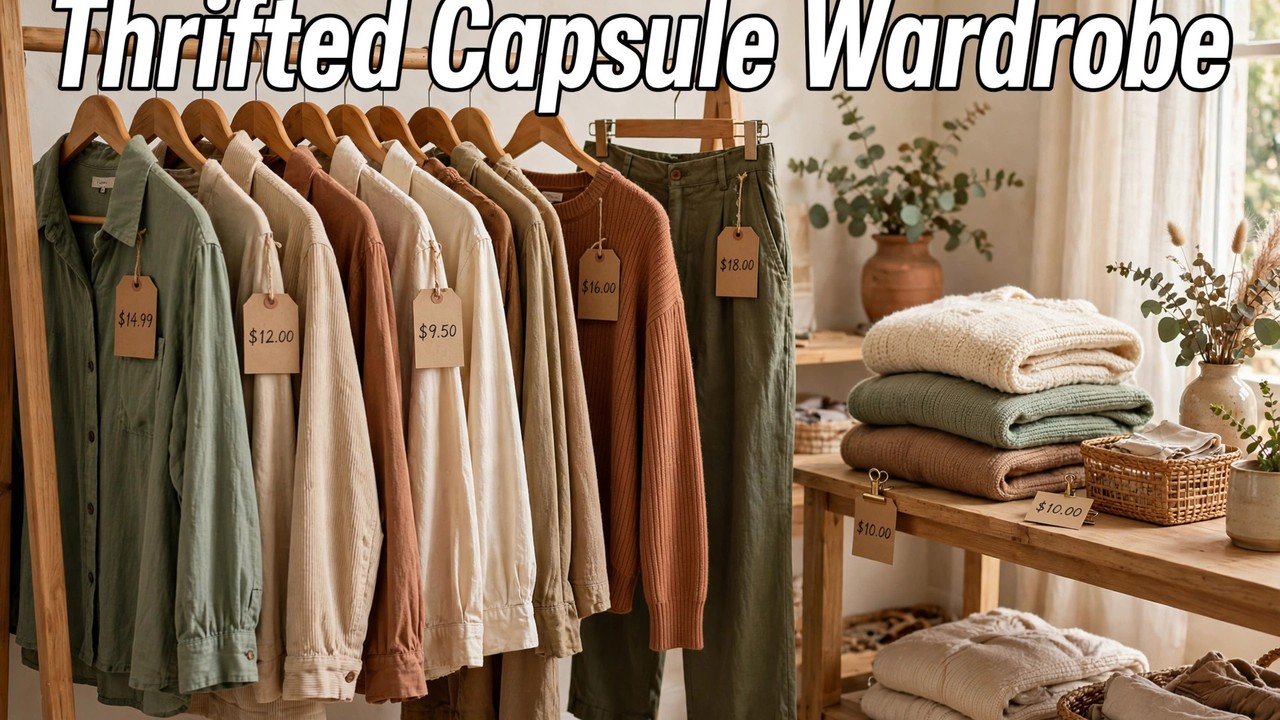
Thrifted Capsule Wardrobe on a Strict Budget
A full thrifted capsule wardrobe — fifteen or so pieces that all work together — typically costs less than one new outfit at a mall brand, if you hunt with a plan. Thrifted capsules can come together for under a hundred dollars — while random “cute finds” that match nothing can blow three hundred.
The difference is never luck. It’s the list, the label-reading, and knowing what to walk past. This guide covers all three.
Start With a Number, Not a Vibe
Decide your total budget before you enter the store. A strict budget means a real number: $100, $150, whatever you’ve got. Write it down — on paper, in your phone, on your hand. Thrift stores are designed to make five-dollar purchases feel free, and twelve “it’s only five dollars” decisions later you’ve spent sixty bucks on things that don’t go together.
Break the number into a rough allocation: about half for the big structural pieces (coat, blazer, jeans, boots), a third for tops and layers, and the rest as a small reserve for the surprise find. That reserve matters — the best thrift scores are unplanned, and having ten or fifteen dollars unassigned lets you say yes without guilt. Goodwill’s own guide to creating a personal thrifting list makes the same point: the list gives you direction, but leave room for the magic.
The Hunt List: What a Thrifted Capsule Needs
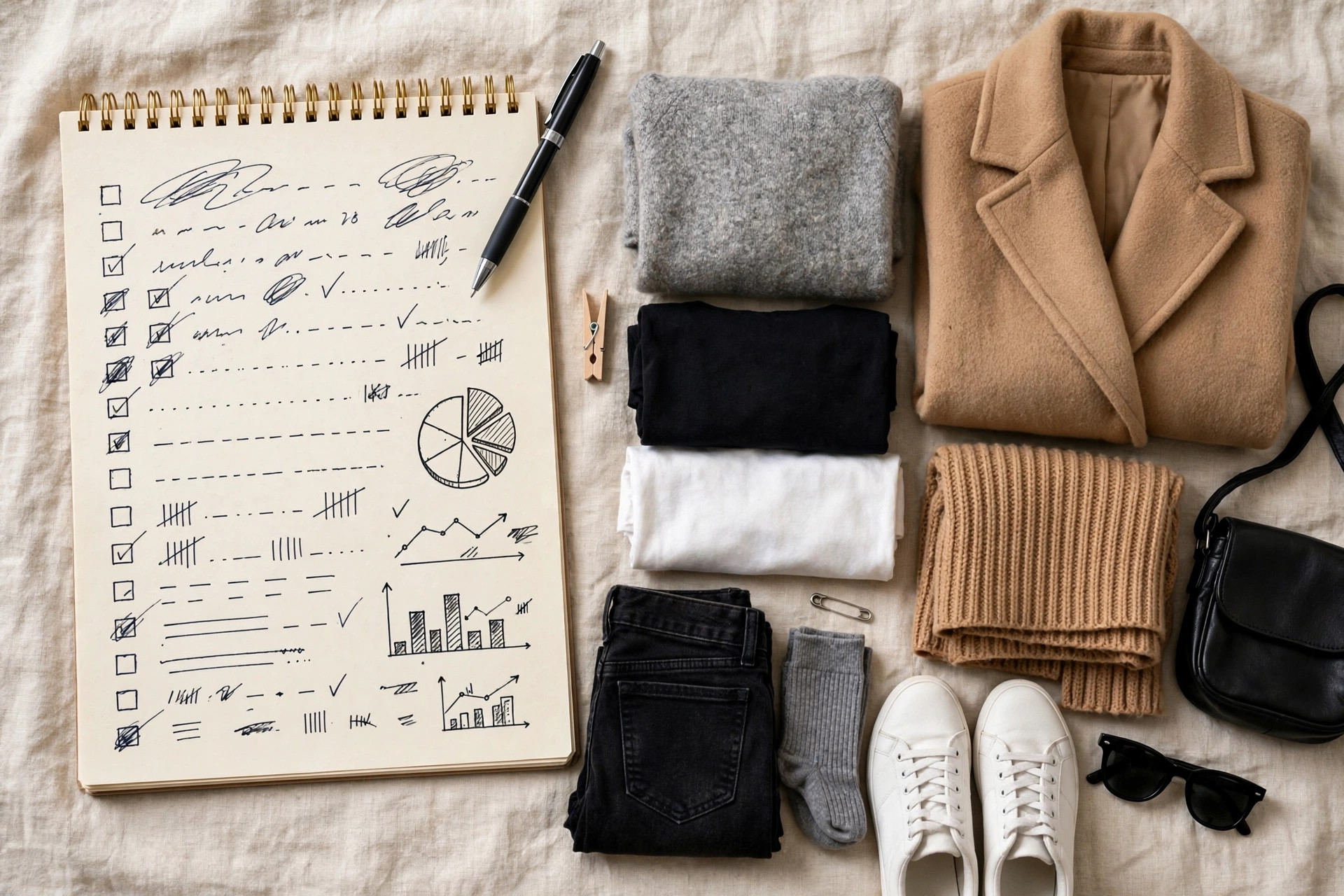
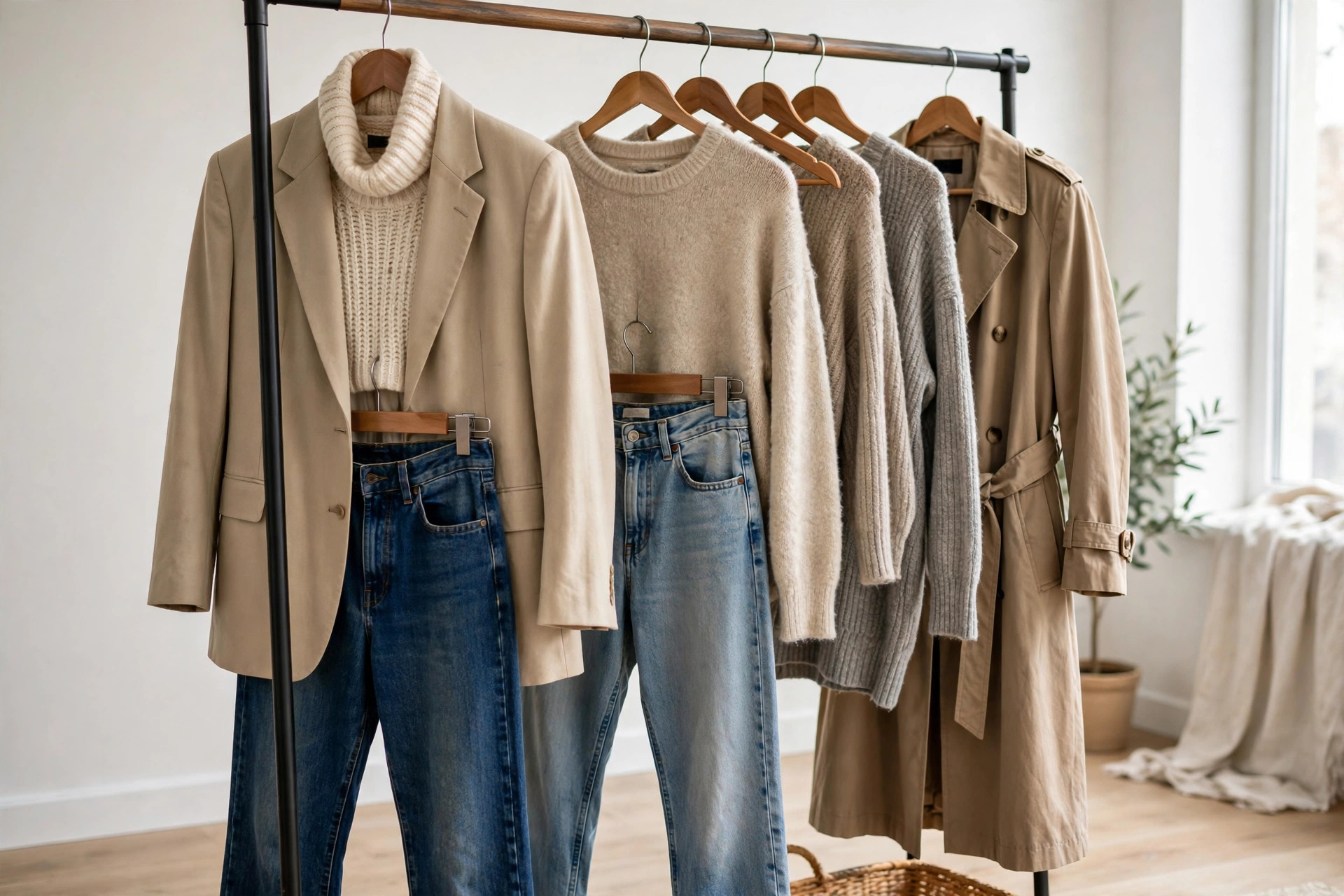
Walk in with a written list of fifteen target pieces, not a mood. A solid starter capsule: two tees, one button-down, one sweater, one hoodie or sweatshirt, dark jeans, black trousers, a blazer, a coat, a dress or jumpsuit, sneakers, one dressier shoe, and a bag. Fifteen pieces, one shared color palette (pick three neutrals before you go), and everything must mix. College guys building this on a student budget can start from a dedicated list of college guy minimalist wardrobe essentials.
Rank the list by priority. Coat, blazer, and jeans first — these are the expensive-new items where thrifting saves the most, and once the blazer is home, these oversized blazer outfit ideas will keep it in heavy rotation. Tees and basics last, because they’re cheap new and thrifted tees are often worn thin. If you find the coat in the first twenty minutes, the whole trip is already a win; everything after that is bonus.
Where to Hunt (and When)
Not all thrift stores are equal. Large charity chains restock constantly and price to move — best for basics and everyday pieces. Smaller church and charity shops price lower but stock less; they’re goldmines for coats and wool sweaters that sat in someone’s closet for a decade. Consignment stores cost more but curate better, which saves time when your budget allows one or two pricier pieces.
Timing matters more than people think. Weekday mornings, right after restocking, beat Saturday afternoons when the racks are picked over. Many stores run weekly discount days — a specific color tag at half price, for instance — and building your trip around those days stretches a strict budget noticeably. Ask the staff; they’re usually happy to tell you when new stock hits the floor.
The 60-Second Rack Scan
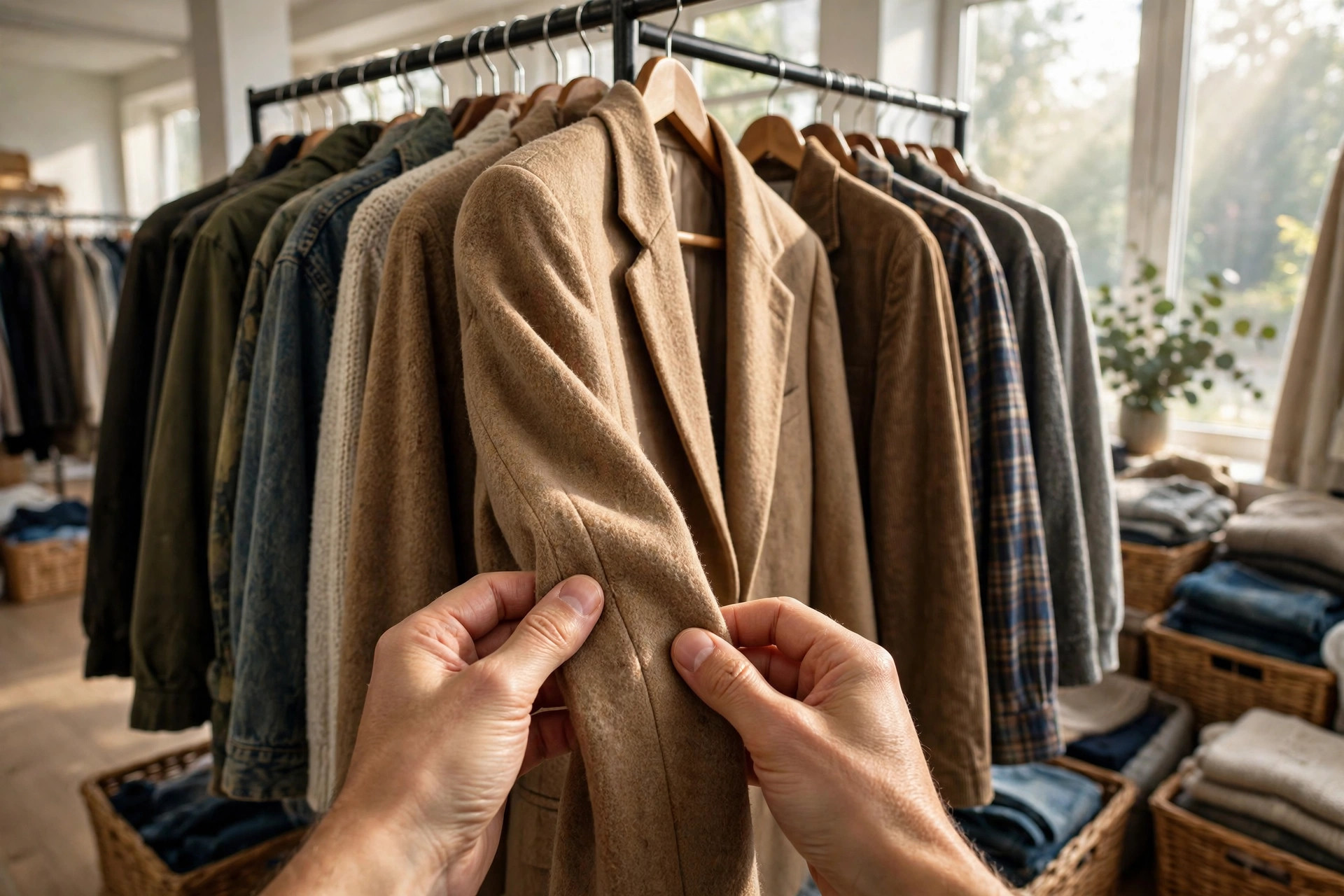
Don’t try on first, scan first. Flip through the rack quickly and pull anything in your palette, in roughly your size, in a fabric worth owning. Fabric first: wool, silk, cotton, linen, and leather go in the maybe pile; thin polyester and scratchy acrylic stay on the rack unless the piece is exceptional. Your hands learn this fast — after three trips you’ll identify a wool-blend blazer by touch without checking the tag.
Then check the seams before you check the mirror. Turn the garment inside out: straight, tight stitching with finished edges signals quality; fraying seams, puckering, or loose threads signal a short remaining life. Check underarms for deodorant staining, collars for ring-around-the-collar, and crotches and elbows for thinning. Thrifted clothes have history — make sure it’s a history you can live with.
Reading Labels Like a Pro
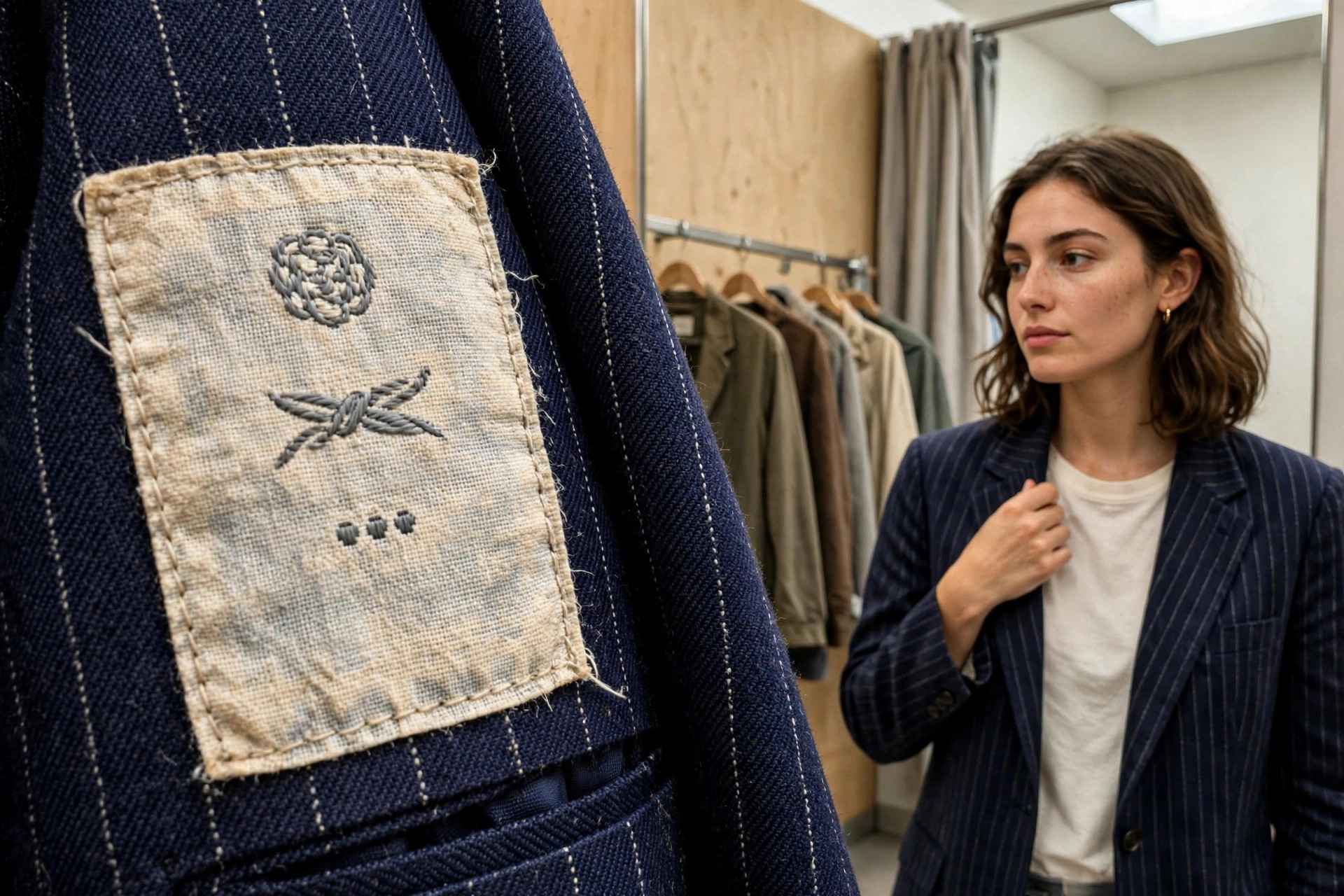
The label tells you what the rack can’t. Fabric content first: “100% wool” or “wool blend” on a coat, “cotton” or “cotton-modal” on tees, real leather on shoes and bags. Country-of-origin and union tags roughly date a piece — older American or European-made garments were often constructed better than their modern equivalents, which is why the vintage blazer outlasts the fast-fashion one.
Size tags lie, especially across decades. A “medium” from the nineties fits like a modern small, and vanity sizing means a new “size 8” and a thrifted “size 8” may be different garments entirely. Ignore the number, hold it up, and try it on.
The fitting room is non-negotiable for anything with structure — blazers, trousers, coats. Tees you can eyeball; tailored pieces you cannot.
The Fitting-Room Checklist
Five checks, every time. One: does it button, zip, and sit right without pulling? Two: raise your arms — does the whole thing ride up or shift weirdly? Three: sit down — trousers and skirts change completely seated.
Four: check the back in the mirror; thrifted pieces get tried on by everyone and the back tells the truth. Five: the ten-second rule — if you have to talk yourself into it, put it back.
Alterations change the math. A $6 pair of trousers plus a $12 hemming job is still a steal; a $6 blazer needing $40 of tailoring is not.
Simple fixes (hemming, taking in a waist, replacing buttons) are worth it. Restructuring shoulders or recutting a garment almost never is. Know which is which before you buy.
What to Never Thrift
Some things aren’t worth the savings. Underwear and swimwear — hygiene, no debate.
Worn-out shoes with collapsed insoles or worn-down heels, which will hurt your feet and cost more to repair than replace. Anything with stains that survived the store’s processing, because they’ve already tried to get them out. And heavily pilling knitwear, which only gets worse.
Be honest about “project pieces” too. The stained silk blouse you’ll “dye,” the gorgeous coat with the broken zipper you’ll “fix” — if you don’t already own dye or know a tailor, these become closet clutter. On a strict budget, every dollar tied up in a maybe is a dollar not spent on a definite.
Wash and Repair Before It Enters the Closet
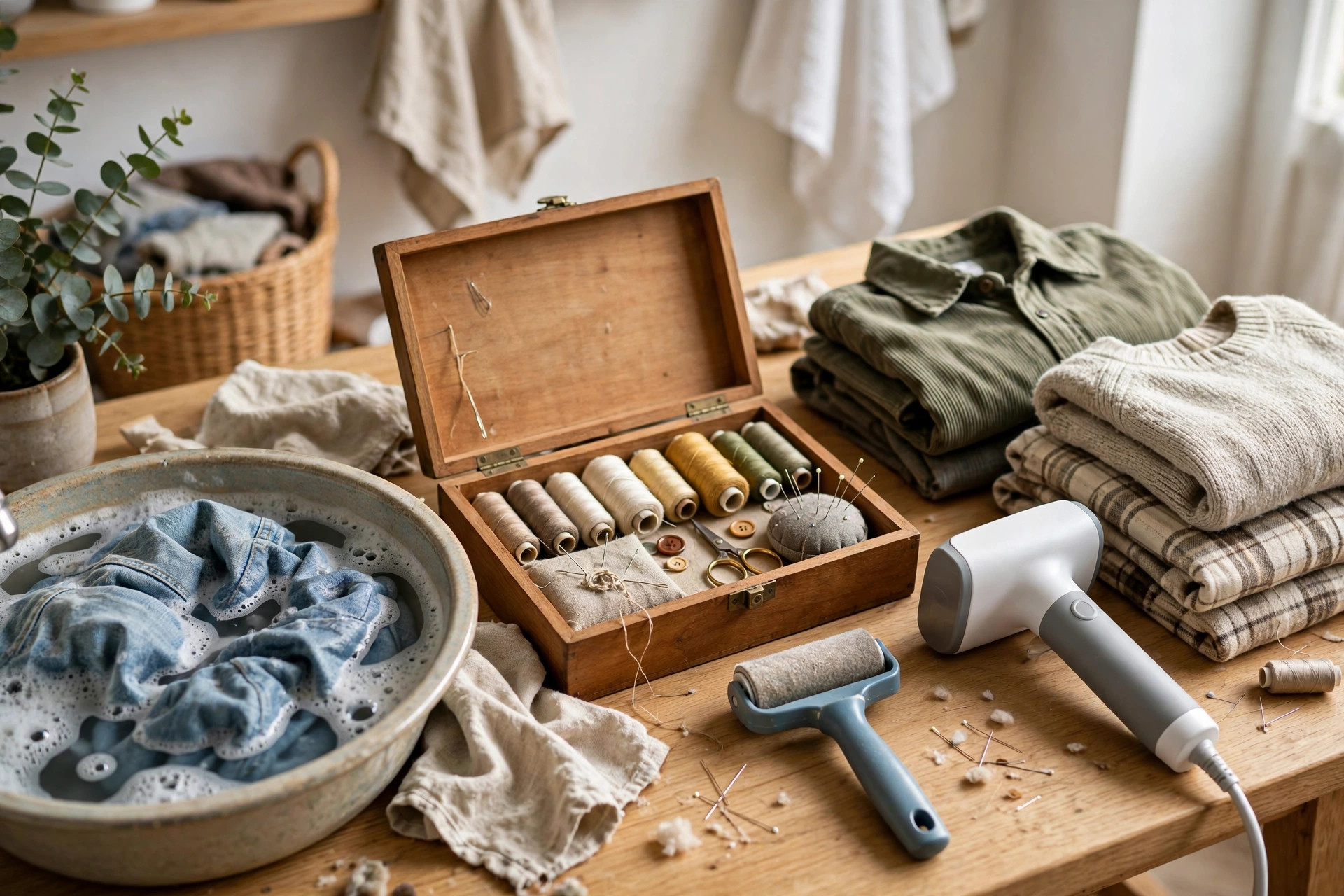
Everything gets washed before it joins the capsule — no exceptions. Hot water for sturdy cottons, gentle cold for wool and silk, and a cup of white vinegar in the rinse for anything with a thrift-store smell. Check pockets first; you’ll be amazed what people leave behind, and occasionally delighted.
Do minor repairs immediately, not “later.” Sew the loose button, clip the loose threads, hit the sweater with a fabric shaver. A fifteen-minute repair session turns a rack of maybes into a wardrobe that looks deliberate. This is the step that separates people whose thrifted clothes look expensive from people whose thrifted clothes look thrifted.
Building Outfits From Random Finds
Here’s the part that makes a thrifted capsule actually work: the palette discipline from your hunt list. When every piece shares three neutrals, random finds assemble themselves into outfits. The $4 camel sweater goes with the $7 dark jeans goes with the $5 white tee — you didn’t plan the combination, the palette did.
Photograph your capsule once it’s built — one flat-lay or a quick mirror pic per outfit. It sounds excessive, but a phone album of “outfits that work” ends morning decision fatigue and stops you buying duplicates of things you already own. Review it before each thrift trip to see what’s actually missing versus what just caught your eye.
The Honest Trade-Off: Time vs. Money
Let’s be straight about what thrifting costs: time. Building a fifteen-piece capsule from thrift stores takes three to five trips across a few weeks, versus one afternoon at a mall. You’re trading hours for savings, and on a strict budget that’s usually a trade worth making — but go in clear-eyed. The people who thrift best treat it as a hobby they enjoy, not a chore they resent.
The other trade-off: fit precision. Thrifted capsules run slightly boxier, slightly more eclectic than bought-new ones.
If that bothers you, spend your alteration budget on the two or three most visible pieces — the coat, the blazer — and let the rest be relaxed. Character is a feature here, not a bug. If you’re building the men’s version, the college guy minimalist wardrobe guide applies the same hunt-list logic with different target pieces.
The same thrift-first approach stretches to workwear — nurses building a shift rotation on a budget should see these nurse scrubs capsule wardrobe essentials, which apply capsule thinking to scrubs and clinical layers.
Typically $75–$150 for fifteen versatile pieces if you shop with a list and hit discount days. Coats, blazers, and leather shoes save the most versus retail; basics like tees save less, so prioritize the big-ticket items first.
The expensive-new structural pieces: coat, blazer, quality jeans, and leather shoes or boots. These offer the biggest savings and anchor the wardrobe. Fill in tops and basics after the anchors are secured.
Check fabric content on the label (natural fibers and blends outlast cheap synthetics), inspect inside seams for tight straight stitching, and look for wear at stress points — underarms, collars, elbows, crotches. Hold the fabric up to light to spot thinning.
Always. Wash everything before it enters your closet — hot water for sturdy cottons, gentle cold for delicates, and white vinegar in the rinse for musty smells. Check all pockets before washing.
Thrift the big-ticket and unique pieces (coats, blazers, quality denim); buy new the items where thrift quality is unreliable (underwear, basic tees, worn shoes). A hybrid approach usually beats an all-or-nothing one on both cost and quality.