Rustic Wainscoting Ideas: 12 Ways to Add Warmth
Plain walls can feel unfinished, especially in a home that leans toward warmth and texture. Wainscoting adds depth, character, and a sense of craft without requiring a full renovation.
The secret is choosing a style that matches your room. A light beadboard can brighten a hallway, while a dark board-and-batten wall can make a study feel grounded and cozy. You don’t need expensive millwork to get the look.
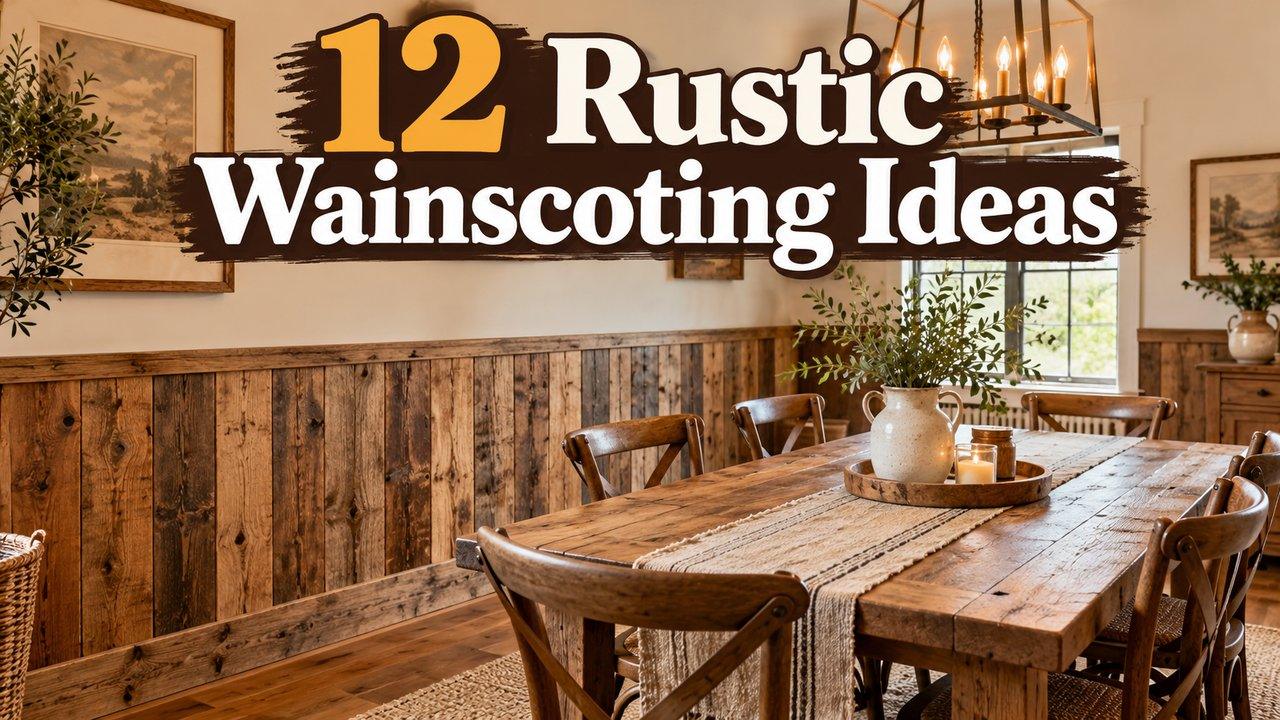
Rustic wainscoting refers to wall paneling with a natural, textured, or aged appearance — think reclaimed wood, visible grain, matte finishes, and simple profiles. It brings warmth to bedrooms, living rooms, hallways, and studies.
Why Rustic Wainscoting Works in Modern Homes
Wood paneling adds dimension that paint alone can’t provide. It creates visual interest at the lower portion of the wall while keeping the upper area light and open.
According to the USDA Forest Products Laboratory Wood Handbook, wood responds to moisture changes by swelling and shrinking. That means proper acclimation and installation matter for any wood paneling project. Let boards adjust to the room’s humidity before installing, and follow the manufacturer’s guidance for fasteners and gaps.
The most useful starting point is the room’s moisture level. Bedrooms and living areas are straightforward; bathrooms and kitchens need more careful material choices.
What is the most popular wainscoting style for rustic homes?
Board-and-batten is a strong choice for rustic interiors. Its simple vertical boards and battens create clean lines that work with farmhouse, cottage, and lodge styles.
How high should rustic wainscoting be?
Chair-rail height (around 32–36 inches) is the classic choice, but taller installations up to 48 inches or even full-height paneling can work in rooms with high ceilings. Test the proportion with painter’s tape before committing.
Here’s the thing: the right height depends on your ceiling, furniture, and the look you want — not a fixed rule.
12 Rustic Wainscoting Ideas to Try
1. Mix Wood Species for a Collected Look
Combining different wood tones can create a wall that feels gathered over time rather than installed in one day. Try pairing reclaimed oak with darker walnut battens, or mix pine boards with a cedar cap rail.
Keep the finishes similar — all matte or all satin — so the mix feels intentional. Test stain samples on the same wall before committing.
What most guides skip is the grain direction. Mixing vertical and horizontal grain can look busy; keeping it consistent usually feels calmer.
2. Try Classic Board-and-Batten
Board-and-batten is the workhorse of rustic wainscoting. Vertical boards with narrow battens over the seams create rhythm and shadow lines that flat walls lack.
Paint it warm white for a farmhouse feel, or stain it in a medium wood tone for a lodge look. The profile is simple enough to suit almost any room.
For a budget version, use plywood strips over a painted wall instead of full boards.
3. Brighten a Hallway With Beadboard
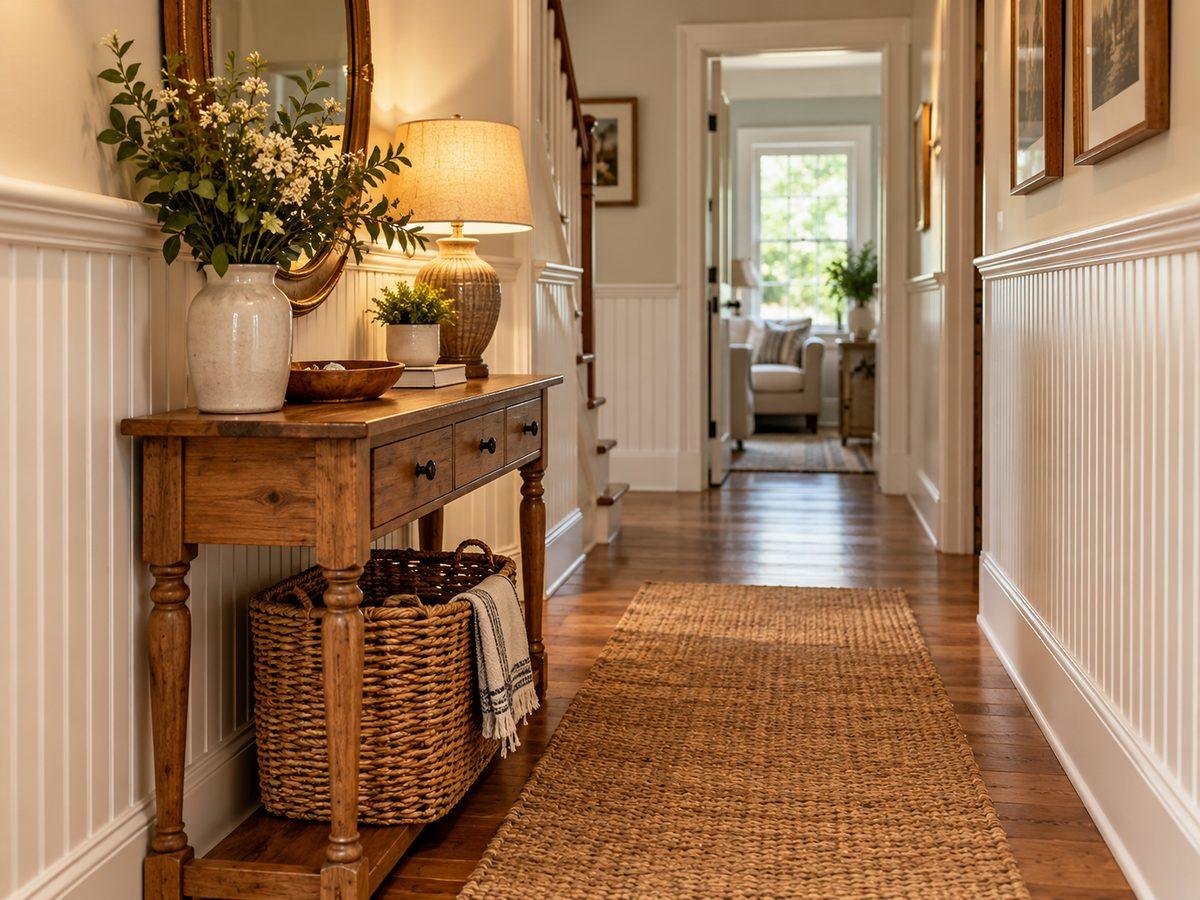
Beadboard’s narrow grooves add texture without visual weight, making it useful for hallways and small spaces. A light finish keeps narrow passages feeling open.
Run it to chair-rail height with a simple cap, and paint the upper wall a soft neutral. The contrast keeps the hallway from feeling like a tunnel.
Quick note: beadboard sheets are easier to install than individual boards, but the seams need careful caulking.
4. Go Dark in a Study or Library
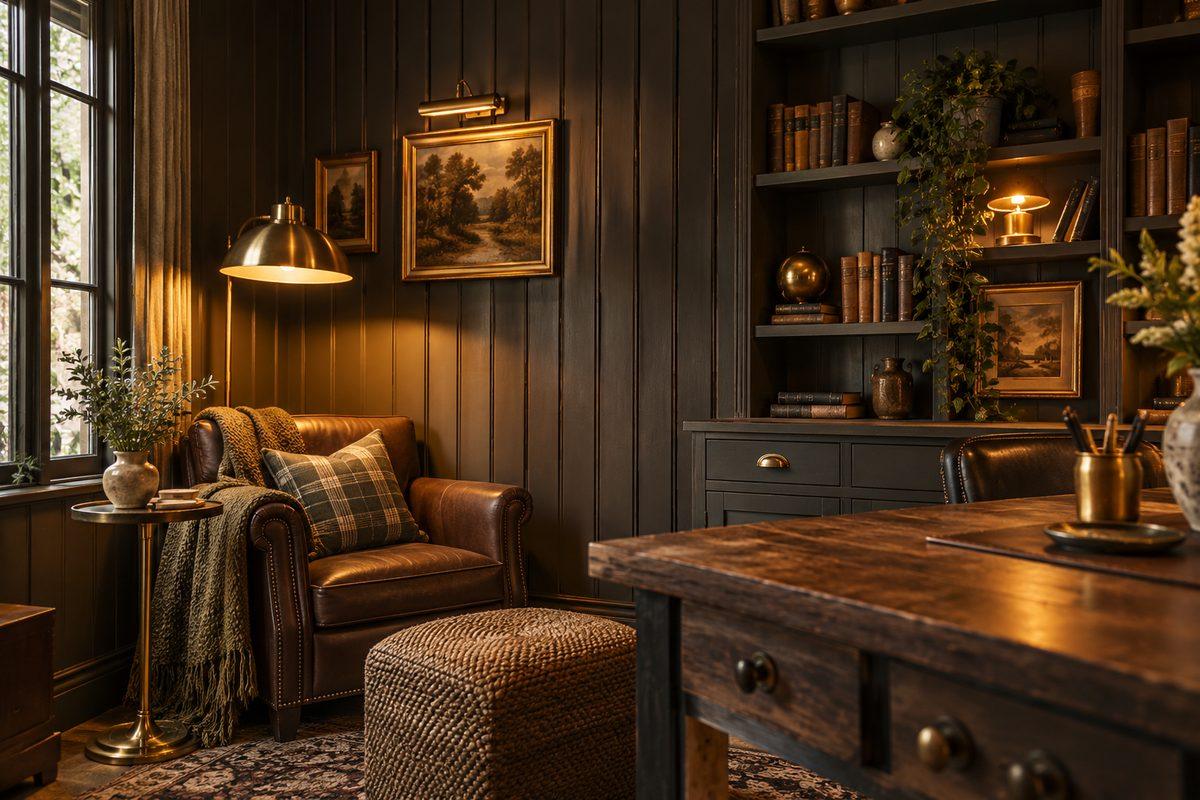
A charcoal or espresso stain can make a study feel serious and cocooned. Dark wainscoting pairs well with bookshelves, leather, and warm task lighting.
Balance the darkness with lighter upper walls and good lighting. A dark lower wall with a white upper section keeps the room from feeling closed in.
Most people assume dark paneling only suits large rooms. A small study can handle it if the lighting is layered.
5. Create a Two-Tone Wall
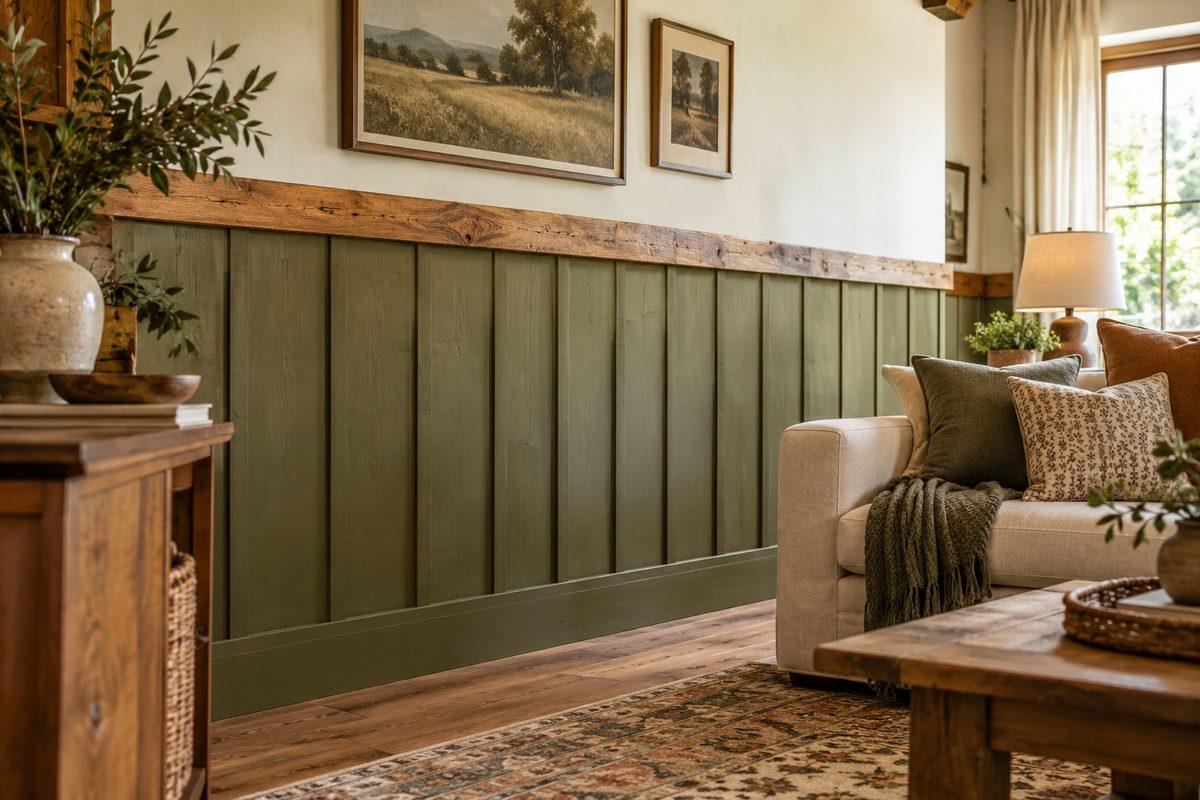
Painting the wainscoting a different color from the upper wall creates a clear visual break. Try sage green below with warm white above, or navy below with cream above.
The chair rail or cap molding becomes the transition line, so choose a profile you like. A simple flat cap keeps it modern; a more detailed molding leans traditional.
Or maybe the better choice is stain below and paint above. That mix can feel especially rustic.
6. Use Reclaimed Wood for Authentic Texture
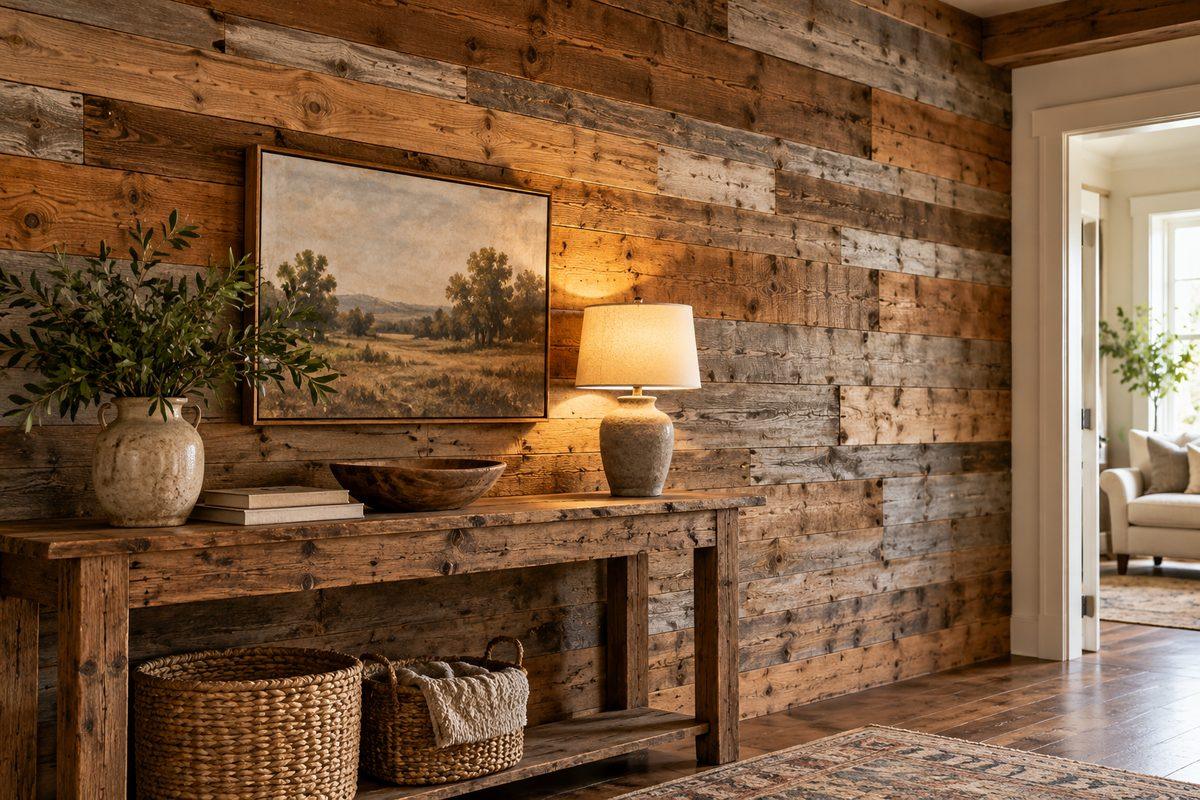
Reclaimed boards bring nail holes, saw marks, and color variation that new lumber can’t replicate. They’re ideal for accent walls in living rooms and bedrooms.
Source from reputable dealers, check for pests and structural soundness, and clean the boards before installation. Some reclaimed wood needs planing to sit flat.
This idea works especially well as a single feature wall rather than every wall in the room.
7. Add Wainscoting to a Bedroom Headboard Wall
Paneling behind the bed creates a built-in headboard effect. A full-height installation in a warm wood tone can make the bedroom feel custom and cozy.
Keep bedding and curtains simple so the wood remains the focus. A few textured pillows can echo the paneling without competing.
For a softer look, try sage green wainscoting — it reads rustic without the weight of dark stain.
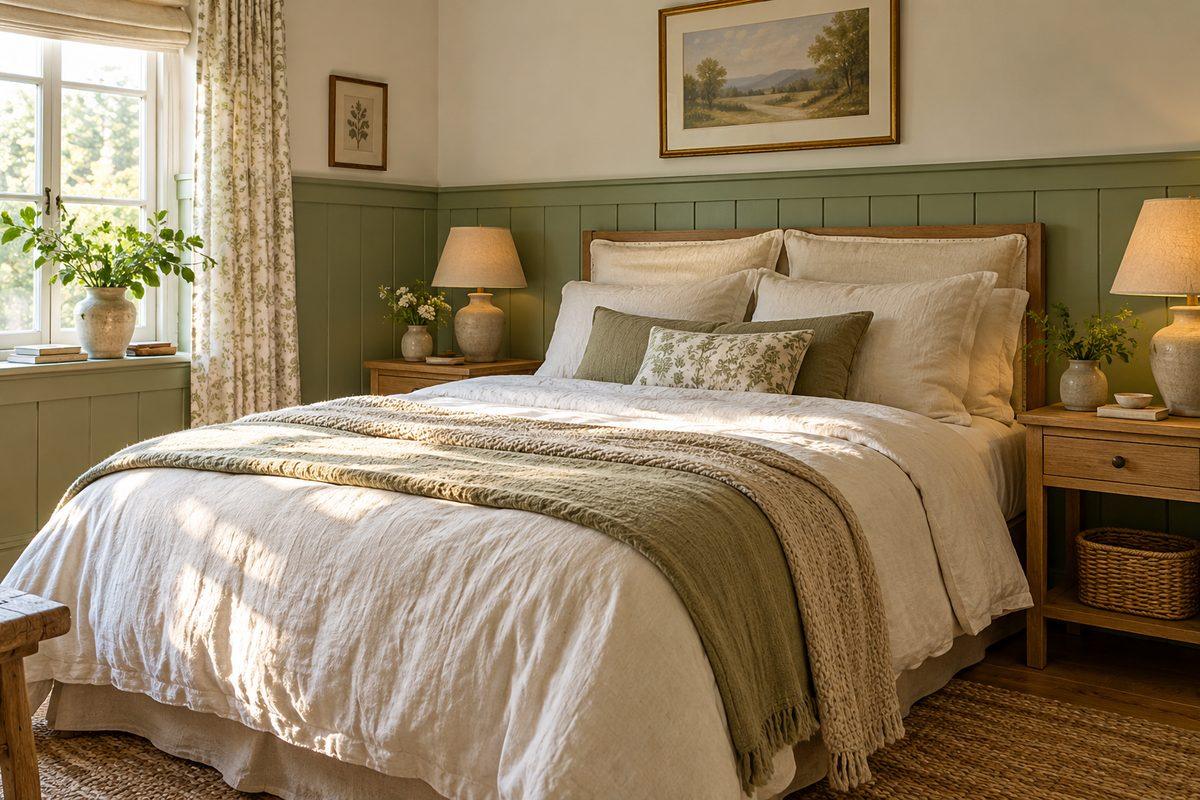
8. Frame a Fireplace With Paneling
Wainscoting around a fireplace can make the hearth feel like the room’s anchor. Run the paneling across the chimney breast or flank the fireplace on both sides.
Keep combustible materials at the clearances required by local codes and the fireplace manufacturer. This is a decorative project, not a structural one.
A mantel shelf above the paneling gives you a display surface that ties the whole wall together.
9. Try a Horizontal Shiplap Variation
Horizontal boards can make a narrow room feel wider. A rustic shiplap with visible gaps and a matte finish suits bedrooms and casual living spaces.
Keep the gaps consistent with spacers during installation. Uneven gaps are the most common DIY giveaway.
Paint it or leave it natural — both work, depending on the room’s palette.
10. Panel a Small Dining Nook
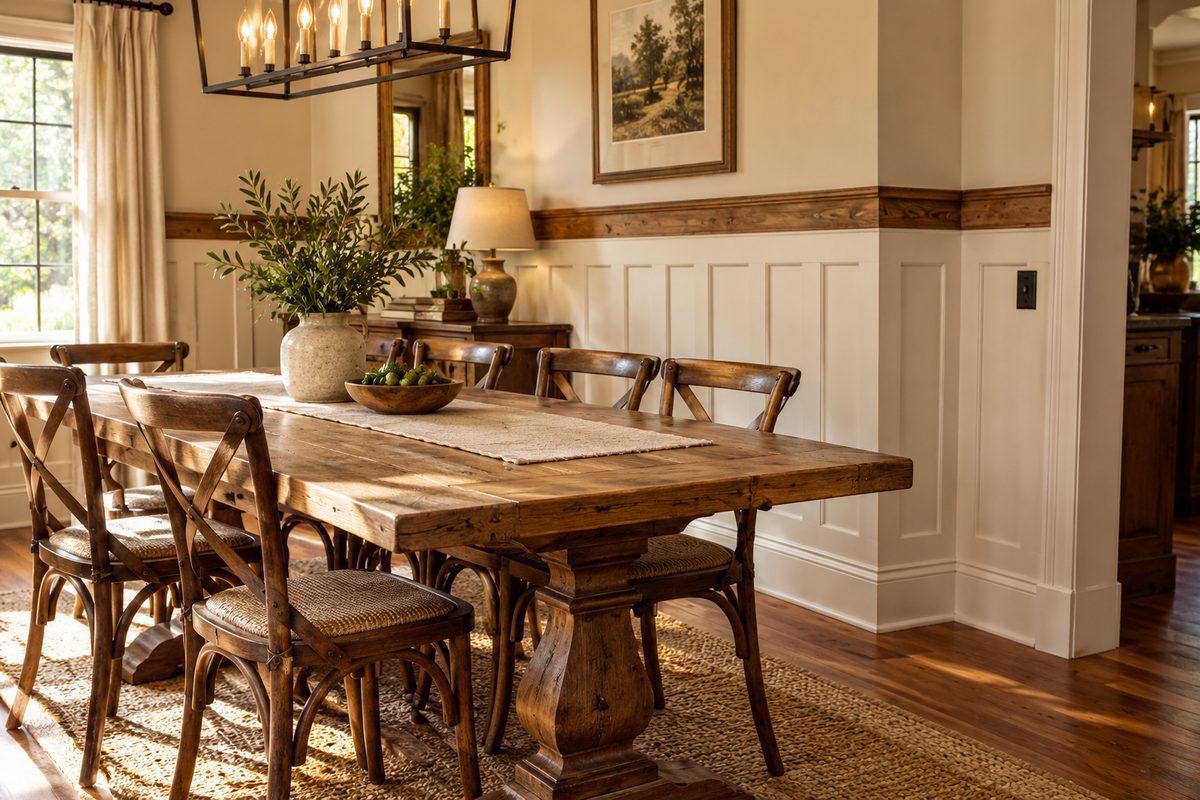
A dining nook is a contained space where wainscoting can have outsized impact. Board-and-batten to chair-rail height with a warm stain makes meals feel more special.
Add a simple bench or banquette against the paneled wall. The combination feels intentional and cozy.
This is a manageable weekend project for one wall.
11. Extend Wainscoting to the Ceiling in a Cottage Bathroom
Full-height beadboard can make a small bathroom feel charming rather than cramped. A moisture-appropriate finish is essential here.
Use materials and finishes rated for humid environments, ventilate well, and avoid trapping moisture behind the panels. When in doubt, consult a professional.
Keep the color light to maximize the sense of space.
12. Mix Wainscoting With Wallpaper Above
Pairing wood paneling below with wallpaper above combines two textures in one wall. A subtle grasscloth or linen-look paper above rustic boards can feel layered and rich.
See our shelf wallpaper ideas for more ways to use pattern in small doses.
Keep the wallpaper pattern quiet so the wood remains the star.
Quick Comparison: Which Rustic Wainscoting Style Is Best?
| Style | Best For | Key Benefit | Limitation |
|---|---|---|---|
| Board-and-batten | Farmhouse and lodge rooms | Simple, versatile profile | Needs precise spacing |
| Beadboard | Hallways and small spaces | Light texture, easy install | Seams need careful caulk |
| Reclaimed wood | Feature walls | Authentic aged character | Heavier, needs sourcing |
| Two-tone painted | Bedrooms and dining rooms | Clear visual interest | Color choice matters |
| Dark stain | Studies and libraries | Rich, cocooned feel | Needs good lighting |
How to Install Rustic Wainscoting
Good preparation matters more than the paneling style you choose. Rushing the prep is the most common reason DIY wainscoting looks amateur.
Follow these practical steps: Acclimate the wood. Let boards sit in the room for several days so they adjust to its humidity. Find the studs. Mark stud locations for secure fastening. Plan the layout. Measure the wall, decide the height, and mark a level line. Cut carefully. Measure twice, cut once — especially around outlets and trim. Install from one end. Keep boards level and check every few pieces. Caulk and fill. Fill nail holes, caulk seams, then paint or stain.
One limitation: this is a decorative guide, not a substitute for professional advice on structural work, electrical modifications, or load-bearing walls.
Frequently Asked Questions About Rustic Wainscoting
Q: What is the cheapest way to add rustic wainscoting?
A: Plywood strips over a painted wall can mimic board-and-batten at a fraction of the cost. Paint or stain unifies the look.
Q: Can I install wainscoting myself?
A: Many homeowners install simple profiles like board-and-batten or beadboard as weekend projects. Complex rooms with many corners may warrant a professional.
Q: Does wainscoting make a room look smaller?
A: Dark or full-height paneling can make a small room feel more enclosed. Light finishes at chair-rail height usually keep the room feeling open.
Q: What wood is best for rustic wainscoting?
A: Pine, cedar, and oak are common choices. Reclaimed wood adds character but needs inspection for pests and soundness.
Q: How do I maintain wood wainscoting?
A: Dust regularly, clean with a damp cloth as needed, and refresh the finish when it shows wear. Keep indoor humidity stable to reduce movement.
Create Walls With Character
Here’s the quiet advantage of rustic wood: it looks better with wear. The scuffs, dings, and softened edges that would ruin a lacquered wall only add to wainscoting’s character. It’s one of the few finishes that forgives real life.
That also means you can relax about perfection during installation. Tight joints matter; invisible ones don’t. The wood will do the rest.