
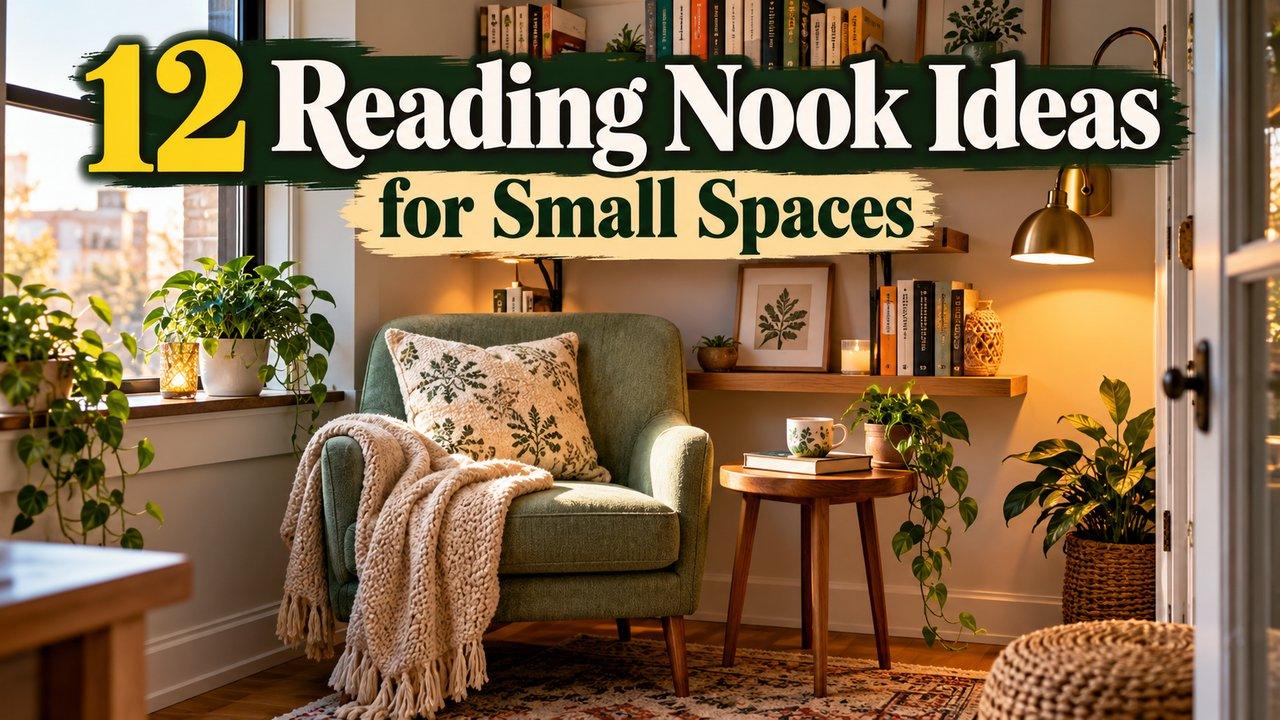
Reading Nook Ideas for Small Spaces: 12 Smart Ideas
A cozy reading corner doesn’t need a spare bedroom, a bay window, or an oversized armchair. With the right layout, even an awkward bedroom corner, an empty closet, or a narrow strip beside the sofa can become a comfortable place to read.
These reading nook ideas for small spaces focus on practical layouts, compact furniture, clever storage, and lighting that makes reading enjoyable.
Each idea works with the space you already have, so you can create a personal retreat without turning your apartment upside down.
Quick definition: Reading nook ideas for small spaces are ways to create a dedicated reading spot within a limited floor area, using compact seating, thoughtful lighting, and space-saving storage. The goal is comfort without blocking everyday movement.
Where Can You Create a Reading Nook in a Small Home?
The best location is often a space that already exists but serves no clear purpose. Look beside a window, at the end of a sofa, beneath a staircase, or in an unused bedroom corner before considering new furniture.
According to Pinterest’s Spring Trend Report 2026, searches for “reading nook ideas” rose 245% year over year, while searches for “comfy reading chair small spaces” rose 455%. These figures reflect Pinterest’s reported search trends, not the percentage of people who have created reading corners.
Here are the first three ways to reclaim space.
1. Turn an Unused Bedroom Corner into a Cozy Reading Corner
An empty bedroom corner can become a peaceful retreat with just three essentials: a compact seat, a reading light, and a place to put your book.
Choose a narrow accent chair with exposed legs to keep the floor visible. Add a small round table or a wall-mounted shelf rather than a bulky cabinet.
Keep the color palette simple if the bedroom is already crowded. Cream, warm beige, sage green, or dusty blue can make the corner feel connected to the rest of the room.
Small-space tip: Measure the chair and its clearance before buying it. The seat may fit perfectly while the legs still interfere with a wardrobe door or walking path.
2. Create a Window-Side Reading Spot
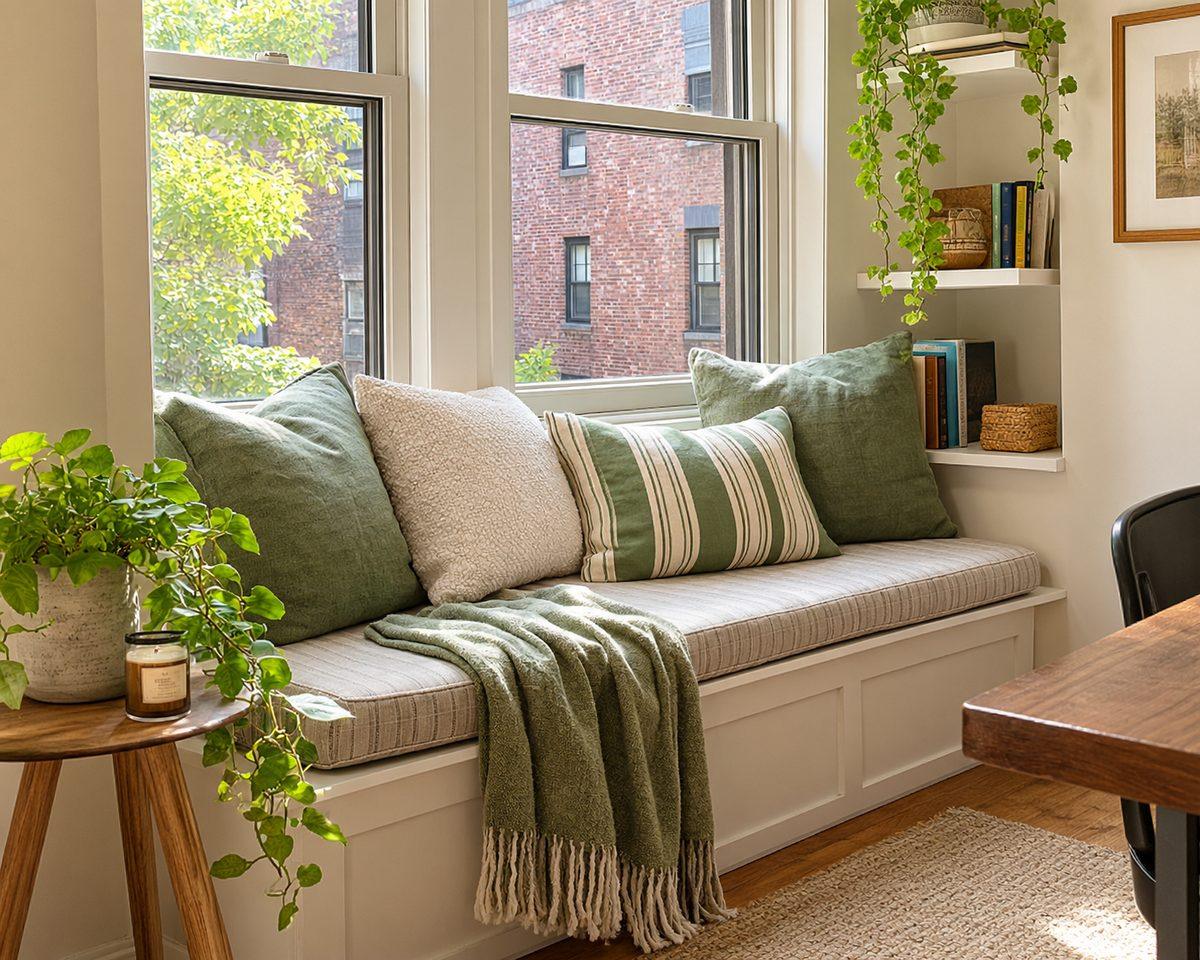
A window offers natural light and an instant sense of separation from the rest of a room. You don’t need a built-in window seat to use it.
Place a narrow bench, a compact chair, or a supportive floor cushion beside the window. Add a washable cushion and a lightweight throw for comfort.
Look — if you’re renting and can’t change the structure, use freestanding furniture that can move with you. Check window access, heating vents, and whether the furniture blocks a window you need to open.
Natural light is useful during the day, but you’ll still need a dedicated lamp for evening reading.
3. Use the End of a Sofa as a Mini Library
An unused space at the end of a sofa can work surprisingly well as a tiny reading space. A slim chair, a floor lamp, and one or two shelves are enough to establish a separate activity without adding another full-size furniture arrangement.
Choose a side table that can tuck under the sofa’s arm or use a small wall shelf for a phone, glasses, and a bookmark.
Here’s the thing: a reading nook doesn’t need to look like a separate room. A rug, a different lamp, or a distinct cushion can visually mark the area without taking up more floor space.
4. Choose a Compact Armchair Instead of a Bulky Recliner
A full-size recliner can consume the same space needed for a wardrobe, desk, or clear walkway. A compact armchair with a supportive back and a smaller footprint is often a better fit.
Look for: A seat depth that suits your height and reading posture. A stable backrest and comfortable seat cushion. Arms that don’t make the chair unnecessarily wide. Legs that allow some floor visibility beneath the seat.
Or maybe I should say it this way: choose the chair for how you read, not just how it looks in a photograph.
Some readers prefer an upright seat for paperbacks, while others want room to curl up with a blanket. Try the seating position before committing to a piece that cannot easily be returned.
Which Furniture and Layouts Work Best for Tiny Reading Spaces?
The right furniture matters more than decorative accessories. A small reading area should accommodate your preferred reading position, provide adequate light, and leave enough room to move around comfortably.
According to Pinterest’s 2026 trend report, interest in compact reading-chair ideas is rising, supporting the appeal of dedicated reading spots in smaller homes. That doesn’t mean you need to buy a new chair: an existing dining chair with a supportive cushion may work for shorter sessions, while longer reading sessions call for more substantial back support.
These next three ideas focus on making limited space feel intentional rather than cramped.
5. Build a Floor-Cushion Reading Corner
Floor cushions are useful when a conventional chair would obstruct a narrow room. Layer a firm cushion over a rug, add a supportive backrest, and keep a basket of books within reach.
This setup is easy to rearrange when guests visit or when you need the floor for another activity.
However, floor seating isn’t comfortable for everyone. Readers who have difficulty getting up from the floor or need stronger back support should consider a compact chair or a low bench with a proper backrest instead.
Quick note: A cushion that looks plush in a photo may flatten during a long reading session. Choose one with enough firmness to support your weight.
6. Install Floating Bookshelves Above Your Reading Spot
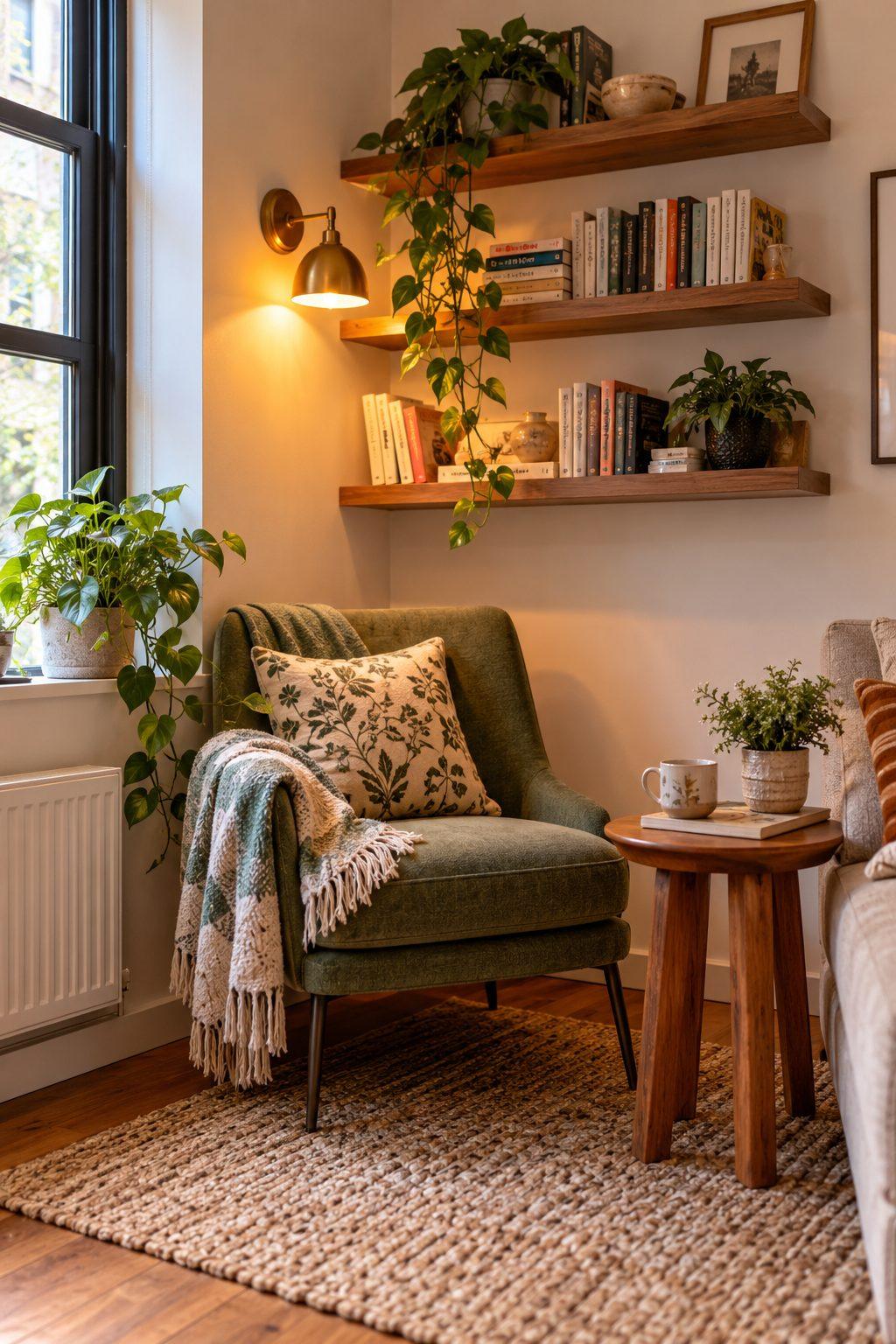
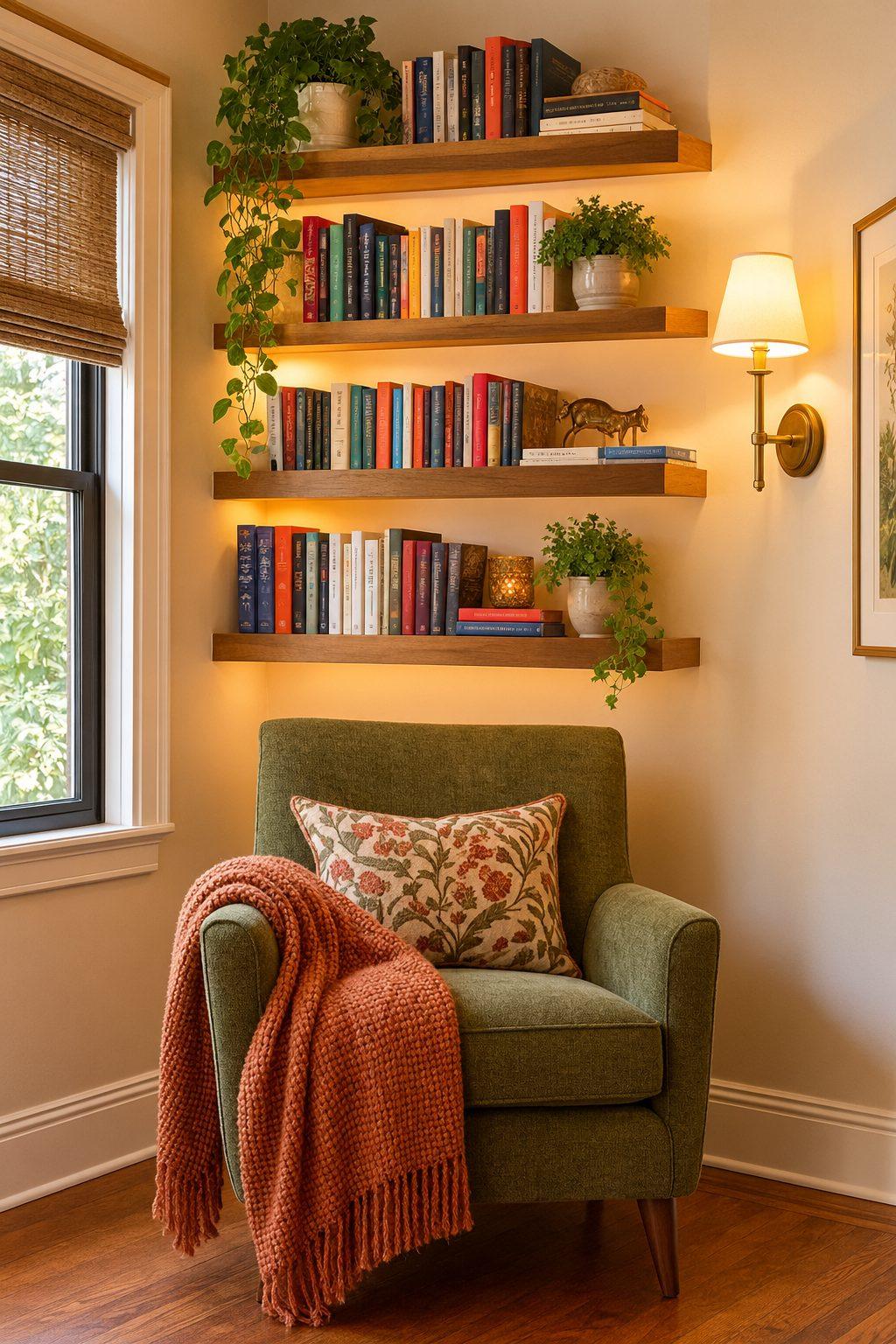
Wall-mounted shelves keep books accessible without taking up floor space. Place one or two shelves above or beside the chair, keeping frequently used books at a comfortable reach.
Floating bookshelves can also turn a plain corner into a miniature library. Mix upright books with a small framed print, but avoid filling every inch with decorative objects.
Check the wall construction and use appropriate fixings for the shelf and its intended load. In a rental, removable or freestanding alternatives may be more suitable than drilling into the wall.
How Can You Add Storage, Lighting, and Privacy Without Clutter?
A functional nook needs more than a pretty chair. Books, reading glasses, charging cables, and lighting accessories can quickly turn a small corner into a messy one.
The solution is to give each essential item a designated place. Use vertical storage, mount lighting where practical, and create visual separation with soft furnishings rather than heavy partitions.
7. Turn an Unused Closet into a Hidden Reading Nook
An unused closet can provide a sense of privacy that an open corner cannot. Remove unnecessary storage, assess the available depth, and see whether a bench or floor cushion can fit without blocking the entrance.
Add a small shelf for books and a suitable reading light. Soft colors, a cushion, and a washable rug can make the space feel inviting.
Before converting a closet, check ventilation, electrical access, door clearance, and whether the space is needed for household storage. Don’t block vents or install unsuitable electrical fixtures in an enclosed area.
This idea works best when the closet is genuinely spare. It won’t help if the space is your only practical storage area. For more closet storage that doesn’t need drilling, see these renter-friendly wardrobe ideas.
8. Use a Plug-In Wall Sconce to Free Up Table Space
A plug-in wall sconce can direct light toward your book while leaving the side table free for a drink or a pair of glasses.
Choose an adjustable fixture that can direct light onto the page without shining into your eyes. Route its cord neatly along the wall, following the manufacturer’s instructions and keeping cables away from walking paths.
If drilling is not allowed, look for a suitable clamp-on lamp or a slim floor lamp that fits behind the chair.
Lighting quality matters more than decorative glow. A beautiful but dim lamp can make reading uncomfortable, especially during evening sessions.
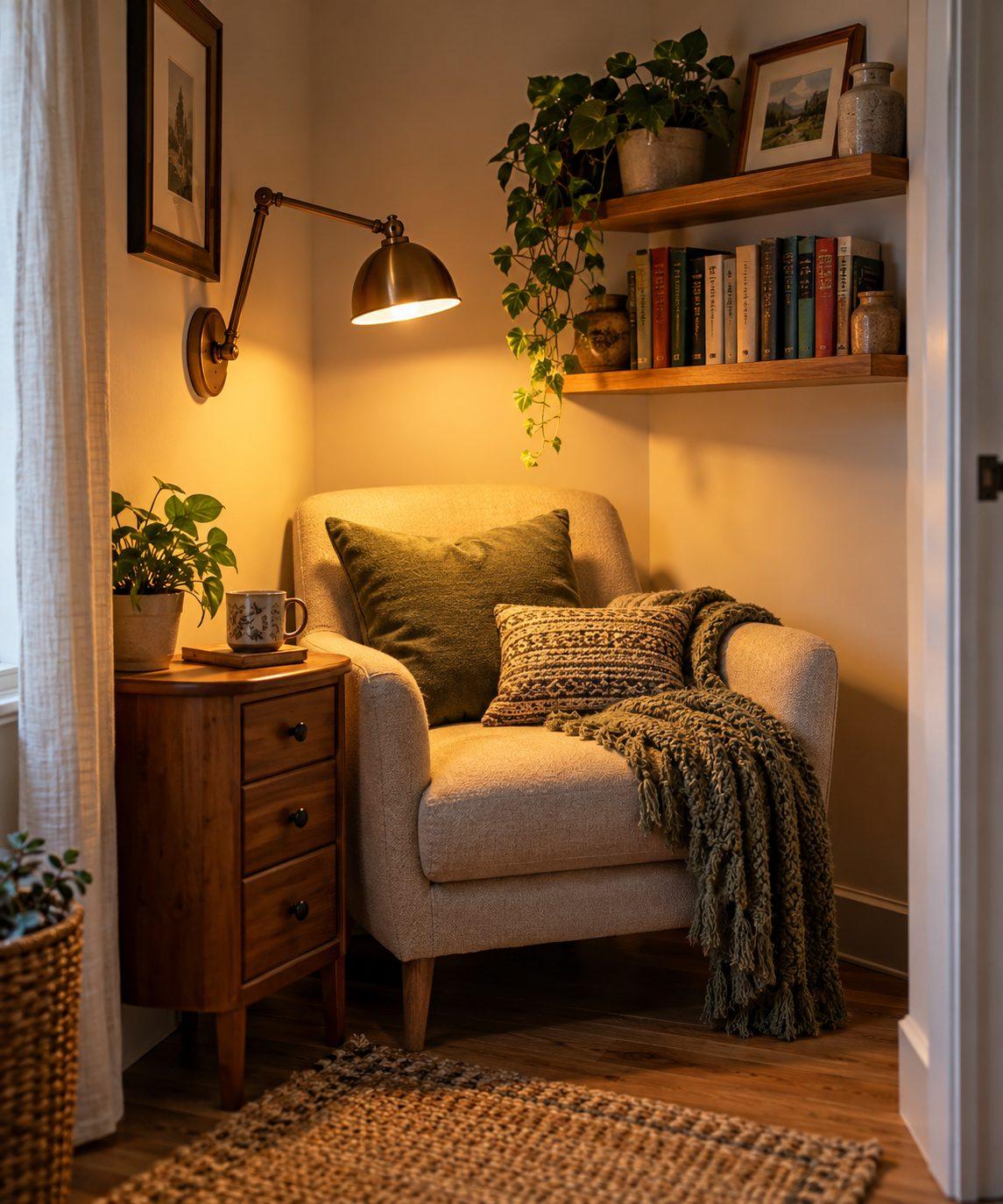
9. Add a Small Side Table With Hidden Storage
A side table gives everyday reading essentials a home. A narrow table with a drawer can hide bookmarks, charging cables, and reading glasses while keeping the top uncluttered.
If floor space is extremely limited, use a wall-mounted shelf at a comfortable height instead. Another option is a small nesting table that can be moved aside when the nook isn’t in use.
Avoid oversized tables with heavy bases. They can make a compact corner feel crowded and leave less room to stretch your legs.
How Do You Make a Small Reading Nook Feel Cozy?
Comfort comes from a few deliberate choices, not from piling on more things. Texture, color, and a sense of enclosure can make a small reading corner feel distinct from the surrounding room.
The counterintuitive part? A nook can feel cozier with fewer accessories. Keeping the floor visible and limiting decorative objects helps a small area feel less cramped, even when the textiles are soft and layered.
10. Use a Rug and Cushions to Define the Corner
A small rug creates a visual boundary without adding furniture. Choose a size that fits beneath the chair’s front legs or defines the seating area without interfering with doors.
Add one supportive cushion and a lightweight throw. A second cushion can be useful, but too many pillows may leave little room to sit comfortably.
For shared homes, washable covers and easy-to-clean fabrics are practical choices. A rug with a suitable non-slip backing can also help prevent movement on smooth flooring.
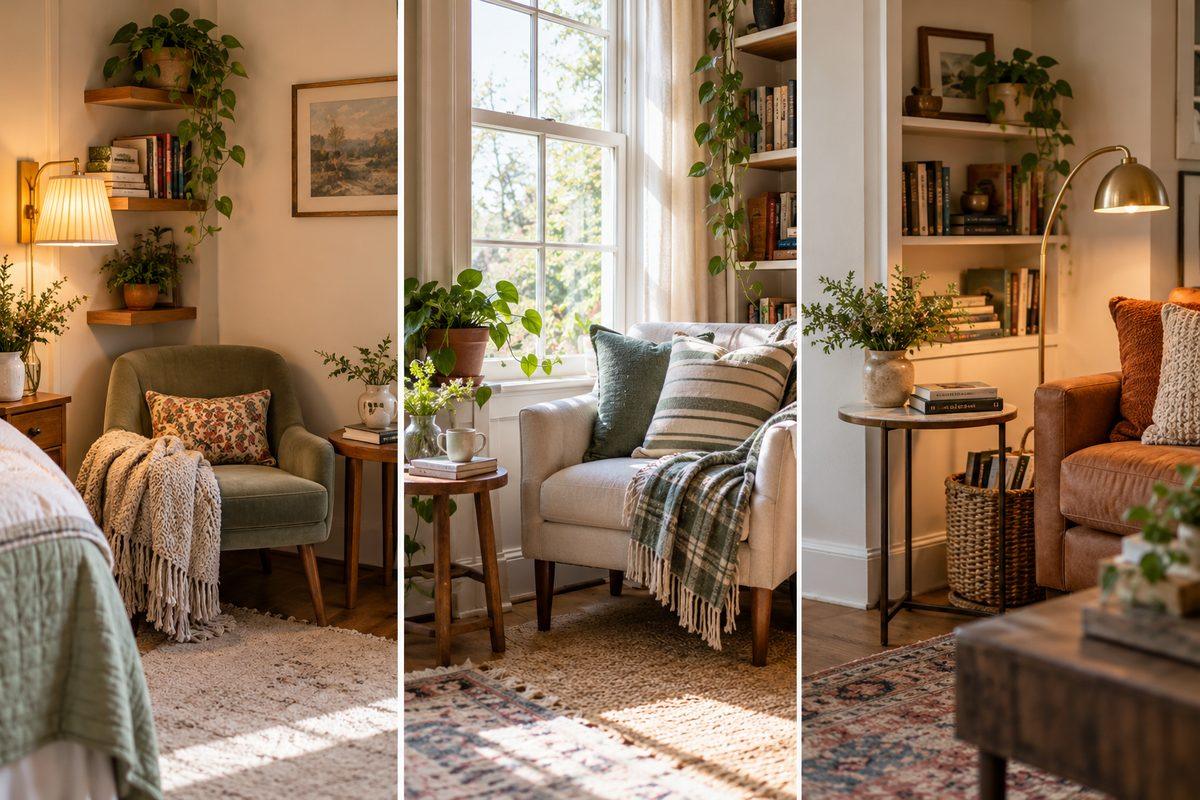
11. Create a Calm Reading Corner With Color
Color can separate the reading area from a busy room without requiring a partition. Try a warm neutral base with one accent shade, such as sage green, muted blue, terracotta, or dusty rose.
Repeat that color in two or three small details: a cushion, a framed print, or a bookend. This creates a coordinated look without making the corner visually busy.
A bold accent wall can also work, but it isn’t necessary. In a shared rental, colorful accessories are easier to change than permanent paint.
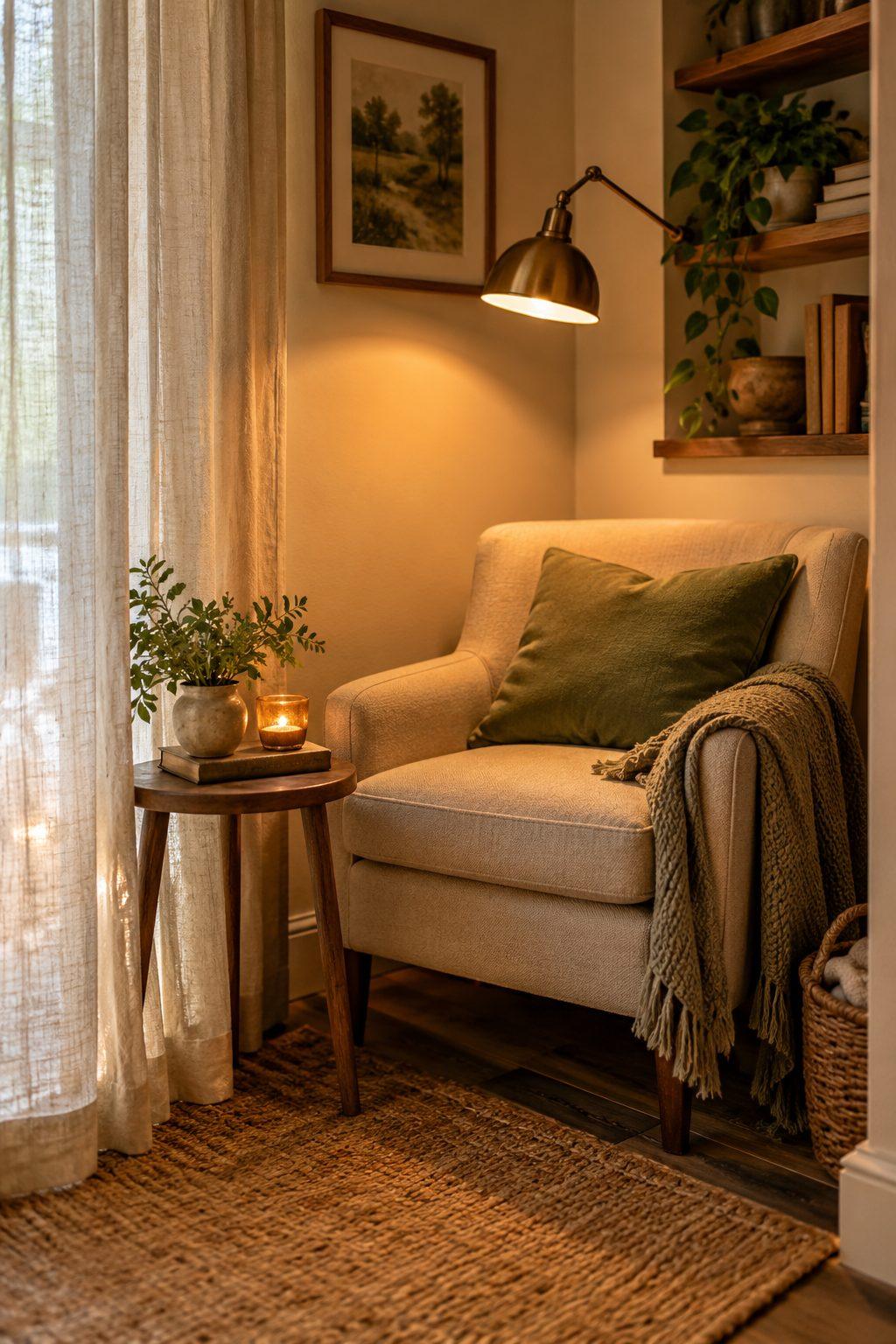
12. Add Curtains or a Lightweight Canopy for Privacy
A curtain can create a gentle boundary between a reading corner and the rest of a bedroom or studio apartment. Use a ceiling-mounted or tension-mounted solution where suitable, depending on the structure and rental restrictions.
Choose lightweight fabric that can be pulled aside easily. Avoid heavy drapes that crowd the chair or make the corner feel dark.
This setup works particularly well in shared rooms, where a little visual separation can make reading feel more private. Keep fabric away from hot bulbs, heaters, and other heat sources.
Quick Comparison
| Option | Best For | Key Benefit | Limitation |
|---|---|---|---|
| Bedroom corner chair | Small bedrooms | Dedicated seating | Needs floor clearance |
| Window-side bench | Homes with usable windows | Natural daylight | Window access must remain clear |
| Floor cushions | Flexible multipurpose rooms | Easy to move | Less back support |
| Floating shelves | Narrow apartments | Uses vertical space | Requires suitable mounting |
| Closet conversion | Unused closets | Greater privacy | Needs careful space and ventilation checks |
How Do You Plan a Reading Nook That Actually Works?
Before buying furniture or drilling shelves, measure the available area and decide how you’ll use it. A corner for quick reading needs less space than one where you plan to spend an hour or two every evening.
What most guides skip is the importance of circulation: the space you need to sit down, stand up, open drawers, and walk past the nook matters just as much as the furniture dimensions.
A simple small-space planning checklist
Measure the available width, depth, and height. Mark nearby doors, drawers, vents, and walking paths. Choose the seating before selecting decorative accessories. Plan a reading light that suits the seating position. Keep books within easy reach without filling every wall. Test the arrangement with existing furniture before spending money.
I’ve seen conflicting figures in coverage of Pinterest trends because reports use different keywords, periods, and comparisons. The clearest published figure I found is Pinterest’s Spring Trend Report 2026, which lists a 245% year-over-year increase for “reading nook ideas.” That supports growing interest, but it doesn’t establish a universal trend across every country or search platform.
For further reading, consult Pinterest’s Spring Trend Report 2026 for the published trend figures, and Pinterest Trends to explore search patterns for your target audience.
Five Common Questions About Reading Nooks
Q: How do you make a reading nook in a very small bedroom?
A: Use an unused corner, a compact chair, a wall-mounted light, and one floating shelf. Keep the layout clear of wardrobes, doors, and your usual walking route.
Q: Can you create a reading nook without buying a chair?
A: Yes. Start with a supportive cushion on an existing bench or a firm floor cushion with back support. Use a small table or shelf for your books.
Q: What furniture is best for a tiny reading space?
A: A compact armchair, narrow bench, or supportive floor cushion usually works well. Choose according to your available floor area and how long you typically read.
Q: How do you light a reading nook without a bedside table?
A: Use a suitable plug-in wall sconce, clamp lamp, or slim floor lamp. Position the light to illuminate the page without shining directly into your eyes.
Q: How can you make a reading corner feel private in a shared home?
A: Place the nook in a quieter corner and use a lightweight curtain, a rug, or a tall open shelf to create visual separation without building a wall.
Conclusion: Start With One Small Corner
A reading nook earns its keep the first evening you choose it over the sofa. Until then it’s just a nice chair in a corner — which is fine, but the chair isn’t the point. The habit is.
So build for the habit, not the photo. Put the nook where you naturally end up after dinner, keep the current book within arm’s reach, and make the light kind to tired eyes. Comfort you use beats style you admire.